
Do Heated Buildings Cause Obesity? Does Cold Exposure Prevent It?

diabetic mediterranean diet paleobetic diet, advanced mediterranean diet

Are heated buildings making us fat?

Dr. Stephan Guyenet thinks they might. It’s not so much central heat as it is failing to expose our bodies adequately to temperatures around 60° F (15.6° C) or lower on a regular basis. Here’s a human experiment Dr. G wrote about:

The second study went further, using a longer cold exposure protocol to investigate changes in fat mass among people with low brown fat activity at baseline (4).  Researchers exposed volunteers to 63 F (17 C) air for two hours a day over a six-week period; again I assume they were lightly clothed.  As in the previous study, they observed an increase in brown fat activity with cold training, and they found that calorie expenditure was higher when subjects were in the ‘cold’ air.  After six weeks of training, body fat mass had declined by about 5 percent.  This is despite the fact that all subjects were lean to begin with!

Read the rest.

I thought this study tied in with that one showing an inverse relationship between altitude and obesity. Environmental temperature rises roughly 3° F with every 1,000 feet (305 meters). But the altitude study controlled for (accounted for) temperature, meaning that the temperature had nothing to do with the association.

Somebody’s probably already tried to link environmental temperatures—whether inside the house or out—to obesity rates. Let me know if you find it.

—Steve

Addendum (after a little searching):

A few minutes at Pubmed.gov revealed this 2013 abstract:

Objective: Raised ambient temperatures may result in a negative energy balance characterized by decreased food intake and raised energy expenditure. This study tested whether indoor temperatures above the thermoneutral zone for clothed humans (approx. 23 o C) were associated with a reduced body mass index (BMI). Design and Methods: Participants were 100,152 adults (≥ 16 years) drawn from 13 consecutive annual waves of the nationally representative Health Survey for England (1995 – 2007). Results: BMI levels of those residing in air temperatures above 23 o C were lower than those living in an ambient temperature of under 19 o C (b = -.233, SE =.053, p <.001), in analyses that adjusted for participant age, gender, social class, health and the month/year of assessment. Robustness tests showed that high indoor temperatures were associated with reduced BMI levels in winter and non-winter months and early (1995 – 2000) and later (2001 – 2007) survey waves. Including additional demographic, environmental, and health behavior variables did not diminish the link between high indoor temperatures and reduced BMI. Conclusions: Elevated ambient indoor temperatures are associated with low BMI levels. Further research is needed to establish the potential causal nature of this relationship.

And consider this abstract, probably from the altitude study I mentioned:

http://www.ncbi.nlm.nih.gov/pubmed/23357956

“There was an approximately parabolic relationship between mean annual temperature and obesity, with maximum prevalence in counties with average temperatures near 18 °C [64.4° F].”

I don’t have the full article, but “parabolic” in this context probably means the obesity incidence was highest at 64.4° F, with lower obesity incidence both above and below 64.4°.

Of course, living in a particular environment doesn’t equate to exposing yourself to outdoor temperatures. But it makes sense that someone living in a cold environment will have more cold exposure than someone in a hot climate.

Perhaps 64.4° F is a sweet spot for efficient body temp regulation and energy partitioning. Living at temps significantly above or below that may cost you energy-wise: you expend extra calories maintaining a normal body temperature, tending to result in lower obesity incidence.

2 Comments

Filed under Overweight and Obesity, Uncategorized

Should Diabetics Exercise?


Women, don't worry about getting too bulky with muscles: you don't have enough testosterone for that

Women, don’t worry that weight training will get you too bulky with muscles: you don’t have enough testosterone for that

Read on for the potential benefits of exercise, then decide for yourself.

GENERAL EXERCISE BENEFITS

Regular physical activity postpones death, mostly by its effect on cancer, strokes, and heart attacks.

Exercise is a fountain of youth. Peak aerobic power (or fitness) naturally diminishes by 50 percent between young adulthood and age 65. Regular exercise increases fitness (aerobic power) by 15–20 percent in middle-aged and older men and women, the equivalent of a 10–20 year reduction in biological age.

Additional benefits of exercise include: 1) enhanced immune function, 2) stronger bones, 3) preservation and improvement of flexibility, 4) lower blood pressure by 8–10 points, 5) diminished premenstrual bloating, breast tenderness, and mood changes, 6) reduced incidence of dementia, 7) less trouble with constipation, 7) better ability to handle stress, 8) less trouble with insomnia, 9) improved self-esteem, 10) enhanced sense of well-being, with less anxiety and depression, 11) higher perceived level of energy, and 12) prevention of weight regain.

EFFECT ON DIABETES

Eighty-five percent of type 2 diabetics are overweight or obese. It’s not just a random association. Obesity contributes heavily to most cases of type 2 diabetes, particularly in those predisposed by heredity. Insulin is the key that allows bloodstream sugar (glucose) into cells for utilization as energy, thus keeping blood sugar from reaching dangerously high levels. Overweight bodies produce plenty of insulin, often more than average. The problem in overweight diabetics is that the cells are no longer sensitive to insulin’s effect. Weight loss and exercise independently return insulin sensitivity towards normal. Many diabetics can improve their condition through sensible exercise and weight management.

Muscles doing prolonged exercise soak up sugar from the blood stream to use as an energy source, a process occurring independent of insulin’s effect. On the other hand, be aware that blood sugar may rise early in the course of an exercise session.

EXERCISE RECOMMENDATIONS

You don’t have to run marathons (26.2 miles) or compete in the Ironman Triathlon to earn the health benefits of exercise. However, if health promotion and disease prevention are your goals, plan on a lifetime commitment to regular physical activity.

Kayaking combines exercise and recreation

Kayaking combines exercise and recreation

For the general public, the U.S. Centers for Disease Control and Prevention recommends:

  • at least 150 minutes per week of moderate-intensity aerobic activity (e.g., brisk walking) and muscle-strengthening activity at least twice a week, OR
  • 75 minutes per week of vigorous-intensity aerobic activity (e.g., running or jogging) plus muscle-strengthening activity at least twice a week. The muscle-strengthening activity should work all the major muscle groups: legs, hips, back, abdomen, chest, shoulders, arms.

I’m working on a program of combined aerobic (high intensity interval training) and strength training for just 70 minutes a week, but it’s not yet ready for prime time.

STRENGTH TRAINING

What’s “strength training”? It’s also called muscle-strengthening activity, resistance training, weight training, and resistance exercise. Examples include lifting weights, work with resistance bands, digging, shoveling, yoga, push-ups, chin-ups, and other exercises that use your body weight or other loads for resistance.

Strength training just twice a week increases your strength and endurance, allows you to sculpt your body to an extent, and counteracts the loss of lean body mass (muscle) so often seen during efforts to lose excess weight. It also helps maintain your functional abilities as you age. For example, it’s a major chore for many 80-year-olds to climb a flight of stairs, carry in a bag of groceries from the car, or vacuum a house. Strength training helps maintain these abilities that youngsters take for granted.

According to the U.S. Centers for Disease Control and Prevention: “To gain health benefits, muscle-strengthening activities need to be done to the point where it’s hard for you to do another repetition without help. A repetition is one complete movement of an activity, like lifting a weight or doing a sit-up. Try to do 8–12 repetitions per activity that count as 1 set. Try to do at least 1 set of muscle-strengthening activities, but to gain even more benefits, do 2 or 3 sets.”

Look into "body weight training" if weight machines and dumbbells don't appeal to you

Look into “body weight training” if weight machines and dumbbells don’t appeal to you

If this is starting to sound like Greek to you, consider instruction by a personal trainer at a local gym or health club. That’s a good investment for anyone unfamiliar with strength training, in view of its great benefits and the potential harm or waste of time from doing it wrong. Alternatives to a personal trainer would be help from an experienced friend or instructional DVD. If you’re determined to go it alone, Internet resources may help, but be careful. Consider “Growing Stronger: Strength Training for Older Adults” (ignore “older” if it doesn’t apply).

Current strength training techniques are much different than what you remember from high school 30 years ago—modern methods are better. Some of the latest research suggests that strength training may be even more beneficial than aerobic exercise.

AEROBIC ACTIVITY

“Aerobic activity” is just about anything that mostly makes you huff and puff. In other words, get short of breath to some degree. Examples are brisk walking, swimming, golf (pulling a cart or carrying clubs), lawn work, painting, home repair, racket sports and table tennis, house cleaning, leisurely canoeing, jogging, bicycling, jumping rope, and skiing. The possibilities are endless. A leisurely stroll in the shopping mall doesn’t qualify, unless that makes you short of breath. Don’t laugh: that is a workout for many who are obese.

But which aerobic physical activity is best? Glad you asked!

Ideally, it’s an activity that’s pleasant for you. If not outright fun, it should be often enjoyable and always tolerable. Unless you agree with Ken Hutchins that exercise isn’t necessarily fun.

Your exercise of choice should also be available year-round, affordable, safe, and utilize large muscle groups. The greater mass and number of muscles used, the more calories you will burn, which is important if you’re trying to lose weight or prevent gain or regain. (Exercise isn’t a great route to weight loss in the real world, although it helps on TV’s Biggest Loser show.) Compare tennis playing with sitting in a chair squeezing a tennis ball repetitively. The tennis player burns calories much faster. Your largest muscles are in your legs, so consider walking, biking, many team sports, ski machines, jogging, treadmill, swimming, water aerobics, stationary cycling, stair-steppers, tennis, volleyball, roller-skating, rowing, jumping rope, and yard work.

You dog needs brisk walking, too

You dog needs brisk walking, too

Walking is “just what the doctor ordered” for many people. It’s readily available, affordable, usually safe, and requires little instruction. If it’s too hot, too cold, or rainy outside, you can do it in a mall, gymnasium, or health club.

MEDICAL CLEARANCE  

Check this link.

SUMMARY

All I’m asking you to do is aerobic activity, such as walk briskly (3–4 mph or 4.8–6.4 km/h) for 30 minutes most days of the week, and do some muscle-strengthening exercises two or three times a week. These recommendations are also consistent with the American Diabetes Association’s Standards of Care–2013. This amount of exercise will get you most of the documented health benefits.

Steve Parker, M.D.

3 Comments

Filed under Exercise

Type 2 Diabetes “Cure” After Gastric Bypass Doesn’t Necessarily Last

…according to Seattle researchers.

They looked at over 4,000 diabetics who had gastric bypass surgery for weight loss, following their cases over many subsequent years. Almost seven in 10 had a “complete diabetes remission” within five years of surgery. (Remission was defined as non-diabetic lab values on blood tests and absence of diabetic drug use.) Of those going into remission, 35% redeveloped diabetes within five years of surgery. Those with the more severe or longstanding cases of diabetes before surgery were  more likely to have a recurrence of diabetes.

bariatric surgery, Steve Parker MD

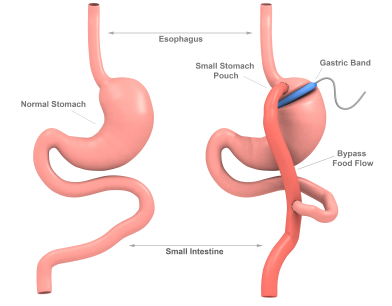
Band Gastric Bypass Surgery (not the only type of gastric bypass)

So it looks to me like, on average, gastric bypass surgery “cures” half of the cases of type 2 diabetes, as measured five years after surgery. As the years pass, even more failures will arise. Nevertheless, that’s an impressive improvement. Given the potential complications of bypass surgery, I’d try a very-low-carb diet before going under the knife. Examples are Dr. Bernstein’s Diabetes Solution and Conquer Diabetes and Prediabetes.

Steve Parker, M.D.

PS: Cure or remission of type 2 diabetes could be defined in other ways. For instance, a more reliable definition of cure might include return of normal pancreas/insulin function as judged by insulin levels and insulin sensitivity. If you have normal blood sugar levels and hemoglobin A1c, yet have ongoing insulin resistance, you’re more likely to develop overt diabetes going forward.

8 Comments

Filed under Bariatric Surgery

Worried About Future Heart Attack? Check Your LDL Cholesterol Particle Number (LDL-P)

…according to Drs. Thomas Dayspring and James Underberg. I don’t know if these guys are right or not. I bet it’s more complicated than simple LDL particle number.

Even if you eat lots of eggs, most of your cholesterol is made by your liver. That's where statin drugs work.

Even if you eat lots of eggs, most of your cholesterol is made by your liver. That’s where statin drugs work.

Most heart attacks (aka myocardial infarctions) do indeed seem to be caused by acute rupture of an atherosclerotic plaque that’s been present for years. Two key questions are:

  1. What causes the plaque?
  2. Why causes them to rupture?

Underberg and Dayspring write:

The only absolute requirement for plaque development is the presence of cholesterol in the artery: although there are additional heart risk factors like smoking, hypertension, obesity, family history, diabetes, kidney disease, etc., none of those need to be present. Unfortunately, measuring cholesterol in the blood, where it cannot cause plaque, until recently has been the standard of risk-testing. That belief was erroneous and we now have much better biomarkers to use for CV risk-assessment. The graveyard and coronary care units are filled with individuals whose pre-death cholesterol levels were perfect. We now understand that the major way cholesterol gets into the arteries is as a passenger, in protein-enwrapped particles, called lipoproteins.

Particle entry into the artery wall is driven by the amount of particles (particle number) not by how much cholesterol they contain. Coronary heart disease is very often found in those with normal total or LDL-cholesterol (LDL-C) levels in the presence of a high LDL particle number (LDL-P). By far, the most common underlying condition that increases LDL particle concentration is insulin resistance, or prediabetes, a state where the body actually resists the action of the sugar controlling hormone insulin. This is the most common scenario where patients have significant heart attack risk with perfectly normal cholesterol levels. The good news is that we can easily fix this, sometimes without medication. The key to understanding how comes with the knowledge that the driving forces are dietary carbohydrates, especially fructose and high-fructose corn syrup. In the past, we’ve often been told that elimination of saturated fats from the diet would help solve the problem. That was bad advice. The fact is that until those predisposed to insulin resistance drastically reduce their carbohydrate intake, sudden deaths from coronary heart disease and the exploding diabetes epidemic will continue to prematurely kill those so afflicted.

***

And for goodness’ sake, if you want to live longer, start reducing the amount of dietary carbohydrates, including bread, potatoes, rice, soda and sweetened beverages (including fruit juices), cereal, candy – the list is large).

Underberg and Dayspring don’t mention don’t mention LDL particle size, such as small/dense and large/fluffy; the former are thought by many to be much more highly atherogenic. Is that outdated?

Whoever figures out the immediate cause of plaque rupture and how to reliably prevent it will win a Nobel Prize in Medicine.

Read the whole enchilada.

Steve Parker, M.D.

About Dayspring and Underberg:

Thomas Dayspring MD, FACP, FNLA   Director of Cardiovascular Education, The Foundation for Health Improvement and Technology, Richmond, VA. Clinical Assistant Professor of Medicine, University of Medicine and Dentistry of New Jersey, New Jersey Medical School.

James Underberg MD, FACP, FNLA   Clinical Assistant Professor of Medicine in the Division of General Internal Medicine at NYU Medical School and the NYU Center for Cardiovascular Disease Prevention . Director of the Bellevue Hospital Primary Care Lipid Management Clinic.

h/t Dr. Axel Sigurdsson

6 Comments

Filed under coronary heart disease, Heart Disease, Uncategorized

Death Bed Regrets

A palliative care nurse asked dying patients what they would have done differently when they had the chance:

1. I wish I’d had the courage to live a life true to myself, not the life others expected of me.

2. I wish I hadn’t worked so hard.

3. I wish I’d had the courage to express my feelings.

4. I wish I had stayed in touch with my friends.

5. I wish that I had let myself be happier.

Read the rest. While you still have your health and time.

Adult life is a battle against gravity. Eventually we all lose.

Adult life is a battle against gravity. Eventually we all lose.

1 Comment

Filed under Longevity

Canadian Study Finds Abdominal Obesity Health Markers Much Improved With Mediterranean Diet and High-Intensity Interval Training

…according to the Heart and Stroke Foundation. Some quotes:

The study found an average reduction in waist circumference of eight centimeters, a reduction in systolic blood pressure of 6 mm Hg and an aerobic fitness improvement of 15 per cent over the first nine months of the study.

Improvements in waist circumference, blood pressure and fitness can lead to numerous other health benefits including a reduced risk of developing high blood pressure, as well as improving osteoarthritis symptoms, quality of life, physical functioning, and cognition.

The high-intensity interval training was done two or three times a week over 20-30 minutes each session. Click for an example of HIIT on a stationary bike. More basic info on HIIT.

The classic Mediterranean diet has too many carbohydrates for many diabetics, although it’s better for them than the Standard American Diet. That’s why I devised the Low-Carb Mediterranean Diet.

Steve Parker, M.D.

Steve Parker MD, low-carb diet, diabetic diet

Olives, olive oil, and vinegar: classic Mediterranean foods

2 Comments

Filed under Exercise, Health Benefits, Mediterranean Diet, Overweight and Obesity

One More Reason to Exercise: Slow the Rate of Age-Related Memory Loss and Alzheimer’s Disease

…according to an article at MedPageToday. The 300+study participants were at high risk of Alzheimer’s dementia due to family history. The protective dose of exercise was at least 7.7 MET per hour/week. Please comment if you can translate that into something practical! Click for the definition of MET at About.com.

Old-school preparation for exercise; stretching actually doesn't do any good for the average person

Old-school preparation for exercise; stretching actually doesn’t do any good for the average person

1 Comment

Filed under Dementia, Exercise

Yet Another Study Links Impaired Sugar Metabolism With Dementia

…according to an article at MedPageToday. A cohort of patients with mild to moderate Alzheimer’s were found to have unexpectedly high rates of impaired glucose tolerance or outright type 2 diabetes. We don’t know for sure if impaired glucose metabolism is a cause of dementia, or if some other factor links the two conditions. Until we have that answer, if I had impaired glucose metabolism, I’d work to improve it with loss of excess weight, exercise, and low-carb eating.

Here’s another article I wrote wondering if diabetes causes dementia.

Comments Off on Yet Another Study Links Impaired Sugar Metabolism With Dementia

Filed under Dementia

World’s Oldest Man Died Recenty (Not Surprisingly, He Was Japanese)

The world’s oldest man died recently. He was 116. National Geographic has an article mentioning him, including an interview with Blue Zones author Dan Buettner:

Who is the most memorable Blue Zoner you’ve met?

Without question it’s Stamatis Moraitis, who lives in Ikaria. I believe he’s 102. He’s famous for partying. He makes 400 liters [100 gallons] of wine from his vineyards each year, which he drinks with his friends. His house is the social hot spot of the island. (See “Longevity Genes Found; Predict Chances of Reaching 100.”)

He’s also the Ikarian who emigrated to the United States, was diagnosed with lung cancer in his 60s, given less then a year to live, and who returned to Ikaria to die. Instead, he recovered.

Yes, he never went through chemotherapy or treatment. He just moved back to Ikaria.

Did anyone figure out how he survived?

Nope. He told me he returned to the U.S. ten years after he left to see if the American doctors could explain it. I asked him what happened. “My doctors were all dead,” he said.

Read the rest.

2 Comments

Filed under Longevity

Shift Work LInked to Twice the Risk of Diabetes

…according to this paper abstract. It doesn’t say so, but I bet the association is to type 2 diabetes, not type 1.

2 Comments

Filed under Uncategorized