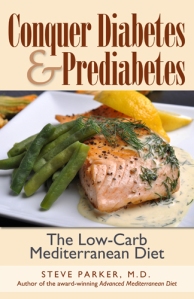
David Mendosa over at Diabetes Developments writes about avoiding diabetes drug toxicity with low-carb eating.
“New” Drug for Diabetes
The U.S. Food and Drug Administration a few days ago announced its approval of Juvisync for treatment of type 2 diabetes. It’s just a combination of sitagliptin and simvastatin, drugs that have been on the market for years. Simvastatin isn’t a diabetes control drug at all; it’s a cholesterol-lowering drug in the statin class.
Better living through chemistry
Filed under Drugs for Diabetes
Does Diminished Work Activity Explain Our 50-Year Overweight Trend?
Daily work-related energy expenditure over the last half-century in the U.S. has decreased by over 100 calories. This may well explain the increase in body weights we’ve seen, according to a 2011 article in PLoS ONE.
 I sorta hate to open this can o’ worms, but it’s important. As a population, are we fat because we eat too much or because we burn too few calories in physical activity? Or is it a combination? The correct answer may help us learn how to reverse the trend.
Methodology
Authors of the study at hand estimated the amount of energy (calories) necessary to perform various jobs, then noted changes in numbers of people employed in those jobs over time. In the early 196os, for example, nearly half of U.S. jobs required at least moderate intensity physical activity, compared to less than 20% demanding that degree of energy now. The authors note the dramatic shift from manufacturing to service-type jobs over the last 50 years. Service jobs, like mine, often entail a lot of sitting and standing around.
They chose to ignore how much energy we expend in exercise, figuring what we do in a 40-hour work week overwhelms the 1-2 hours of exercise we may do.
Researchers’ Findings and Conclusions
They found that work-related daily energy expenditure has decreased by over 100 calories over the last half-century, which (in the authors’ view) would account for a significant portion of the increased body weight we’ve seen. Since physically demanding jobs are unlikely to see a resurgence, the authors advocate physically active lifestyles away from workplace.
Discussion
Surveys indicate that only one in four of us fulfill the federal physical activity guidelines: 150 minutes a week of moderate intensity activity or 75 minutes a week of vigorous intensity activity. When activity is actually measured with an accelerometer, only one in 20 achieve that lofty goal. We over-estimate how much we exercise, and under-estimate how much we eat.
(If you want to emulate a Paleolithic lifestyle, you should probably shoot for an hour of exercise daily, not 20 minutes as above.)
The researchers cite studies showing significantly increased average per capita calorie consumption in the U.S. over the last several decades. Some experts estimate the caloric increase is in the range of 500 a day for adults; the authors here think that’s too high but don’t offer a specific alternative. Looking at one of their references (Hall et al), they must think the increase is closer to 200 calories a day, comparing 2005 to 1975.
Several studies suggest that average daily energy expenditure has not decreased in developed countries, at least from the 1980s to the present. A strength of the current study at hand is that it spans about 50 years, up to 2008.
My sense is that both calorie consumption (too much) and physical activity (too little) contribute to our overweight problem that started 40 or 50 years ago. Excessive consumption is the predominant factor. To “exercise off” the calories in a Snickers candy bar, you’d have to jog for an hour. If you’re watching your weight, you’ll have more success if you just skip the Snickers.
In case you couldn’t tell, I still believe in the “calories in/calories out” model of overweight and obesity, aka “the energy balance equation.” At the same time, I believe certain foods are more fattening than others: concentrated sugars and refined starches.
References:
Church, T.S., et al. Trends over 5 decades in U.S. occupation-related physical activity and their associations with obesity. PLoS ONE, 2011, 6(5): e19657. doi: 10.1371/journal.pone.0019657
Swinburn, B., et al. Increased food energy supply is more than sufficient to explain the U.S. epidemic of obesity. American Journal of Clinical Nutrition, 2009 (90): 1,453-1,456.
Hall, K.D., et al. The progressive increase of food waste in America and its environmental impact. PLoS ONE, 2009, 4(11): e7940. doi: 10.1371/journal.pone.0007940
Filed under Exercise, Overweight and Obesity
Mediterranean Diet Linked to Brain Preservation
The Mediterranean diet slowed age-related mental decline in elderly Chicago residents, according to researchers at Rush University Medical Center. The investigators noted that a Manhattan population following the Mediterranean diet also showed slower mental decline and lower rates of Alzheimers dementia.
 Over 3,000 study participants (2,280 blacks, 1,510 whites) were studied for an average of eight years. Food consumption was determined by questionnaires, and mental function was tested every three years. Adherence to the Mediterranean diet was judged according to a Mediterranean diet score developed by Panagiotakis, et al.
The greater the adherence to the Greek-style Mediterranean diet, the lower the rate of mental decline over the course of the study.
Mental decline to some extent is a normal part of aging. If we can avoid it or lessen it’s impact, why not? A couple ways to do that are regular exercise and the Mediterranean diet.
Would a low-carb Mediterranean diet work just as well or better? Nobody knows yet.
Reference: Tangney, Christine, et al. Adherence to a Mediterranean-type dietary pattern and cognitive decline in a community population. American Journal of Clinical Nutrition, 2010. doi 10.3945/ajcn.110.007369
Filed under Health Benefits, Mediterranean Diet
Mediterranean Diet Linked to Less Sudden Cardiac Death in Women

"Trust me. You don't want sudden cardiac death until you're very old!"
A Mediterranean-style diet is one of four factors helping to greatly reduce the risk of sudden cardiac death in women, as reported by Reuters on June 5, 2011. The other factors reducing risk were maintainence of a healthy weight, regular exercise, and not smoking.
The study involved women only, so we don’t know if the research, reported in the Journal of the American Medical Association, applies to men. I bet it does.
This study confirms many earlier ones linking the Mediterranean diet with longevity and reduced rates of heart disease.
Comments Off on Mediterranean Diet Linked to Less Sudden Cardiac Death in Women
Filed under coronary heart disease, Health Benefits, Mediterranean Diet
Introducing Paleo Diabetic, a New Blog
 A few of my patients have asked me if the paleo diet and lifestyle would be good for their diabetes. I’m not sure. A few pilot studies suggest it would be. I expect much more published scientific research over the coming decade, in addition to self-experimentation reports by patients. I’ll be looking into the matter at Paleo Diabetic.
The paleo diet in modern times began gathering steam in 2008. It’s still not widely known or followed, but the trend is definitely upwards.
The idea behind the paleo diet—also referred to as the Stone Age or caveman diet—is that optimal health depends on adherence to dietary and lifestyle factors to which we’re genetically adapted. Our current mix of genes overwhelmingly reflects the Paleolithic era of human cultural development, starting anywhere from 750,000 to 2.5 million years ago, and ending around 10,000 years ago. It’s also called the Stone Age.
The paleo diet pattern isn’t set in stone. In general, it includes nuts, vegetables, fruits, fish, meat, and poultry. It excludes or limits grains, dairy, legumes, sugars other than fruit or honey, industrial seed oils (e.g., from soybean and corn), and modern processed, highly refined foods. Fresh, natural, and “organic” are preferred.
I’ve already got a few posts up and plan on new ones once or twice weekly. If you’re interested, please join me at Paleo Diabetic.
Filed under Uncategorized
Is Grape Seed Extract as Healthful as Wine?
Patients ask me periodically if grape seed extract provides the same health benefit as judicious red wine. Nobody knows with certainty. The health benefits of red wine may be due to resveratrol. Grape seed extract contains potentially healthy antioxidants called proanthocyanidins,
 Many people don’t enjoy wine or other alcohol-containing drinks, and others just shouldn’t drink any alcohol. Should they take a grape seed extract supplement or drink grape juice as a subsitute? Again, it’s still unclear. In 2009 I wrote a about a review article looking at the effect of various non-wine grape products and effects on heart disease risk.
A recent meta-analysis out of the University of Connecticut found improvement in two heart disease risk factors in those who take a grape seed extract supplement:
- systolic blood pressure lower by 1.54 mmHg
- heart rate lower by 1.42 beats per minute
No effect was seen on lipids (cholesterol and triglycerides), diastolic blood pressure, and C-reactive protein (a test of systemic inflammation).
Granted, these are tiny effects. It’s unknown whether they, or other unknown effects of grape seed extract, would translate into clinical benefits such as fewer heart attacks and strokes, and longer lifespans.
Bottom Line
Grape seed extract and other non-wine grape products may be as beneficial as red wine in prolonging lifespan and preventing heart disease. But we have much stronger evidence in favor of red wine and other alcohol-containing drinks.
Reference: Feringa, H.H.H, et al. The Effect of Grape Seed Extract on Cardiovascular Risk Markers: A Meta-Analysis of Randomized Controlled Trials. Journal of the American Dietetic Association, 111 (2011): 1,173-1,181.
Filed under Uncategorized
A Good Night On-Call
 At the hospital last night, I admitted an elderly heart patient with chest pain. I asked if he’d ever heard of the Mediterranean diet. He answered, “What’s that? Does it mean you only eat those kinds of people?”
PS: In the course of our conversation, he worked in five other one-line jokes. What a blessing.
PPS: Q: Why did the cannibal eat the trapeze artist?
A: He wanted a balanced meal.
Filed under Uncategorized
The Holy Grail of Diabetes Treatment: Preserving Beta Cell Function
A Nobel Prize in Medicine belongs to whoever (whomever?) figures out how to reliably and affordably protect and preserve beta cell function starting early in the course of type 2 diabetes. Or type 1 diabetes, for that matter.
Dietary carbohydrates lead to secretion of insulin into the bloodstream by the pancreas’s beta cells. The insulin limits and reverses the rise in blood sugar that results from digestion of carbohydrates. If blood sugar rises too high, it damages our bodies.
Type 2 diabetes is a disorder of carbohydrate metabolism. Insulin from the beta cells isn’t doing its job adequately because tissues that should be taking up bloodstream sugar are resistant to insulin’s effect of driving sugar into the cells. The beta cells pump out increasing amounts of insulin, trying to overcome the resistance of the tissues. Eventually the beta cells become exhausted or “burned out,” reflected in diminished beta cell mass. This situation has usually been present for years before type 2 diabetes is formally diagnosed. This scenario is a leading theory of the development of type 2 diabetes.
Type 2 diabetes is considered by most physicians to be a progressive illness, requiring more and more drugs to control as the years pass. That’s because the beta cells are dying off or otherwise becoming totally nonfunctional. Once they’re gone, it’s hard (impossible?) to get them back. If diabetes could be diagnosed early on, we’d find healthier beta cells to work with. Perhaps we could strengthen or protect them. This is what beta cell preservation is all about. Keep them working as nature intended, avoiding the expense and risks of drug therapy.
 So I was excited to find an article entitled “Effects of exenatide on measures of beta cell function after three years in metformin-treated patients with type 2 diabetes.” Exenatide is sold in the U.S. as Byetta. It’s a GLP-1 analogue.
European researchers studied 36 type 2 diabetics for three years. All were taking metformin. Sixteen of them also took exenatide, whereas 20 also took insulin glargine (e.g., Lantus in the U.S.).
What Did They Find?
Both groups achieved similar levels of blood sugar control after three years. Exanatide users lost 5.7 kg (12.5 lb) while glargine users gained 2.1 kg (4.6 lb).
After three years of drug use, the subjects were told to stop exenatide and glargine while continuing metformin. After four weeks off-drug:
- insulin sensitivity improved significantly in the exenatide group while glargine had no effect
- first-phase insulin secretion improved by a small amount in the exenatide group
However, 12 weeks after stopping the study drugs, hemoglobin A1c and fasting blood sugars returned to pretreatment levels in both groups. (Hemoglobin A1c is a blood test of overall diabetes control over the preceeding three months.)
Final Thoughts
You have to wonder if the improved insulin sensitivity in the exenatide group simply reflects their weight loss as compared to the weight gain in the insulin glargine group. Improved insulin sensitivity is good, any way you can get it.
 When measured 12 weeks after stopping the study drugs, hemoglobin A1c and fasting blood sugar levels were no better than baseline levels three years earlier. Very disappointing. If exanatide or glargine preserved beta cell function, you’d want to see better post-treatment numbers. The search for beta cell preservation continues.
Reference: Bunck, M., Corner, A., Eliasson, B., Heine, R., Shaginian, R., Taskinen, M., Smith, U., Yki-Jarvinen, H., & Diamant, M. (2011). Effects of Exenatide on Measures of Beta-Cell Function After 3 Years in Metformin-Treated Patients With Type 2 Diabetes Diabetes Care, 34 (9), 2041-2047 DOI: 10.2337/dc11-0291
PS: In case it matters to you, this study was funded at least partially by Amylin Pharmaceuticals and Eli Lilly and Company.
Comments Off on The Holy Grail of Diabetes Treatment: Preserving Beta Cell Function
Filed under Uncategorized
Insulin Resistance, Lipotoxicity, Type 2 Diabetes, and Atherosclerosis
This will bore most readers.
 I just want to mention a scientific review article from 2009 that reviews insulin activity (down to a molecular level) in the context of type 2 diabetes, atherosclerosis, and insulin resistance. Towards the end it starts sounding like an informercial for thiazolidinedione drugs.
The author makes a great case for the dangers of hyperinsulinemia.
Good reference overall.
R. A. DeFronzo wrote “Insulin resistance, lipotoxicity, type 2 diabetes and atherosclerosis: the missing links. The Claude Bernard Lecture 2009.” Diabetologia, 2010 (53); 1,270-1,287. doi: 10.1007/s00125-010-1684-1
Filed under Causes of Diabetes, coronary heart disease