Should You Try the Low FODMAPs Diet for Your IBS or GERD?

You won’t know until you try it, suggests dietitian Melanie Thomassian. These are some of the diagnoses that may respond positively: irritable bowel syndrome (IBS), Crohns disease, and gastroesophageal reflux disease (GERD).

Very low-carb diets also help GERD.

I’ve written before about the low FODMAPs diet and irritable bowel syndrome. The low FODMAPs diet essentially involves limiting the delivery of particular carbohydrates to your intestinal bacteria.

Steve Parker, M.D.

Comments Off on Should You Try the Low FODMAPs Diet for Your IBS or GERD?

Filed under Uncategorized

QOTD: James Fell on Cooking and Weight Loss

If you want to lose weight you need to cook. Period.

—James Fell

Comments Off on QOTD: James Fell on Cooking and Weight Loss

Filed under Weight Loss

More on the New Type 2 Diabetes Drug: Dapagliflozin (Farxiga)

We have 12 classes of drugs for the war on diabetes. The latest class is SGLT2 inhibitors and the newest of these is dapagliflozin. I read the manufacturer’s package insert an updated my SGLT2 inhibitor post.

Fun Fact: Taking 10 mg/day of dapagliflozin leads to loss of blood glucose into the urinary tract to the tune of 70 grams a day.

That’s 280 calories down the drain. I suspect that cutting 70 grams of carbohydrate from your diet would have just as much effect on diabetes as do these drugs.

Steve Parker, M.D.

Comments Off on More on the New Type 2 Diabetes Drug: Dapagliflozin (Farxiga)

Filed under Drugs for Diabetes

You Don’t Need a High-Carb Diet For “Energy”

Amber Wilcox-O’Hearn explains why.

Your heart beats 100,000 times a day, every day, without rest. You’d think it needs a reliable energy source, and you’d be right. One of Amber’s references (#4) reminds me that, “Fatty acids are the heart’s main source of fuel, although ketone bodies as well as lactate can serve as fuel for heart muscle. In fact, heart muscle consumes acetoacetate in preference to glucose.”

Steve Parker, M.D.

3 Comments

Filed under Carbohydrate, Exercise, ketogenic diet

Drug Review: SGLT2 Inhibitors (Canagliflozin, Dapagliflozin, Empagliflozin)

diabetic mediterranean diet, Steve Parker MD

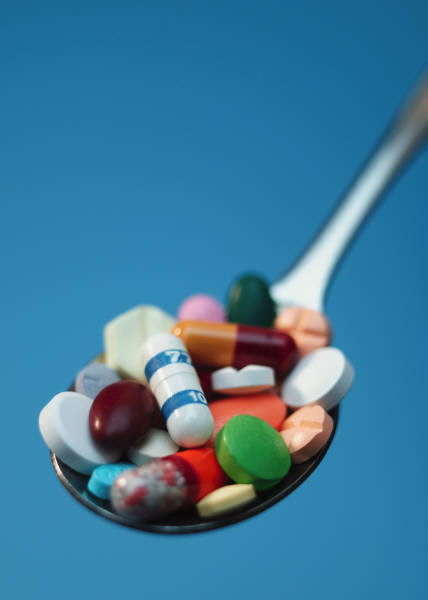
Pharmacist counting pills

In March, 2013, the U.S. Food and Drug Administration approved the first agent in a new class of diabetes drugs: canagliflozin. It’s sold in the U.S. as Invokana. So we now have 12 classes of drugs for treating diabetes. In January 2014 the second drug in this class was approved: dapagliflozin or Farxiga. Empagliflozin ( U.S. brand name: Jardiance) was approved in August, 2014. Ertugliflozin (U.S. brand name: Steglatro) was approved in early 2018 or so. Other SGLT2 inhibitors are in the pipeline.

This review is quite limited—consult your physician or pharmacist for full details. Remember that drug names vary by country and manufacturer. My info source is the manufacturers’ package inserts. Any of this information could change at any time.

Class

Sodium-glucose co-transport 2 inhibitors, or SGLT2 inhibitors.

How Do They Work?

Our kidneys filter glucose (sugar) out of our bloodstream, then reabsorb that glucose back into the bloodstream. (Don’t ask me why.) SGLT2 inhibitors impair that reabsorption process, allowing some glucose to be excreted in our urine. You could call it a diuretic effect. Dapagliflozin at a dose of 10 mg/day, for example, causes the urinary loss of 70 grams of glucose daily.

Usage

These drugs are for adults with type 2 diabetes, to be used in combination with diet and exercise. They can be used alone or in combination with some of the other diabetes drugs, possibly to include insulin, metformin, sulfonylureas, or pioglitazone. Dapagliflozin has also been tested in combination with sitagliptin, a DPP4-inhibitor. Clinical experience in combination with other diabetes drugs is very limited.

Dose

Canagliflozin starts at 100 mg by mouth daily, taken before the first meal of the day. Dose can be increased to 300 mg daily. Dapagliflozin dosing starts at 5 mg by mouth every morning, with or without food, and can be increased up to 10 mg once daily. Start empagliflozin at 10 mg every AM, and max out at 25 mg every AM if needed. Ertugliflozin starts at 5 mg daily and can go up to 15 mg/day.

Side Effects

The most common side effects are vaginal yeast infections (about 5% of women), urinary tract infections, and penile yeast infections (e.g., balanitis). Also noted are increased urination, and dizziness or fainting from low blood pressure after arising to stand (orthostatic hypotension). The low blood pressures are related to a diuretic effect of this class.

Hypoglycemia (low blood sugar) is quite uncommon, perhaps nonexistent, unless these drugs are used with other drugs that often cause hypoglycemia, such as insulin and insulin secretagogues like sulfonylureas.

High potassium levels may be seen with canagliflozin. All three can cause elevations of LDL cholesterol (“bad cholesterol”).

Dapagliflozin and empagliflozin may cause elevations of creatinine in the blood, a warning that kidney function may be impaired.

Canagliflozin seems to promote weight loss, which may be welcome by some. It also doubles the risk of leg and foot amputations when compared to placebo. Ertugliflozin is also linked to increased risk of lower limb amputation.

Don’t Use If You . . .

  • have diabetic ketoacidosis
  • are pregnant or planning to get pregnant
  • have advanced or severe kidney disease
  • have severe liver impairment (glomerular filtration rate under 60 ml/min/1.73 m-squared, at least for dapagliflozin)
  • have type 1 diabetes
  • are on dialysis
  • are a nursing mother
  • for dapagliflozin: active bladder cancer (and use caution if you have history of bladder cancer)


Update: In 2019, the FDA approved an SGLT2 inhibitor in pill form, called semaglutide and sold in the U.S. as Rybelsus.

Updated September 26, 2019

10 Comments

Filed under Drugs for Diabetes

Exercise Helps With Insomnia, But It May Take Four Months

She'll sleep better, eventually

She’ll sleep better, eventually

The Well blog at the New York Times has details. The study at hand involved only 11 women with insomnia, mostly in their 60s. A key take-away is that it took as long as four months for some  to see an improvement. So don’t get discouraged and stop exercising too soon.

It doesn’t take much exercise.

Read the whole thing (it’s brief).

Comments Off on Exercise Helps With Insomnia, But It May Take Four Months

Filed under Exercise

What Causes Obesity?

"It's been three months. That HCG should kick in right about now."

“It’s been three months. That HCG should kick in right about now.”

Isn’t it just ’cause we eat too much and exercise too little due to lack of discipline and willpower?

Science writer David Berreby has an article at Aeon suggesting it’s way more complicated than that. Even if we do eat too much, why do we? Some quotes:

And so we appear to have a public consensus that excess body weight (defined as a Body Mass Index of 25 or above) and obesity (BMI of 30 or above) are consequences of individual choice. It is undoubtedly true that societies are spending vast amounts of time and money on this idea. It is also true that the masters of the universe in business and government seem attracted to it, perhaps because stern self-discipline is how many of them attained their status. What we don’t know is whether the theory is actually correct.

***

As Richard L Atkinson, Emeritus Professor of Medicine and Nutritional Sciences at the University of Wisconsin and editor of the International Journal of Obesity, put it in 2005: ‘The previous belief of many lay people and health professionals that obesity is simply the result of a lack of willpower and an inability to discipline eating habits is no longer defensible.’

Like liver, skeletal muscle, and brain, our body fat is a tissue that is carefully regulated by genes, hormones, enzymes, etc., which I’ll lump together as “metabolism.” Regulatory metabolic processes for liver, muscle, and brain will be different from each other and from fat tissue. Some processes aid fat storage, others lead to fat breakdown and weight loss.

Mr. Berreby discusses various trendy factors that may directly alter fat tissue metabolic processes, leading to overweight and obesity. Here’s his list:

  • lack of sleep
  • viruses (e.g., Ad-36)
  • stress
  • bacteria (e.g., Methanobrevibacter smithii in the large intestine)
  • industrial chemical contaminants (e.g., BPA, heavy metals, detergents, sunscreen, fire retardants, cosmetics)
  • electrification (e.g., too much light exposure, especially at night)
  • heat and air conditioning
  • undernutrition (“starvation”) during pregnancy: the children hatched are more likely to be overweight or obese as adults
  • intergenerational influence (epigenetic)

Read all about it.

3 Comments

Filed under Overweight and Obesity

Basic Advice If You’re New to Weight Training

Steve Parker MD, Advanced Mediterranean Diet, Ketogenic Mediterranean Diet

Not me or Mr. Schuler

I was glad to see that four of my basic exercises were listed by Lou Schuler as foundational: squat, deadlift, pushup, and row. The other foundational one for me is the overhead press. A little more from him:

Every good training program is based on bedrock principles like progressive overload. You give your body a stimulus. You repeat the stimulus an optimal number of times. And then you give your body the opportunity to recover from it. Every good lifter eventually learns how to apply the principles in a way that works for him or her, but it always starts with the basics: learn the movements, apply the movements, build on the movements.

Every bad training program ignores these fundamentals, but it ignores them in a unique way. Too much stimulus with too little recovery. Too little stimulus with too much recovery. Poor exercise selection for the individual’s abilities and goals.

Read the whole thing.


h/t Yoni Freedhoff, M.D.

Comments Off on Basic Advice If You’re New to Weight Training

Filed under Exercise

One More Drug Available to Treat Type 2 Diabetes: Dapagliflozin

Open wide!

Open wide!

Where do they get these names?!

The trade name in the U.S. is Farxiga. (How do you pronounce that?) In Europe and Australia they call it Forxiga. Go figure.

MedPageToday has the details. Here’s the FDA press release, which misspells dapagliflozin. Here’s the Australian package insert for full prescribing information. I can’t find the one for the U.S. This is breaking news—I’ll write more about it when I have reliable info.

This drug joins the first drug in the SGLT2 inhibitor class: Invokana (canagliflozin). We how have 12 classes of drugs for treating diabetes.

2 Comments

Filed under Drugs for Diabetes

Low-Carb Diet Improves Glucose Control in Japanese Type 2 Diabetics

Mt. Fuji in Japan

Mt. Fuji in Japan

I don’ know anything about Japanese T2 diabetes. I’ve never studied it. Their underlying physiology may or may not be the same as in North American white diabetics, with whom I am much more familiar.

For what it’s worth, a small study recently found improvement of blood sugar control and triglycerides in those on a carbohydrate restricted diet versus a standard calorie-restricted diet.

Only 24 patients were involved. Half were assigned to eat low-carb without calorie restriction; the other half ate the control diet. The carbohydrate-restricted group aimed for 70-130 grams of carb daily, while eating more fat and protein than the control group. The calorie-restricted guys were taught how to get 50-60% of calories from carbohydrate and keep fat under 25% of calories. At the end of the six-month study, the low-carbers were averaging 125 g of carb daily, compare to 200 g for the other group. By six months, both groups were eating about the same amount of calories.

Average age was 63. Body mass index was 24.5 in the low-carb group and 27 in the controls. (If you did the research, I bet you’d find Japanese T2 diabetics have lower BMIs than American diabetics.) All were taking one or more diabetes drugs.

The calorie-restricted group didn’t change their hemoglobin A1c (a standard measure of glucose control) from 7.7%. The low-carb group dropped their hemoglobin A1c from 7.6 to 7.0% (statistically significant). The low-carb group also cut their triglycerides by 40%. Average weights didn’t change in either group.

Bottom Line

This small study suggests that mild to moderate carbohydrate restriction helps control diabetes in Japanese with type 2 diabetes. The improvement in hemoglobin A1c is equivalent to that seen with initiation of many diabetes drugs. I think further improvements in multiple measures would have been seen if carbohydrates had been restricted even further.

Steve Parker, M.D.

Link to reference.

h/t Dr Michael Eades

Comments Off on Low-Carb Diet Improves Glucose Control in Japanese Type 2 Diabetics

Filed under Carbohydrate, Fat in Diet