

Banting and Best’s experiments on dogs gave us insulin
Dr. Harriet Hall over at Science-Based Medicine reviews the discovery and purification of insulin, truly a modern medical miracle. One of the first human users was Elizabeth Hughes.
—Steve
Banting and Best’s experiments on dogs gave us insulin
Dr. Harriet Hall over at Science-Based Medicine reviews the discovery and purification of insulin, truly a modern medical miracle. One of the first human users was Elizabeth Hughes.
—Steve
Filed under Drugs for Diabetes
Americans could once boast proudly that their system set the benchmark for the world; the United States was the rule of law. But now what we see is the rule of lawyers, which is something different.
Comments Off on Quote of the Day
Filed under Quote of the Day

“Wanna arm wrestle?”
I hate exercising. Don’t you?
I’d rather watch TV, play Parcheesi, play my mandolin, bowl, go to a movie, sleep, blog, surf the ‘net, work on my next book, fish, visit with my wife and kids, practice shooting, work on new recipes, or even go to work.
But….
I want the health benefits of exercise.
So for much of this year I’ve been experimenting with various exercise programs that may yield the health benefits with minimal time commitment. Like 60 minutes a week. Not the 150 minutes recommended by some public health authorities. In case you’re interested, here are some links that outline the programs:
If you’re tempted to try any of these programs, get your personal physician’s blessing first. I’d love to hear about your experience with them.
Comments Off on Minimalist Exercise For Those Who Don’t Enjoy It
Filed under Exercise
The truth is that tooth decay is a relatively new phenomenon. Until the rise of agriculture roughly 10,000 years ago, THERE WAS NO TOOTH DECAY IN HUMANS. Let that sink in for a moment. Humanity is 2,500,000 years old. For the first 2,490,000 years no one ever had a cavity. If we understand that tooth decay started when people started farming instead of hunting and gathering for a living clearly you realize that tooth decay is a disease or mismatch between what you are eating and what your body expects you to eat. If we examine the past as prologue it becomes clear that the path to proper health starts in the mouth and the answers are so simple that not only did a Cave Man do it. They perfected it.
—John Sorrentino in a blog post August 6, 2012

Filed under Quote of the Day
Researchers are constantly searching for safe, effective weight loss pills. More helpful would be a pill that prevents weight regain. Weight loss is relatively easier.
Regain of lost body fat is the most problematic area in the field of weight management. Whoever solves this problem for good will win a Nobel Prize in Medicine. Why do most diets ultimately fail over the long run? Because people go back to their old habits. Here are the two secrets to prevention of weight regain:
“Successful losers” apply self-restraint on an almost daily basis, avoiding food they know will lead to weight regain. They limit how much they eat. They consciously choose not to return to their old eating habits, despite urges to the contrary.
The other glaring difference is that, compared to regainers, the successful losers are physically active. Oftentimes, they exercised while losing weight, and almost always continue to exercise in the maintenance phase of their program. This is true in at least eight out of 10 cases. It’s clear that regular exercise isn’t always needed, but it dramatically increases your chances of long-term success.
Comments Off on The Two Secrets to Prevention of Weight Regain
Filed under Overweight and Obesity, Weight Regain

Less active
Much of the globe has seen a significant decline in populaton-wide physical activity over the last few decades, according to Nike-sponsored research reported in Obesity Reviews.
Countries involved with the study are the U.S., U.K., Brazil, China, and India. How did they measure activity levels?
Using detailed historical data on time allocation, occupational distributions, energy expenditures data by activity, and time-varying measures of metabolic equivalents of task (MET) for activities when available, we measure historical and current MET by four major PA domains (occupation, home production, travel and active leisure) and sedentary time among adults (>18 years).
The authors note the work of Church, et al, who found decreased work-related activity in the U.S. over the last half of the 20th century.
Inexplicably, they don’t mention the work of Westerterp and colleagues who found no decrease in energy expenditure in North American and European populations since the 1980s.

More active
My gut feeling is that advanced populations around the globe probably are burning fewer calories by physical activity over the last 50 years, if not longer, thanks to technologic advances. We in the U.S. are also eating more calories lately. Since the 1970s, average daily consumption by women is up by 150 calories, and up 300 by men. Considering both these trends together, how could we not be fat?
Filed under Overweight and Obesity
Frederick Douglass taught that literacy is the path from slavery to freedom. There are many kinds of slavery and many kinds of freedom, but reading is still the path.
Filed under Quote of the Day
Mainly because of its low cost, HFCS [high fructose corn syrup] consumption replaced approximately one-third of the total sugar consumption in the USA between 1970 and 2000, paralleling to some extent the increasing prevalence of obesity during this period. Consequently, HFCS has been a particular focus of possible blame for the obesity epidemic. However, HFCS consumption has remained very low in other parts of the world where obesity has also increased, and the most commonly used form of HFCS contains about 55% fructose, 42% glucose, and 3% other sugars, and hence is associated with similar total fructose and glucose intakes as with sugar. Furthermore, sucrose is hydrolyzed in the gut and absorbed into the blood as free glucose and fructose, so one would expect HFCS and sucrose to have the same metabolic consequences. In short, there is currently no evidence to support the hypothesis that HFCS makes a significant contribution to metabolic disease independently of the rise in total fructose consumption.
Given the substantial consumption of fructose in our diet, mainly from sweetened beverages, sweet snacks, and cereal products with added sugar, and the fact that fructose is an entirely dispensable nutrient, it appears sound to limit consumption of sugar as part of any weight loss program and in individuals at high risk of developing metabolic diseases. There is no evidence, however, that fructose is the sole, or even the main factor in the development of these diseases…
— Luc Tappy in BMC Biology, May 21, 2012 (the article is a review of fructose metabolism and potential adverse effects of high consumption)
PS: Luc Tappy believes that excessive calorie consumption is an important cause of overweight and obesity.
Filed under Uncategorized

“I’m just over-worked, right?”
Especially if you’re a woman taking a statin drug.
-Steve
Comments Off on Tired and Easily Fatigued? It Might Be Your Medication
Filed under Drugs for Diabetes
This one brings the TSA to mind…
Find out just what people will submit to and you have found out the exact amount of injustice and wrong which will be imposed upon them…. The limits of tyrants are prescribed by the endurance of those whom they oppress.
— Frederick Douglass, former slave
Comments Off on Quote of the Day
Filed under Quote of the Day
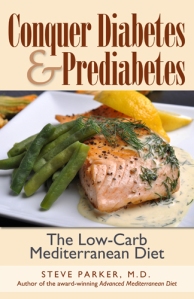
Click the pic to purchase at Amazon.com. E-book versions also available at Smashwords.com.
 Bible Verse of the Day
 Diabetic Mediterranean Diet