
Nearly Half of Adults in California Have Prediabetes

The actual figure is 46%, according to researchers at UCLA. The LA Times has the story.

“Our genes and our environment are kind of on a collision course,” said Dr. Francine Kaufman, the former head of the American Diabetes Assn., who was not involved with the research. “It’s not stopping.”

The problem with prediabetes is that it often evolves into full-blown diabetes. It’s also associated with increased risk for cardiovascular disease such as heart attack and stroke. The Times article says “up to 70% of those with prediabetes develop diabetes in their lifetime.” I’d never heard that vague number before; I say vague because “up to 70%” could be anything between zero and 70. It’s more accurate to note that one in four people with prediabetes develops type 2 diabetes over the course of three to five years.

Prediabetes is defined as:

  1. fasting blood sugar between 100 and 125 mg/dl (5.56–6.94 mmol/l), or
  2. blood sugar level 140–199 mg/dl (7.78–11.06 mmol/l) two hours after drinking 75 grams of glucose
Most adults with prediabetes don't know they have it

Most adults with prediabetes don’t know they have it

How To Prevent Progression of Prediabetes Into Diabetes

  • If you’re overweight or obese, lose excess fat weight. How much should you lose? Aim for at least 5% of body weight and see if that cures your prediabetes. For instance, if you weigh 200 lb (91 kg), lose 10 lb (4.5 kg).
  • If you’re sedentary, start exercising regularly.
  • Cut back on your consumption of sugar-sweetened beverages, other sugar sources, and other refined carbohydrates like wheat flour.

Steve Parker, M.D.


Comments Off on Nearly Half of Adults in California Have Prediabetes

Filed under Prediabetes, Prevention of T2 Diabetes

19 Weight-Loss Tips

My son Paul made this GIF

My son Paul made this GIF

These don’t work for everybody, but they work for a lot. Take what works for you and discard the rest. You won’t know until you try.

1.  Record-keeping is often the key to success.

2.  Accountability is another key to success. Consider documenting your program and progress on a free website such as FitDay, SparkPeople, 3FatChicks, Calorie Count (http://caloriecount.about.com), or others. Consider blogging about your weight-loss adventure on a free platform such as WordPress or Blogger. Such a public commitment may be just what you need to keep you motivated.

3.  Do you have a friend or spouse who wants to lose weight? Start the same program at the same time and support each other. That’s built-in accountability.

4.  If you tend to over-eat, floss and brush your teeth after you’re full. You’ll be less likely to go back for more anytime soon.

5.  Eat at least two or three meals daily. Skipping meals may lead to uncontrollable overeating later on. On the other hand, ignore the diet gurus who say you must eat every two or three hours. That’s codswallop.

6.  Eat meals at a leisurely pace, chewing and enjoying each bite thoroughly before swallowing.

7.  Plan to give yourself a specific reward for every 10 pounds (4.5 kg) of weight lost. You know what you like. Consider a weekend get-away, a trip to the beauty salon, jewelry, an evening at the theater, a professional massage, home entertainment equip-ment, new clothes, etc.

8.  Carefully consider when would be a good time to start your new lifestyle. It should be a period of low or usual stress. Bad times would be Thanksgiving day, Christmas/New Years’ holiday, the first day of a Caribbean cruise, and during a divorce.

Credit: Zvonimir Atletic / Shutterstock.com

Christmas holiday isn’t the best time to start a diet. New Years’ Day is better. 

9.  If you know you’ve eaten enough at a meal to satisfy your nutritional requirements yet you still feel hungry, drink a large glass of water and wait a while.

10.  Limit television to a maximum of a few hours a day.

11.  Maintain a consistent eating pattern throughout the week and year.

12.  Eat breakfast routinely.

13.  Control emotional eating.

14.  Weigh frequently: daily during active weight-loss efforts and during the first two months of your maintenance-of-weight-loss phase. After that, cut back to weekly weights if you want. Daily weights will remind you how hard you worked to achieve your goal.

15.  Be aware that you might regain five or 10 pounds (2-4 kg) of fat now and then. You probably will. Don’t freak out. It’s human nature. You’re not a failure; you’re human. But draw the line and get back on the old weight-loss program for one or two months. Analyze and learn from the episode. Why did it happen? Slipping back into your old ways? Slacking off on exercise? Too many special occasion feasts or cheat days? Allowing junk food back into the house?

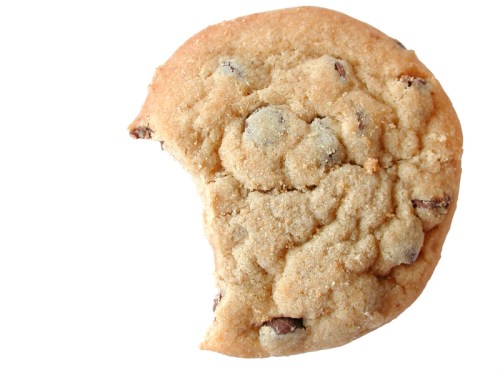
16.  Learn which food item is your nemesis—the food that consistently torpedoes your resolve to eat right. For example, mine is anything sweet. Remember an old ad campaign for a potato chip: “Betcha can’t eat just one!”? Well, I can’t eat just one cookie. So I don’t get started. I might eat one if it’s the last one available. Or I satisfy my sweet craving with a diet soda, small piece of dark chocolate, or sugar-free gelatin. Just as a recovering alcoholic can’t drink any alcohol, perhaps you should totally abstain from…? You know your own personal gastronomic Achilles heel. Or heels. Experiment with various strategies for vanquishing your nemesis.

My nemesis

My nemesis

17.  If you’re not losing excess weight as expected (about a pound or half a kilogram per week), you may benefit from eating just two meals a day. This will often turn on your cellular weight-loss machinery even when total calorie consumption doesn’t seem much less than usual. The two meals to eat would be breakfast and a mid-afternoon meal (call it what you wish). The key is to not eat within six hours of bedtime. Of course, this trick could cause dangerous hypoglycemia if you’re taking drugs with potential to cause low blood sugars, like insulin and sulfonylureas. Talk to your dietitian or physician before instituting a semi-radical diet change like this.

18.  One of the bloggers I followed when I had time is James Fell. He says, “If you want to lose weight you need to cook. Period.” James blogs at http://www.sixpackabs.com, with a focus on exercise and fitness.

19.  Regular exercise is much more important for prevention of weight regain rather than for actually losing weight.


10 Comments

Filed under Overweight and Obesity, Weight Loss

Recipe: Frozen Fruit Smoothie #2


Similar to an Icee, but healthier for you

This is double the serving size below. Similar to an Icee, but healthier for you.

Fruits are thought to be one of the healthy components of the traditional Mediterranean diet. Try this smoothie for dessert instead of calorie-laden items like pie, cake, cookies, and ice cream. Unlike this smoothie, those aren’t very nutrient-dense, either. Since I provide the nutritional analysis below, you can easily incorporate this into the Low-Carb Mediterranean Diet.

At the Parker Compound, we mix this in a Vitamix. Other devices may work, but I’m not familiar with them.

It's all here

It’s all here

Ingredients

1 cup (240 ml) frozen raspberries

1/2 cup (120 ml) frozen blueberries

1 cup (240 ml) frozen strawberries

1 frozen banana (7 inches or 18 cm), cut into 3–4 pieces

1 tbsp (13 g) chia seeds

1 handful (1/2 ounce?) raw kale

2.5 cups (590 ml) water

1 cup (240 ml) ice cubes

Instructions

First item into the Vitamix is the water, then banana, all berries, chia seeds, then top off with the ice. Start mixing on variable speed 1 then slowly increase spin rate to 10, for a total mix of 45–60 seconds. Soon after you get started you’ll probably have to use the “plunger” a few times to un-clump the top items.

Loaded and ready to spin

Loaded and ready to spin

Depending on your batch of fruits, this drink may not be as sweet as you like. You could easily sweeten it up with your favorite artificial non-caloric sweetener. I used 1.5 tsp (7.5 ml) of Truvia to good effect, just thrown in with every thing else before or after the primary mix. Or you could use table sugar, about 4 tsp (20 ml), instead of the Truvia. Most of us eat too much sugar. If you go the sugar route, you’ll increase the calories per serving by 7, and increase carbohydrate grams by 2 per serving.

My able assistant wields the plunger

My able assistant wields the plunger

Number of Servings: 7 servings of 6 fl oz (175 ml) each

Nutritional Analysis per Serving:

7% fat

90% carbohydrate

3% protein

100 calories

23 g carbohydrate

3 g fiber

20 g digestible carbohydrate

3 mg sodium

150 mg potassium

Prominent features: Fair dose of vitamin C, homeopathic amounts of sodium

Steve Parker, M.D.

PS: I credit my wife with this recipe.


5 Comments

Filed under Fruits, Recipes

Which Diabetes Drugs Cause Hypoglycemia?

Hypoglycemia—aka low blood sugar—can kill you. The most common cause is medications taken by people with diabetes.

DRUGS THAT RARELY, IF EVER, CAUSE HYPOGLYCEMIA

Diabetics not being treated with pills or insulin rarely need to worry about hypoglycemia. That’s usually true also for prediabetics. Yes, some type 2 diabetics control their condition with diet and exercise alone, without drugs.

Similarly, diabetics treated only with diet, metformin, colesevalam, sodium-glucose co-transport 2 inhibitor (SGLT2 inhibitor), and/or an alpha-glucosidase inhibitor (acarbose, miglitol) should not have much, if any, trouble with hypoglycemia. The DPP4-inhibitors (sitagliptan and saxagliptin) do not seem to cause low glucose levels, whether used alone or combined with metformin or a thiazoladinedione. Thiazolidinediones by themselves cause hypoglycemia in only 1 to 3% of users, but might cause a higher percentage in people on a reduced calorie diet. Bromocriptine may slightly increase the risk of hypoglycemia. GLP-1 analogues rarely cause hypoglycemia, but they can.

DRUGS THAT CAUSE HYPOGLYCEMIA

Regardless of diet, diabetics are at risk for hypoglycemia if they use any of the following drug classes. Also listed are a few of the individual drugs in some classes:

  • insulins
  • sulfonylureas: glipizide, glyburide, glimiperide, chlorpropamide, acetohexamide, tolbutamide
  • meglitinides: repaglinide, nateglinide
  • pramlintide plus insulin
  • possibly GLP-1 analogues
  • GLP-1 analogues (exanatide, liragultide, albiglutide, dulaglutide) when used with insulin, sufonylureas, or meglitinides
  • possibly thiazolidinediones: pioglitazone, rosiglitazone
  • possibly bromocriptine

BECOME THE EXPERT ON YOUR OWN DRUGS

If you take drugs for diabetes, you need to be your own pharmaceutical expert. Don’t depend solely on your physician or pharmacist. Your doctor has to be familiar with 150–200 drugs, and the pharmacist, even more. You only need to master two or three, I hope. Here are important things to know about your drugs:

  • interactions with other drugs or supplements you take, whether prescription or over-the-counter
  • how to monitor for drug toxicity (e.g., periodic blood tests)
  • potential adverse effects
  • is the money-saving generic just as good as the brand-name drug
  • what’s the maximum dose and how often can the dose be adjusted
  • if you take a brand-name drug, what’s the generic name

Steve Parker, M.D.

low-carb mediterranean diet

Front cover of book

Comments Off on Which Diabetes Drugs Cause Hypoglycemia?

Filed under Drugs for Diabetes

The Peter Sheehan Diabetes Care Foundation Requests Your Help to Fight Diabetes


MP900437299[1]

The Executive Director of the aforementioned foundation contacted me and asked me to help spread the word about the work they are doing. Goals of this new foundation include diabetes prevention and improvement of diabetes care, especially in at-risk communities. Click the link for more information and consider contributing to their current crowdfunding effort.

Steve Parker, M.D.

Comments Off on The Peter Sheehan Diabetes Care Foundation Requests Your Help to Fight Diabetes

Filed under Prevention of T2 Diabetes

Be Your Own Drug Expert

Open wide!

Open wide!

I recommend you become the expert on the diabetic drugs you take.

Don’t depend solely on your physician or pharmacist. Do research at reliable sources and keep written notes. With a little effort, you could quickly surpass your doctor’s knowledge of your specific drugs.

What are the side effects? How common are they? How soon do they work? Any interactions with other drugs? What’s the right dose, and how often can it be changed? Do you need blood tests to monitor for toxicity? How often? Who absolutely should not take this drug?

Along with everything else your doctor has to keep up with, he prescribes about a hundred drugs on a regular basis. You only have to learn about two or three. It could save your life.

Steve Parker, M.D.

k

1 Comment

Filed under Drugs for Diabetes

German Girl Pleads for Protection From Immigrants

I don’t know anyone living in Germany, or I’d alert them personally about this video. I do have four or five blog visitors from Germany daily. So this is for them.

If you watch the whole thing, you’ll learn the German words for cocktail, T shirt, and Taser.

As far as I know, this video is legitimate. The girl reportedly posted it on the German edition of Facebook, but it was censored (taken down).

Back to our regularly scheduled programming tomorrow.

5 Comments

Filed under Uncategorized

What’s the Newcastle Diet?

Some of these are Newcastle-compliant

Some of these are Newcastle-compliant

Several years ago Prof. Roy Taylor and colleagues found they could apparently reverse type 2 diabetes with a very low-calorie diet. How low? 600–800 per day for eight weeks. His program—often called the Newcastle diet—has achieved some prominence in the United Kingdom but I don’t hear about it much over here across the pond. The clinical study in support of the program was very small—only 11 participants: 9 men and 2 women (with an average BMI of 33.6). I’m sure hundreds, if not thousands, have tried it since then.

I’m not endorsing or recommending the Newcastle diet at this time. I haven’t studied it in detail. It probably requires careful medical and dietitian supervision. Prof. Taylor says:

Our research subjects found the diet challenging to stick to. Motivated people were selected, and support from the team was given frequently. Support from the families of the research volunteers was very important in helping them comply with the diet. Hunger was not a particular problem after the first few days, but the complete change in social activities (not going to the pub, not joining in the family meals etc.) was a challenge over the eight weeks.

The purpose of this post is simply to collect a few informational links for my own records and for my readers who want to know more.

Links:

The original program utilizes Optifast liquid meals (600 calories/day) plus vegetables for another 200 calories. Prof. Taylor notes that products equivalent to Optifast may be more readily available and just as effective, but I don’t know what those are. Ensure? Carnation Instant Breakfast? Boost? Jevity?

Very low calorie diets like this are often referred to as starvation diets or crash diets. Starvation diets can cause weakness and easy fatigue, headaches, dizziness, hair loss, gallstones, electrolyte (blood mineral) disturbances, palpitations, nutritional deficiencies, skin problems, gout, kidney failure, or worse.

Even if successful, transitioning away from the eight-week Newcastle diet better be done carefully or the diabetes will return.

Steve Parker, M.D.

low-carb mediterranean diet

Front cover of book

5 Comments

Filed under Overweight and Obesity

QOTD: Exercise versus Death

What fits your busy schedule better, exercising 30 minutes a day or being dead 24 hours a day?

—Randy Glasbergen in a 2008 cartoon

Comments Off on QOTD: Exercise versus Death

Filed under Exercise, Quote of the Day

What’s the Deal With Hypoglycemia Unawareness?

Some people with diabetes, particularly after having the condition for many years, lose the ability to detect hypoglycemia—low blood sugar—just by the way they feel. This “hypoglycemia unawareness” is obviously more dangerous than being able to detect and treat hypoglycemia early on. Blood sugar levels may continue to fall and reach a life-threatening degree. Hypoglycemia unawareness can be caused by impairment of the nervous system (autonomic neuropathy) or by beta blocker drugs prescribed for high blood pressure or heart disease. People with hypoglycemia unawareness need to check blood sugars more frequently, particularly if driving a car or operating dangerous machinery.

How Is Hypoglycemia Treated?

Folks who can indeed perceive signs or symptoms of hypoglycemia usually won’t notice them until their blood sugar is under 65 mg/dl (36 mmol/l).

If you have diabetes, your personal physician and other healthcare team members should teach you how to recognize and manage hypoglycemia. Immediate early stage treatment involves ingestion of glucose as the preferred treatment—15 to 20 grams. You can get glucose tablets or paste at your local pharmacy without a prescription. Other carbohydrates will also work: six fl oz (180 ml) sweetened fruit juice, 12 fl oz (360 ml) milk, four tsp (20 ml) table sugar mixed in water, four fl oz (120 ml) soda pop, candy, etc. Fifteen to 30 grams of glucose or other carbohydrate should do the trick. Hypoglycemic symptoms respond within 20 minutes.

If level of consciousness is diminished such that the person cannot safely swallow, he’ll need a glucagon injection. Non-medical people can be trained to give the injection under the skin or into a muscle. Ask your doctor if you’re at risk for severe hypoglycemia. If so, ask him for a prescription so you can get an emergency glucagon kit from a pharmacy.

Steve Parker, M.D.

low-carb mediterranean diet

Front cover of book


4 Comments

Filed under Diabetes Complications