Saturated Fat is Bad – If You’re a Mouse!

I was excited to see an article, “A Look at the Low-Carbohydrate Diet,” in the December 3, 2009, New England Journal of Medicine.  I was quickly disappointed.

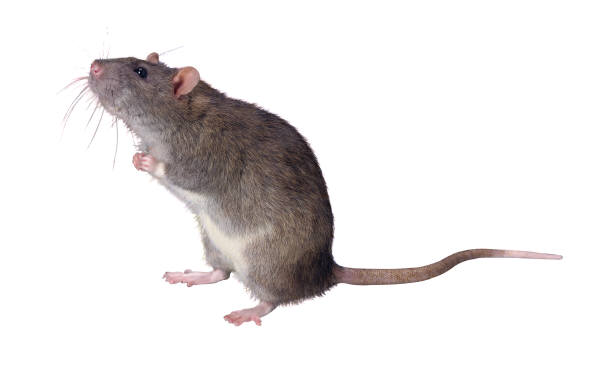
Expecting a scholarly review of low-carb eating in humans, I found an exposition of a diet study in mice.  And not just your garden-variety mice.  These were a lab strain deficient in apolipoprotein E, which makes them particularly susceptible to atherosclerosis when fed a “Western” high-fat, moderate-protein, moderate-carbohydrate diet instead of standard lab chow.

Click on the HeartWire reference below for a discussion of the original mouse research.  I wrote a short post about it in August, 2009.

The article author, Dr. Steven R. Smith, states the usual concern that high-fat (especially saturated fat), high-protein, low-carb diets may cause cardiovascular disease such as atherosclerosis (hardening of the arteries).  He doesn’t mention the scientific evidence showing little or no role of total and saturated fat in cardiovascular disease.

I give credit to him for mentioning that high-fat low-carb diets area associated with improvement in several cardiovascular risk factors such as HDL cholesterol and blood pressure.  He thought they also improve ( lower) LDL cholesterol levels—not something I’ve been impressed with.  He didn’t mention the lowering of triglycerides so often seen. 

Dr. Smith explains that, compared with controls, mice eating the Western high-fat low-carb diet demonstrated progression of atherosclerosis, perhaps mediated by elevated nonesterified fatty acids and low numbers of endothelial progenitor cells.  These are not yet considered classic cardiovascular risk factors in humans.

To quote Dr. Smith, his main point is that . . .

The work of Foo et al suggests that the [high-fat low-carb] diet might increase the risk of cardiovascular disease through mechanisms that have nothing to do with these “usual suspects” [e.g., LDL and HDL cholesterol, blood pressure, C-reactive protein] and so provides a note of caution against reliance on the traditional cardiovascular risk factors as a gauge of safety.

He rightfully calls for investigation of these issues in humans, but . . .

In the meantime, the ageless advice applies to the consumer of the [high-fat low-carb] diet and other fad diets: caveat emptor.

Take Home Points

I agree that human studies are needed.

As the evidence in favor of the safety and efficacy of high-fat low-carb diets increases, the reigning medical establishment is looking for new ways to discredit them.  This attempt is pathetic.

Unfortunately, the typical physician reading NEJM will skim this article and conclude, “Yeah, I was right—the Atkins diet causes heart disease.  Low-fat high-carb is still the best.” 

If you have beloved pet mice that are deficient in apolipoprotein E, don’t feed them a high-fat low-carb diet.

Steve Parker, M.D.

References:

Smith, Steven R.  A Look at the Low-Carbohydrate Diet.  New England Journal of Medicine, 361 (2009): 2,286-2,288.  [This may cost you $10 USD.]

Foo, S.Y., et al.  Vascular effects of a low-carbohydrate high-protein dietProceedings of the National Academy of Sciences of the United States of America, 106 (2009): 15418-15423.   doi: 10.1073/pnas.0970995106  [This may cost you $10 USD.]

Busko, Marlene.  Atherosclerosis heightened in mice fed low-carb, high-protein diet.  HeartWire, August 26, 2009.  [Free]

5 Comments

Filed under Carbohydrate, Fat in Diet

Healthy Eating Guide from Darya Pino

Darya Pino is a scientist, San Francisco foodie and advocate of local, seasonal foods

Darya Pino, founder of Summer Tomato, has generously offered her new guide, “How to Get Started Eating Healthy,” to anyone who wants it, gratis.

I’ve not read the guide yet, but I’m very familiar with Darya’s work at Summer Tomato.  I’m sure her guide is well done and her suggestions would be a vast improvement over the standard American diet (SAD). 

Steve Parker, M.D.

3 Comments

Filed under Uncategorized

Are Fructose and High Fructose Corn Syrup Bad for Us?

Table sugar (sucrose) is a combination of glucose and fructose

Darya Pino earlier this month posted at her Summer Tomato blog a video regarding high fructose corn syrup.  The speaker in the video is pediatric endocrinologist Robert Lustig, M.D., of the University of California—San Francisco.
In the U.S. between 1970 and 1990, consumption of high fructose corn syrup increased over 1000%.  During those two decades, the incidence of overweight and obesity nearly doubled.  Many wonder if this is more than just coincidental. Most of this fructose is in soft drinks.  Soft drink consumption per person in 1942 was two servings per week.  In 2000, consumption was two servings per day.  Of course, these drinks typically have few nutrients other than sugars.

Dr. Lustig is convinced that high fructose corn syrup (HFCS) is a chronic toxin, at least in the amounts many of us eat, and the cause of our current epidemic of childhood and adult obesity and overweight.  Even if this idea is not new to you, you may be interested to hear the biochemistry and physiology behind his position.  If you didn’t enjoy college lectures or are not a food science geek, you probably won’t be able to sit through this 1.5-hour video. 

I enjoyed the heck out of it!  Made me feel like I was back in college again.  Few of my professors were as good as Dr. Lustig at lecturing. 

Here are a few of his other major points:

  • HFCS was invented in Japan in the 1960s, then introduced to U.S. markets in 1975
  • sucrose and fructose are both poisons
  • in the U.S. we eat 63 pounds (28.6 kg) of HFCS and 141 pounds (64.1 kg) of sugar per year [he didn’t define “sugar” in this context]
  • he praises Yudkins book, Pure, White, and Deadly [I’ve written about the Cleave-Yudkin carbohydrate theory of chronic disease]
  • the triglyceride/HDL ratio predicts heart disease much better than does LDL cholesterol
  • chronic high fructose intake causes the metabolic syndrome [does he think it’s the only cause?]
  • only the liver can metabolize fructose, in contrast to every other tissue and organ that can use glucose as an energy supply
  • high fructose consumption increases the risk of gout and high blood pressure
  • fructose interferes with production of our body’s production of nitrous oxide—a natural circulatory dilator—leading to higher blood pressures
  • fructose increases de novo lipogenesis—in other words, it creates body fat
  • fructose interferes with natural chemical messengers that tell your brain you’ve had enough food and it’s time to stop eating
  • high fructose intake reduces LDL particle size, potentially increasing the future risk of cardiovascular disease such as heart attacks [small, dense LDL cholesterol is more damaging to your arteries that large, fluffy LDL]

So What? 

You don’t need polititians to reduce your consumption of sugary soft drinks and high fructose corn syrup—do it yourself starting today.  Read food labels—HFCS is everywhere.  I’ve found it in sausage! 

The food industry greatly reduced use of trans fats in response to consumer concerns, before the polititians ever dabbled in it.  HFCS can go the same route.  Consumption of soft drinks, sports drinks, and other sugary beverages—the major sources of HFCS—is up to you.

Steve Parker, M.D.

PS: The Advanced Mediterranean Diet and Ketogenic Mediterranean Diet are naturally low in fructose.

2 Comments

Filed under Carbohydrate, Causes of Diabetes, Overweight and Obesity, Shameless Self-Promotion

Is Olive Oil Less Healthy When Used for Cooking?

Cooking doesn’t destroy much of olive oil’s healthy properties, according to registered dietitian Karen Collins in a recent guest post at CalorieLab.

I’ve been wondering about this since olive oil plays such a prominent role in the Advanced Mediterranean and Ketogenic Mediterranean Diets.  I use room-temperature olive oil on my salads and vegetables, but also use it  to sauté vegetables, eggs, and meat. 

Olive oil is the major fat in the traditional Mediterranean diet.  It has heart-healthy and perhaps anti-cancer action related to monounsaturated fat and phenolic compounds that have antioxidant and anti-inflammatory properties.

Steve Parker, M.D.

1 Comment

Filed under Health Benefits, Mediterranean Diet

Quote of the Day

Therefore I tell you, do not worry about your life, what you will eat or drink; or about your body, what you will wear.  Is not life more important than food, and the body more important than clothes? 

Look at the birds of the air; they do not sow or reap or store away in barns, and yet our heavenly Father feeds them.  Are you not much more valuable than they? 

Who of you by worrying can add a single hour to his life?

                                                                 Matthew 6: 25-27  (New International Version)

2 Comments

Filed under Quote of the Day

Book Review: Atkins Diabetes Revolution

I must give credit to Dr. Robert C. Atkins for popularizing an approach – carbohydrate restriction – that helps people with diabetes control their disease, and likely helps prevent type 2 diabetes in others.  Mary C. Vernon and Jacqueline Eberstein do a great job explaining his program in their 2004 book, Atkins Diabetes Revolution: The Groundbreaking Approach to Preventing and Controlling Type 2 Diabetes

On the Amazon.com five-star rating scale, I give this book four stars.

I can best summarize this book by noting that it is the standard Atkins diet with a few modifications: 1) special supplements  2) you add additional carbs to your diet more slowly  3) the warning that diabetics may well end up with a lower acceptable lifetime carbohydrate intake level.

By way of review, the Atkins diet is a very low-carb diet, particularly in the two-week induction phase.  “Very low-carb” means lots of meat, chicken, fish, eggs, limited cheese, and 2-3 cups daily of salad greens and low-carb veggies like onions, tomatoes, broccoli, and snow peas.  After induction phase, you slowly add back carbs on a weekly basis until weight loss stalls, then you cut back on carbs.

As an adult medicine specialist, I have no expertise in pediatrics.  I didn’t read the two chapters related to children.

The authors present “complimentary medicine”in a favorable light.  Unsuspecting readers need to know that much of complementary medicine is based on hearsay and anecdote, not science-based evidence.  In that same vein, the two chapters on supplements for diabetes and heart disease recommend a cocktail of supplements that I’m not convinced are needed.  I don’t know a single endocrinologist or cardiologist prescribing these concoctions.  Then again, I could be wrong.   

Vernon and Eberstein provide two excellent chapters on exercise.

A month of meal plans and recipes are provided for 20, 40, and 60-gram carbohydrate levels.  [The average American is eating 250-300 g of carbs daily.]  The recipes look quick and easy, but I didn’t prepare or taste any of them.

The 5-hour glucose and insulin tolerance test (GTT, paged 61) that Dr. Atkins reportedly ran on all patients who came to him is rarely done in other medical clinics.  This doesn’t mean it’s wrong, but certainly out of the mainstream.  The authors admit that at least a few people will have to count calories – specifically, limit total calories – if the basic program doesn’t control diabetes, prediabetes, and the metabolic syndrome.  Limiting portion size will speed weight loss, they write.

What we don’t know with certainty is, will long-term Atkins aficionados miss out on the health benefits of higher consumption of fruits, vegetables, legumes, and whole grains?  Much of the scientific literature suggests, “Yes.”

What if we compare the long-term outlooks of a diabetic Atkins follower with a poorly controlled diabetic who’s 80 pounds overweight and eating a standard American diet?  The Atkins follower is quite likely to be healthier  and live longer.

Steve Parker, M.D.


1 Comment

Filed under Book Reviews

Thinking About a Weight Loss New Years’ Resolution?

Did you get enough to eat for Thanksgiving holiday?  Did you gain a pound or three, like me?

Around this time of year, many people start thinking seriously about losing excess weight and getting healthier.  Choosing a weight-loss program is not something to be done on a whim.  That’s a recipe for failure.  So I’ve updated my popular eight-part “Prepare for Weight Loss” series.  After laying some groundwork, it helps you pick a reasonable weight-loss plan suited to you. 

Well begun is half done:  It’s as true for weight loss as it is for other projects.

Steve Parker, M.D.

Comments Off on Thinking About a Weight Loss New Years’ Resolution?

Filed under Uncategorized

What About the Paleo Diet?

Paleo diets have been increasingly popular over the last few years.  The idea is that, for optimal health, we should be eating the things that we are evolutionarily adapted to eat.  Those foods pre-date the onset of large-scale agriculture 10-12,000 years ago.  So grains and modern fruits and vegetables play little or no role in someone who has “gone paleo.”

My recollection from college courses years ago is that average lifespan in paleolithic times was perhaps 25-30 years, or less.  If you’re going to die at 25, it may not matter if you eat a lot of  wooly mammath, berries, insects, cholesterol, saturated fats, Doritos, Ding Dongs, or Cheetos.  The diseases of civilization we worry about today—coronary heart disease, high blood pressure, cancer, dementia, type 2 diabetes, etc.—don’t usually appear until after age 30.  Paleolithic Man worried more about starvation.

Jenny Ruhl, at her Diabetes Update blog, recently put much more critical thought than I into the concept of paleo diets.  Recommended reading.    

Steve Parker, M.D. 

Extra credit

For purposes of discussion, let’s assume that human evolution actually occurred over millions, or at least hundreds of thousands, of years.  In other words, assume that God didn’t make Adam and Eve in human form in one day.

The theory of evolution proposes that genes that allow an animal to live and reproduce more vigorously in a particular environment will be passed on to the animal’s offspringNature will select those genes to spread through the animal population over time, assuming the environment doesn’t change.  The offspring with those genes will be able to compete with other animals more successfully for food, shelter, and mates.  Factors that promote the persistence and inheritance of specific genes are called “selection pressure.”

Here’s an example of selection pressure.  Remember when you were in grade school on the playground, some people could naturally run faster than others?  Were you one of the fast ones?  If you’ve never seen it for yourself, take my word for it: Some people are naturally gifted with athletic genes.

Let’s say you and I are outside collecting berries and nuts in paleolithic times.  A saber-toothed tiger spots us and charges, hungry for a meal.  You don’t have to outrun the tiger: you just have to outrun me.  I’m slower than you, and get eaten.   I can no longer pass on my slow-running genes to the next generation.  You live another day and pass on your fast-running genes to your children. 

Viola!  Natural selection, via selection pressure, has promoted your genes over mine.

[The tiger also passes on her genes since she was fast and smart enough to catch me, preventing starvation of her and her offspring.] 

[I’m 99% sure I wrote the preceeding few paragraphs originally about a year ago.  My notes, however, hint that they may have been written by Dr. J., a regular contributor at CalorieLab.  Dr. J., let me know if I’ve plagiarized you and I’ll give you full credit and delete my writing.]

The paleo diet rationale seems to be based on an evolutionary argument: Certain foods were available to us during 99% of our evolution, so our bodies are adapted to work optimally with them.  For example, humans/humanoids/higher primates who were not suited to the available food did not survive and reproduce, so their genes were not passed on to us.

For most of human existence, maximum lifespan was probably 25-30 years, on average. If that’s as long as you’re going to live, it may not matter much what you eat. Eat paleo, vegetarian, McDonald’s, Atkins, or Mediterranean. Most diet-related conditions except overweight and under-nutrition are not going to be an issue before age 30. 

[The modern paleos argue that infant and childhood mortality were extremely high in paleolithic times.  If you survived childhood, you could easily live to be 50+.]

But now we live to be 80, long enough for diet-related diseases to appear. We have cancer, heart attacks, and strokes that paleo man never saw because he died of trauma or infection or starvation. We even see the expression of genes that were not subjected to survival or selection pressure: Alzheimers disease, Huntingtons chorea, some breast cancers, etc.  People with genes for these diseases reproduce before the genes do their damage.

In other words, we carry genes that don’t matter if you die at age 30. If you live longer, they express themselves, and I believe we can modify their expression through diet and lifestyle. And not necessarily the paleo diet.

I’m still thinking it through.

For the other side of the argument, visit Mark’s Daily Apple, At Darwin’s Table, or read Dr. Loren Cordain’s The Paleo Diet.

-Steve

9 Comments

Filed under Uncategorized

Modern Heart Disease Found in Ancient Egyptian Mummies

HeartWire on November 23, 2009, reported the discovery of atherosclerosis (hardening-of-the-arteries) in Egyptian mummies 3000 years old. 

So it appears that atherosclerosis in not just a disease of modern civilization, as suggested by some.

Steve Parker, M.D.

1 Comment

Filed under coronary heart disease

Quote of the Day

The urge to simplify a complex scientific situation so that physicians can apply it to their patients and the public embrace it has taken precedence over the scientific obligation of presenting the evidence with relentless honesty.

                                            —Gary Taubes, in Good Calories, Bad Calories  (2007)

Comments Off on Quote of the Day

Filed under Quote of the Day