Category Archives: Causes of Diabetes

Dr. Roger Unger and his Glucagon-Centric Diabetes Model

Perhaps we’ve been wrong about diabetes all along: the problem isn’t so much with insulin as with glucagon.

At least one diabetes researcher would say that’s the case. Roger Unger, M.D., is a professor at the University of Texas Southwestern Medical Center. That’s one of the best medical schools in the U.S., by the way.

Glucagon is a hormone secreted by the alpha cells of the pancreas; it raises blood sugar. (There are also glucagon-secreting alpha cells in the lining of the stomach, and I believe also in the duodenum.) In the pancreas, the insulin-producing beta cells are adjacent to the glucagon-secreting alpha cells. Released insulin directly suppresses glucagon. So if your blood sugar’s too high, as in diabetes, may be you’ve got too much glucagon action rather than too little insulin action.

From Shutterstock.com

Don’t ask me what delta cells do

Dr. Unger says that insulin regulates glucagon. If your sugar’s too high, your insulin isn’t adequately keeping a lid on glucagon. Without glucagon, your blood sugar wouldn’t be high. All known forms of diabetes mellitus have been found to have high glucagon levels (if not in peripheral blood, then in veins draining glucagon-secreting organs).

This is pretty well proven in mice. And maybe hamsters. I don’t know if we have all the pertinent evidence in humans, because it’s harder to do the testing.

Here’s Dr. Unger’s glucagon-centric theory of the pathway to insulin-resistant type 2 diabetes: First we over-eat too many calories, leading to insulin over-secretion, leading to increased fat production (lipogenesis) and storage in pancreatic islet cells as triglycerides, in turn leading to increased ceramide (toxic) in those islet cells, leading to pancreas beta cell death (apoptosis) and insulin resistance in the alpha cell (so glucagon is over-produced), all culminating in type 2 diabetes.

For a diagram of this, click forward minute 40 and 10 seconds in the video below.

If this is all true, so what? It could lead to some new and more effective treatments for diabetes. Dr. Unger says that in type 2 diabetes, we need to suppress glucagon. Potential ways to do that include a chemical called somatostatin, glucagon receptor antibodies, and leptin (the latter mentioned in a 2012 article, I think). The glucagon-centric theory of diabetes also explains why type 1 diabetics rarely have totally normal blood sugars no matter how hard they try: we’re ignoring the glucagon side of the equation. I don’t yet understand his argument, but he also says that giving higher doses of insulin to T2 diabetics may well be harmful. I’m guessing the insulin leads to increased accumulation of lipids (and the associated toxic ceramide) in cells.

Not making sense? Try this YouTube video:

Steve Parker, M.D.

PS: Dr. Unger Says: “Without insulin, you can’t get fat.”

Apoptosis: the second p is apparently silent.

h/t George Henderson

5 Comments

Filed under Causes of Diabetes

Could Glucagon Be Just as Important as Insulin in Diabetes?

I couldn't find a pertinent picture

I couldn’t find a pertinent picture

Everybody knows that insulin is the key hormone gone haywire in diabetes, right? Did you know it’s not the only one out of whack? Roger Unger and Alan Cherrington in The Journal of Clinical Investigation point out that another hormone—glucagon—is also very important in regulation of blood sugar in both types of diabetes.

Insulin has a variety of actions the ultimately keep blood sugar levels from rising dangerously high. Glucagon, on the other hand, keeps blood sugar from dropping too low. For instance, when you stop eating food, as in an overnight or longer fast, glucagon stimulates glucose (sugar) production by your liver so you don’t go into a hypoglycemic coma and die. It does the same when you exercise, as your muscles soak up glucose from your blood stream.

Glucagon works so well to raise blood sugar that we inject it into diabetics who are hypoglycemic but comatose or otherwise unable to swallow carbohydrates.

Glucagon also has effects on fatty acid metabolism, ketone production, and liver protein metabolism, but this post is already complicated enough.

So where does glucagon come from? The islets of Langherhans, for one. You already know the healthy pancreas has beta cells that produce insulin. The pancreas has other cells—alpha or α cells—that produce glucagon. Furthermore, the stomach and duodenum (the first part of the small intestine) also have glucagon-producing alpha cells. The insulin and glucagon work together to keep blood sugar in an fairly narrow range. Insulin lowers blood sugar, glucagon raises it. It’s sort of like aiming for a hot bath by running a mix of cold and very hot water.

Update: I just licensed this from Shutterstock.com

Update: I just licensed this from Shutterstock.com

Ungar and Cherrington say that one reason it’s so hard to tightly control blood sugars in type 1 diabetes is because we don’t address the high levels of glucagon. The bath water’s not right because we’re fiddling with just one of the faucets. Maybe we’ll call this the Goldilocks Theory of Diabetes.

When you eat carbohydrates, your blood sugar starts to rise. Beta cells in the healthy pancreas start secreting insulin to keep a lid on the blood sugar rise. This is not the time you want uncontrolled release of glucagon from the alpha cells, which would work to raise blood sugars further. Within the pancreas, beta and alpha cells are in close proximity. Insulin from the beta cells directly affects the nearby alpha cells to suppress glucagon release. This localized hormone effect is referred to as “paracrine guidance” in the quote below, and it takes very little insulin to suppress glucagon.

From the Ungar and Cherrington article:

Here, we review evidence that the insulinocentric view of metabolic homeostasis is incomplete and that glucagon is indeed a key regulator of normal fuel metabolism, albeit under insulin’s paracrine guidance and control. Most importantly, we emphasize that, whenever paracrine control by insulin is lacking, as in T1DM, the resulting unbridled hyperglucagonemia is the proximal cause of the deadly consequences of uncontrolled diabetes and the glycemic volatility of even “well-controlled” patients.

*  *  *

All in all, it would seem that conventional monotherapy with insulin is incomplete because it can provide paracrine suppression of glucagon secretion only by seriously overdosing the extrapancreatic tissues.

So What?

Elucidation of diabetes’ disease mechanisms (pathophysiology) can lead to new drugs or other therapies that improve the lives of diabetics. A potential drug candidate is leptin, known to suppress glucagon hyper secretion in rodents with type 1 diabetes.

RTWT.

Steve Parker, M.D.

PS: Amylin is yet another hormone involved in blood sugar regulation, but I’ll save that for another day. If you can’t wait, read about it here in my review of pramlintide, a drug for type 1 diabetes.

10 Comments

Filed under Causes of Diabetes

Do Chemical Contaminants Cause Diabetes or Obesity?

"Today we're going to learn about odds ratios and relative risk."

“Today we’re going to learn about odds ratios and relative risk.”

Last year I watched part of a documentary called “Plastic Planet” on Current TV (Now Al Jazeera TV). It was alarming. Apparently chemicals are leaking out of plastics into the environment (or into foods contained by plastic), making us diabetic, fat, impairing our fertility, and God knows what else. The narrator talked like it was a sure thing. I had work to do at the hospital, so I didn’t see the whole thing. A couple chemicals I remember being mentioned are bisphenol A (BPA) and phthalates. I freaked my wife out when I mentioned it to her—she went and bought some storage containers for leftover food the next day. I always take my lunch to work in plastic containers and often cover microwaved food with Glad Press’n Seal plastic wrap.

A few days later I saw a report of sperm counts being half of what they were just half a century ago. (It’s debatable.) Environmental contaminants were mentioned as a potential cause.

So I spent a couple hours trying to figure out if chemical contamination really is causing obesity and type 2 diabetes. In the U.S., childhood obesity has tripled since 1980, to a current rate of 17%. Even preschool obesity (age 2-5) doubled from 5 to 10% over that span. In industrial societies, even our pets, lab animals (rodents and primates), and feral rats are getting fatter! The ongoing epidemics of obesity and type 2 diabetes, and our lack of progress in preventing and reversing them, testify that we may not have them figured out and should keep looking at root causes to see if we’re missing anything.

Straightaway, I’ll tell you it’s not easy looking into this issue. The experts are divided. The studies are often contradictory or inconsistent. One way to determine the cause of a condition or illness is to apply Bradford Hill criteria (see bottom of page for those). We could reach a conclusion faster if we did controlled exposure experiments on humans, but we don’t. We look at epidemiological studies and animal studies that don’t necessarily apply to humans.

Regarding type 1 diabetes and chemical contamination, we have very little data. I’ll not mention type 1 again.

What Does the Science Tell Us?

For this post I read a couple pertinent scientific reviews published in 2012, not restricting myself to plastics as a source of chemical contaminants.

The first was REVIEW OF THE SCIENCE LINKING CHEMICAL EXPOSURES TO THE HUMAN RISK OF OBESITY AND DIABETES from non-profit CHEM Trust, written by a couple M.D., Ph.D.s. I’ll share some quotes and my comments. My clarifying comments within a quote are in [brackets].

“It should be noted that diabetes itself has not been caused in animals exposed to these chemicals [a long list] in laboratory studies, but metabolic disruption closely related to the pathogenesis of Type 2 diabetes has been reported for many chemicals.”

“In 2002, Paula Baillie-Hamilton proposed a hypothesis linking exposure to chemicals with obesity, and this is now gaining credence. Exposure to low concentrations of some chemicals leads to weight gain in adult animals, while exposure to high concentrations causes weight loss.”

“The obesogen hypothesis essentially proposes that exposure to chemicals foreign to the body disrupts adipogenesis [fat tissue growth] and the homeostasis and metabolism of lipids (i.e., their normal regulation), ultimately resulting in obesity. Obesogens can be functionally defined as chemicals that alter homeostatic metabolic set-points, disrupt appetite controls, perturb lipid homeostasis to promote adipocyte hypertrophy [fat cells swelling with fat], stimulate adipogenic pathways that enhance adipocyte hyperplasia [increased numbers of fat cells] or otherwise alter adipocyte differentiation during development. These proposed pathways include inappropriate modulation of nuclear receptor function; therefore, the chemicals can be termed EDCs [endocrine disrupting chemicals].”

Don't assume mouse physiology is the same as human's

Don’t assume mouse physiology is the same as human’s

Literature like this talks about POPs: persistent organic pollutants, sometimes called organohalides. The POPs and other chemical contaminants that are currently suspicious for causing obesity and type 2 diabetes include arsenic, pesticides, phthalates, metals (e.g., cadmium, mercury, organotins), brominated flame retardants, DDE (dichloro-diphenyldichloroethylene), PCBs (polychlorinated biphenyls), trans-nonachlor, dioxins.

Another term you’ll see in this literature is EDCs: endocrine disrupting chemicals. These chemicals mess with hormonal pathways. EDCs that mimic estrogen are linked to obesity and related metabolic dysfunction. Some of the chemicals in the list above are EDCs.

The fear—and some evidence—is that contaminants, whether or not EDCs, are particularly harmful to embryos, fetuses, and infants. For instance, it’s pretty well established that mothers who smoked while pregnant predispose their offspring to obesity in adulthood. (Epigenetics, anyone?) Furthermore, at the right time in the life cycle, it may only take small amounts of contaminants to alter gene expression for the remainder of life. For instance, the number of fat cells we have is mostly determined some time in childhood (or earlier?). As we get fat, those cells simply swell with fat. When we lose weight, those cells shrink, but the total cell number is unchanged. What if contaminant exposure in childhood increases fat cell number irrevocably? Does that predispose to obesity later in life?

The authors note that chemical contaminants are more strongly linked to diabetes than obesity. They do a lot of hemming and hawing, using “maybe,” “might,” “could,” etc. They don’t have a lot of firm conclusions other than “Hey, people, we better wake up and look into this further, and based on the precautionary principle, we better cut back on environmental chemical contamination stat!” [Not a direct quote.] It’s clear they are very concerned about chemical contaminants as a public health issue.

Here’s the second article I read: Role of Environmental Chemicals in Diabetes and Obesity: A National Toxicology Program Workshop Review. About 50 experts were empaneled. Some quotes and my comments:

“Overall, the review of the existing literature identified linkages between several of the environmental exposures and type 2 diabetes. There was also support for the “developmental obesogen” hypothesis, which suggests that chemical exposures may increase the risk of obesity by altering the differentiation of adipocytes [maturation and development of fat cells] or the development of neural circuits that regulate feeding behavior. The effects may be most apparent when the developmental [early life] exposure is combined with consumption of a high-calorie, high-carbohydrate, or high-fat diet later in life.”

“The strongest conclusion from the workshop was that nicotine likely acts as a developmental obesogen in humans. This conclusion was based on the very consistent pattern of overweight/obesity observed in epidemiology studies of children of mothers who smoked during pregnancy (Figure 1) and was supported by findings from laboratory animals exposed to nicotine during prenatal [before birth] development.”

I found some data that don’t support that conclusion, however. Here’s a graph of U.S. smoking rates over the years since 1944. Note that the smoking rate has fallen by almost half since 1983, while obesity rates, including those of children, are going the opposite direction. If in utero cigarette smoke exposure were a major cause of U.S. childhood obesity, we’d be seeing less, not more, childhood obesity. I suppose we could still see a fall-off in adult obesity rates over the next 20 years, reflecting lower smoking rates.  But I doubt that will happen.

The CDC suggests a slight drop in childhood obesity in recent years (2010 data).

“The group concluded that there is evidence for a positive association of diabetes with certain organochlorine POPs [persistent organic pollutants]. Initial data mining indicated the strongest associations of diabetes with trans-nonachlor, DDT (dichloro-diphenyltrichloroethane)/DDE (dichloro-diphenyldichloroethylene)/DDD (dichloro-chlorophenylethane), and dioxins/dioxin-like chemicals, including polychlorinated biphenyl (PCBs). In no case was the body of data considered sufficient to establish causality [emphasis added].”

“Overall, this breakout group concluded that the existing data, primarily based on animal and in vitro studies [no live animals involved], are suggestive of an effect of BPA on glucose homeostasis, insulin release, cellular signaling in pancreatic β cells, and adipogenesis. The existing human data on BPA and diabetes (Lang et al. 2008Melzer et al. 2010) available at the time of the workshop were considered too limited to draw meaningful conclusions. Similarly, data were insufficient to evaluate BPA as a potential risk factor for childhood obesity.”

“It was not possible to reach clear conclusions about BPA and obesity from the existing animal data. Although several studies report body weight gain after developmental exposure, the overall pattern across studies is inconsistent.”

“The pesticide breakout group concluded the epidemiological, animal, and mechanistic data support the biological plausibility that exposure to multiple classes of pesticides may affect risk factors for diabetes and obesity, although many significant data gaps remain.”

“Recently, the focus of investigations has shifted toward studies designed to understand the consequences of developmental exposure to lower doses of organophosphates [insecticides], and the long-term effects of these exposures on metabolic dysfunction, diabetes, and obesity later in life. [All or nearly all the studies cited here were rodent studies, not human.] The general findings are that early-life exposure to otherwise subtoxic levels of organophosphates results in pre-diabetes, abnormalities of lipid metabolism, and promotion of obesity in response to increased dietary fat.”

In case it’s not obvious, remember that “association is not the same as causation.” For example, in the Northern hemisphere, higher swimsuit purchases are associated with summer. Swimsuit sales and summer are linked (associated), but one doesn’t cause the other. Swimsuit purchases are caused by the desire to go swimming, and that’s linked to warm weather.

In at least one of these two review articles, I looked carefully at the odds ratios of various chemicals linked to adverse outcomes. One way this is done is too measure the blood or tissue levels of a contaminant in a population, then compare the adverse outcome rates in animals with the highest and lowest levels of contamination. For instance, if those with the highest contamination have twice the incidence of diabetes as the least contaminated, the odds ratio is 2. You could also call it the relative risk. Many of the potentially harmful chemicals we’re considering have a relative risk ratio of 1.5 to 3. Contrast those numbers with the relative risk of death from lung cancer in smokers versus nonsmokers: the relative risk is 10. Smokers are 10 times more likely to die of lung cancer. That’s a much stronger association and a main reason we decided smoking causes lung cancer. Odds ratios under two are not very strong evidence when considering causality; we’d like to have more pieces of the puzzle.

These guys flat-out said arsenic is not a cause of diabetes in the U.S.

Overall, the authors of the second article I read were clearly less alarmed than those of the first. Could the less-alarmed panelists have been paid off by the chemical industry to produce a less scary report, so as not to jeopardize their profits? I don’t have the resources to investigate that possibility. The workshop was organized (and paid for, I assume) by the U.S. government, but that’s no guarantee of pure motivation by any means.

You need a break. Enjoy.

You need a break. Enjoy.

My Conclusions

For sure, if I were a momma rat contemplating pregnancy, I’d avoid all those chemicals like the plague!

It’s premature to say that these chemical contaminants are significant causes of obesity and type 2 diabetes in humans. That’s certainly possible, however. We’ll have to depend on unbiased scientists to do more definitive research for answers, which certainly seems a worthwhile endeavor. Something tells me the chemical producers won’t be paying for it. Universities or governments will have to do it.

You should keep your eyes and ears open for new evidence.

There’s more evidence for chemical contaminants as a potential cause of type 2 diabetes than for obesity. Fetal and childhood exposure may be more harmful than later in life.

If I were 89-years-old, I wouldn’t worry about these chemicals causing obesity or diabetes. For those quite a bit younger, taking action to avoid these environmental contaminants is optional. As for me, I’m drinking less water out of plastic bottles and more tap water out of glass or metal containers. Yet I’m not sure which water has fewer contaminants.

Humans, particularly those anticipating pregnancy and child-rearing, might be well advised to minimize exposure to the aforementioned chemicals. For now, I’ll leave you to your own devices to figure out how to do that. Good luck.

Why not read the two review articles I did and form your own opinion?

Unless the chemical industry is involved in fraud, bribery, obfuscation, or other malfeasance, the Plastic Planet documentary gets ahead of the science. I’m less afraid of my plastic containers now.

Steve Parker, M.D.

Additional Resources:

Sarah Howard at Diabetes and the Environment (focus on type 1 but much on type 2 also).

Jenny Ruhl, who thinks chemical contaminants are a significant cause of type 2 diabetes (search her site).

From Wikipedia:

The Bradford Hill criteria, otherwise known as Hill’s criteria for causation, are a group of minimal conditions necessary to provide adequate evidence of a causal relationship between an incidence and a consequence, established by the English epidemiologist Sir Austin Bradford Hill (1897–1991) in 1965.

The list of the criteria is as follows:

  1. Strength: A small association does not mean that there is not a causal effect, though the larger the association, the more likely that it is causal.
  2. Consistency: Consistent findings observed by different persons in different places with different samples strengthens the likelihood of an effect.
  3. Specificity: Causation is likely if a very specific population at a specific site and disease with no other likely explanation. The more specific an association between a factor and an effect is, the bigger the probability of a causal relationship.
  4. Temporality: The effect has to occur after the cause (and if there is an expected delay between the cause and expected effect, then the effect must occur after that delay).
  5. Biological gradient: Greater exposure should generally lead to greater incidence of the effect. However, in some cases, the mere presence of the factor can trigger the effect. In other cases, an inverse proportion is observed: greater exposure leads to lower incidence.
  6. Plausibility: A plausible mechanism between cause and effect is helpful (but Hill noted that knowledge of the mechanism is limited by current knowledge).
  7. Coherence: Coherence between epidemiological and laboratory findings increases the likelihood of an effect. However, Hill noted that “… lack of such [laboratory] evidence cannot nullify the epidemiological effect on associations”.
  8. Experiment: “Occasionally it is possible to appeal to experimental evidence”.
  9. Analogy: The effect of similar factors may be considered.

Science-Based Medicine blog has more on Hill’s criteria.

Comments Off on Do Chemical Contaminants Cause Diabetes or Obesity?

Filed under Causes of Diabetes, Overweight and Obesity

What Causes Type 2 Diabetes?

diabetic diet, low-carb Mediterranean Diet, low-carb, Conquer Diabetes and Prediabetes

Stop reading this sciencey post when you get bored

According to Roy Taylor, “type 2 diabetes is a potentially reversible metabolic state precipitated by the single cause of chronic excess intraorgan fat.” The organs accumulating fat are the liver and pancreas. He is certain “…that the disease process can be halted with restoration of normal carbohydrate and fat metabolism.” I read Taylor’s article published earlier this year in Diabetes Care.

[Do you remember that report in 2011 touting cure of T2 diabetes with a very low calorie diet? Taylor was the leader. The study involved only 11 patients, eating 600 calories a day for eight weeks.]

Dr. Taylor (M.D.) says that severe calorie restriction is similar to the effect of bariatric surgery in curing or controlling diabetes. Within a week of either intervention, liver fat content is greatly reduced, liver insulin sensitivity returns, and fasting blood sugar levels can return to normal. During the first eight weeks after intervention, pancreatic fat content falls, with associated steadily increasing rates of insulin secretion by the pancreas beta cells.

bariatric surgery, Steve Parker MD

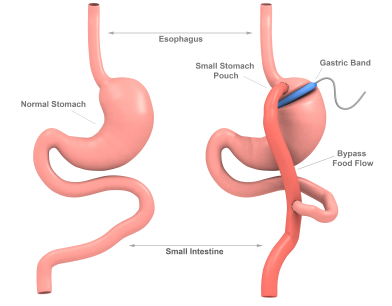
Band Gastric Bypass Surgery (not the only type of gastric bypass): very successful at “curing” T2 diabetes if you survive the operation

Taylor’s ideas, by the way, dovetail with Roger Unger’s 2008 lipocentric theory of diabetes. Click for more ideas on the cause of T2 diabetes.

Here are some scattered points from Taylors article. He backs up most of them with references:

  • In T2 diabetes, improvement in fasting blood sugar reflects improved liver insulin sensitivity more than muscle insulin sensitivity.
  • The more fat accumulation in the liver, the less it is sensitive to insulin. If a T2 is treated with insulin, the insulin dose is positively linked to how much fat is in the liver.
  • In a T2 who starts insulin injections, liver fat stores tend to decrease. That’s because of suppression of the body’s own insulin delivery from the pancreas to the liver via the portal vein.
  • Whether obese or not, those with higher circulating insulin levels “…have markedly increased rates of hepatic de novo lipogenesis.” That means their livers are making fat. That fat (triglycerides or triacylglycerol) will be either burned in the liver for energy (oxidized), pushed into the blood stream for use elsewhere, or stored in the liver. Fatty acids are components of triglycerides. Excessive fatty acid intermediaries in liver cells—diglycerides and ceramide—are thought to interfere with insulin’s action, i.e., contribute to insulin resistance in the liver.
  • “Fasting plasma glucose concentration depends entirely on the fasting rate of hepatic [liver] glucose production and, hence, on its sensitivity to suppression by insulin.”
  • Physical activity, low-calorie diets, and thiazolidinediones reduce the pancreas’ insulin output and reduce liver fat levels.
  • Most T2 diabetics have above-average liver fat content. MRI scans are more accurate than ultrasound for finding it.
  • T2 diabetics have on average only half of the pancreas beta cell mass of non-diabetics. As the years pass, more beta cells are lost. Is the a way to preserve these insulin-producing cells, or to increase their numbers? “…it is conceivable that removal of adverse factors could result in restoration of normal beta cell number, even late in the disease.”
  • “Chronic exposure of [pancreatic] beta cells to triacylglycerol [triglycerides] or fatty acids…decreases beta cell capacity to respond to an acute increase in glucose levels.” In test tubes, fatty acids inhibit formation of new beta cells, an effect enhanced by increased glucose concentration.
  • There’s a fair amount of overlap in pancreas fat content comparing T2 diabetics and non-diabetics. It may be that people with T2 diabetes are somehow more susceptible to adverse effects of the fat via genetic and epigenetic factors.
  • “If a person has type 2 diabetes, there is more fat in the liver and pancreas than he or she an cope with.”
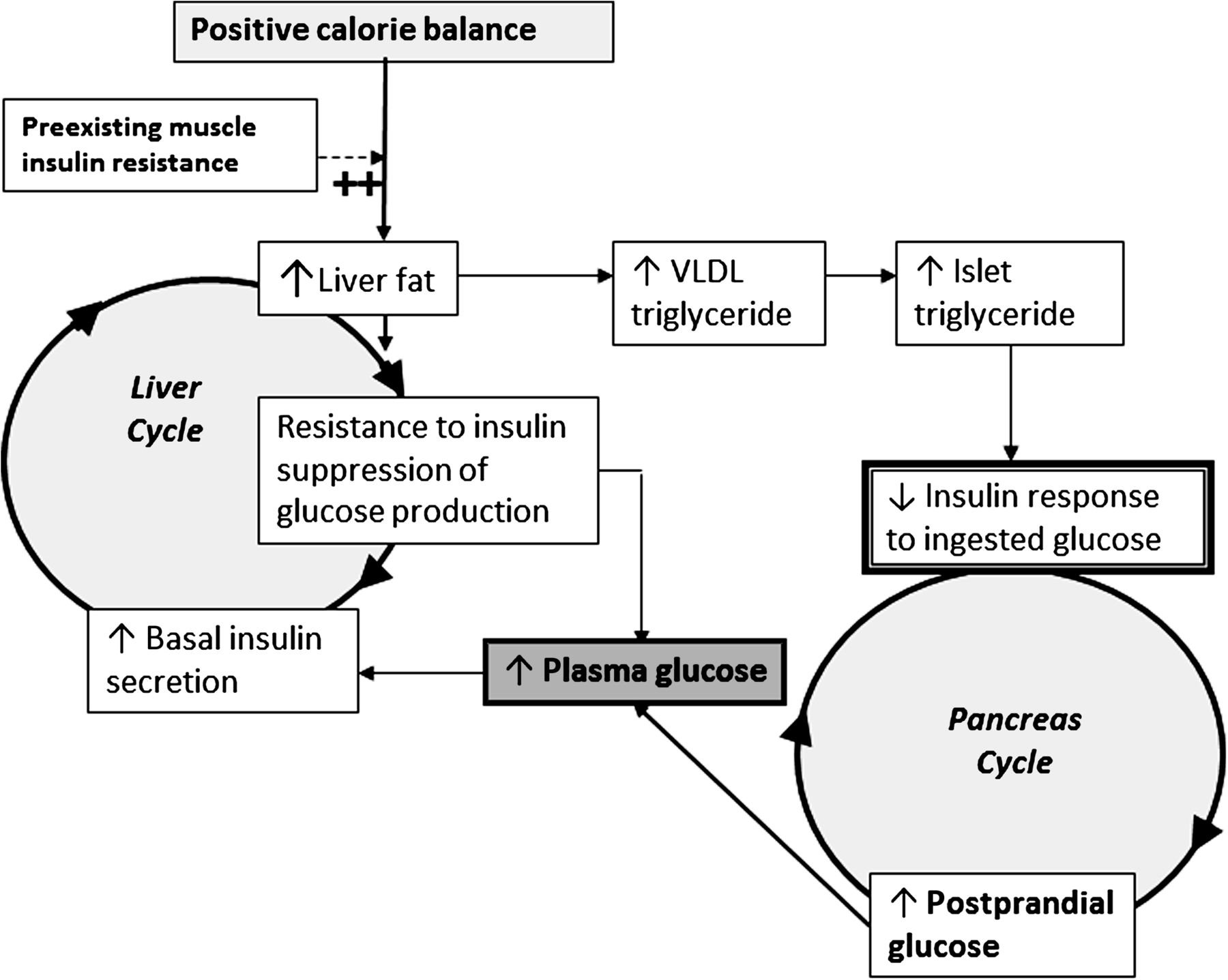
  • Here’s Dr. Taylor’s Twin Cycle Hypothesis of Etiology of Type 2 Diabetes: “The accumulation of fat in liver and secondarily in the pancreas will lead to self-reinforcing cycles that interact to bring about type 2 diabetes. Fatty liver leads to impaired fasting glucose metabolism and increases export of VLDL triacylglcerol [triglycerides], which increases fat delivery to all tissues, including the [pancreas] islets. The liver and pancreas cycles drive onward after diagnosis with steadily decreasing beta cell function. However, of note, observations of the reversal of type 2 diabetes confirm that if the primary influence of positive calorie balance is removed, the the processes are reversible.”
diabetic diet, etiology of type 2 diabetes, Roy Taylor, type 2 diabetes reversal

Figure 6 from the article: Dr. Taylor’s Twin Cycle Hypothesis of Etiology of Type 2 Diabetes

  • The caption with Figure 6 states: “During long-term intake of more calories than are expended each day, any excess carbohydrate must undergo de novo lipogenesis [creation of fat], which particularly promotes fat accumulation in the liver.”
  • “The extent of weight gloss required to reverse type 2 diabetes is much greater than conventionally advised.” We’re looking at around 15 kg (33 lb) or 20% of body weight, assuming the patient is obese to start.  “The initial major loss of body weight demands a substantial reduction in energy intake. After weight loss, steady weight is most effectively achieved by a combination of dietary restriction and physical activity.”

Dr. Taylor doesn’t specify how much calorie restriction he recommends, but reading between the lines, I think he likes his 600 cals/day for eight weeks program. That will have a have a high drop-out rate. I suspect a variety of existing ketogenic diets may be just as successful and more realistic, even if it takes more than eight weeks. I wonder how many of the 11 “cures” from the 2011 study have persisted.

Steve Parker, M.D.

Reference: Taylor, Roy. Type 2 diabetes: Etiology and reversibility. Diabetes Care, April 2013, vol. 36, no. 4, pp:1047-1055.

Update December 16, 2013:

Some wild and crazy guys tried this method at home. Click for results.

h/t commenter PhilT.

7 Comments

Filed under Causes of Diabetes

Pancreas Beta Cells May be Key to the Cause of Type 2 Diabetes

…according to an article I found in Diabetes Care. As background, be aware that one theory holds that T2 diabetes is caused primarily by body tissue insulin resistance, separate from what’s going on in the pancreas beta (β) cells that produce insulin to control blood sugar.

Some quotes:

Although it has long been assumed that insulin resistance is the leading factor in the pathogenesis of type 2 diabetes, evidence for the importance of the pancreatic β-cells has accumulated over the past decades. In fact, the vast majority of genes associated with type 2 diabetes have been linked to the β-cell, and impairments in β-cell mass and in insulin secretion have been reported in numerous studies in patients with type 2 diabetes.

***

It has also been suggested that obesity causes type 2 diabetes through impaired insulin action. Undoubtedly, the risk of developing type 2 diabetes increases markedly with BMI. However, if obesity were really the cause of type 2 diabetes, one would expect the vast majority of obese individuals to develop hyperglycemia, whereas in reality ∼80% of obese individuals remain free of diabetes. These findings suggest that obesity and insulin resistance are indeed important cofactors that increase the individual risk of diabetes but that the actual cause of the disease seems to be clearly linked to the β-cells.

***

The conundrum of whether loss of mass or loss of function underlies the β-cell defects in type 2 diabetes is not likely to be conclusively solved on the basis of the evidence we have reviewed here. Decreased cell mass and acceleration of the biological processes resulting in β-cell loss have been described in type 2 diabetes by a number of laboratories. On the other hand, several lines of evidence suggest that β-cell functional defects may exist in type 2 diabetes.

Both viewpoints tacitly assume that 1) type 2 diabetes is a rather homogeneous entity, at least when it comes to β-cell biology, and 2) overall islet secretory capacity is a linear function of the product between β-cell number and isolated β-cell function. It is possible that neither assumption holds true.

The most likely scenario, indeed, is that a variable combination of the two processes, loss of mass and loss of function, is at work in type 2 diabetes. Indeed, there appears to be a tight relationship between mass of pancreatic β-cells and functional insulin secretion.

2 Comments

Filed under Causes of Diabetes

Should People With Diabetes Restrict Carbohydrates?

MB900402413Dr. John Rollo (a surgeon in the British Royal Artillery) in 1797 published a book, An Account of Two Cases of the Diabetes Mellitus. He discussed his experience treating a diabetic Army officer, Captain Meredith, with a high-fat, high-meat, low-carbohydrate diet. Mind you, this was an era devoid of effective drug therapies for diabetes.

The soldier apparently had type 2 diabetes rather than type 1.

Rollo’s diet led to loss of excess weight (original weight 232 pounds or 105 kg), elimination of symptoms such as frequent urination, and reversal of elevated blood and urine sugars.

This makes Dr. Rollo the original low-carb diabetic diet doctor. Many of the leading proponents of low-carb eating over the last two centuries—whether for diabetes or weight loss—have been physicians.

But is carbohydrate restriction a reasonable approach to diabetes, whether type 1 or type 2?

What’s the Basic Problem in Diabetes?

Diabetes and prediabetes always involve impaired carbohydrate metabolism: ingested carbs are not handled by the body in a healthy fashion, leading to high blood sugars and, eventually, poisonous complications.  In type 1 diabetes, the cause is a lack of insulin from the pancreas.  In type 2, the problem is usually a combination of insulin resistance and ineffective insulin production.

Elevated blood pressure is one component of metabolic syndrome

Elevated blood pressure is one component of metabolic syndrome

A cousin of type 2 diabetes is “metabolic syndrome.”  It’s a constellation of clinical factors that are associated with increased future risk of type 2 diabetes and atherosclerotic complications such as heart attack and stroke. One in six Americans has metabolic syndrome. Diagnosis requires at least three of the following five conditions:

■  high blood pressure (130/85 or higher, or using a high blood pressure medication)

■  low HDL cholesterol:  under 40 mg/dl (1.03 mmol/l) in a man, under 50 mg/dl (1.28 mmol/l) in a women (or either sex taking a cholesterol-lowering drug)

■  triglycerides over 150 mg/dl (1.70 mmol/l) (or taking a cholesterol-lowering drug)

■  abdominal fat:  waist circumference 40 inches (102 cm) or greater in a man, 35 inches (89 cm) or greater in a woman

■  fasting blood glucose over 100 mg/dl (5.55 mmol/l)

Metabolic syndrome and simple obesity often involve impaired carbohydrate metabolism. Over time, excessive carbohydrate consumption can turn obesity and metabolic syndrome into prediabetes, then type 2 diabetes.

Carbohydrate restriction directly addresses impaired carbohydrate metabolism naturally.

Carbohydrate Intolerance

Diabetics and prediabetics—plus many folks with metabolic syndrome—must remember that their bodies do not, and cannot, handle dietary carbohydrates in a normal, healthy fashion. In a way, carbs are toxic to them. Toxicity may lead to amputations, blindness, kidney failure, nerve damage, poor circulation, frequent infections, premature heart attacks and death, among other things.

Diabetics and prediabetics simply don’t tolerate carbs in the diet like other people. If you don’t tolerate something, you have to give it up, or at least cut way back on it. Lactose-intolerant individuals give up milk and other lactose sources. Celiac disease patients don’t tolerate gluten, so they give up wheat and other sources of gluten. One of every five high blood pressure patients can’t handle normal levels of salt in the diet; they have to cut back or their pressure’s too high. Patients with phenylketonuria don’t tolerate phenylalanine and have to restrict foods that contain it. If you’re allergic to penicillin, you have to give it up. If you don’t tolerate carbs, you have to give them up or cut way back. I’m sorry.

Carbohydrate restriction directly addresses impaired carbohydrate metabolism naturally.

But Doc, …?

1.  Why not just take more drugs to keep my blood sugars under control while eating all the carbs I want?

We have 12 classes of drugs to treat diabetes.  For most of these classes, we have little or no idea of the long-term consequences.  It’s a crap shoot.  The exceptions are insulin and metformin.  Several big-selling drugs have been taken off the market due to unforeseen side effects.  Others are sure to follow, but I can’t tell you which ones.  Adjusting insulin dose based on meal-time carb counting is popular.  Unfortunately, carb counts are not nearly as accurate as you might think; and the larger the carb amount, the larger the carb-counting and drug-dosing errors.

2.  If I reduce my carb consumption, won’t I be missing out on healthful nutrients from fruits and vegetables?

No.  Choosing low-carb fruits and vegetables will get you all the plant-based nutrients you need.  You may well end up eating more veggies and fruits than before you switched to low-carb eating.  Low-carb and paleo-style diets are unjustifiably criticized across-the-board as being meat-centric and deficient in plants.  Some are, but that’s not necessarily the case.

3.  Aren’t vegetarian and vegan diets just as good?

Maybe.  There’s some evidence that they’re better than standard diabetic diets.  My personal patients are rarely interested in vegetarian or vegan diets, so I’ve not studied them in much detail.  They tend to be rich in carbohydrates, so you may run into the drug and carb-counting issues in Question No. 1.

Steve Parker, M.D.

PS:  The American Diabetes Association recommends weight loss for all overweight diabetics. Its 2011 guidelines suggest three possible diets: “For weight loss, either low-carbohydrate [under 130 g/day], low-fat calorie-restricted, or Mediterranean diets may be effective in the short-term (up to two years).”  The average American adult eats 250–300 grams of carbohydrate daily.

8 Comments

Filed under Carbohydrate, Causes of Diabetes, Prediabetes

What Causes Type 2 Diabetes?

Prediabetes and type 2 diabetes are epidemics because of excessive consumption of refined sugars and starches, and lack of physical activity.  I can’t prove it; nevertheless that’s my impression after years of pondering the nutrition science literature.

I could be wrong.  I reserve the option to change my mind based on evidence as it becomes available.  That’s one of the great things about science.  Accurately identifying the cause of diabetes could provide strong clues about optimal prevention and treatment strategies.

Genetics undoubtedly plays a major role in diabetes, but the gene pool hasn’t changed much over the last several decades as type 2 diabetes rates have soared.

The problem in type 2 diabetes and prediabetes is that the body cannot handle ingested carbohydrates in the normal fashion. In a way, dietary carbohydrates (carbs) have become toxic instead of nourishing. This is a critical point, so let’s take time to understand it.

NORMAL DIGESTION AND CARBOHYDRATE HANDLING

The major components of food are fats, proteins, and carbohydrates. We digest food either to get energy, or to use individual components of food in growth, maintenance, or repair of our own body parts.

We need some sugar (also called glucose) in our bloodstream at all times to supply us with immediate energy. “Energy” refers not only to a sense of muscular strength and vitality, but also to fuel for our brain, heart, and other automatic systems. Our brains especially need a reliable supply of bloodstream glucose.

In a normal, healthy state, our blood contains very little sugar—about a teaspoon (5 ml) of glucose. (We have about one and a third gallons (5 liters) of blood circulating. A normal blood sugar of 100 mg/dl (5.56 mmol/l) equates to about a teaspoon of glucose in the bloodstream.)

Our bodies have elaborate natural mechanisms for keeping blood sugar normal. They work continuously, a combination of removing and adding sugar from the bloodstream to keep it in a healthy range (70 to 140 mg/dl, or 3.9 to 7.8 mmol/l). These homeostatic mechanisms are out of balance in people with diabetes and prediabetes.

By the way, glucose in the bloodstream is commonly referred to as “blood sugar,” even though there are many other types of sugar other than glucose. In the U.S., blood sugar is measured in units of milligrams per deciliter (mg/dl), but other places measure in millimoles per liter (mmol/l).

When blood sugar levels start to rise in response to food, the pancreas gland—its beta cells, specifically—secrete insulin into the bloodstream to keep sugar levels from rising too high. The insulin drives the excess sugar out of the blood, into our tissues. Once inside the tissues’ cells, the glucose will be used as an immediate energy source or stored for later use. Excessive sugar is stored either as body fat or as glycogen in liver and muscle.

When we digest fats, we see very little direct effect on blood sugar levels. That’s because fat contains almost no carbohydrates. In fact, when fats are eaten with high-carb foods, they tend to slow the rise and peak in blood sugar you would see if you had eaten the carbs alone.

Ingested protein can and does raise blood sugar, usually to a mild degree. As proteins are digested, our bodies can make sugar (glucose) out of the breakdown products. The healthy pancreas releases some insulin to keep the blood sugar from going too high.

In contrast to fats and proteins, carbohydrates in food cause significant—often dramatic—rises in blood sugar. Our pancreas, in turn, secretes higher amounts of insulin to prevent excessive elevation of blood glucose. Carbohydrates are easily digested and converted into blood sugar. The exception is fiber, which is indigestible and passes through us unchanged.

During the course of a day, the pancreas of a healthy adult produces an average of 40 to 60 units of insulin. Half of that insulin is secreted in response to meals, the other half is steady state or “basal” insulin. The exact amount of insulin depends quite heavily on the amount and timing of carbohydrates eaten. Dietary protein has much less influence. A pancreas in a healthy person eating a very-low-carb diet will release substantially less than 50 units of insulin a day.

To summarize thus far: dietary carbs are the major source of blood sugar for most people eating “normally.” Carbs are, in turn, the main cause for insulin release by the pancreas, to keep blood sugar levels in a safe, healthy range.

Hang on, because we’re almost done with the basic science!

You deserve a break

CARBOHYDRATE  HANDLING  IN  DIABETES  &  PREDIABETES

Type 2 diabetics and prediabetics absorb carbohydrates and break them down into glucose just fine. Problem is, they can’t clear the glucose out of the bloodstream normally. So blood sugar levels are often in the elevated, poisonous range, leading to many of the complications of diabetes.

Remember that insulin’s primary function is to drive blood glucose out of the bloodstream, into our tissues, for use as immediate energy or stored energy (as fat or glycogen).

In diabetes and prediabetes, this function of insulin is impaired.

The tissues have lost some of their sensitivity to insulin’s action. This critical concept is called insulin resistance. Insulin still has some effect on the tissues, but not as much as it should. Different diabetics have different degrees of insulin resistance, and you can’t tell by just looking.  (There are several other hormones involved in regulation of blood sugar.)

Did you know that people who work at garbage dumps, sewage treatment plants, and cattle feedlots get used to the noxious fumes after a while? They aren’t bothered by them as much as they were at first. Their noses are less sensitive to the fumes. You could call it fume resistance. In the same fashion, cells exposed to high insulin levels over time become resistant to insulin.

Insulin resistance occurs in most cases of type 2 diabetes and prediabetes. So what causes the insulin resistance? It’s debatable. In many cases it’s related to overweight, physical inactivity, and genetics. A high-carbohydrate diet may contribute. A few cases are caused by drugs. Some cases are a mystery.

To overcome the body tissue’s resistance to insulin’s effect, the pancreas beta cells pump even more insulin into the bloodstream, a condition called hyperinsulinemia. Some scientists believe high insulin levels alone cause some of the damage associated with diabetes. Whereas a healthy person without diabetes needs about 50 units of insulin a day, an obese non-diabetic needs about twice that to keep blood sugars in check. Eventually, in those who develop diabetes or prediabetes, the pancreas can’t keep up with the demand for more insulin to overcome insulin resistance. The pancreas beta cells get exhausted and start to “burn out.” That’s when blood sugars start to rise and diabetes and prediabetes are easily diagnosed. So, insulin resistance and high insulin production have been going on for years before diagnosis. By the time of diagnosis, 50% of beta cell function is lost.

Steve Parker, M.D.

EXTRA  CREDIT  FOR  INQUISITIVE  MINDS

You’ve learned that insulin’s main action is to lower blood sugar by transporting it into the cells of various tissues. But that’s not all insulin does. It also 1) impairs breakdown of glycogen into glucose, 2) stimulates glycogen formation, 3) inhibits formation of new glucose molecules by the body, 4) promotes storage of triglycerides in fat cells (i.e., lipogenesis, fat accumulation), 5) promotes formation of fatty acids (triglyceride building blocks) by the liver, 6) inhibits breakdown of stored triglycerides, and 7) supports body protein production.

2 Comments

Filed under Causes of Diabetes, Prevention of T2 Diabetes

What’s Metabolic Syndrome?

metabolic syndrome, low-carb diet, diabetes, prediabetes

He’s at high risk for metabolic syndrome

“Metabolic syndrome” may be a new term for you. It’s a constellation of clinical factors that are associated with increased future risk of type 2 diabetes and atherosclerotic complications such as heart attack and stroke. One in six Americans has metabolic syndrome. Diagnosis requires at least three of the following five conditions:

  • high blood pressure (130/85 or higher, or using a high blood pressure medication)
  • low HDL cholesterol:  under 40 mg/dl (1.03 mmol/l) in a man, under 50 mg/dl (1.28 mmol/l) in a women (or either sex taking a cholesterol-lowering drug)
  • triglycerides over 150 mg/dl (1.70 mmol/l) (or taking a cholesterol-lowering drug)
  • abdominal fat:  waist circumference 40 inches (102 cm) or greater in a man, 35 inches (89 cm) or greater in a woman
  • fasting blood glucose over 100 mg/dl (5.55 mmol/l)

What To Do About It

Metabolic syndrome and simple excess weight often involve impaired carbohydrate metabolism. Over time, excessive carbohydrate consumption can turn overweight and metabolic syndrome into prediabetes, then type 2 diabetes.  Carbohydrate restriction directly addresses impaired carbohydrate metabolism naturally. When my patients have metabolic syndrome, some of my recommendations are:

  • weight loss, often via a low-carb diet
  • low-carb diet if blood sugars are elevated
  • regular exercise, with a combination of strength and aerobic training

If these work, the patient can often avoid costly drugs and their potential adverse effects.

Ask your doctor what she thinks.

Steve Parker, M.D.

5 Comments

Filed under Causes of Diabetes, Prediabetes

High Glycemic Load in Diet Linked to Type 2 Diabetes

The research is published in the American Journal of Clinical Nutrition.  The researchers suggest that keeping your glycemic load on the low side would help prevent type 2 diabetes.

Glycemic load is a reflection of how high a specific food raises blood sugar levels, plus taking into account how much is eaten.  Learn more at NutritionData.


2 Comments

Filed under Causes of Diabetes

In T2 Diabetes, Which Comes First: High Insulin Levels or Insulin Resistance?

pancreas, liver, insulin, woman, teacher, books, diabetes, cause of diabetes

I couldn’t find a decent picture of a liver or pancreas, so this will have to do….

Excessive insulin output by the pancreas (hyperinsulinemia) is the underlying cause of type 2 diabetes, according to a hypothesis from Walter Pories, M.D., and G. Lynis Dohm, Ph.D.  The cause of the hyperinsulinemia is a yet-to-be-identified “diabetogenic signal” to the pancreas from the gastrointestinal tract.

This is pretty sciencey, so you’re excused if you stop reading now.  You probably should.

They base their hypothesis on the well-known cure or remission of many cases of type 2 diabetes quite soon after roux-en-y gastric bypass surgery (RYGB) done for weight loss.  (Recent data indicate that six years after surgery, the diabetes has recurred in about a third of cases.)  Elevated fasting insulin levels return to normal within a week of RYGB and remain normal for at least three months.  Also soon after surgery, the pancreas recovers the ability to respond to a meal with an appropriate insulin spike.  Remission or cure of type 2 diabetes after RYGB is independent of changes in weight, insulin sensitivity, or free fatty acids.

Bariatric surgery provides us with a “natural” experiment into the mechanisms behind type 2 diabetes.

The primary anatomic change with RYGB is exclusion of food from a portion of the gastrointestinal tract, which must send a signal to the pancreas resulting in lower insulin levels, according to Pories and Dohm.

Why would fasting blood sugar levels fall so soon after RYGB?  To understand, you have to know that fasting glucose levels primarily reflect glucose production by the liver (gluconeogenesis).  It’s regulated by insulin and other hormones.  Insulin generally suppresses gluconeogenesis.  The lower insulin levels after surgery should raise fasting glucose levels then, don’t you think?  But that’s not the case.

Pories and Dohm surmise that correction of hyperinsulinemia after surgery leads to fewer glucose building blocks (pyruvate, alanine, and especially lactate) delivered from muscles to the liver for glucose production.  Their explanation involves an upregulated Cori cycle, etc.  It’s pretty boring and difficult to follow unless you’re a biochemist.

The theory we’re talking about is contrary to the leading theory that insulin resistance causes hyperinsulinemia.  Our guys are suggesting it’s the other way around: hyperinsulinemia causes insulin resistance.  It’s a chicken or the egg sort of thing.

If they’re right, Pories and Dohm say we need to rethink the idea of treating type 2 diabetes with insulin except in the very late stages when there may be no alternative.  (I would add my concern about using insulin secretagogues (e.g., sulfonylureas) in that case also.)  If high insulin levels are the culprit, you don’t want to add to them.

We’d also need to figure out what is the source of the “diabetogenic signal” from the gastrointestinal tract to the pancreas that causes hyperinsulinemia.  A number of stomach and intestinal hormones can affect insulin production by the pancreas; these were not mentioned specifically by Pories and Dohm.  Examples are GIP and GLP-1 (glucose-dependent insulinotropic polypeptide and glucagon-like peptide-1).

Keep these ideas in mind when you come across someone who’s cocksure that they know the cause of type 2 diabetes.

Steve Parker, M.D.

Reference:  Pories, Walter and Dohm, G. Lynis.  Diabetes: Have we got it all wrong?  Hyperinsulinism as the culprit: surgery provides the evidence.  Diabetes Care, 2012, vol. 35, p. 2438-2442.

8 Comments

Filed under Causes of Diabetes