Do Artificial Sweeteners Cause Diabetes and Overweight?

Would aspartame or stevia be healthier than those sugar cubes?

Would aspartame or stevia be healthier than those sugar cubes?

We don’t know with certainty yet. But a recent study suggests that non-caloric artificial sweeteners do indeed cause overweight and type 2 diabetes in at least some folks. The study at hand is very small, so I wouldn’t bet the farm on it. I’m not even changing any of my recommendations at this point.

exercise for weight loss and management, dumbbells

Too many diet sodas?

The proposed mechanism for adverse metallic effects is that the sweeteners alter the mix of germs that live in our intestines. That alteration in turn causes  the overweight and obesity. See MedPageToday for the complicated details. The first part of the article is about mice; humans are at the end.

Some quotes:

“Our results from short- and long-term human non-caloric sweetener consumer cohorts suggest that human individuals feature a personalized response to non-caloric sweeteners, possibly stemming from differences in their microbiota composition and function,” the researchers wrote.

The researchers further suggested that these individualized nutritional responses may be driven by personalized functional differences in the micro biome [intestinal germs or bacteria].

***

Diabetes researcher Robert Rizza, MD, of the Mayo Clinic in Rochester, Minn., who was not involved with the research, called the findings “fascinating.”

He noted that earlier research suggests people who eat large amounts of artificial sweeteners have higher incidences of obesity and diabetes. The new research, he said, suggests there may be a causal link.

“This was a very thorough and carefully done study, and I think the message to people who use artificial sweeteners is they need to use them in moderation,” he said. “Drinking 17 diet sodas a day is probably a bad idea, but one or two may be OK.”

I won’t argue with that last sentence!

Finally, be aware the several clinical studies show no linkage between human consumption of non-caloric artificial sweeteners and overweight, obesity, and T2 diabetes.

Steve Parker, M.D.

2 Comments

Filed under Causes of Diabetes, Overweight and Obesity, Sugar Substitutes

Endocrine-Disrupting Chemicals May Cause T2 Diabetes and Obesity

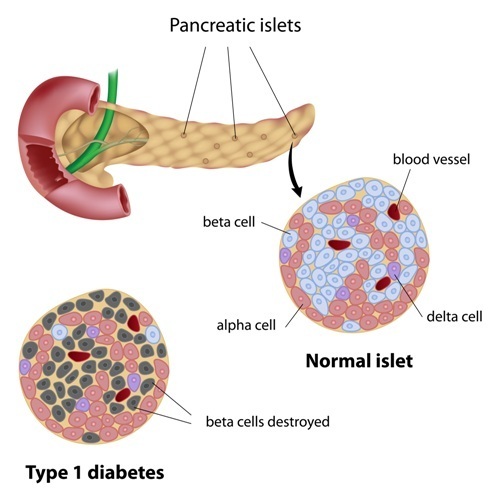
See text for mention of pancreatic alpha and beta cells

See text for mention of pancreatic alpha and beta cells

A panel of university-based scientists convened by The Endocrine Society recently reviewed the available literature on health effects of endocrine-disrupting chemicals (aka EDCs). The executive summary is available free online. Some excerpts:

The full Scientific Statement represents a comprehensive review of the literature on seven topics for which there is strong mechanistic, experimental, animal, and epidemiological evidence for endocrine disruption, namely: obesity and diabetes, female reproduction, male reproduction, hormone-sensitive cancers in females, prostate cancer, thyroid, and neurodevelopment and neuroendocrine systems. EDCs such as bisphenol A, phthalates, pesticides, persistent organic pollutants such as polychlorinated biphenyls, polybrominated diethyl ethers, and dioxins were emphasized because these chemicals had the greatest depth and breadth of available information.

*  *  *

Both cellular and animal models demonstrate a role for EDCs in the etiology of obesity and T2D [type 2 diabetes]. For obesity, animal studies show that EDC-induced weight gain depends on the timing of exposure and the age of the animals. Exposures during the perinatal period [the weeks before and after birth] trigger obesity later in life. New results covering a whole range of EDC doses have underscored the importance of nonmonotonic dose-response relationships; some doses induced weight increase, whereas others did not. Furthermore, EDCs elicit obesity by acting directly on white adipose tissue, al- though brain, liver, and even the endocrine pancreas may be direct targets as well.

Regarding T2D, animal studies indicate that some EDCs directly target 􏰁beta and alpha cells in the pancreas, adipocytes, and liver cells and provoke insulin resistance together with hyperinsulinemia. These changes can also be associated with altered levels of adiponectin and leptin— often in the absence of weight gain. This diabetogenic action is also a risk factor for cardiovascular diseases, and hyperinsulinemia can drive diet-induced obesity. Epide- miological studies in humans also point to an association between EDC exposures and obesity and/or T2D; however, because many epidemiological studies are cross-sectional, with diet as an important confounding factor in humans, it is not yet possible to infer causality.

RTWT.

Bix at Fanatic Cook blog says foods of animal origin are the major source of harmful persistent organic pollutants, some of which act as ECDs.

Keep your eyes and ears open for new research reports on this critically important topic.

Steve Parker, M.D.

Comments Off on Endocrine-Disrupting Chemicals May Cause T2 Diabetes and Obesity

Filed under Causes of Diabetes, Overweight and Obesity

Shocker: 40% of U.S. Adults to Develop Diabetes

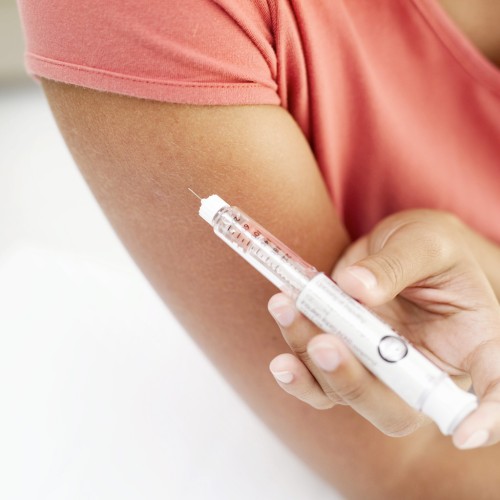
Like type 1 diabetics, many type 2's need insulin shots

Like type 1 diabetics, many type 2’s need insulin shots

Researchers affiliated with the U.S. Centers for Disease Control estimate that 40% of American adults will develop diabetes, mostly type 2. The CDC’s prior estimate was the one of every three Americans born in 2000 would develop diabetes. Some snippets from the article abstract:

On the basis of 2000—11 data, lifetime risk of diagnosed diabetes from age 20 years was 40·2% for men and 39·6% for women, representing increases of 20 percentage points and 13 percentage points, respectively, since 1985—89.

The number of life-years lost to diabetes when diagnosed at age 40 years decreased from 7·7 years in 1990—99 to 5·8 years in 2000—11 in men, and from 8·7 years to 6·8 years in women over the same period.

Years spent with diabetes increased by 156% in men and 70% in women.

The good news is that you can decrease your odds of type 2 diabetes via diet and exercise. The single most important issue in preventing type 2 diabetes is avoiding obesity. Next  is regular physical activity.

Steve Parker, M.D.


2 Comments

Filed under DM Prevalence

A Review: “Stop the Clock: The Optimal Anti-Aging Strategy”

dementia, memory loss, Mediterranean diet, low-carb diet, glycemic index, dementia memory loss

“I wish we could have read PD Mangan’s book thirty years ago!”

I read P.D. Mangan’s 2015 book, Stop the Clock: The Optimal Anti-Aging Strategy. I give it five stars in Amazon’s rating system. High recommended.

♦   ♦   ♦

I approached this book with trepidation. I like PD Mangan even though I’ve never met him. We’ve interacted on Twitter and at our blogs. You can tell from his blogging that he’s very intelligent. I don’t know his educational background but wouldn’t be surprised if he has a doctorate degree. My apprehension about the book is that I was concerned it would be brimming with malarkey and scams. Fortunately, that’s not the case at all.

Twin studies have established that 25% of longevity is genetic. That leaves a lot of lifestyle factors for us to manipulate.

I’m not familiar with the anti-aging scientific literature and don’t expect it will ever be something I’ll spend much time on. But it’s an important topic. I’ll listen to what other smart analysts—like Mr. Mangan—have to say about it.

It’s quite difficult to do rigorous testing of anti-aging strategies on free-living humans. So the best studies we have were done with worms, rodents, and monkeys; the findings may or may not apply to us. For example, long-term calorie restriction—about 30% below expected energy needs—is known to prolong life span in certain worms and rodents, with mixed results in rhesus monkeys. It’s the rare person who would follow such a low-calorie diet for years as an experiment. I doubt I would do it even if proven to give me an extra five years of life. I like to eat.

There are several prominent theories of how and why animals age. The author thinks the major factors are:

  1. oxidative stress
  2. inflammation
  3. a decline in autophagy (perhaps most important)

An effective anti-aging program should address these issues.

In the anti-aging chapter of his book, The South Asian Health Solution, internist Ronesh Sinha says that “Lifestyle practices that reduce excess inflammation in the body will help delay the aging process.” Dr. Sinha is a huge exercise advocate and low-carb diet proponent.

Mr. Mangan makes a convincing argument that a good way to forestall aging is to apply hormetic stress. Hormesis is a phenomenon whereby a beneficial effect (e.g., improved health, stress tolerance, growth, or longevity) results from exposure to low doses of an agent or activity that is otherwise toxic or lethal when given at higher doses.

Needs a bit more hormetic stress

Needs a bit more hormetic stress

In case you’re not familiar with hormesis, here’s a major example. Lack of regular exercise leads is linked to premature death from heart disease and cancer. Starting and maintaining an exercise program leads to greater resistance to injury and disease and longer life span. On the other hand, too much exercise is harmful to health and longevity. We see that in professional athletes and excessive marathon runners. Something about exercise—in the right amount—enhances the body’s intrinsic repair mechanisms. That’s the hormetic effect of exercise; one mechanism is by turning on autophagy.

Autophagy is the body’s natural process for breaking down and removing or recycling worn-out cellular structures. This wearing-out occurs daily and at all ages.

If you’re thinking Mr. Mangan recommends exercise as an anti-aging strategy, you’re exactly right. Especially resistance training and high intensity training. His specific recommendations are perfectly in line with what I tell my patients.

Calorie restriction is another form of hormesis; the body reacts by up-regulating stress defense mechanisms. As a substitute for calorie restriction, the author recommends intermittent fasting. Intermittent fasting increases insulin sensitivity, which leads to enhanced autophagy. Fasting seems perfectly reasonable if you think about it, which very few do. Many of us eat every three or four hours while awake, whether a meal or a snack. If you think about it, that’s not a pattern that would be supported by evolution. In the Paleolithic era, we often must have gone 12–16 hours or even several days without food. Hominins without the resiliency to do that would have died off and not passed their genes down to us.

Steve Parker MD, Advanced Mediterranean DIet

Naturally low-carb Caprese salad: mozzarella cheese, tomatoes, basil, extra virgin olive oil

Another anti-aging trick is a low-carb diet, defined as under 130 grams/day, or under 20% of total calories. It may work via insulin signaling and weight control.

Glutathione within our cells is a tripeptide antioxidant critical for clearing harmful reactive oxygen species (free radicals). We need adequate glutathione to prevent or slow aging. Cysteine is the peptide that tends to limit our body’s production of glutathione. We increase our cysteine supply either through autophagy (which recycles protein peptides) or diet. Dietary sources of cysteine are proteins, especially from animal sources. Whey protein supplements and over-the-counter n-acetyl cysteine are other sources. Fasting is another trick that increases cysteine availability via autophagic recyling.

I don’t recall the author ever mentioning it, but if you hope to maximize longevity, don’t smoke. Even if it has hormetic effects. Maybe that goes without saying in 2015.

When I read a book like this, I always run across tidbits of information that I want to remember. Here are some:

  • those of us in the top third of muscular strength have a 40% lower risk of cancer (NB: you increase your strength through resistance training not aerobics)
  • exercise helps prevent cognitive decline and dementia, at least partially via enhanced autophagy
  • exercise increases brain volume (in preparing to do this review I learned that our brains after age 65 lose 7 cubic centimeters of volume yearly)
  • optimal BMI may be 20 or 21, not the 18.5-25 you’ll see elsewhere (higher BMI due to muscle mass rather than fat should not be a problem)
  • Scientist Cynthia Kenyon: “Sugar is the new tobacco.” (in terms of aging)
  • phytochemicals (from plants, by definition) activate AMPK, a cellular energy sensor that improves stress defense mechanisms and increases metabolic efficiency
  • curcumin (from the spice turmeric) activates AMPK
  • coffee promotes autophagy
  • he does not favor HGH supplementation
  • in the author’s style of intermittent fasting, you’re not reducing overall calorie intake, just bunching your calories together over a shorter time frame (e.g., all 2,500 calories over 6-8 hours instead of spread over 24)
  • mouse studies suggest that intermittent fasting could reduce risk of Alzheimer’s disease and Parkinsons disease
  • consider phytochemical supplements: curcumin, resveratrol, green tea extract
  • calorie-restriction mimetics include resveratrol, curcumin, nicotinamide, EGCG, and hydroxycitrate
  • supplemental resveratrol at 150 mg/day improved memory and cognition in humans

The author provides very specific anti-aging recommendations that could be followed by just about anyone. Read the book for details. Scientists are working feverishly to develop more effective anti-aging techniques. I look forward to a second edition of this book in three to five years.

Steve Parker, M.D.

PS: People with certain medical conditions, such as diabetics taking drugs that can cause hypoglycemia, should not do intermittent fasting without the blessing of their personal physician. If you have any question about your ability to fast safely, check with your doctor.

PPS: If you have diabetes or prediabetes and want to reduce your carbohydrate consumption, consider my Low-Carb Mediterranean Diet or Paleobetic Diet.

3 Comments

Filed under Book Reviews, Longevity

How To Find a Church

Let’s say you’re not happy with the ideology of your current church or you quit going to church years ago and are thinking about returning. Do you want a liberal or a conservative church? How would you find a church where you fit in?

One starting point would be to review a neat graphic put together by Tobin Grant. (Sorry, non-Americans, this is mostly about American churches. But there are data points for atheists and agnostics, too.)

Based on surveys of churchgoers, Mr. Grant classifies churches by where they stand on size of government and “protection of morality.” I’m not saying this is the best way to choose a church; it’s one way to get started.

Happy hunting!

Steve Parker, M.D.

3 Comments

Filed under Uncategorized

Lose Weight With Contrave, But Don’t Kill Yourself

Open wide!

Open wide!

The FDA recently approved a new weight-loss drug for the U.S. market. It’s marketed as Contrave, a combination of naltrexone and bupropion.

Neither of the components is new. Naltrexone’s been used to treat alcohol and narcotic addiction. Bupropion, e.g., Wellbutrin, is for depression and smoking cessation.

Contrave joins two other recent drugs for weight loss. Belviq and Qsymia were approved in 2012. I still haven’t run across anyone using those.

To qualify for the new formulation, you need a body mass index over 30, or over 27 plus one or more weight-related medical condition such as type 2 diabetes or high blood pressure.

If you haven’t lost over 5% of your initial body weight in the first 12 weeks of use, the FDA recommends stopping the drug.

Potential adverse effects include suicidal thoughts and seizures. More commonly, users may experience headache, nausea, constipation, diarrhea, dizziness, insomnia, and dry mouth. Constipation and diarrhea?!

Even with the drug, you still have to be on a reduced-calorie diet and exercise program.

Why not try the Low-Carb Mediterranean Diet or Paleobetic Diet first?

Steve Parker, M.D.

Comments Off on Lose Weight With Contrave, But Don’t Kill Yourself

Filed under Weight Loss

Do Antibiotics Cause Type 2 Diabetes?

Denmark researchers found an association between antibiotic usage and later development of type 2 diabetes. I don’t think they’ve released full details of their study yet. Just because there’s a linkage between antibiotics and type 2 diabetes doesn’t mean there is a direct causal relationship.

One possible way that antibiotics could cause diabetes, however, would be through alteration of gut germs (aka microbiome). An antibiotic may do a great job curing your urinary tract infection, while at the same time eliminating millions of certain gut bacteria and allowing other species to have a population explosion. One of the most fascinating fields of medicine now is trying to figure out if and how the billions of bacteria in our intestines might influence health and disease. F’rinstance, gut bacteria may influence whether we are fat or slim.

I bet if you graphed antibiotic use and incidence of type 2 diabetes over the last 50 years, they would trend together pretty well.

Steve Parker, M.D.

Comments Off on Do Antibiotics Cause Type 2 Diabetes?

Filed under Causes of Diabetes

Low-Carb Beats Low-Fat Diet for Weight Loss Once Again

…according to an article at MedPageToday.

Many physicians have been reluctant to recommend low-carb diets out of fear that they increase cardiovascular risk. A recent study compared low-carb to low-fat dieting over 12 months and actually found better improvements in cardiovascular disease risk factors on the low-carb diet (max of 40 grams a day).

This Avocado Chicken soup is low-carb. Use the search box to find the recipe.

This Avocado Chicken soup is low-carb. Use the search box to find the recipe.

After 12 months, folks on a low-carbohydrate diet had lost 5.3 kg (11.7 lb), while those on a low-fat diet with similar caloric value had lost 1.8 kg (3.9 lb). Both groups showed lowering of LDL cholesterol, while the low-carbers had better improvements in HDL cholesterol and triglycerides.

DietDoctor Andreas Eenfeldt can add this study to his list of others that show better weight loss with low-carb diets compared to low-fat.

Regular readers here know of my Low-Carb Mediterranean Diet for diabetes and prediabetes. My Advanced Mediterranean Diet for non-diabetics also offers a low-carb option in addition to traditional reduced-calorie portion-control eating.

Steve Parker, M.D.

Comments Off on Low-Carb Beats Low-Fat Diet for Weight Loss Once Again

Filed under Carbohydrate, Mediterranean Diet, Weight Loss

Does a New Diabetes Drug Reduce Heart Disease Risk?

diabetic mediterranean diet, Steve Parker MD

Pharmacist using her advanced degree to count pills

Larry Husten writing at CardioBrief mentions a recent press release alleging that empagliflozin reduces cardiovascular disease risk.

Larry points out a problem with diabetes drugs that I’ve been harping on for years: we don’t know the long-term outcomes and side effects of most of our drugs. As long as a diabetes drug reduces blood sugar and seems to be relatively safe in the short term, it will be approved for use by the U.S. Food and Drug Administration. Larry writes:

Until now the best thing anyone could say for sure about all the new diabetes drugs was that at least they didn’t kill people. That’s because although these drugs have been shown to be highly effective in reducing glucose levels, a series of large cardiovascular outcomes trials failed to provide any evidence of significant clinical benefit.

Cardiovascular disease is a major stalker of diabetics. I’m talking about heart attacks, strokes, heart failure, sudden cardiac death.

The aforementioned press release touts reduced cardiovascular disease risk in patients taking empagliflozin. What’s missing is any mention of overall death reduction. Even if the drug really prevents heart attacks and strokes, which I doubt, don’t you want to know about overall death rates? I do. For all we know, the drug could promote illness and death from infections and cancer while reducing heart attacks and strokes. The drug’s net effect could be premature death. 

I’m 99% sure the researchers doing the work have the mortality data. Unless they don’t want to know.

By no means am I against drug use. But if I had type 2 diabetes, I’d do all I can with exercise, weight control, and low-carb eating before resorting to new or higher doses of drugs.

Steve Parker, M.D.

1 Comment

Filed under Drugs for Diabetes

New Study Suggests Low-Carb Diet Healthier Than Low-Fat in T2 Diabetes

This is an important report because most diet studies last much less than one year. Details are in the American Journal of Clinical Nutrition.

Study participants were 115 obese (BMI 35) type 2 diabetics with hemoglobin A1c averaging 7.3%. Average age was 58. So pretty typical patients, although perhaps better controlled than average.

They were randomized to follow for 52 weeks either a very low-carbohydrate or a high-carbohydrate “low-fat” diet. Both diets were designed to by hypocaloric, meaning that they provided fewer calories than the patients were eating at baseline, presumably with a goal of weight loss. The article abstract implies the diets overall each provided the same number of calories. They probably adjusted the calories for each patient individually. (I haven’t seen the full text of the article.) Participants were also enrolled in a serious exercise program: 60 minutes of aerobic and resistance training thrice weekly.

Kayaking is an aerobic exercise if done seriously

Kayaking is an aerobic exercise if done seriously

The very low-carb diet (LC diet) provided 14% of total calories as carbohydrate (under 50 grams/day). The high-carb diet (HC diet) provided 53% of total calories as carbohydrate and 30% of calories as fat. The typical Western diet has about 35% of calories from fat.

Both groups lost weight, about 10 kg (22 lb) on average. Hemoglobin A1c, a reflection of glucose control over the previous three months, dropped about 1% (absolute reduction) in both groups.

Compared to the HC diet group, the LC dieters were able to reduce more diabetes medications, lower their triglycerides more, and increase their HDL cholesterol (“good cholesterol”). These triglyceride and HDL changes would tend to protect against heart disease.

SO WHAT?

You can lose weight and improve blood sugar control with reduced-calorie diets—whether very low-carb or high-carb—combined with an exercise program. No surprise there.

I’m surprised that the low-carb group didn’t lose more weight. I suspect after two months of dieting, the low-carbers started drifting back to their usual diet which likely was similar to the high-carb diet. Numerous studies show superior weight loss with low-carb eating, but those studies are usually 12 weeks or less in duration.

The low-carb diet improved improved lipid levels that might reduce risk of future heart disease, and allowed reduction of diabetes drug use. Given that we don’t know the long-term side effects of many of our drugs, that’s good.

If I have a chance to review the full text of the paper, I’ll report back here.

Steve Parker, M.D.

Reference: Jeannie Tay, et al. Comparison of low- and high-carbohydrate diets for type 2 diabetes management: a randomized trial. First published July 29, 2015, doi: 10.3945/​ajcn.115.112581    Am J Clin Nutr

3 Comments

Filed under Carbohydrate, Heart Disease, Weight Loss