Is It Time to Freak-Out About Arsenic In Wine?

Is the arsenic in the irrigation water, pesticides, or introduced during processsing?

Is the arsenic in the irrigation water, pesticides, or introduced during processsing?

A class-action lawsuit in California claims that certain wines have dangerously high levels of arsenic that could cause cancer, cardiovascular disease, or diabetes. USA Today has one of the ubiquitous stories outlining the few details we know at this point.

Furthermore, chronic low-dose arsenic exposure can cause skin changes (e.g., scaly thick skin, darkening, lightening), peripheral neuropathy (numbness, pain, weakness, typically starting in the feet, then hands), peripheral vascular disease, and liver disease. The cancers linked to arsenic are mostly skin, bladder, lung, and liver. The increased cancer risk persists even after the end of exposure.

How Do You Know If You’ve Been Poisoned With Arsenic?

Comments here refer to chronic low-dose exposure; acute high dose poisoning is another can o’ worms.

First, see your doctor for a history and physical exam and let her know you’re worried about arsenic. If arsenic poisoning remains a possibility, lab testing is usually a 24-hour urine collection for arsenic, or spot urine for arsenic and creatinine. “Spot” in this context means a random single specimen, not a 24-hour collection. For the 48 to 72 hours before either of those tests, don’t eat fish, seaweed, or shellfish.

What about testing hair for arsenic? In general, it’s not accurate.

Bottom Line

At this point, if you or someone you love drinks wine, I suggest simply keeping an eye on this story as it develops. We need more facts. The whole thing could blow over, with nothing coming of it. One of the brands mentioned is Sutter Home, one of my favorites.

Remember a few years ago when we had the vapors over arsenic in rice?

Steve Parker, M.D.

PS: Wine is a time-honored component of the traditional Mediterranean diet, but see my books for alternatives to wine. You don’t have to drink wine to live long and prosper.

Comments Off on Is It Time to Freak-Out About Arsenic In Wine?

Filed under Alcohol

Over 10% of UK’s Drug Budget Goes for Diabetes Drugs

Here in the U.S., two of the top 10 prescribed drugs are diabetes drugs: Lantus and Januvia. That top 10 list is based on number of monthly prescriptions rather than revenue or cost.

Low Carb Diabetic has the details:

“The NHS in England spent £956.7m on drugs last year prescribed by GPs, nurses and pharmacists to treat and manage the condition. That sum represents 10.6% of the cost of all prescriptions issued by NHS primary care services in 2015-16.

The health service now spends more on medication for type 1 and type 2 diabetes than for any other ailment. The number of diabetics across the UK as a whole has recently risen to more than four million and has increased by 65% over the last 10 years.”


Comments Off on Over 10% of UK’s Drug Budget Goes for Diabetes Drugs

Filed under Drugs for Diabetes

The Heavier Identical Twin Is Twice as Likely to Develop Type 2 Diabetes

The study was done in Sweden and involved 4,000 identical twin pairs. The lighter of the twin pairs had average body mass index of 23.9; the heavier twins averaged 25.9. Note that 25.9 is barely into the overweight range.

Type 2 diabetes definitely tends to “run in families.” If you have a genetic predisposition to it, then get overweight or obese, your risk increases even more.

From the abstract:

“In [identical] twin pairs, higher BMI was not associated with an increased risk of MI or death but was associated with the onset of diabetes. These results may suggest that lifestyle interventions to reduce obesity are more effective in decreasing the risk of diabetes than the risk of cardiovascular disease or death.”

Source: Risks of Myocardial Infarction, Death, and Diabetes in Identical Twin Pairs With Different Body Mass Indexes | JAMA Internal Medicine | JAMA Network

PS: Study results may or may not apply to non-Swedes.

PPS: Calculate your body mass index.

Comments Off on The Heavier Identical Twin Is Twice as Likely to Develop Type 2 Diabetes

Filed under Causes of Diabetes

Pre-Mixed Insulins May Not Be Right For You

Kelly Pounds, RN, CDE, has a brief post on the problems of pre-mixed insulins. By pre-mixed, I mean something like Novolin 70/30, which is 70% intermediate-acting insulin and 30% regular insulin. Another common product is 75/25.

Click the link below for details.

“Mixed insulins can have their place.  For instance, they are ideal for those that can only afford one vial of insulin at a time.  Or for those with limited abilities in calculating and managing their insulin doses.  They may be ideal for those that are advanced in years or those with limited dexterity, limited understanding, or even vision problems (people that may mix up insulin vials if they have more than one.)  However, if you are not bound these types of circumstances, you may consider a different, more effective regimen.”

Source: Problems With Mixed Insulin Therapy – Low Carb RN (CDE)

Comments Off on Pre-Mixed Insulins May Not Be Right For You

Filed under Drugs for Diabetes

Ethnic Low-Carb Recipes

It wouldn't  be pico de gallo without jalapeño pepper

It wouldn’t be pico de gallo without jalapeño pepper

DietDoctor presents  a collection of ethnic low-carb recipes with Indian, Mexican, and Asian flavors. With a little effort, you’ll also find basic nutritional analysis provided: carb counts and % of calories from protein, fat, and carbohydrates.

Steve Parker, M.D.

PS: If you can’t afford my book, you’ll find most of the recipes here at this website your reading now.


Comments Off on Ethnic Low-Carb Recipes

Filed under Recipes

FDA Approves Another GLP-1 Receptor Agonist Drug for Type 2 Diabetes

The most common side effects are nausea, vomiting, diarrhea, headaches, and dizziness.

“The U.S. Food and Drug Administration approved Adlyxin (lixisenatide), a once-daily injection to improve glycemic control (blood sugar levels), along with diet and exercise, in adults with type 2 diabetes.

“The FDA continues to support the development of new drug therapies for diabetes management,” said Mary Thanh Hai Parks, M.D., deputy director, Office of Drug Evaluation II in the FDA’s Center for Drug Evaluation and Research. “Adlyxin will add to the available treatment options to control blood sugar levels for those with type 2.

”Type 2 diabetes affects more than 29 million people and accounts for more than 90 percent of diabetes cases diagnosed in the United States. Over time, high blood sugar levels can increase the risk for serious complications, including heart disease, blindness and nerve and kidney damage.”

Source: Press Announcements > FDA approves Adlyxin to treat type 2 diabetes

Comments Off on FDA Approves Another GLP-1 Receptor Agonist Drug for Type 2 Diabetes

Filed under Drugs for Diabetes

Cabbage: Nature’s Laxative

There’s something about cabbage…

I found out why cabbage soup can help fight constipation and even cause diarrhea. It’s raffinose.

Raffinose is sometimes called a fiber but more often is characterized as a trisaccharide, oligosaccharide, or complex carbohydrate. It’s all four.

A typical bowl of cabbage soup has three grams of fiber. If you eat two bowls, that’s six grams, still not all that much, but can predictably cause loose stools or diarrhea in  many folks because of a particular type of fiber: raffinose.

The thing about raffinose is that it passes through the small intestine undigested because we lack the enzyme alpha-galactosidase. When raffinose hits the colon, bacteria start digesting it (aka fermentation), potentially leading to gas, bloating, and/or diarrhea. If your “dose” of raffinose is small enough, you won’t have any symptoms. To use cabbage soup as a constipation preventative or remedy, you have to experiment to see what dose works for you.

Raffinose is also found in beans and cruciferous vegetables like brussels sprouts and cauliflower

Steve Parker, M.D.

PS: Ever heard of Beano? The active ingredient is the enzyme alpha-galactosidase. It breaks down raffinose in the small intestine, to simple sugars we can absorb.

PPS: Raffinose is one of the oligosaccharides to avoid if you’re on a low FODMAPs diet.

Comments Off on Cabbage: Nature’s Laxative

Filed under Fiber

Bariatric Surgery Reduces Microvascular Complications of Type 2 Diabetes

bariatric surgery, Steve Parker MD

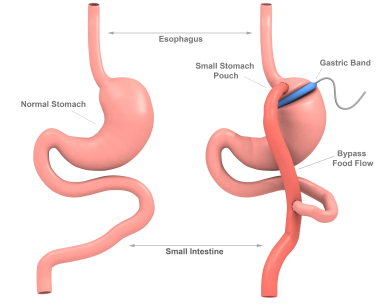
Band Gastric Bypass Surgery (not the only type of gastric bypass): very successful at “curing” T2 diabetes if you survive the operation

Folks with T2 diabetes who undergo weight-loss surgery (bariatric surgery) often see a reversal or remission of their diabetes. The reversal doesn’t always last.

In either case, bariatric surgery does seem to reduce the risk if microvascular complications, namely retinopathy (eye disease), neuropathy (nerve pain or numbness), and nephropathy (kidney disease).

The conclusion of a recent study:

“Our results indicate that remission of type 2 diabetes after bariatric surgery confers benefits for risk of incident microvascular disease even if patients eventually experience a relapse of their type 2 diabetes. This provides support for a legacy effect of bariatric surgery, where even a transient period of surgically induced type 2 diabetes remission is associated with lower long-term microvascular disease risk.”

Source: Long-term Microvascular Disease Outcomes in Patients With Type 2 Diabetes After Bariatric Surgery: Evidence for the Legacy Effect of Surgery | Diabetes Care

Comments Off on Bariatric Surgery Reduces Microvascular Complications of Type 2 Diabetes

Filed under Diabetes Complications

Night Shift Work Linked to Increased Type 2 Diabetes In Women

Shift work may kill you.

I’ve seen studies associating night shift work with T2 diabetes in Japanese men, higher breast cancer rates, more metabolic syndrome, and higher heart disease risk in men.

Now we have evidence for higher diabetes rates in women who do shift work”

“Our results suggest that an extended period of rotating night shift work is associated with a modestly increased risk of type 2 diabetes in women, which appears to be partly mediated through body weight. Proper screening and intervention strategies in rotating night shift workers are needed for prevention of diabetes.”

Source: PLOS Medicine: Rotating Night Shift Work and Risk of Type 2 Diabetes: Two Prospective Cohort Studies in Women

Action Plan: P.D. Mangan has some ideas.

Also, reduce your risk of cancer, heart disease, and diabetes with the Mediterranean diet.

2 Comments

Filed under Causes of Diabetes

Two sons REVERSED their father’s T2 diabetes by making him cut out pasta and bread 

DailyMail.com has the story.

BTW, you’ll read below about body weight expressed in “stones.” That’s a term used in the UK and Ireland. One stone equals 14 pounds or 6.35 kilograms.

Click the link below for more details. Here’s a snippet:

“The story of how Anthony and his younger brother Ian, 37, a documentary maker, intervened to bring their father back from the brink is told in a powerful new BBC film, called Fixing Dad.

The searingly honest documentary is a salutary tale for the 3.6 million people with Type 2 diabetes in the UK.

With his family’s help Geoff believes he has managed to ‘reverse’ the disease: he now weighs 13 stone and his blood sugar levels are so low he no longer needs diabetes medication.

His sons believe this may not have happened had they not stuck Geoff on an 800-calorie-a-day diet for eight weeks, an approach pioneered by Professor Roy Taylor of Newcastle University’s Diabetes Research Group.They also dramatically slashed his carbohydrate intake — by banning pasta and bread — after studies in the journals Nutrition & Metabolism and Diabetologia in 2008 and 2012 found this may be one of the best approaches to reset the release of insulin to safe levels again.”

Source: These sons REVERSED their fathers diabetes by making him cut out pasta and bread | Daily Mail Online

Steve Parker, M.D.

PS: Here’s more info on the Newcastle Diet.

5 Comments

Filed under Uncategorized