
Merry Christmas to One and All!

Don’t forget the reason for the season

3 Comments

Filed under Uncategorized

Red and Processed Meats Not So Deadly After All?

From New York Times:

Public health officials for years have urged Americans to limit consumption of red meat and processed meats because of concerns that these foods are linked to heart disease, cancer and other ills.

But on Monday, in a remarkable turnabout, an international collaboration of researchers produced a series of analyses concluding that the advice, a bedrock of almost all dietary guidelines, is not backed by good scientific evidence.

Whew…What a relief! Dodged that bullet.

Click for Gina Kolata’s article.

Steve Parker, M.D.

low-carb mediterranean diet

Click the pic to purchase at Amazon.com. E-book versions also available at Smashwords.com.

 

1 Comment

Filed under cancer, Heart Disease

Ketogenic and Very Low-Carb Diet Effective Over Two Years in Type 2 Diabetes

This Avocado Chicken soup is very low-carb. Use the search box to find the recipe.

It’s well-established that very low-carb and ketogenic diets over the short-term usually do a good job for folks with type 2 diabetes: better blood sugar levels, fewer diabetes drugs needed, improved lipids, lower blood pressure, etc. Many people—from patients to dietitians to physicians—question whether the diet and associated improvements can be sustained for more than a few months. The study at hand looked at results two years out, and found definite clinical benefit and sustainability.

First, a quick point to get out of the way. In the U.S., HgbA1c is reported as a percentage. But other countries often report HgbA1c in mmol/mol. It’s not easy to convert one to the other accurately, so when you see values in mmol/mol below, be aware they’re only my approximations, not the researchers’.

Here’s how the researchers did their study, published in the summer of 2019.

Scientific Method

262 adults with type 2 diabetes (average age 54) were enrolled in the intervention group, called CCI (digitally-monitored continuous care intervention via a web-based app). 87 were assigned to “usual care.” For all participants at baseline, body mass index averaged 37-40, HgbA1c averaged 7.6% (60 mmol/mol), and they had diabetes for an average of eight years. The CCI group monitored beta-hydroxybutyrate (a ketone) levels, glucoses, body weight, etc, and uploaded results via the web-based app. The app also facilitated an online peer community for social support. For those who preferred in-person education (about half of the total), clinic-based group meetings were held weekly for 12 weeks, bi-weekly for 12 weeks, monthly for six months, and then quarterly in the second year. Continuous Care Intervention included individual support with telemedicine, customized nutritional guidance (emphasis on sustained nutritional ketosis), and health coaching.

The 87 Usual Care folks were recruited from the same geographic area and healthcare system. The received care from their primary care physician or endocrinologist and were counseled by a dietitian (ADA recommendations) as part of their diabetes education. Medical care was not modified for the study. This group had less intense clinical measurements than the CCI cohort.

Of the 262 participants who started with the CCI group, 218 remained after one year. So 44 drop-outs. Of these 262 pioneers, 194 remained for the entire second year (so 24 more drop-outs). If those drop-out numbers seem high to you, be aware that they are NOT. Even the Usual Care group of 87 had 19 drop-outs over the two years.

So what happened?

Reductions from baseline to two years in the CCI group included: fasting insulin, weight (down about 10% or 11.9 kg), blood pressure (systolic and diastolic), HgbA1c, and triglycerides. Those are all going in the right direction.

Other findings for the CCI group: HDL-cholesterol (“good cholesterol”) went up. Excluding metformin, the use of diabetes control drugs in the CCI group dropped from 56% of participants to 27%. Some dietitians fear the ketogenic diets are bad for bones, causing calcium to leak out of bones, weakening them since calcium is the main mineral in bones. But spine bone mineral density in the CCI group was unchanged over the two years.

The “usual care” group had no changes in those measurements or diabetes medication use.

Now, to understand some of the investigators results, you need to know their definitions. Diabetes remission = glycemic control without medication use. Partial remission is “sub-diabetic hyperglycemia of at least 1 year duration, HgbA1c level between 5.7-6.5% (39 to 48 mmol/mol), without any medications (two HbgA1c measurements).” Complete remission is “normoglycemia of at least 1 year duration, HgbA1c below 5.7% [39 mmol/mol], without any medications (two HgbA1c measurements).” Diabetes reversal per Supplementary Table 2: Sub-diabetic hyperglycemia and normoglycemia (HgbA1c below 6.5% or 48 mmol/mol), without medications except metformin.

The CCI group had resolution of diabetes (partial or complete remission in 18%, reversal in 53%), which was not seen in the usual care group. Complete remission was achieved in 17 (6.7%) of the CCI group. HgbA1c in the CCI group at two years dropped from average of 7.6% (60 mmol/mol)  to 6.7% (50 mmol/mol).

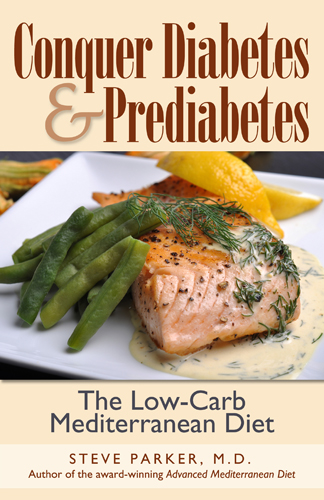
Conquer Diabetes and Prediabetes

Metformin is the most-recommended drug for type 2 diabetes

“CCI diabetes reversal exceeds remission as prescriptions for metformin were usually continued given its role in preventing disease progression, preserving beta-cell function and in the treatment of pre-diabetes per guidelines.”

The average dose of insulin in CCI folks who were using insulin at baseline decreased by 81% at two years. (Have you noticed the price of insulin lately?)

Beta-hydroxybutyrate is a ketone, and at a certain level in the blood, indicates the presence of ketosis on a ketogenic diet. “The 2 year beta-hydroxybutryate (BHB) increase above baseline demonstrated sustained dietary modification.”  “…the encouraged range of nutritional ketosis (> or = 0.5 mM) was observed in only a minority (14.1%) of participants at 2 years. On average, patient-measured BHB was > or = 0.5mM for 32.8% of measurement over the 2 years.”

Bottom Line

In summary, the CCI group—eating ketogenic and/or very low-carb—showed sustained beneficial effects even two years after start of the study. I suspect the Virta app, clinic-based group meetings, and individual support and coaching contributed significantly to the participants’ success.

Steve Parker, M.D.

PS: By the way, many of the study authors are affiliated with Virta Health Corp., which I assume is a for-profit company. Virta provided funding for the study. Could that funding have unduly influenced the results? It’s always possible but I have no evidence that it did. If not already available, I expect a commercial version of the program will be within 12-24 months.

Reference: Athinarayanan, S.J., et al (including Sarah Hallberg, Jeff Volek, and Stephen Phinney). Long-Term Effects of a Novel Continuous Remote Care Intervention Including Nutritional Ketosis for the Management of Type 2 Diabetes: A 2-year Non-randomized Clinical Trial. Frontiers in Endocrinology, Vol. 10, article 348, June 19, 2019.

low-carb mediterranean diet

Click the pic to purchase at Amazon.com. E-book versions also available at Smashwords.com.

 

1 Comment

Filed under ketogenic diet

Eat Nuts to Avoid Age-Related Weight Gain

Remember…peanuts aren’t nuts, they’re legumes

Nuts have been part of the healthy Mediterranean diet for decades.

From NPR:

Eating a handful of almonds, walnuts, peanuts or any type of nut on a regular basis may help prevent excessive weight gain and even lower the risk of obesity, new research suggests.

It may be that substituting healthy nuts for unhealthy snacks is a simple strategy to ward off the gradual weight gain that often accompanies aging, according to the researchers. Nuts also help us feel full longer, which might offset cravings for junk food.Researchers looked at the diet and weight of more than 280,000 adults taking part in three long-term research studies. Over more than 20 years of monitoring, participants were asked every four years about their weight and, among other things, how often, over the preceding year, they had eaten a serving (about one ounce) of nuts.

Source: Just A Handful Of Nuts May Help Keep Us From Packing On The Pounds As We Age : The Salt : NPR

Steve Parker, M.D.

PS: Both of my Mediterranean Diets include nuts.

Click pic to order at Amazon.com. E-book versions also available at Smashwords.com.

Click pic to order at Amazon.com. E-book versions also available at Smashwords.com.

3 Comments

Filed under nuts, Overweight and Obesity

Taking an Exercise Break? Fitness Deteriorates After Just Two Weeks

A workout partner may motivate you

From UPI:

A new study proves that the old adage “use it or lose it” is definitely true when it comes to fitness.After just two weeks of sedentary behavior, formerly fit people had:

—A decline in heart and lung health

—Increased waist circumference

—Greater body fat and liver fat

—Higher levels of insulin resistance

Source: Study: Two weeks of no exercise enough to damage fit people’s bodies – UPI.com

On the other hand, taking a two-week break from exercise twice a year probably won’t have any lasting effect on health and longevity. And it may prevent burn-out and abandonment of fitness entirely.

It’s a small study, just 28 subjects, so may not be reproducible.

Steve Parker, M.D.

low-carb mediterranean diet

Click the pic to purchase at Amazon.com. E-book versions also available at Smashwords.com.

2 Comments

Filed under Exercise

Do Folks With Diabetic Kidney Disease Need to Restrict Protein Consumption?

The nephron is the microscopic structural and functional unit of the kidney.

From a Diabetes Care Consensus panel:

Consensus recommendation:

In individuals with diabetes and non–dialysis-dependent diabetic kidney disease (DKD), reducing the amount of dietary protein below the recommended daily allowance (0.8 g/kg body weight/day) does not meaningfully alter glycemic measures, cardiovascular risk measures, or the course of glomerular filtration rate decline and may increase risk for malnutrition.

Are protein needs different for people with diabetes and kidney disease? Historically, low-protein eating plans were advised to reduce albuminuria and progression of chronic kidney disease in people with DKD, typically with improvements in albuminuria but no clear effect on estimated glomerular filtration rate. In addition, there is some indication that a low-protein eating plan may lead to malnutrition in individuals with DKD. The average daily level of protein intake for people with diabetes without kidney disease is typically 1–1.5 g/kg body weight/day or 15–20% of total calories. Evidence does not suggest that people with DKD need to restrict protein intake to less than the average protein intake.

Source: Nutrition Therapy for Adults With Diabetes or Prediabetes: A Consensus Report | Diabetes Care

Steve Parker, M.D.

Click the pic to purchase at Amazon.com. E-book versions also available at Smashwords.com.

1 Comment

Filed under Diabetes Complications

Bariatric Surgery Prolongs Life in PWDs (formerly “diabetics”)

bariatric surgery, Steve Parker MD

Band-type gastric bypass, a type of metabolic surgery

Bariatric surgeries are considered by some experts (mostly surgeons?) to be the most effective way to treat or cure type 2 diabetes. They are effective, assuming you survive the original operation and potential complications, which may require further surgery.

From JAMA Network:

Among patients with type 2 diabetes and obesity, metabolic surgery, compared with nonsurgical management, was associated with a significantly lower risk of incident [heart attack, ischemic stroke, and mortality]. The findings from this observational study must be confirmed in randomized clinical trials.

Source: Association of Metabolic Surgery With Major Adverse Cardiovascular Outcomes in Patients With Type 2 Diabetes and Obesity | Bariatric Surgery | JAMA | JAMA Network

Steve Parker, M.D.

low-carb mediterranean diet

Click the pic to purchase at Amazon.com. E-book versions also available at Smashwords.com.


2 Comments

Filed under Bariatric Surgery, Longevity

Soft Drinks Linked to Premature Death

I enjoy an aspartame-flavored Fresca now and then

The study at hand involved Europeans. It’s the first time I’ve seen artificially-sweetened soft drinks like to premature death.

From JAMA Network:

This study found that consumption of total, sugar-sweetened, and artificially sweetened soft drinks was positively associated with all-cause deaths in this large European cohort; the results are supportive of public health campaigns aimed at limiting the consumption of soft drinks.

Source: Association Between Soft Drink Consumption and Mortality in 10 European Countries | Cardiology | JAMA Internal Medicine | JAMA Network

Steve Parker, M.D.

Click the pic to purchase at Amazon.com. E-book versions also available at Smashwords. com

2 Comments

Filed under Longevity

Can Diet Alter Your Gut Bacteria and Thereby Lower Your Risk of Dementia?

The short answer? We don’t know.

Low-carb salad

The gut bacteria (aka microbiome) seem to be able to decrease or increase inflammation that could cause or exacerbate Alzheimer’s dementia. The  microbiome’s effect on inflammation depends on the species of bacteria present, and the amount of those bacteria. At least one study found that Alzheimer’s patients have a greater abundance of the pro-inflammatory species and less of the anti-inflammatory species, compared to other folks.

Researchers with Wake Forest School of Medicine tried to find answers to the questions in the title of this post. (Click for full text.) They studied 17 experimental subjects, average age 64, who had mild cognitive impairment (11) or “cogni/subjective memory complaints” (6). God bless them for submitting to three spinal taps apiece. The experimental diets were 1) Mediterranean-Ketogenic (under 20 g carb/day), or 2) Low-fat American Heart Association diet (under 40 g fat/day). Participants were on each diet for six weeks.

The investigators didn’t find anything useful for those of us trying today to avoid Alzheimer’s or prevent the progression of mild cognitive impairment to dementia. Their bottom line is, “The data suggest that specific gut microbial signatures may depict [characterize] the mild cognitive impairment and that the modified Mediterranean-ketogenic diet can modulate the gut microbiome and metabolites in association with improved Alzheimer’s disease biomarkers in cerebrospinal fluid.”

So we won’t know for several more years, if ever, whether intentional modification of diet will “improve” our gut microbiomes, leading to lower risk of dementia.

What we have known for many year, however, is that the traditional Mediterranean diet is linked to lower risk of Alzhiemer’s dementia.

For more details, see Science Daily:

In a small pilot study, the researchers identified several distinct gut microbiome signatures — the chemicals produced by bacteria — in study participants with mild cognitive impairment (MCI) but not in their counterparts with normal cognition, and found that these bacterial signatures correlated with higher levels of markers of Alzheimer’s disease in the cerebrospinal fluid of the participants with MCI.

Through cross-group dietary intervention, the study also showed that a modified Mediterranean-ketogenic diet produced changes in the gut microbiome and its metabolites that correlated with reduced levels of Alzheimer’s markers in the members of both study groups.

Source: Diet’s effect on gut bacteria could play role in reducing Alzheimer’s risk — ScienceDaily

Steve Parker, M.D.

Click the pic to purchase the world’s first practical ketogenic Mediterranean diet at Amazon.com. E-book versions also available at Smashwords.com.

If you own this book, you already have a ketogenic Mediterranean diet.

1 Comment

Filed under Carbohydrate, Dementia, Health Benefits, ketogenic diet, Mediterranean Diet

Support for Tighter Diabetes Control

Spaghetti squash “spaghetti” with meaty sauce

In Diabetes Care:

Glycated hemoglobin targets have been given in guidelines for the last three decades, mostly without change at around 6.5–7.0% (47–53 mmol/mol). Personalization of such targets has also long been advocated, but often with little and inappropriate guidance. More recently some have suggested higher targets might be indicated, and more specifically lower targets avoided, even in those in whom they are easily attained without seeming burden or risk. Prospective data from randomized and observational studies, in people with type 2 diabetes and indeed those without diabetes, find cardiovascular and mortality risk are uniformly lowest at lower levels including into the normal range. In some studies with large populations, a high proportion of people are found to attain such levels, and the UK Prospective Diabetes Study (UKPDS) and more recent studies appear to confirm the importance of starting low and continuing long. Studies of cardiovascular events and mortality in people with diabetes will already factor in any effect of hypoglycemia, which therefore should not be double-counted in setting targets. Nevertheless, some factors should lead to modification of target levels, and these will include experience of hypoglycemia where therapy change and glucose monitoring cannot ameliorate it and sometimes prospectively in those at social or occupational risk. The fact that clinical experience will modify targets emphasizes that targets will not be stable over time but will change, for example, with occurrence of adverse events or perceptions of increased/decreased burden of therapy. The evidence suggests that glucose control takes 5 years or more to have any impact on vascular outcomes or mortality, so targets may also be higher in those with shorter life expectancy or higher health burden or simply reflect individual preferences. This article discusses the evidence behind these conclusions.

Source: Controversies for Glucose Control Targets in Type 2 Diabetes: Exposing the Common Ground | Diabetes Care

If I had diabetes, I’d aim for HgbA1c under 5.7%, expecting that would increase my longevity and decrease my risk of diabetes complications. Such an ambitious goal would require frequent blood sugar monitoring, exercise, and a very low-carb diet.

Steve Parker, M.D.

low-carb mediterranean diet

Click the pic to purchase at Amazon.com. E-book versions also available at Smashwords.com.

2 Comments

Filed under Uncategorized