Legumes and Cereal Grains: Any Role in Weight Management?

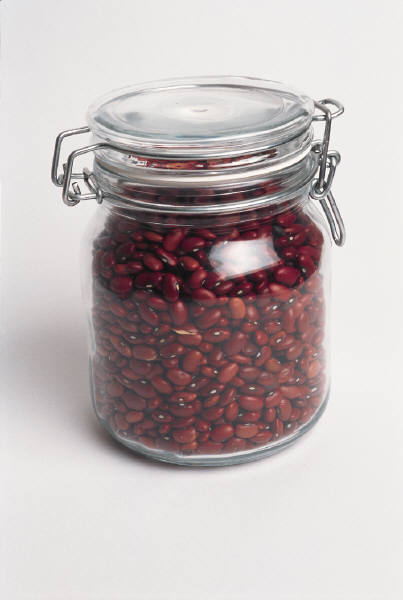
Researchers at the University of Wollongong (Australia) reviewed the scientific literature on the role for cereal grains and legumes in weight management.

In this context, “cereal” refers to “a grass such as wheat, oats, or corn, the starchy grains of which are used as food” (American Heritage Dictionary). 

Here’s their summary:

There is strong evidence that a diet high in whole grains is associated with lower body mass index, smaller waist circumference, and reduced risk of being overweight; that a diet high in whole grains and legumes can help reduce weight gain; and that significant weight loss is achievable with energy-controlled diets that are high in cereals and legumes. There is weak evidence that high intakes of refined grains may cause small increases in waist circumference in women. There is no evidence that low-carbohydrate diets that restrict cereal intakes offer long-term advantages for sustained weight loss. There is insufficient evidence to make clear conclusions about the protective effect of legumes on weight.  

I haven’t read the entire article, but invite you to do so.  I’m searching for clues as to which type of carbs to add after one finishes the Ketogenic Mediterranean Diet.

Steve Parker, M.D.

Reference:  Williams, P.G., et al.  Cereal grains, legumes, and weight management: a comprehensive review of the scientific evidence.  Nutrition Reviews, 66(2008): 171-82.

3 Comments

Filed under Carbohydrate, Grains, legumes, Overweight and Obesity, Weight Loss

Book Review: The Blue Zones

Here’s my review of  The Blue Zones: Lessons for Living Longer From the People Who’ve Lived the Longest, a 2008 book by Dan Buettner.  I give the book four stars on Amazon.com’s five-star system (“I like it”). 

♦   ♦   ♦

The lifestyle principles advocated in The Blue Zones would indeed help the average person in the developed world live a longer and healthier life.  The book is a much-needed antidote to rampant longevity quackery.  Dan Buettner’s idea behind the book was “discovering the world’s best practices in health and longevity and putting them to work in our lives.”  He succeeds. 

Mr. Buettner assembled a multidisciplinary team of advisors and researchers to help him with a very difficult subject.  Do people living to 100, scattered over several continents, share any characteristics?  Do those commonalities lead to health and longevity? 

They studied four longevity hot spots (Blue Zones):

  • Okinawa islands (Japan)
  • Barbagia region of Sardinia (an island off the Italian mainland)
  • Loma Linda, California (a large cluster of Seventh Day Adventists)
  • and the Nicoya Peninsula (Costa Rica). 

Research focused on people who lived to be 100. 

Until recently, two of the Blue Zones—the Nicoyan Peninsula and Sardinia—were quite isolated, with relatively little influence from the outside world. 

Mr. Buettner et al identify nine key traits that are associated with longevity and health in these cultures.  Of course, association is not causation, which Mr. Buettner readily admits.  He draws more conclusions from the data than would many (most?) longevity scientists.  Scientists can wait for more data, but the rest of us have to decide and act based on what we know today.  Here are the “Power Nine”:

  1. regular low-intensity physical activity
  2. hari hachi bu (eat until only 80% full—from Okinawa)
  3. eat more plants and less meat than typical Western cultures
  4. judicious alcohol, favoring dark red wine
  5. have a clear purpose for being alive (a reason to get up in the morning, that makes a difference)
  6. keep stress under control
  7. participate in a spiritual community
  8. make family a priority
  9. be part of a tribe (social support system) that “shares Blue Zone values”

Of these, I would say the available research best supports numbers 1, 4, 7, 8, and the social support system.

I doubt that hari hachi bu (eat until you’re only 80% full) will work for us in the U.S.  It’s never been tested rigorously.  The idea is to avoid obesity.  

The author believes that average lifespan could be increased by a decade via compliance with the Power Nine.  And these would be good, relatively healthy years.  Not an extra 10 years living in a nursing home.

Appropriately and early on, Mr. Buettner addresses the issue of genetics by mentioning a single study of Danish twins that convinces him longevity is only 25% deterimined by genetic heritage.  Environment and lifestyle choices determine the other 75%.  I believe he underestimates the effect of genetics. 

Over half the population of the Nicoya Peninsula Blue Zone are of Chorotega Indian descent, not from Spanish Conquistadores.  Would a Danish twin study have much tosay about Chorotega Indians’ longevity?  We don’t know, but I’m skeptical.  Also, the Sardinians and Okinawans would seem to have centuries of a degree of inbreeding, too, according to Buettner’s own documentation. 
 
Do the Adventists tend to marry and breed with each other (like Mormons), thereby concentrating longevity genes?  You won’t find the question addressed in the book.

Because I think genetics plays a larger role in longevity than 25%, I’d estimate that the healthy lifestyle choices in this book might prolong life by six or seven years instead of 10.  But I’m splitting hairs.  I don’t have any better evidence than Mr. Buettner, just a hunch plus years of experience treating diseased and dying patients.

These four Blue Zones do share a mostly plant-based diet of natural foods with minimal processing.  Two of the populations—the Okinawans and Costa Ricans—didn’t seem to have any choice.  Heavy meat consumption just wasn’t an option available to them.  Rather than promoting a low-meat plant-based diet, it might be more accurate to conclude that “you don’t have to eat a lot of meat, chicken, or fish to live a long healthy life.”

In other words, it may not matter how much meat you eat as long as you eat the healthy optimal level of fruits, vegetables, and whole grains.  It’s a critical difference not addressed in this book except among the Adventists.

Even if you could live an extra two years as a vegan, I’m sure many people would choose to eat meat anyway.  By the way, this book conflates vegan, lacto-vegetarian, lacto-ovo vegetarian, near-vegetarian, and vegetarian into one: vegetarian.  It’s a common problem when considering the health aspects of vegetarianism.  They are not necessarily the same.   

By the same token, plenty of my patients have told me they don’t like any kind of exercise and they won’t do it, even if it would give them an extra two years of life.  What many don’t realize is that from a functional standpoint, regular exercise makes their bodies perform as if they were ten years younger.  There’s a huge difference between the age of 80 and 70 in terms of functional abilities.

Why read the book now that you have the Power Nine?  To convince you to change your unhealthy ways, and indispensible instruction on how to do so.

Steve Parker, M.D.

Disclosure:  The publisher’s representative did not pay me for this review, nor ask for a favorable review.  They offered me a review copy and three give-aways, and I accepted.  I figure the cost of the books to the publisher was $16 USD total.  I gave away the books through my Advanced Mediterranean Diet Blog.  Cost of shipping the books to the winners came out of my pocket.

3 Comments

Filed under Book Reviews, Vegetarian Diet

New Year’s Traditions and Superstitions

Eat black-eyed peas on New Year’s Day for good luck in the coming year, at least if you live in the southern U.S. where I grew up.  In the Deep South, add pork and collard greens.

In some parts of Italy they eat lentils instead, for financial prosperity.  Lentils look  a bit like coins. 

In Greece, January 1 is St. Basil’s day.  He was the forefather of the Greek Orthodox church.  At midnight on New Year’s eve, the head of the household cuts vassilopitta (St. Basil’s cake).  Whoever gets the piece with the embedded silver or gold coin will be lucky for the next year. 

In Spain and Portugal, they eat 12 grapes, one grape at each stroke of the clock or bell at midnight New Year’s eve.  Assuming you don’t choke, you gain 12 months of prosperity and luck. 

Inhabitants in some regions of Portugal eat salt cod on New Year’s eve for good luck. 

In Mexico, if someone gives you red underwear and you have it on at midnight New Year’s eve, you’ll experience love that year.  Yellow underwear brings a good job, work, or prosperity.  Carry suitcases outside and around your house at midnight, and you’ll travel in the coming year.

My children were born in Pensacola, Florida—the Deep South for sure.  I’m picking up a can of black-eyed peas today. 

Here’s wishing you a happy and healthy New Year!

Steve Parker, M.D.

Comments Off on New Year’s Traditions and Superstitions

Filed under Uncategorized

Mea Culpa: Average Holiday Weight Gain Not as High as I Thought

Travis Saunders at the Obesity Panacea blog notes that average weight gain in adults over the Thanksgiving (U.S.)–Christmas–New Years’ season seems to be on the order of 0.8 pounds or 0.37 kg. 

Data are from a 2000 article in the New England Journal of Medicine.  Researchers weighed 195 Americans throughout the year.  My quick search at PubMed.gov found no better or more recent studies.

I mention this because I had written somewhere that average holiday season weight gain is about five pounds (2.3 kg).  I stand corrected.

Steve Parker, M.D.

Comments Off on Mea Culpa: Average Holiday Weight Gain Not as High as I Thought

Filed under Overweight and Obesity

Mediterranean Diet Linked to Lower Stomach Cancer Risk

"I just wish we'd found this cancer a year ago"

The Mediterranean diet is associated with a 33% reduction in stomach cancer, according to a study just published in the American Journal of Clinical Nutrition.

Stomach cancer (aka gastric cancer) is uncommon in the U.S.  Most cases are advanced and incurable at the time of diagnosis.  So prevention is ideal.

European investigators studied 485,000 people over the course of nine years, during which 449 cases of stomach cancer were found.  Surveys determined how closely the food consumption of study participants tracked nine key components of the Mediterranean diet.  Compared with people who had low adherence to the Mediterranean diet, those with high adherence had 33% less risk of developing stomach cancer.

The Mediterranean diet has long been associated with a lower risk of cancer: specifically, cancers of the breast, colon, prostate, and uterus.  We can add stomach cancer to the list now.

Steve Parker, M.D.

Reference:  Buckland, Genevieve, et al.  Adherence to a Mediterranean diet and risk of gastric adenocarcinoma within the European Prospective Investigation into Cancer and Nutrition (EPIC) cohort studyAmerican Journal of Clinical Nutrition, December 9, 2009, epub ahead of print.  doi: 10.3945/ajcn.2009.28209

Comments Off on Mediterranean Diet Linked to Lower Stomach Cancer Risk

Filed under Health Benefits

Top 10 Diabetes Superfoods

The American Diabetes Association has published a list of  Top 10 Diabetes Superfoods.  They share a low glycemic index and provide key nutrients, according to the ADA.  Click the link for details.  Here they are in no particular order:

  • beans
  • dark green leafy vegetables
  • citrus fruit
  • sweet potatoes
  • berries
  • tomatoes
  • fish high in omega-3 fatty acids
  • whole grains
  • nuts
  • fat-free milk and yogurt

Regular readers here know I have no problem generally with regular or high-fat versions of dairy products.  An exception would be for people trying to lose weight while still eating lots of carbohydrates; the low- and no-fat versions could have lower calorie counts, which might help with weight management.

But compare non-fat and whole milk versions of yogurt in the USDA nutrient database.  One cup of non-fat fruit variety yogurt has 233 calories, compared to 149 calories in plain whole milk yogurt.  The “non-fat” version  reduced the fat from 8 to 2.6 g (not zero g) and replaced it with sugars (47 g versus 11 g). 

Unfortunately, your typical supermarket yogurts are low-fat yet loaded with sugar or high fructose corn syrup that impede weight loss.

Nevertheless, this superfoods list may give us some guidance in design of a Diabetic Mediterranean Diet.  Except for “fat-free,” everything else on the list is a component of the traditional healthy Mediterranean diet.  “Fat-free” is a modern invention and not necessarily an improvement.

Steve Parker, M.D.

2 Comments

Filed under Dairy Products, Fish, Fruits, Glycemic Index and Load, Grains, Health Benefits, legumes, Mediterranean Diet, nuts, Vegetables

Mediterranean Cookbooks for Health and Longevity

Who knows where this is?

Here are some Christmas gift book suggestions for someone trying to eat healthier via the Mediterranean diet.

  • The Mediterranean Heart Diet: How It Works and How to Reap the Health Benefits, with Recipes to Get You Started by Helen V. Fisher.
    [More than 140 delicious and healthy recipes from an experienced cookbook author and a doctorate-level clinical nutrition specialist.] 
  • The Mediterranean Diet by Marissa Cloutier and Eve Adamson.  [The Mediterranean-style recipes here get you close to an ovo-lacto-vegetarian diet.  The authors complicate the Oldways-Willett Mediterranean Pyramid and promote soy milk products.  Nevertheless, this is “good eats.”]
  • The Mediterranean Kitchen by Joyce Esersky Goldstein.
  • The Essential Mediterranean: How Regional Cooks Transform Key Ingredients into the World’s Favorite Cuisines by Nancy Harmon Jenkins. 
  • Mediterranean Diet Cookbook: A Delicious Alternative for Lifelong Health by Nancy Harmon Jenkins.  Updated in 2008 as The New Mediterranean Diet Cookbook
  • Mediterranean Cooking by Paula Wolfert.

Steve Parker, M.D.

2 Comments

Filed under Book Reviews

Low-Carb Killing Spree Continues

The choice is clear . . . NOT

Low-fat and low-carb diets produce equal weight loss and improvements in insulin resistance but the low-carb diet may be detrimental to vascular health, according to a new study in Diabetes.

Methodology

Researchers in the the UK studied 24 obese subjects—15 female and 9 male—randomized to eat either a low-fat (20% fat, 60% carbohydrate) or low-carb (20% carb, 60% fat) diet over 8 weeks.  Average age was 39; average body mass index was 33.6.  Most of them had prediabetes.  Food intake was calculated to result in a 500 calorie per day energy deficit (a reasonable reduced-calorie diet, in other words).  Study participants visited a nutritionist every other day, and all food was provided in exact weighed portions. 

Results

Both groups lost the same amount of weight, about 7.3% of initial body weight. 

Triglycerides dropped by a third in the low-carb group; unchanged in the low-fat cohort.  Changes in total cholesterol, LDL cholesterol, and HDL changes were about the same for both groups.

Systolic blood pressure dropped about 10 points in both groups; diastolic fell by 5 in both.

Aortic augmentation index” fell significantly in the low-fat group and tended to rise in the low-carb group.  According to the researchers, the index is used to estimate systemic arterial stiffness.  [In general, flexible arteries are better for you than stiff ones.  “Hardening-of-the-arteries,” etc.]  The low-fat group started with a AAI of 17, the low-carb group started at 12.  They both ended up in the 13-14 range. 

Peripheral insulin sensitivity improved significantly only in the low-carb group but “there was no significant difference between groups.”  No difference between the groups in hepatic (liver) insulin resistance. 

Fasting insulin levels fell about 20% in the low-fat group and about 40% in the low-carb group, a difference not reaching statistical significance (p=0.17).

The Authors’ Conclusions

This study demonstrates comparable effects on insulin resistance of low-fat and low-carbohydrate diets independent of macronutrient content.  The difference in augmentation index may imply a negative effect of low-carbohydrate diets on vascular risk.

My Comments

Yes, you can indeed lose weight over eight weeks on both low-fat and low-carb diets, if you follow them.  So diets DO work.  No surprise.

Loss of excess body fat by either method lowers your blood pressure.  No surprise.

Once again, concerns about low-carb/high-fat diets adversely affecting common blood lipids—increasing heart disease risk—are not supported.  No surprise

Hyperinsulinemia and insulin resistance are risk factors for development of diabetes and cardiovascular disease.  Results here tend to favor the low-carb diet.  I have to wonder if a study with just twice the number of test subjects would have shown a clear superiority for the low-carb diet.

The authors imply that aortic augmentation index is an important measure in terms of future cardiovascular health.  A major conclusion of this study is that a change in this index with the low-carb diet might adveresly affect heart health.  Yet they don’t bother to discuss this test much at all.  I’m no genius, but neither are the typical readers of Diabetes.  I doubt that they are any more familiar with that index than am I, and I’d never heard of it before. 

[Feel free to educate me regarding aortic augmentation index in the comment section.]

Unfortunately, many readers of this journal article and the associated news releases will come away with the impression, once again, that low-carb diets are bad for your heart. 

I’m not convinced.

Steve Parker, M.D.   

References:

Bradley, Una, et al.  Low-fat versus low-carbohydrate weight reduction diets.  Effects on weight loss, insulin resistance, and cardiovascular risk: A randomized control trialDiabetes, 58 (2009): 2,741-2,748.

Nainggolan, Lisa.  Low-carb diets hit the headlines again.  HeartWire, December 11, 2009.

1 Comment

Filed under Carbohydrate, coronary heart disease, Fat in Diet, Prevention of T2 Diabetes, Weight Loss

More Coffee, Less Diabetes

"Is the world shaking, or is it just me?"

Coffee drinking is associated with lower risk of developing type 2 diabetes, according to the current issue of Archives of Internal Medicine.  Tea and decaffeinated coffee seem to have the same effect.  Each additional daily cup of coffee reduced the risk by seven percent.

These beverages may have one or more phytochemicals that that alter blood sugar physiology.  [“Phyto” is Greek for “plant.”]  If the experts can figure out which chemicals are involved, it may lead to new drugs to prevent and treat diabetes 10 or 20 years down the road.

In the meantime, don’t feel too guilty about drinking two or three cups of coffee a day, especially if you have risk factors for developing type 2 diabetes.  Common risk factors are family history of diabetes, overweight, high-glycemic-index eating, and sedentary lifestyle.

Steve Parker, M.D.

Reference:  Huxley, Rachel, et al.  Coffee, decaffeinated coffee, and tea consumption in relation to incident type 2 diabetes mellitus: A systematic review with meta-analysisArchives of Internal Medicine, 22 (2009): 2,053-2,063.

Comments Off on More Coffee, Less Diabetes

Filed under Prevention of T2 Diabetes

Book Review: Good Calories, Bad Calories

Here’s my  review of good Calories, Bad Calories: Challenging the Conventional Wisdom on Diet, Weight Control, and Disease, by Gary Taubes, 2007.  I give it five stars on Amazon.com’s five-star system (“I love it”).

♦   ♦   ♦

This brilliant book deserves much wider currency among physicians, dietitians, nutritionists, and obesity researchers.  The epidemic of overweight and obesity over the last 30 years should make us question the reigning theories of obesity treatment and prevention.  Taubes questioned those theories and pursued answers wherever the evidence led.  He shares in GCBC his eye-opening, even radical, well-reasoned findings. 

Ultimately, this tome is an indictment of the reigning scientific community and public nutrition policy-makers of the last four decades.  That explains why, twoyears after publication, this serious, scholarly work has not been reviewed by the New England Journal of Medicine, the Journal of the American Medical Association, the American Journal of Clinical Nutrition , and the Journal of the American Dietetic Association (as of August, 2009).

In Part 1, Taubes examines the scientific evidence for what he calls the fat-cholesterol hypothesis.  More commonly known as the diet-heart hypothesis, it’s the idea that dietary fat (especially saturated fat) and cholesterol clog heart arteries, causing heart attacks.  Taubes finds the evidence unconvincing.  He’s probably right.

Part 2, The Carbohydrate Hypothesis, revives and older theory from the mid-twentieth cenury that is elsewhere called the Cleave-Yudkin carbohydrate theory of dental and chronic systemic disease.  In the carbohydrate theory,  high intake of sugary foods, starches, and refined carbhohyrates leads first to dental disease (cavities, gum inflammation, periodontal disease) then, later, to obesity and type 2 diabetes, coronary heart disease, perhaps even cancer and Alzheimer’s Disease.  These are, collectively, the “diseases of civilization.”

Part 3 tackles obesity and weight regulation.  Taubes writes that “…fattening and obesity are caused by an imbalance—a dysequilibirium—in the hormonal regulation of adipose [fat] tissue and fat metabolism.”  Think of the transformation of a skinny 10-year-old girl into a voluptuous young woman.  It’s not over-eating that leads to curvaceous fat deposits, growth of mammary tissue, and increase in height; it’s hormonal changes beyond her control. 

The primary hormonal regulator of fat storage is insulin, per Taubes.  Elevated insulin levels lead to storage of food energy as fat.  Carbohydrates stimulate insulin secretion and make us fat. 

Although it’s a brilliant book, by no means do I agree with all Taubes’ conclusions.  For instance, if carbohydrates cause heart disease, why is glycemic index only very weakly associated with coronary heart disease in men?  It’s way too early to blame cancer and Alzheimers on carbohydrates.  Primitive cultures may not exhibit many of the diseases of civilization because their members die too young.  Taubes is clearly an advocate of low-carb eating.  Why didn’t he directly address the evidence that fruits, vegetables, and whole grains in the right amounts are healthy?

I have to give Taubes credit for thinking “outside the box.”  His search for answers included reviews of esoteric literature and interviews with scientists in the fields of genetics, athropology, public policy, physiologic psychology, and paleontology, to name a few.

Towards the end of the book, Taubes describes a Mediterranean-style or “prudent” diet that is popular these days.  After five years of research for his book, he says that whether a very low-carb meat diet is healthier than a prudent diet “… is still anybody’s guess.”  It’s hard for me to put aside numerous observational studies associating health benefits with legumes, fruits, vegetables, and wholegrains.  So my “guess” is that the Mediterranean-style diet is healthier.  Perhaps the answer is different for each individual.  Heck, maybe the answer is low-carb Mediterranean.  Both Taubes and I are prepared to accept either result when we have proof-positive data.    

Taubes doesn’t base his opinions on late-breaking scientific results.  Instead, his research findings mostly span from 1930 to 1980, especially 1940-1960.  Once the fat-cholesterol (diet-heart) hypothesis took root around 1960 and blossomed in the 1970s, these data were ignored by the entrenched academics and policy-makers of the day. 

To be fair, I’ve got to mention this is not light reading.  A majority of people never read another book after they graduate high school.  Of those who do, many (like me) will have to look up the definition of “tautology,” “solecism,” etc. 

I was taught in medical school years ago that “a calorie is a calorie is a calorie.”  Meaning: if you want to lose excess weight, it doesn’t matter if you cut calories from fat, protein, or carbohydrates.  I really wonder about that now.

Steve Parker, M.D 

Additional Reading

Bray, George A.  Viewpoint: Good Calories, Bad Calories by Gary TaubesObesity Reviews, 9 (2008): 251-263.

Taubes, Gary.  Letter to Editor: Response to Dr. George Bray’s review of Good Calories, Bad CaloriesObesity Reviews, 10 (2008): 96-98.

5 Comments

Filed under Book Reviews, Carbohydrate, Causes of Diabetes, coronary heart disease, Overweight and Obesity