Category Archives: Weight Loss

Ketogenic Mediterranean Diet Now in Book Form

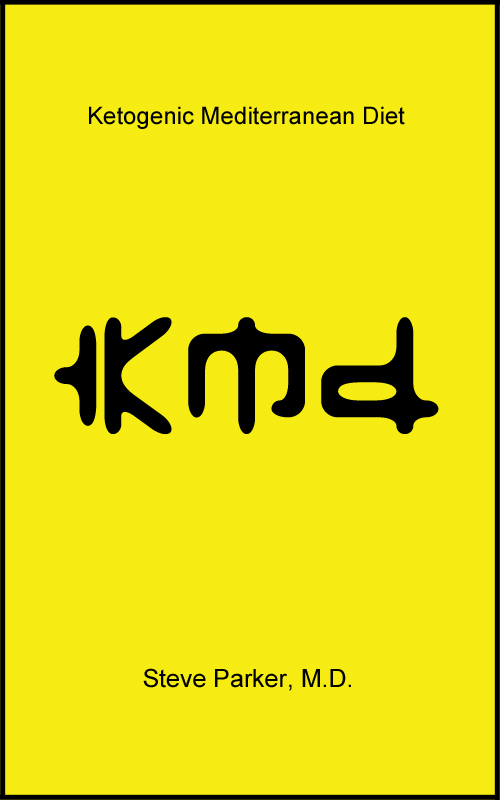
A number of my patients and blog readers have asked for a more comprehensive presentation of the Ketogenic Mediterranean Diet. The KMD, as you may be aware, is the basis for the Low-Carb Mediterranean Diet.  Both of them are in Conquer Diabetes and Prediabetes: The Low-Carb Mediterranean Diet.

Odd cover, huh?

The new book is geared for folks who don’t have diabetes, but want to lose weight with a very-low-carb diet.  It’s called KMD: Ketogenic Mediterranean Diet.  Readers of Conquer Diabetes and Prediabetes will get nothing out of the new book: they’ve seen it all before.  Here’s the book description from Amazon.com:

Dr. Steve Parker presents the world’s first low-carbohydrate Mediterranean diet. Nutrition experts for years have recommended the healthy Mediterranean diet. It’s linked to longer life span and reduced rates of heart attack, stroke, cancer, diabetes, and dementia. Dr. Parker (M.D.) has modified the Mediterranean diet to help you lose excess weight while retaining most of the healthy foods in the traditional Mediterranean diet. What’s the secret? Cut back on the fattening carbohydrates such as concentrated sugars and refined starches.

You’ll discover how to manage your weight without exercise, without hunger, without restricting calories, while eating fish, meat, chicken, vegetables, fruits, wine, olive oil, nuts, and cheese.

The book includes advice on how to avoid weight regain, instruction on exercise, a week of meal plans, special recipes, a general index, a recipe index, and scientific references. All measurements are given in both U.S. customary and metric units. This low-carbohydrate Mediterranean diet is included also in Dr. Parker’s Advanced Mediterranean Diet (2nd edition) and Conquer Diabetes and Prediabetes. Are you finally ready to lose weight while eating abundantly and without counting calories?

♦   ♦   ♦


KMD: Ketogenic Mediterranean Diet is available for purchase at Amazon.com (Kindle edition here, also) or Barnes and Noble (Nook version here).  The ebook version is available in multiple formats at Smashwords

Steve Parker, M.D.

2 Comments

Filed under ketogenic diet, Mediterranean Diet, My KMD Experience, Shameless Self-Promotion, Weight Loss

What About “The Biggest Loser”?

Probably not watching The Biggest Loser

Dr. Barry Sears (Ph.D., I think) recently wrote about a lecture he attended by a dietitian affiliated with “The Biggest Loser” TV show.  She revealed the keys to weight-loss success on the show.  Calorie restriction is a major feature, with the typical 300-pounder (136 kg) eating 1,750 calories a day.  On my Advanced Mediterranean Diet, 300-pounders get 2,300 calories (men) or 1,900 calories (women). 

Although not stressed by Dr. Sears, my impression is that contestants exercise a huge amount. 

Go to the Sears link above and you’ll learn that all contestants are paid to participate.  In researching my Conquer Diabetes and Prediabetes book, I learned that the actual Biggest Loser wins $250,000 (USD).  Also, “The Biggest Loser” is an international phenomenon with multiple countries hosting their own versions, with different pay-off amounts.  A former Biggest Loser, Ali Vincent, lives in my part of the world and still has some celebrity status.

This TV show demonstrates that the calories in/calories out theory of body weight still applies.  Including the fact that massive exercise can help significantly with weight loss.  In real-world situations, exercise probably contributes only a small degree to loss of excess weight.  The major take-home point of the show, for me, is that you can indeed make food and physical activity choices that determine your weight.

Most of us watch too much

I know losing 50 to 10o pounds of fat (25–45 kg) and keeping it off for a couple years is hard; most folks can’t do it.  Do you think you’d be more successful if I gave you $250,ooo for your success?

Steve Parker, M.D.

5 Comments

Filed under Exercise, Weight Loss

Your Tax Dollars At Work: FDA Warns HCG Marketers


"It's been three months. That HCG should kick in right about now."

Ooooh!  I’m sure they’re shaking in their boots.

I ran across a patient in the emergency department a couple months ago who coincidentally happened to be taking over-the-counter HCG oral drops for help with weight loss.  She didn’t ask my opinion, so I didn’t give it.

Now the FDA has sent a stern warning letter to seven HCG diet marketers to cease and desist.  I started seeing ads for homeopathic oral HCG at least a year ago.  And the FDA is just now getting around to the letters?

The Science-Based Medicine blog can teach you about homeopathy.

Here’s a snippet from the first FDA link above:

Miller explains that HCG was first promoted for weight loss in the 1950s. “It faded in the 1970s, especially when it became apparent that there was a lack of evidence to support the use of HCG for weight loss,” she says.

The diet has become popular again and FDA and FTC are taking action on illegal HCG products. “You cannot sell products claiming to contain HCG as an OTC drug product. It’s illegal,” says Brad Pace, team leader and regulatory counsel at FDA’s Health Fraud and Consumer Outreach Branch. “If these companies don’t heed our warnings, they could face enforcement actions, legal penalties or criminal prosecution.” 

You think these HCG marketers didn’t know from the git-go that what they were doing was illegal?

I’d have thought the FDA already had enough poop to start enforcement actions.

But what do I know?

Steve Parker, M.D.


4 Comments

Filed under Drugs for Diabetes, Weight Loss

Severe Carb Restriction in Type 2 Diabetes

U.K. researchers found major metabolic improvements in obese type 2 diabetics following a very low-carbohydrate diet, compared to a low-fat portion-controlled diet.  The latter is a standard recommendation in the U.S. for overweight type 2 diabetics.
 
This study is an oldie (2005) but a goodie.
 
Methodology
 
The investigators randomly assigned 102 poorly controlled diabetics to follow one of the two diets for three months.  Participants had average weights of 224 pounds (102 kg),  body mass index 36, age 58, hemoglobin A1c’s of 9%.  Half of them were men.  About 40% of the diabetics in both groups were on unspecified oral diabetic drugs; 20% were on insulin and 40% were using a combination of the two.  Sulfonylurea was mentioned, but not metformin. 
 
Participants were randomly assigned to either a low-fat portion-controlled weight-loss diet or a low-carbohydrate diet.  The goal with the low-carb diet was “up to 70 g of carbohydrate per day,” including at least a half a pint of milk and one piece of fruit.  (Is a UK pint the same as in the US?).  Increased physical activity was recommended to both groups. 
 
Only 79 of the 102 participants made it through the three-month diet intervention.  Drop-out rate was the same for both groups.
 
What Did They Find?
 
(Differences are statistically significant unless otherwise noted.)
Weight loss for the low-carb group was 3.55 kg (7.8 lb) compared to only 0.92 kg (2 lb) for the low-fat cohort.
 
The total/HDL cholesterol ratio improved for the low-carb group (absolute decrease of 0.48 versus 0.10). 
 
Hemoglobin A1c and systolic blood pressure tended to decrease more for the low-carb group, but did not reach statistical significance.  For instance, HgbA1c dropped 0.55% (in absolute terms) for the low-carb group, and 0.23% for the low-fat group.  Lower HgbA1c indicates improved blood sugar control.
 
Caloric intake was not different between the groups (about 1350 cals/day by diet recall method).
 
The low-carb group reduced carbs to 109 g/day compared to 168 g in the  low-fat cohort.
 
The low-carb group consumed 33% of energy as carbs compared to 45% for the low-fat group.
 
The low-carb group consumed 40% of energy as fat compared to 33% in the low-fat cohort.
 
Protein intake was 26% of energy for the low-carbers compared to 21% for the low-fatters.
 
Absolute saturated fatty acid intake was higher for the low-carbers, but still considered moderate.
 
Insulin dose was reduced in about 85% of the insulin users in the low-carb group but in only 22% of the low-fat group.  Oral diabetic pill use was unchanged in both groups.
 
Comments
 
This is a classic research report that I cited in Conquer Diabetes and Prediabetes: The Low-Carb Mediterranean Diet.
 
The improved total/HDL cholesterol ratio in the low-carbers may reduce risk of heart and vascular disease.  These investigators didn’t look at LDL particle size.  Other studies have found that low-carb eating tends to shift LDL cholesterol (bad stuff) from small dense particles to light fluffy particles, which are thought to be less harmful to arteries.
 
The authors considered reduction of carbs to 109 grams a day to be “severe.”  That compares to 275 grams a day eating by the typical U.S. citizen.  I agree that a reduction of carbs by two-thirds is major restriction.  Dr. Richard Bernstein and I consider severe restriction to be 20–30 grams, or perhaps up to 50 g.
 
I suspect the improved metabolic numbers in the low-carbers would have been even more dramatic if they had reduced carbs well below 100 grams a day.  The Ketogenic Mediterranean Diet reduces digestible carbs to 20–30 grams daily.  Many diabetics start losing control of their blood sugars when daily carbs exceed 60–80 grams.
 
Low-carb diets often yield better weight loss than low-fat calorie-restricted diets, as was seen here.  This is often attributed to lower calorie consumption on the low-carb diets.  These investigators didn’t see that here.
 
Low-carb diets are often criticized as being hard to stick with.  The low-carbers here didn’t have any more drop-outs than the low-fat group.  Granted, it was only a three-month study.
 
Based on what we know today, the reduced need for insulin in these patients was entirely predictable. 
 
The authors had some concern about the higher relative saturated fatty acid consumption in the low-carbers.  In 2011, we know that’s not much, if any, cause for concern.


Reference: Daly, M.E., et al.  Short-term effects of severe dietary carbohydrate-restriction advice in Type 2 diabetes—a randomized controlled trialDiabetic Medicine, 23 (2006): 15-20.  doi: 10.1111/j.1464-5491.2005.01760.x

Comments Off on Severe Carb Restriction in Type 2 Diabetes

Filed under Carbohydrate, Weight Loss

Does Loss of Excess Weight Improve Longevity?

High WHR

Intentional weight loss didn’t have any effect either way on risk of death, according to recent research out of Baltimore.  Surprising, huh?

Obesity tends to shorten lifespan, mostly due to higher rates of cancer and cardiovascular disease like heart attacks and strokes.  Doctors and dietitians all day long recommend loss of excess weight, figuring it will reduce the risk of obesity-related death and disease.  Many of them are unaware that’s not necessarily the case.  It’s called the “obesity paradox“: some types of overweight and obese patients actually seem to do better (e.g., live longer) if they’re above the so-called healthy body mass index of 18.5 to 24.9.  For instance: those with heart failure, coronary artery disease, and advanced kidney disease.

It’s never really been clear whether the average obese person (body mass index over 30) improves his longevity by losing some excess weight.  That’s what the study at hand is about.

Methodology

Baltimore-based investigators followed the health status of 585 overweight or obese older adults over the course of 12 years.  Half of them were randomized to an intentional weight loss intervention.  All of them had a high blood pressure diagnosis.  Average age was 66.  Average body mass index was 31.  Details of the weight-loss intervention are unclear, but it was probably along the lines of “eat less, exercise more.”

What Did They Find?

The weight-loss group lost and maintained an average of 4.4 kg (9.7 lb) over the 12 years of the study.  This is about 5% of initial body weight, the minimal amount thought to be helpful for improvement in weight-related medical and metabolic problems.  Most of the weight loss was over the first three years.

The men assigned to the weight-loss program had about half the risk of dying over the course of the study, compared to the men not assigned to weight loss.  The authors don’t seem to put much stock in it, however, stating that “…no significant difference overall was found in all-cause mortality between older overweight and obese adults who were randomly assigned to an intentional weight-loss intervention and those who were not.” 

Comments

With regards to the men losing weight, we’re only talking about 100-150 test subjects, a relatively small number.  So I understand why the researchers didn’t make a big deal of the lower mortality: it may not be reproducible.

This same research group did a similar study of 318 arthritis patients and intentional weight loss, finding a 50% lower death rate over eight years.

The authors reviewed many similar studies done by other teams, noting increased death rates from weight loss in some studies, and lesser death rates in others. 

When the studies are all over the place like this, it usually means there’s no strong association either way.  Nearly all the pertinent studies were done on relatively healthy, middle-aged and older folks.  The most reliable thing you can say about the issue is that loss of excess fat weight doesn’t increase your odds of premature death

 Remember that patients with coronary heart disease, congestive heart failure, or advanced kidney disease tend to live longer if they’re overweight or at least mildly obese.  It’s the obesity paradox.  Will they live longer or die earlier if they go on a weight-loss program?  We don’t know.

We do know that intentional weight loss helps:

  • prevent type 2 diabetes
  • maintain reasonable blood pressures (avoiding high blood pressure)
  • improves lower limb functional ability

Maybe that’s enough.

Steve Parker, M.D.

Reference: Shea, M.K., et al.  The effect of intentional weight loss on all-cause mortality in older adults: results of a randomized controlled weight-loss trial.  American Journal of Clinical Nutrition, 94 (2011): 839-846.

11 Comments

Filed under Weight Loss

Penelope Cruz Touts Mediterranean Diet

Penelope Cruz credits the Mediterranean diet with helping her keep her weight under control, according to “The Times of India.”

1 Comment

Filed under Health Benefits, Mediterranean Diet, Weight Loss

Low-Carb Diet Better Than Low-Cal for Fatty Liver

Loss of excess weight is a mainstay of therapy for nonalcoholic fatty liver disease.  A very-low-carb diet works better than a reduced-calorie diet, according to a recent study in the American Journal of Clinical Nutrition.

Nonalcoholic fatty liver disease (NAFLD) occurs in 20 to 40% of the general population, with most cases occuring between the ages of 40 and 60.  It’s an accumulation of triglycerides in the liver. 

Nonalcoholic steatohepatitis (NASH) is a subset of NAFLD, perhaps 30% of those with NAFLD.  Steatohepatitis involves an inflammatory component, progressing to cirrhosis in 3 to 26% of cases. 

ResearchBlogging.orgResearchers at the University of Texas Southwestern Medical Center assigned 18 obese subjects (average BMI 35) to either a very-low-carb diet (under 20 grams a day) or a low-calorie diet  (1200 to 1500 calories a day) for two weeks.  Liver fat was measured by magnetic resonance technology.  The low-carb groups’ liver fat decreased by 55% compared to 28% in the other group.  Weight loss was about the same for both groups (4.6 vs 4 kg). 

Bottom Line

This small study needs to be replicated, ideally with a larger group of subjects studied over a longer period.  Nevertheless, it appears that a very-low-carb diet may be one of the best dietary approaches to nonalcoholic fatty liver disease.  And I bet it’s more sustainable than severe calorie restriction.  The Ketogenic Mediterranean Diet, by the way, provides 20-30 grams of carb daily.

Steve Parker, M.D. 

 
Refernce:  Browning JD, Baker JA, Rogers T, Davis J, Satapati S, & Burgess SC (2011). Short-term weight loss and hepatic triglyceride reduction: evidence of a metabolic advantage with dietary carbohydrate restriction. The American journal of clinical nutrition, 93 (5), 1048-52 PMID: 21367948

12 Comments

Filed under ketogenic diet, Overweight and Obesity, Weight Loss

Exercise, Part 2: The Fountain of Youth and Other Metabolic Effects

Part 1 of the Exercise series focused on how regular physical activity prevented or postponed death. Onward now to other benefits.

Waist Management

Where does the fat go when you lose weight dieting? Chemical reactions convert it to energy, water, and carbon dioxide, which weigh less than the fat. Most of your energy supply is used to fuel basic life-maintaining physiologic processes at rest, referred to as resting or basal metabolism. Basal metabolic rate (BMR) is expressed as calories per kilogram of body weight per hour.

The major determinants of BMR are age, sex, and the body’s relative proportions of muscle and fat. Heredity plays a lesser role. Energy not used for basal metabolism is either stored as fat or converted by the muscles to physical activity. Most of us use about 70 percent of our energy supply for basal metabolism and 30 percent for physical activity. Those who exercise regularly and vigorously may expend 40–60 percent of their calorie intake doing physical activity. Excess energy not used in resting metabolism or physical activity is stored as fat.

Insulin, remember, is the main hormone converting that excess energy into fat; and carbohydrates are the major cause of insulin release by the pancreas.

To some extent, overweight and obesity result from an imbalance between energy intake (food) and expenditure (exercise and basal metabolism). Excessive carbohydrate consumption in particular drives the imbalance towards overweight, via insulin’s fat-storing properties.

In terms of losing weight, the most important metabolic effect of exercise is that it turns fat into weightless energy. We see that weekly on TV’s “Biggest Loser” show; participants exercise a huge amount. Please be aware that conditions set up for the show are totally unrealistic for the vast majority of people.

Physical activity alone as a weight-loss method isn’t very effective. But there are several other reasons to recommend exercise to those wishing to lose weight. Exercise counteracts the decrease in basal metabolic rate seen with calorie-restricted diets. In some folks, exercise temporarily reduces appetite (but others note the opposite effect). While caloric restriction during dieting can diminish your sense of energy and vitality, exercise typically does the opposite. Many dieters, especially those on low-calorie poorly designed diets, lose lean tissue (such as muscle and water) in addition to fat. This isn’t desirable over the long run. Exercise counteracts the tendency to lose muscle mass while nevertheless modestly facilitating fat loss.

How much does exercise contribute to most successful weight-loss efforts? Only about 10 percent on average. The other 90 percent is from food restriction.

Fountain of Youth

Regular exercise is a demonstrable “fountain of youth.” Peak aerobic power (or fitness) naturally diminishes by 50 percent between young adulthood and age 65. In other words, as age advances even a light physical task becomes fatiguing if it is sustained over time. By the age of 75 or 80, many of us depend on others for help with the ordinary tasks of daily living, such as housecleaning and grocery shopping. Regular exercise increases fitness (aerobic power) by 15–20 percent in middle-aged and older men and women, the equivalent of a 10–20 year reduction in biological age! This prolongation of self-sufficiency improves quality of life.

Heart Health

Exercise helps control multiple cardiac (heart attack) risk factors: obesity, high cholesterol, elevated blood pressure, high triglycerides, and diabetes. Regular aerobic activity tends to lower LDL cholesterol, the “bad cholesterol.” Jogging 10 or 12 miles per week, or the equivalent amount of other exercise, increases HDL cholesterol (“good cholesterol”) substantially. Exercise increases heart muscle efficiency and blood flow to the heart. For the person who has already had a heart attack, regular physical activity decreases the incidence of fatal recurrence by 20–30 percent and adds an extra two or three years of life, on average.

Effect on Diabetes

Eighty-five percent of type 2 diabetics are overweight or obese. It’s not just a random association. Obesity contributes heavily to most cases of type 2 diabetes, particularly in those predisposed by heredity. Insulin is the key that allows bloodstream sugar (glucose) into cells for utilization as energy, thus keeping blood sugar from reaching dangerously high levels. Overweight bodies produce plenty of insulin, often more than average. The problem in overweight diabetics is that the cells are no longer sensitive to insulin’s effect. Weight loss and exercise independently return insulin sensitivity towards normal. Many diabetics can improve their condition through sensible exercise and weight management.

Miscellaneous Benefits

In case you need more reasons to start or keep exercising, consider the following additional benefits: 1) enhanced immune function, 2) stronger bones, 3) preservation and improvement of flexibility, 4) lower blood pressure by 8–10 points, 5) diminished premenstrual bloating, breast tenderness, and mood changes, 6) reduced incidence of dementia, 7) less trouble with constipation, 7) better ability to handle stress, 8) less trouble with insomnia, 9) improved self-esteem, 10) enhanced sense of well-being, with less anxiety and depression, 11) higher perceived level of energy, and 12) prevention of weight regain.

People who lose fat weight but regain it cite lack of exercise as one explanation. One scientific study by S. Kayman and associates looked at people who dropped 20 percent or more of their total weight, and the role of exercise in maintaining that loss. Two years after the initial weight loss, 90 percent of the successful loss-maintainers reported exercising regularly. Of those who regained their weight, only 34 percent were exercising.

 Part 3 of this series gets into specific exercise recommendations.

Steve Parker, M.D.

12 Comments

Filed under Exercise, Weight Loss, Weight Regain

ADA Weight-Loss Guidelines for 2011

Earlier this month the American Diabetes Association published its Standards of Care in Diabetes—2011

The ADA recommends weight loss for all overweight diabetics.

For weight loss, either low-carbohydrate [under 130 g/day], low-fat calorie-restricted, or Mediterranean diets may be effective in the short-term (up to two years).  For those on low-carb diets, monitor lipids, kidney function, and protein consumption, and adjust diabetic drugs as needed…The optimal macronutrient composition of weight loss diets has not been established. [Macronutients are carbohydrates, proteins, and fats.]

Until three years ago, the ADA recommended against carbohydrate-restricted diets for overweight diabetics.  In January, 2008, their position statement noted that such diets may be effective for up to one year.  My recollection is that their 2010 guidelines also said “up to one year” and didn’t mention the  Mediterranean diet. 

Progress!

Looks like the timing of my Low-Carb Mediterranean Diet is good.

Steve Parker, M.D.

4 Comments

Filed under Carbohydrate, Mediterranean Diet, Weight Loss

Another Good Reason to Lose the Fat: Stop Urine Leakage

For overweight and obese women, loss of between five and 10% of body weight significantly reduces urine leakage.  According to the research report in a recent Obstetrics & Gynecology journal, weight loss should be the first approach to urine leakage in overweight and obese women.

The other word for urine leakage is incontinence: an involuntary loss of urine.  It’s a major problem that isn’t much talked about.  It’s not exactly dinner-party conversation material.  You can imagine its effect on quality of life.  In the U.S., leakage of urine on at least a weekly basis is reported by one in 10 women and one in 20 men.  It’s more common at higher ages and in women.  Just looking at non-pregnant women, incontinence affects 7% of women aged 20-39, 17% of those aged 40-59, and 23% of women 60-79 years old.

The study at hand involved 338 overweight and obese women: average age 53 (minimum of 30), average body mass index 36, average weight 92 kg (202 lb).  For participation, they had to have at least 10 incontinence episodes per week.  On average, they reported 24 leakage episodes per week (10 stress incontinence, 14 urge incontinence).  All women were given a “self-help incontinence behavioral booklet with instructions for improving bladder control.”  They were randomized to two different weight-loss programs, but I won’t bore you with the details.  The diets were the standard reduced-calorie type.  One diet group had many more meetings than than the other.

The women kept diaries of leakage, and even collected urine soaked pads for weighing.

Results

Eight-five percent of the women completed the 18-month study.

By six months, 89 of the women has lost five to 10% of body weight; 84 lost over 10%.  As expected, when measured at 18 months, only 61 women were in the “five to 10% loss” category; 71 were in the “over 10%” group. 

Greater amounts of weigh loss were linked to fewer episodes of leakage.  Maximal improvement in leakage episodes were seen in the women who lost between five and 10% of body weight, with no additional benefit to greater degrees of weight loss, generally.

Women who lost 5-10% of their body weight were two to four times more likely to achieve at least a 70% reduction in total and urge incontinent episode frequency compared with women who gained weight at 6, 12, and 18 months.

Weight loss works better for stress incontinence than for urge incontinence.

Three of every four women who lost five to 10% of body weight said they were moderately or very satisfied with their improved bladder control.

Bottom Line

Weight loss is usually not a cure for incontinence, but a reasonable management option for overweight and obese women.  It’s going to take loss of five or 10% of body weight.  Other options  include drugs, surgery, Kegel exercises, and just living with it.

Five or 10% weight loss for a 200 pound woman is just 10 or 20 pounds.  That degree of weight loss is also linked to lower risk of diabetes and hypertension: even more reason go for it.  

Does it work for men?  Who knows?

Steve Parker, M.D.

Reference: Wing, R.R., et al.  Program to Reduce Incontinence by Diet and Exercise: Improving urinary incontinence in overweight and obese women through modest weight loss. Obstetrics and Gynecology, 116 (2010): 284-92 PMID: 20664387

2 Comments

Filed under Weight Loss