
“I really avoid grains and starches, so meats and vegetables and fruits are my diet,” he tweeted. “I make them all different ways to keep it interesting. What’s worked for me is no sugar, no grains, no dairy except goat cheese, no white starches, portion control, and high intensity workouts.”
Category Archives: Weight Loss
Chaz Bono Loses 65 Pounds in Six Months Eating Low-Carb
Comments Off on Chaz Bono Loses 65 Pounds in Six Months Eating Low-Carb
Filed under Weight Loss
“ItsTheWooo” Explains Reluctance to Try Very-Low-Carb Eating For Weight Management
Click for details. ITW, BTW, is a nurse. A snippet:
At work, a few days ago, I was sitting at the station alongside a new nurse; she’s very young (about my age when I first started using a ketogenic diet for my obesity) and she is also very very overweight. In addition to being a young female (thus common sense that she prefers to be thin), observing her eating behavior made it patently obvious this poor girl has been trying for years to correct her obesity. She always refuses food if offered to her, and when she does bring food, she rarely eats it, and it’s always healthy food like salads.
Comments Off on “ItsTheWooo” Explains Reluctance to Try Very-Low-Carb Eating For Weight Management
Filed under ketogenic diet, Weight Loss
One More Study Shows Low-Carb Beats Low-Fat Diet for Weight Loss

Low-carb isn’t meat-only: You can eat these low-carb fruits
A low-carb diet was superior to a traditional low-fat weight loss diet, and without adverse effects on markers of systemic inflammation, according to a report at ScienceDaily. Some medical professionals are still hesitant to accept the validity of low-carb dieting, fearing that relatively high fat and protein content may promote inflammation, leading to atherosclerosis. The study at hand should be reassuring in that regard.
Some quotes from ScienceDaily:
The researchers measured the participants’ blood levels for three common markers of inflammation — C-reactive protein, interleukin 6 and tumor necrosis factor-alpha — at the beginning and end of the study. They also measured body weight, body mass index (BMI) and total body and belly fat. At the start, both groups were similar in the various measures, including elevated levels of inflammation markers.
The participants on the low-carb diet lost more weight, on average, than those on the low-fat diet — 28 pounds versus 18 pounds [over the six month trial.
…
“In both groups, there was a significant drop in the levels of all three measures of inflammation,” says [Kerry] Stewart, indicating that a diet higher in fat and protein doesn’t interfere with the ability to lower inflammation, as long as you are losing weight.
Despite reading several online articles on this study, I can’t determine which low-carb diet was used, nor the level of carbohydrate restriction. Both diet groups exercised three times a week. I expect full details to be published in a scientific journal within a couple years. The research was done at Johns Hopkins University and was not funded by Atkins Nutritionals. U.S. taxpayers funded it.
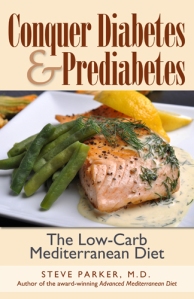
If you’re looking for a low-carb diet, consider the Low-Carb Mediterranean Diet. Carb restriction starts at under 30 grams a day, but allows for increases over time as long as you’re making weight-loss progress. The typical American eats 250 to 300 grams of carbohydrate daily.
Read the rest at ScienceDaily.
Filed under Weight Loss
Once Again, Low-Carbohydrate Ketogenic Diet Beats Low-Calorie For Overweight Diabetes

Kuwait City and Towers
A low-carbohydrate ketogenic diet is safe, effective, and superior to a low-calorie diet in type 2 diabetics, according to a report last year in Nutrition.
Kuwaiti researchers gave 102 adult overweight diabetic men and women their choice of diet: 78 chose ketogenic, 24 went low-calorie. Average age was 37, average weight 211 lb (96 kg). The study lasted six months. The ketogenic diet was very much Atkins-style, starting out at 20 grams of carbohydrate daily. Once good weight-loss progress was made, and if carb cravings were an issue, dieters could increase their carbs in small increments weekly.
This is all they said about the low-calorie diet: “Participants in the low-calorie diet group were given appropriate guidelines and a sample low-calorie diet menu of 2200 calories is presented in Table 1” (it’s typical and reasonable).
What Did They Find?
The low-carb ketogenic dieters lost 12% of body weight, compared to 7% lost by the low-calorie dieters. Furthermore, the ketogenic dieters showed significant lowering of total cholesterol, LDL cholesterol (bad cholesterol), and triglycerides. HDL cholesterol (good cholesterol) rose. The low-calorie dieters seem to have had a significant drop in LDL cholesterol, but no changes in the other lipids.
Fasting blood sugar levels dropped significantly in both groups, but more in the ketogenic dieters. Both groups started with fasting blood sugars around 162 mg/dl (9 mmol/l) and fell to 108 mg/dl (6 mmol/l) in the ketogenic group and to 126 mg/dl (7 mmol/l) in the low-calorie group.
Glycosylated hemoglobin (hemoglobin A1c) levels fell in both groups, more so in the ketogenic dieters. The drop was statistically significant in the ketogenic group, but the authors were unclear about that in the low-calorie dieters. It appears hemoglobin A1c fell from 7.8% to 6.3% with the ketogenic diet (the units given for glycosylated hemoglobin were stated as mg/dl). In the low-calorie dieters, hemoglobin A1c fell from 8.2 to 7.7%.
What’s Odd About This Study?
The title of the research report indicates a study of diabetics, but only about 25% of study participants had diabetes (total subjects = 363). (The figures I share above are for the diabetics only.)
Glycosylated hemoglobin, a test of overall diabetes control, is reported in Fig. 1 in terms of mg/dl. That’s nearly always reported as a percentage, not mg/dl. Misprint?
None of the participants dropped out of the study. That’s incredible, almost unbelievable.
The low-calorie diet was poorly described. Were 140-lb women and 250-lb men all put on the same calorie count?
Food diaries were kept, but the authors report nothing about compliance and actual food intake.
Clearly, some of these diabetics were on insulin and other diabetic drugs. The authors note necessary reductions in drug dosages for the ketogenic group but don’t say much about the other dieters. They imply that the drug reductions in the low-calorie group were minimal or nonexistent.

Grand Mosque of Kuwait
So What?
Calorie-restricted diets are effective in overweight type 2 diabetics, but ketogenic diets are even better.
The effectiveness and safety of ketogenic diets for overweight type 2 diabetics has been demonstrated in multiple other populations, so this study is not surprising. We’ve seen these lipid improvements before, too.
The favorable lipid changes on low-carb ketogenic diets would tend to reduce future heart and vascular disease.
I know little about Kuwaiti culture and genetics. Their contributions to the results here, as compared with other populations, is unclear to me. Type 2 diabetes is spreading quickly through the Persian Gulf, so this research may have wide applicability there.
Reference: Hussain, Talib, et al. Effect of low-calorie versus low-carbohydrate ketogenic diet in type 2 diabetes. Nutrition, 2012; 28(10): 1016-21. doi: 10.1016/j.nut.2012.01.016
Filed under ketogenic diet, Overweight and Obesity, Weight Loss
Mediterranean and Low-Carb Diets Beat Low-Fat for Weight Loss Over Six Years

Israeli flag
Remember Shai et al’s 2008 DIRECT study that compared weight loss over two years on either a low-carb, low-fat, or Mediterranean diet? I reviewed it at length in 2008.
The same Isreali researchers now report the results of an additional four years of follow-up. Do you know of any other weight loss study over that length of time? I don’t.
Of the 322 original study participants, 259 were available for follow-up for an additional four years. Of these, 67% told researchers they had continued their originally assigned diet.
Over six years, the weight loss was as follows:
- 0.6 kg (about a pound) in the low-fat group
- 1.7 kg (almost 4 pounds) in the low-carb cohort
- 3.1 kg (almost 7 pounds) in the Mediterranean group
The difference between the low-carb and Mediterranean groups was not statistically significant.
Almost all the original study participants (86%) were men, so it’s debatable whether these results apply to women. I bet they do. I assume most of the participants were Israeli, so you can also debate whether results apply to other nationalities or ethnicities.
Bottom Line
For long-term weight management, Mediterranean and low-carb diets appear to be more effective than traditional low-fat, calorie-restricted dieting.
Beth Mazur at her Weight Maven blog has some worthwhile comments about the study.
Incidentally, my Advanced Mediterranean Diet (2nd Edition) book features both a traditional Mediterranean diet and the world’s first low-carb Mediterranean diet.
Filed under Weight Loss, Weight Regain
Comprehensive List of Low-Carb Vegetables

A half cup of sliced bell pepper has about 2 grams of digestible carbohydrate
Laura Dolson over at About.com has a helpful list of low-carb veggies. Helpful if you:
- experience excessive blood sugar spikes from high-carb items
- are restricting carbs for weight management
- are eating a Paleo Diabetic diet
-Steve
Comments Off on Comprehensive List of Low-Carb Vegetables
Filed under Paleo diet, Vegetables, Weight Loss
14 Little-Known Weight-Loss Tips

“Look…the soda’s not for me, OK?”
These have worked for lots of my patients. Take what works for you and discard the rest.
- Plan on grocery shopping, meal preparation, and taking meals to your workplace.
- Keeping a record of your food consumption is often the key to success.
- Accountability is another key. Do you have a friend or spouse who wants to lose weight? Start the same program at the same time and support each other. That’s one of many ways to have accountability.
- If you tend to over-eat or snack too much, floss and brush your teeth after you’re full. You’ll be less likely to go back for more anytime soon.
- Eat at least two or three meals daily. Eat breakfast every day. Ignore the diet gurus who say you must eat every two or three hours.
- Eat slowly and allow yourself time to enjoy your food; you’ll be a better judge of when your’re full.
- Don’t eat while watching TV.
- Give yourself a specific reward for every 10 pounds (4.5 kg) of weight lost. Consider a weekend get-way, jewelry, new clothes, an evening at the theater, a professional massage, etc. Choose the reward in advance, to give you something to work toward.
- Don’t start a diet during a time of stress.
- Maintain a consistent eating pattern throughout the week and year.
- If you know you’ve eating enough at a meal to satisfy your nutritional requirements yet you still feel hungry, drink a large glass of water and wait a while. Or try a sugar-free psyllium fiber supplement: three grams of fiber in 8 oz (240 ml) of water.
- Weigh yourself frequently: daily during your active weight-loss phase and during the first two months of your maintenance-of-weight-loss phase. Weekly thereafter.
- Be aware that you’ll probably regain five or 10 pounds (2.3 or 4.5 kg) of fat now and then. That’s normal. Just get back on your original weight-loss plan for a month or two.
- Tell your housemates you’re on a diet and ask for their support. You may also need to tell your co-workers and others with whom you spend significant time. If they care about you, they’ll be careful not to tempt you off the diet.
Indispensable? OK, maybe that’s a little over the top. But each of these tips has proven indispensable to at least one of my patients.
Comments Off on 14 Little-Known Weight-Loss Tips
Filed under Weight Loss
Low-Carb Research Update

“What about that recent study in American Journal of Clinical Nutrition…?”
As much as possible, I base my nutrition and medical recommendations on science-based research published in the medical literature. Medical textbooks can be very helpful, but they aren’t as up-to-date as the medical journals.
In the early 2000s, a flurry of research reports demonstrated that very-low-carb eating (as in Dr. Atkins New Diet Revolution) was safe and effective for short-term weight management and control of diabetes. I was still concerned back then about the long-term safety of the high fat content of Atkins. But 80 hours of literature review in 2009 allowed me to embrace low-carbohydrate eating as a logical and viable option for many of my patients. The evidence convinced me that the high fat content (saturated or otherwise) of many low-carb diets was little to worry about over the long run.
By the way, have you noticed some of the celebrities jumping on the low-carb weight-management bandwagon lately? Sharon Osbourne, Drew Carey, and Alec Baldwin, to name a few.
My primary nutrition interests are low-carb eating, the Mediterranean diet, and the paleo diet. I’m careful to stay up-to-date with the pertinent scientific research. I’d like to share with you some of the pertinent research findings of the last few years.
Low-Carb Diets
- Low-carb diets reduce weight, reduce blood pressure, lower triglyceride levels (a healthy move), and raise HDL cholesterol (another good trend). These improvements should help reduce your risk of heart disease. (In the journal Obesity Reviews, 2012.)
- Dietary fat, including saturated fat, is not a cause of vascular disease such as heart attacks and atherosclerosis (hardening of the arteries). (Multiple research reports.)
- If you’re overweight and replace two sugary drinks a day with diet soda or water, you’ll lose about four pounds over the next six months. (American Journal of Clinical Nutrition, 2012.)
- United States residents obtain 40% of total calories from grains and added sugars. Most developed countries are similar. Dr. Stephan Guyenet notes that U.S. sugar consumption increased steadily “…from 6.3 pounds [2.9 kg] per person per year in 1822 to 107.7 pounds [50 kg] per person in 1999. Wrap your brain around this: in 1822 we ate the amount of added sugar in one 12-ounce can of soda every five days, while today we eat that much sugar every seven hours.”
- A very-low-carb diet improves the memory of those with age-related mild cognitive impairment. Mild cognitive impairment is a precursor to dementia. (University of Cincinnati, 2012.)
- High-carbohydrate and sugar-rich diets greatly raise the risk of mild cognitive impairment in the elderly. (Mayo Clinic study published in the Journal of Alzheimers’ Disease, 2012.)
- Compared to obese low-fat dieters, low-carb dieters lose twice as much fat weight. (University of Cincinnati, 2011.)
- Diets low in sugar and refined starches are linked to lower risk of age-related macular degeneration in women. Macular degeneration is a major cause of blindness. (University of Wisconsin, 2011.)
- A ketogenic (very-low-carb) Mediterranean diet cures metabolic syndrome (Journal of Medicinal Food, 2011.)
- For type 2 diabetics, replacing a daily muffin (high-carb) with two ounces (60 g) of nuts (low-carb) improves blood sugar control and reduces LDL cholesterol (the “bad” cholesterol). (Diabetes Care, 2011.)
- For those afflicted with fatty liver, a low-carb diet beats a low-fat diet for management. (American Journal of Clinical Nutrition, 2011.)
- For weight loss, the American Diabetes Association has endorsed low-carb (under 130 g/day) and Mediterranean diets, for use up to two years. (Diabetes Care, 2011.)
- High-carbohydrate eating doubles the risk of heart disease (coronary artery disease) in women. (Archives of Internal Medicine, 2010.)
- One criticism of low-carb diets is that they may be high in protein, which in turn may cause bone thinning (osteoporosis). A 2010 study shows this is not a problem, at least in women. Men were not studied. (American Journal of Clinical Nutrition.)
- High-carbohydrate eating increases the risk of developing type 2 diabetes (American Journal of Clinical Nutrition, 2010.)
- Obesity in U.S. children tripled from 1980 to 2000, rising to 17% of all children. A low-carb, high-protein diet is safe and effective for obese adolescents. (American Journal of Clinical Nutrition, 2010.)
Mediterranean Diet
The traditional Mediterranean diet is well established as a healthy way of eating despite being relatively high in carbohydrate: 50 to 60% of total calories. It’s known to prolong life span while reducing rates of heart disease, cancer, strokes, diabetes, and dementia. The Mediterranean diet is rich in fresh fruits, vegetables, nuts and seeds, olive oil, whole grain bread, fish, and judicious amounts of wine, while incorporating relatively little meat. It deserves your serious consideration. I keep abreast of the latest scientific literature on this diet.
- Olive oil is linked to longer life span and reduced heart disease. (American Journal of Clinical Nutrition, 2012.)
- Olive oil is associated with reduced stroke risk. (Neurology, 2012).
- The Mediterranean diet reduces risk of sudden cardiac death in women. (Journal of the American Medical Association, 2011.)
- The Mediterranean diet is linked to fewer strokes visible by MRI scanning. (Annals of Neurology, 2011.)
- It reduces the symptoms of asthma in children. (Journal of the American Dietetic Association, 2011.)
- Compared to low-fat eating, it reduces the incidence of type 2 diabetes by 50% in middle-aged and older folks. (Diabetes Care, 2010.)
- A review of all available well-designed studies on the Mediterranean diet confirms that it reduces risk of death, decreases heart disease, and reduces rates of cancer, dementia, Parkinson’s disease, stroke, and mild cognitive impairment. (American Journal of Clinical Nutrition, 2010.)
- It reduces the risk of breast cancer. (American Journal of Clinical Nutrition, 2010.)
- The Mediterranean diet reduces Alzheimer’s disease. (New York residents, Archives of Neurology, 2010).
- It slows the rate of age-related mental decline. (Chicago residents, American Journal of Clinical Nutrition, 2010.)
- In patients already diagnosed with heart disease, the Mediterranean diet prevents future heart-related events and preserves heart function. (American Journal of Clinical Nutrition, 2010.)
Clearly, low-carb and Mediterranean-style eating have much to recommend them. Low-carb eating is particularly useful for weight loss and management, and control of diabetes, prediabetes, and metabolic syndrome. Long-term health effects of low-carb eating are less well established. That’s where the Mediterranean diet shines. That’s why I ask many of my patients to combine both approaches: low-carb and Mediterranean. Note that several components of the Mediterranean diet are inherently low-carb: olive oil, nuts and seeds, fish, some wines, and many fruits and vegetables. These items easily fit into a low-carb lifestyle and may yield the long-term health benefits of the Mediterranean diet. If you’re interested, I’ve posted on the Internet a Low-Carb Mediterranean Diet that will get you started.
Disclaimer: All matters regarding your health require supervision by a personal physician or other appropriate health professional familiar with your current health status. Always consult your personal physician before making any dietary or exercise changes.
Dukan Diet Founder Loses Libel Lawsuit Against Dr. Cohen
Dr. Pierre Dukan sued another diet doctor, Jean-Michel Cohen, for claiming that the Dukan diet could harm dieters. A French court ruled in Dr. Cohen’s favor last year. U.K.’s The Telegraph has a few of the details. Claire Al-Aufi has more at Hive Health Media.
I reviewed the Dukan diet last April. Gee, I hope I’m not Dr. Dukan’s next target!
Comments Off on Dukan Diet Founder Loses Libel Lawsuit Against Dr. Cohen
Filed under Book Reviews, Weight Loss
Weight-Loss Secrets

What’s it gonna be? You decide
These have worked for lots of my patients. Take what works for you and discard the rest.
- Plan on grocery shopping, meal preparation, and taking meals to your workplace.
- Keeping a record of your food consumption is often the key to success.
- Accountability is another key. Do you have a friend or spouse who wants to lose weight? Start the same program at the same time and support each other. That’s one of many ways to have accountability.
- If you tend to over-eat or snack too much, floss and brush your teeth after you’re full. You’ll be less likely to go back for more anytime soon.
- Eat at least two or three meals daily.
- Eat breakfast every day.
- Ignore the diet gurus who say you must eat every two or three hours.
- Eat slowly and allow yourself time to enjoy your food; you’ll also be a better judge of when your’re full.
- Don’t eat while watching TV.
- Give yourself a specific reward for every 10 pounds (4.5 kg) of weight lost. Consider a weekend get-way, jewelry, new clothes, an evening at the theater, a professional massage, etc. Choose the reward in advance, to give you something to work toward.
- Don’t start a diet during a time of stress.
- Maintain a consistent eating pattern throughout the week and year.
- If you know you’ve eating enough at a meal to satisfy your nutritional requirements yet you still feel hungry, drink a large glass of water and wait a while. Or try a sugar-free psyllium fiber supplement: three grams of fiber in 8 oz (240 ml) of water.
- Weigh yourself frequently: daily during your active weight-loss phase and during the first two months of your maintenance-of-weight-loss phase. Weekly thereafter.
- Be aware that you’ll probably regain five or 10 pounds (2.3 or 4.5 kg) of fat now and then. That’s normal. Just get back on your original weight-loss plan for a month or two.
- Tell your housemates you’re on a diet and ask for their support. You may also need to tell your co-workers and others with whom you spend significant time. If they care about you, they’ll be careful not to tempt you off the diet.
Godspeed!
Filed under Weight Loss


 Diabetic Mediterranean Diet