Category Archives: Longevity

Does the Mediterranean Diet Actually Prevent Chronic Diseases?


Told ya so!

A couple PhD nutritionists with the University of Arizona Cancer Center reviewed the literature for or against the healthfulness of the Mediterranean diet in 2017. They agree with me that the health claims hold up to scrutiny. From the abstract:

A large body of research data suggests that traditional dietary habits and lifestyle unique to the Mediterranean region (Mediterranean diet, MD) lower the incidence of chronic diseases and improve longevity. These data contrast with troubling statistics in the United States and other high income countries pointing to an increase in the incidence of chronic diseases and the projected explosion in cost of medical care associated with an aging population. In 2013, the MD was inscribed by UNESCO in the “Representative List of the Intangible Cultural Heritage of Humanity.” The 2015–2020 Dietary Guidelines for Americans included the MD as a healthy dietary pattern. Therefore, specific objectives of this article are to provide an overview of the nutritional basis of this healthful diet, its metabolic benefits, and its role in multiple aspects of disease prevention and healthy aging.

Source: Mediterranean Diet and Prevention of Chronic Diseases

Steve Parker, M.D.

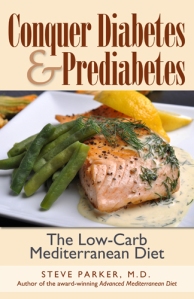
Low-Carb Mediterranean Diet, front cover


3 Comments

Filed under Longevity

Mediterranean and Paleo Diets Linked to Longer Lifespan

The Journal of Nutrition in 2017 published a study that looked at baseline diet characteristics of over 21,000 folks, then over the next six years noted who died, and why. Guess how many died?

Here’s a clue. These U.S. study participants were at least 45 years old at the start of the study.

2,513 died. Seems high to me, so I bet the average age was close to 65.

Hank’s not worried about death

I can’t tell for sure from the report’s abstract, but it looks like the researchers were interested in the Mediterranean and “caveman” diets from the get-go. Study subjects who ate Paleo- or Mediterranean-style were significantly less likely to die over six years. They were less likely to die from any cause or from cancer or from cardiovascular disease.

Composition of the paleo diet is debatable (click for my 2012 definition).

Consider adopting some Mediterranean diet features, too.

Steve Parker, M.D.

Reference:

Paleolithic and Mediterranean Diet Pattern Scores Are Inversely Associated with All-Cause and Cause-Specific Mortality in Adults. First published February 8, 2017, doi: 10.3945/​jn.116.241919. Authors:

  1. Kristine A Whalen
  2. Suzanne Judd
  3. Marjorie L McCullough
  4. W Dana Flanders
  5. Terryl J Hartman
  6. Roberd M Bostick

Abstract

Background: Poor diet quality is associated with a higher risk of many chronic diseases that are among the leading causes of death in the United States. It has been hypothesized that evolutionary discordance may account for some of the higher incidence and mortality from these diseases.

Objective: We investigated associations of 2 diet pattern scores, the Paleolithic and the Mediterranean, with all-cause and cause-specific mortality in the REGARDS (REasons for Geographic and Racial Differences in Stroke) study, a longitudinal cohort of black and white men and women ≥45 y of age.

Methods: Participants completed questionnaires, including a Block food-frequency questionnaire (FFQ), at baseline and were contacted every 6 mo to determine their health status. Of the analytic cohort (n = 21,423), a total of 2513 participants died during a median follow-up of 6.25 y. We created diet scores from FFQ responses and assessed their associations with mortality using multivariable Cox proportional hazards regression models adjusting for major risk factors.

Results: For those in the highest relative to the lowest quintiles of the Paleolithic and Mediterranean diet scores, the multivariable adjusted HRs for all-cause mortality were, respectively, 0.77 (95% CI: 0.67, 0.89; P-trend < 0.01) and 0.63 (95% CI: 0.54, 0.73; P-trend < 0.01). The corresponding HRs for all-cancer mortality were 0.72 (95% CI: 0.55, 0.95; P-trend = 0.03) and 0.64 (95% CI: 0.48, 0.84; P-trend = 0.01), and for all-cardiovascular disease mortality they were 0.78 (95% CI: 0.61, 1.00; P-trend = 0.06) and HR: 0.68 (95% CI: 0.53, 0.88; P-trend = 0.01).

Conclusions: Findings from this biracial prospective study suggest that diets closer to Paleolithic or Mediterranean diet patterns may be inversely associated with all-cause and cause-specific mortality.

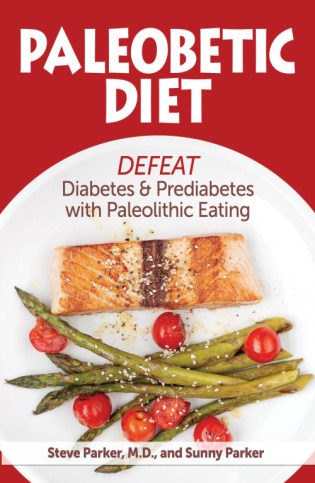
Click pic to order at Amazon


Click pic to order at Amazon

1 Comment

Filed under Longevity

PURE Study: Higher Carb Consumption Linked to Greater Risk of Death

Adult life is a battle against gravity. Eventually we all lose.

Here’s the abstract of a new epidemiological study that investigated the relationships between diet, cardiovascular disease, and death rates. I don’t have the entire article. My sense is that the 18 countries studied are mostly non-Western:

Background

The relationship between macronutrients and cardiovascular disease and mortality is controversial. Most available data are from European and North American populations where nutrition excess is more likely, so their applicability to other populations is unclear.

Methods

The Prospective Urban Rural Epidemiology (PURE) study is a large, epidemiological cohort study of individuals aged 35–70 years (enrolled between Jan 1, 2003, and March 31, 2013) in 18 countries with a median follow-up of 7·4 years (IQR 5·3–9·3). Dietary intake of 135 335 individuals was recorded using validated food frequency questionnaires. The primary outcomes were total mortality and major cardiovascular events (fatal cardiovascular disease, non-fatal myocardial infarction, stroke, and heart failure). Secondary outcomes were all myocardial infarctions, stroke, cardiovascular disease mortality, and non-cardiovascular disease mortality. Participants were categorised into quintiles of nutrient intake (carbohydrate, fats, and protein) based on percentage of energy provided by nutrients. We assessed the associations between consumption of carbohydrate, total fat, and each type of fat with cardiovascular disease and total mortality. We calculated hazard ratios (HRs) using a multivariable Cox frailty model with random intercepts to account for centre clustering.

Findings

During follow-up, we documented 5796 deaths and 4784 major cardiovascular disease events. Higher carbohydrate intake was associated with an increased risk of total mortality (highest [quintile 5] vs lowest quintile [quintile 1] category, HR 1·28 [95% CI 1·12–1·46], ptrend=0·0001) but not with the risk of cardiovascular disease or cardiovascular disease mortality. Intake of total fat and each type of fat was associated with lower risk of total mortality (quintile 5 vs quintile 1, total fat: HR 0·77 [95% CI 0·67–0·87], ptrend<0·0001; saturated fat, HR 0·86 [0·76–0·99], ptrend=0·0088; monounsaturated fat: HR 0·81 [0·71–0·92], ptrend<0·0001; and polyunsaturated fat: HR 0·80 [0·71–0·89], ptrend<0·0001). Higher saturated fat intake was associated with lower risk of stroke (quintile 5 vs quintile 1, HR 0·79 [95% CI 0·64–0·98], ptrend=0·0498). Total fat and saturated and unsaturated fats were not significantly associated with risk of myocardial infarction or cardiovascular disease mortality.

Interpretation

High carbohydrate intake was associated with higher risk of total mortality, whereas total fat and individual types of fat were related to lower total mortality. Total fat and types of fat were not associated with cardiovascular disease, myocardial infarction, or cardiovascular disease mortality, whereas saturated fat had an inverse association with stroke. Global dietary guidelines should be reconsidered in light of these findings.

Source: Associations of fats and carbohydrate intake with cardiovascular disease and mortality in 18 countries from five continents (PURE): a prospective cohort study – The Lancet

5 Comments

Filed under Heart Disease, Longevity

Obesity Paradox: Diabetes Seems to Forestall Death In the Overweight and Obese

The study was done in the U.K.

Highlights

•What is the association between BMI and mortality in people with and without diabetes mellitus?

•Compared to normal BMI, the risk of death was a 33% lower in overweight people with diabetes and 12% lower in those without.

•For obese class I, the risk was 35% lower in diabetes and 5% lower in non-diabetes.

•For obese class III, the risk was a 10% non-significantly lower in diabetes and 29% higher in non-diabetes.

•For the same level of obesity, mortality risk was higher in non-diabetes than in diabetes.

Source: Body mass index and mortality in people with and without diabetes: A UK Biobank study – Nutrition, Metabolism and Cardiovascular Diseases

Comments Off on Obesity Paradox: Diabetes Seems to Forestall Death In the Overweight and Obese

Filed under Diabetes Complications, Longevity

Can You Regain Muscle Mass If Over 60?

She'll lose muscle fibers if she gets too sedentary as she ages

She’ll lose muscle fibers if she gets too sedentary as she ages

“Our lab and others have shown repeatedly” that older muscles will grow and strengthen, says Marcas Bamman, a professor of integrative biology at the University of Alabama at Birmingham. In his studies, men and women in their 60s and 70s who began supervised weight training developed muscles that were as large and strong as those of your average 40-year-old.”

Source: Can You Regain Muscle Mass After Age 60? – The New York Times

Dr. Bamman says older folks (over 60?) don’t add new muscle fibers like young’uns do. But an effective exercise program will cause hypertrophy (growth) of the existing muscle fibers. “Effectiveness” probably depend on exhausting muscle groups during weight training.

2 Comments

Filed under Exercise, Longevity

U.S. Lifespan Declining

MP900146033[1]

Adult life is a battle against gravity. Eventually we all lose.

If you’re considering suicide, talk to a therapist first or call the National Suicide Prevention Lifeline in the U.S.: 1-800-273-8255.

Daily use of high-dose opiates is also a risk factor for premature death. Detox yourself.

From Bloomberg:

The latest, best guesses for U.S. lifespans come from a study released this month by the Society of Actuaries: The average 65-year-old American man should die a few months short of his 86th birthday, while the average 65-year-old woman gets an additional two years, barely missing age 88.

This new data turns out to be a disappointment. Over the past several years, the health of Americans has deteriorated—particularly that of middle-aged non-Hispanic whites. Among the culprits are drug overdoses, suicide, alcohol poisoning, and liver disease, according to a Princeton University study issued in December.

Partly as a result, the life expectancy for 65-year-olds is now six months shorter than in last year’s actuarial study. Longevity for younger Americans was also affected: A 25-year-old woman last year had a 50/50 chance of reaching age 90. This year, she is projected to fall about six months short. (The average 25-year-old man is expected to live to 86 years and 11 months, down from 87 years and 8 months in last year’s estimates.) Baby boomers, Generation X, and yes, millennials, are all doing worse.

Source: Americans Are Dying Faster. Millennials, Too – Bloomberg

1 Comment

Filed under Longevity

Diabetes Doubles Risk of Sudden Cardiac Death

Sudden cardiac death is what it sounds like. It’s often caused by a rhythm disturbance like ventricular tachycardia or ventricular fibrillation but can also be the result of a massive heart attack (acute blockage of blood flow to heart muscle).

I’m hopeful that good control of diabetes will reduce the risk of death.

“Diabetes mellitus was associated with a 2-fold increase in the risk of sudden cardiac death in the general population.”

Source: Diabetes mellitus and the risk of sudden cardiac death: A systematic review and meta-analysis of prospective studies – Nutrition, Metabolism and Cardiovascular Diseases

1 Comment

Filed under Longevity

Level of Fitness May Be More Important Than Number of Hours You Exercise

She can increase intensity by increasing the weight of those dumbbells

She can increase intensity by increasing the weight of those dumbbells

You’ve heard that “sitting is the new smoking,” right?

Regular physical activity prevents disease and prolongs life. But if you nevertheless still spend to much time sitting around either at work or home, the sitting tends to counteract the benefits of your exercise.

A new study says that your fitness level is more important for long-term health than the number of hours you exercise. Fitness level in this context was cardiorespiratory fitness, probably measured by a maximal-effort treadmill or bicycle test.

Some of your fitness level is inherited, but you can also improve your fitness with the proper intensity or duration of exercise. Rather than exercise longer, I prefer more intensity. Just strolling around the mall at 2 mph for two hours isn’t going to improve fitness in most folks.

From MNT:

The team conducted a cross-sectional study of 495 women and 379 men from Norway aged between 70-77 years. Sedentary time and physical activity were assessed by accelerometers, while cardiorespiratory fitness was determined by peak oxygen uptake (VO2 peak) – the measurement of the volume of oxygen that the body can utilize during physical exertion.

Researchers compared different levels of activity with fitness levels and cardiovascular risk factor clusters. A cardiovascular risk factor cluster was defined as the presence of three to five risk factors for heart disease.

These risk factors included: elevated waist circumference, elevated blood triglycerides or reduced “good” cholesterol levels, high blood pressure or treatment for hypertension, and elevated fasting blood sugar levels – combined symptoms commonly referred to as metabolic syndrome.

High cardiorespiratory fitness reduced risk of heart diseaseFindings – published in Mayo Clinic Proceedings – showed that when compared with women and men who were the least sedentary, women and men from the most sedentary group were 83 percent and 63 percent more likely to have cardiovascular risk factors from extended time sitting, respectively.

However, when the team took participants’ level of fitness into consideration – measured by having high age-specific cardiorespiratory fitness – they found that the fittest 40 percent had a decreased likelihood of cardiovascular risk factors from prolonged sitting.This finding held true even though the fittest participants spent between 12-13 hours per day sedentary and did not meet current moderate to vigorous physical activity guidelines.

Source: Fitness, not physical activity, mitigates negative effects of prolonged sitting – Medical News Today

PS: If you’re new to exercise, I teach you how to get started in my books.

3 Comments

Filed under Exercise, Longevity

Mediterranean Diet Could Prevent 20,000 Deaths Per Year in Britain


Italian seaside tangentially related to this post

Italian seaside tangentially related to this post

The Telegraph has the details:

“Some 20,000 lives could be saved each year if Britons switched to a Mediterranean diet, according to a new study.

The Medical Research Council (MRC) and Cambridge University followed nearly 24,000 people in the UK for up to 17 years to see how their diet affected the health of their heart.

They discovered that people who followed a diet high in fruits, vegetables, whole grains, nuts, fish and olive oil lowered their risk of cardiovascular disease by up to 16 per cent. The researchers estimate that 12.5 per cent of cardiovascular deaths, such as heart attacks and strokes,  could be prevented if everyone switched to the Mediterranean diet. There are around 160,000 heart deaths each year so 20,000 deaths could be avoided just by eating more healthy foods.”

Source: Mediterranean diet could prevent 20,000 deaths in Britain each year 

I’ve been a proponent of the Mediterranean diet for over a decade. I’m not alone.

Steve Parker, M.D.

3 Comments

Filed under Health Benefits, Heart Disease, Longevity, Mediterranean Diet, Stroke, Uncategorized

R.I.P., Mary Tyler Moore

Actress Mary Tyler Moore died today at the age of 80. She is probably the most famous type 1 diabetic of a certain generation, those watching TV in the 1960s and 1970s. According to her NYT obituary, her diabetes started in her 30s.

Average life expectancy in the U.S. is 78.8 years, based on 2014 data. It’s longer for women, shorter for men. That average is reduced by 10–12 years for those with type 1 diabetes.

It still amazes me that one of the very first users of insulin injections, Elizabeth Hughes, lived to be 73, having started insulin around age 22.

Steve Parker, M.D.

Comments Off on R.I.P., Mary Tyler Moore

Filed under Longevity, Uncategorized