Tag Archives: low-carb diet

What’s Metabolic Syndrome?

metabolic syndrome, low-carb diet, diabetes, prediabetes

He’s at high risk for metabolic syndrome

“Metabolic syndrome” may be a new term for you. It’s a constellation of clinical factors that are associated with increased future risk of type 2 diabetes and atherosclerotic complications such as heart attack and stroke. One in six Americans has metabolic syndrome. Diagnosis requires at least three of the following five conditions:

  • high blood pressure (130/85 or higher, or using a high blood pressure medication)
  • low HDL cholesterol:  under 40 mg/dl (1.03 mmol/l) in a man, under 50 mg/dl (1.28 mmol/l) in a women (or either sex taking a cholesterol-lowering drug)
  • triglycerides over 150 mg/dl (1.70 mmol/l) (or taking a cholesterol-lowering drug)
  • abdominal fat:  waist circumference 40 inches (102 cm) or greater in a man, 35 inches (89 cm) or greater in a woman
  • fasting blood glucose over 100 mg/dl (5.55 mmol/l)

What To Do About It

Metabolic syndrome and simple excess weight often involve impaired carbohydrate metabolism. Over time, excessive carbohydrate consumption can turn overweight and metabolic syndrome into prediabetes, then type 2 diabetes.  Carbohydrate restriction directly addresses impaired carbohydrate metabolism naturally. When my patients have metabolic syndrome, some of my recommendations are:

  • weight loss, often via a low-carb diet
  • low-carb diet if blood sugars are elevated
  • regular exercise, with a combination of strength and aerobic training

If these work, the patient can often avoid costly drugs and their potential adverse effects.

Ask your doctor what she thinks.

Steve Parker, M.D.

5 Comments

Filed under Causes of Diabetes, Prediabetes

How’s Charlie Martin Doing on Week 10 of His Low-Carb Diet?

Great!  Read the details at PJ Media or his FB page.  In addition to being low-carb, he also characterized the diet as paleo.  He has an ambitious exercise program that may not be necessary at this point.  Exercise is more helpful for maintenance of weight loss.  I’m sure that doing this in the public’s eye is helping him stick with it.

Comments Off on How’s Charlie Martin Doing on Week 10 of His Low-Carb Diet?

Filed under Uncategorized

Mediterranean and Low-Carb Diets Beat Low-Fat for Weight Loss Over Six Years

Israeli flag

Remember Shai et al’s 2008 DIRECT study that compared weight loss over two years on either a low-carb, low-fat, or Mediterranean diet?  I reviewed it at length in 2008.

The same Isreali researchers now report the results of an additional four years of follow-up.  Do you know of any other weight loss study over that length of time?  I don’t.

Of the 322 original study participants, 259 were available for follow-up for an additional four years.  Of these, 67% told researchers they had continued their originally assigned diet.

Over six years, the weight loss was as follows:

  • 0.6 kg (about a pound) in the low-fat group
  • 1.7 kg (almost 4 pounds) in the low-carb cohort
  • 3.1 kg (almost 7 pounds) in the Mediterranean group

The difference between the low-carb and Mediterranean groups was not statistically significant.

Almost all the original study participants (86%) were men, so it’s debatable whether these results apply to women.  I bet they do.  I assume most of the participants were Israeli, so you can also debate whether results apply to other nationalities or ethnicities.

Bottom Line

For long-term weight management, Mediterranean and low-carb diets appear to be more effective than traditional low-fat, calorie-restricted dieting.

Beth Mazur at her Weight Maven blog has some worthwhile comments about the study.

Incidentally, my Advanced Mediterranean Diet (2nd Edition) book features both a traditional Mediterranean diet and the world’s first low-carb Mediterranean diet.

Steve Parker, M.D.

2 Comments

Filed under Weight Loss, Weight Regain

Low-Carb Research Update

“What about that recent study in American Journal of Clinical Nutrition…?”

As much as possible, I base my nutrition and medical recommendations on science-based research published in the medical literature.  Medical textbooks can be very helpful, but they aren’t as up-to-date as the medical journals.

In the early 2000s, a flurry of research reports demonstrated that very-low-carb eating (as in Dr. Atkins New Diet Revolution) was safe and effective for short-term weight management and control of diabetes.  I was still concerned back then about the long-term safety of the high fat content of Atkins.  But 80 hours of literature review in 2009 allowed me to embrace low-carbohydrate eating as a logical and viable option for many of my patients.  The evidence convinced me that the high fat content (saturated or otherwise) of many low-carb diets was little to worry about over the long run.

By the way, have you noticed some of the celebrities jumping on the low-carb weight-management bandwagon lately?  Sharon Osbourne, Drew Carey, and Alec Baldwin, to name a few.

My primary nutrition interests are low-carb eating, the Mediterranean diet, and the paleo diet.  I’m careful to stay up-to-date with the pertinent scientific research.  I’d like to share with you some of the pertinent research findings of the last few years.

Low-Carb Diets

  • Low-carb diets reduce weight, reduce blood pressure, lower triglyceride levels (a healthy move), and raise HDL cholesterol (another good trend).  These improvements should help reduce your risk of heart disease.  (In the journal Obesity Reviews, 2012.)
  • Dietary fat, including saturated fat, is not a cause of vascular disease such as heart attacks and atherosclerosis (hardening of the arteries).  (Multiple research reports.)
  • If you’re overweight and replace two sugary drinks a day with diet soda or water, you’ll lose about four pounds over the next six months.  (American Journal of Clinical Nutrition, 2012.)
  • United States residents obtain 40% of total calories from grains and added sugars.  Most developed countries are similar.  Dr. Stephan Guyenet notes that U.S. sugar consumption increased steadily “…from 6.3 pounds [2.9 kg] per person per year in 1822 to 107.7 pounds [50 kg] per person in 1999.  Wrap your brain around this: in 1822 we ate the amount of added sugar in one 12-ounce can of soda every five days, while today we eat that much sugar every seven hours.”
  • A very-low-carb diet improves the memory of those with age-related mild cognitive impairment. Mild cognitive impairment is a precursor to dementia.  (University of Cincinnati, 2012.)
  • High-carbohydrate and sugar-rich diets greatly raise the risk of mild cognitive impairment in the elderly. (Mayo Clinic study published in the Journal of Alzheimers’ Disease, 2012.)
  • Compared to obese low-fat dieters, low-carb dieters lose twice as much fat weight.  (University of Cincinnati, 2011.)
  • Diets low in sugar and refined starches are linked to lower risk of age-related macular degeneration in women.  Macular degeneration is a major cause of blindness.  (University of Wisconsin, 2011.)
  • A ketogenic (very-low-carb) Mediterranean diet cures metabolic syndrome (Journal of Medicinal Food, 2011.)
  • For type 2 diabetics, replacing a daily muffin (high-carb) with two ounces (60 g) of nuts (low-carb) improves blood sugar control and reduces LDL cholesterol (the “bad” cholesterol). (Diabetes Care, 2011.)
  • For those afflicted with fatty liver, a low-carb diet beats a low-fat diet for management. (American Journal of Clinical Nutrition, 2011.)
  • For weight loss, the American Diabetes Association has endorsed low-carb (under 130 g/day) and Mediterranean diets, for use up to two years. (Diabetes Care, 2011.)
  • High-carbohydrate eating doubles the risk of heart disease (coronary artery disease) in women.  (Archives of Internal Medicine, 2010.)
  • One criticism of low-carb diets is that they may be high in protein, which in turn may cause bone thinning (osteoporosis).  A 2010 study shows this is not a problem, at least in women.  Men were not studied.  (American Journal of Clinical Nutrition.)
  • High-carbohydrate eating increases the risk of developing type 2 diabetes (American Journal of Clinical Nutrition, 2010.)
  • Obesity in U.S. children tripled from 1980 to 2000, rising to 17% of all children.  A low-carb, high-protein diet is safe and effective for obese adolescents.  (American Journal of Clinical Nutrition, 2010.)

Mediterranean Diet

The traditional Mediterranean diet is well established as a healthy way of eating despite being relatively high in carbohydrate: 50 to 60% of total calories.  It’s known to prolong life span while reducing rates of heart disease, cancer, strokes, diabetes, and dementia.  The Mediterranean diet is rich in fresh fruits, vegetables, nuts and seeds, olive oil, whole grain bread, fish, and judicious amounts of wine, while incorporating relatively little meat.  It deserves your serious consideration.  I keep abreast of the latest scientific literature on this diet.

  • Olive oil is linked to longer life span and reduced heart disease.  (American Journal of Clinical Nutrition, 2012.)
  • Olive oil is associated with reduced stroke risk.  (Neurology, 2012).
  • The Mediterranean diet reduces risk of sudden cardiac death in women.  (Journal of the American Medical Association, 2011.)
  • The Mediterranean diet is linked to fewer strokes visible by MRI scanning.  (Annals of Neurology, 2011.)
  • It reduces the symptoms of asthma in children.  (Journal of the American Dietetic Association, 2011.)
  • Compared to low-fat eating, it reduces the incidence of type 2 diabetes by 50% in middle-aged and older folks.  (Diabetes Care, 2010.)
  •  A review of all available well-designed studies on the Mediterranean diet confirms that it reduces risk of death, decreases heart disease, and reduces rates of cancer, dementia, Parkinson’s disease, stroke, and mild cognitive impairment.  (American Journal of Clinical Nutrition, 2010.)
  • It reduces the risk of breast cancer.  (American Journal of Clinical Nutrition, 2010.)
  • The Mediterranean diet reduces Alzheimer’s disease.   (New York residents, Archives of Neurology, 2010).
  • It slows the rate of age-related mental decline.  (Chicago residents, American Journal of Clinical Nutrition, 2010.)
  • In patients already diagnosed with heart disease, the Mediterranean diet prevents future heart-related events and preserves heart function.  (American Journal of Clinical Nutrition, 2010.)

Clearly, low-carb and Mediterranean-style eating have much to recommend them.  Low-carb eating is particularly useful for weight loss and management, and control of diabetes, prediabetes, and metabolic syndrome.  Long-term health effects of low-carb eating are less well established.  That’s where the Mediterranean diet shines.  That’s why I ask many of my patients to combine both approaches: low-carb and Mediterranean.  Note that several components of the Mediterranean diet are inherently low-carb: olive oil, nuts and seeds, fish, some wines, and many fruits and vegetables.  These items easily fit into a low-carb lifestyle and may yield the long-term health benefits of the Mediterranean diet.  If you’re interested, I’ve posted on the Internet a Low-Carb Mediterranean Diet that will get you started.

Steve Parker, M.D.

Disclaimer:  All matters regarding your health require supervision by a personal physician or other appropriate health professional familiar with your current health status.  Always consult your personal physician before making any dietary or exercise changes.

7 Comments

Filed under Carbohydrate, Fat in Diet, Health Benefits, Heart Disease, ketogenic diet, Mediterranean Diet, nuts, olive oil, Stroke, Vegetables, Weight Loss

Jimmy Moore Interviews Keith Runyan, M.D.

Jimmy posted a recent interview with type 1 diabetic Dr. Keith R. Runyan, who is a nephrologist and internist.

Dr. Runyan is training for his first Great Floridian Triathlon in October, 2012, so he naturally has a great interest in high level athleticism as it intersects with diabetes.

Dr. Runyan’s current carb consumption level didn’t come up specifically in the interview, but his website indicates he’s on a ketogenic diet heavily influenced by Dr. Richard Bernstein.  So I figure he’s eating under 50 grams of digestible carbohydrate daily.  He also tried Loren Cordain’s paleo diet; my sense is that it didn’t help much with his diabetes, but perhaps some.

Overall, the interview strongly supports carbohydrate-restricted eating for folks with diabetes.  Definitely worth a listen for anyone with diabetes who’s not sold on a very-low-carb diet.  If you’re sitting on the fence, at least check out his “About Me” page.

Steve Parker, M.D.

Triathlon: run, swim, bike

Comments Off on Jimmy Moore Interviews Keith Runyan, M.D.

Filed under Carbohydrate, Exercise, Inspiration, Paleo diet

Book Review: Low-Carbing Among Friends, Volume 1

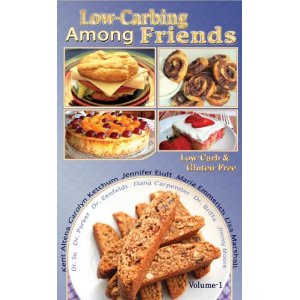
I just read “Low-Carbing Among Friends, Volume 1” by Jennifer Eloff, Maria Emmerich, Carolyn Ketchum, Lisa Marshall, and Kent Altena.  Per Amazon.com’s rating system, I give it five stars (“I love it”).

♦   ♦   ♦

If you’re serious about low-carb eating, you’ll want this book.  Five well-known low-carb cooks and chefs present many of their best recipes in a straightforward format.  All recipes are gluten-free, wheat-free, and sugar-free.  I read through over half of the recipes and understood all the instructions; I’m confident I could make anything in this book.

Some of of the recipe ingredients will be a little hard to find. You may have to order a few of them online, and the authors tell you where to order. Unless you’re just dabbling in low-carb eating, you’ll want to stock up on some of these anyway. 

I have an incurable sweet tooth.  I like to share my cooking with my wife, but she has, um, (ahem)… “gastrointestinal problems” with my usual non-caloric sweetener, Splenda.  That’s not very common, but is a well-known phenomenon.  I was glad to learn herein that erythritol is a trouble-free alternative, GI-wise.

One thing I miss about standard high-carb eating is baked sugary items like cakes and muffins.  Sure, I’ve read that if you stay away from those for four to six months, you’ll lose your desire.  Not me.  And I tried.  In my next stretch of days off, I’m making a batch of Jennifer Eloff’s Splendid Gluten-Free Bake Mix and spending some time in the kitchen!

Not being previously familiar with him, I was particularly impressed with Kent Altena’s background.  Starting at over 400 pounds (182+ kg), he lost over 200 pounds (91+ kg) and reenlisted in the U.S. National Guard and started running marathons (26.2 miles)!  Thank you for your service to our country, Mr. Altena.

The book is laced with commentary from low-carb proponents, including Dana Carpender, Jimmy Moore, Dr. John Briffa, Dr. Andreas Eenfeldt, Dr. Robert Su, and me.  I am honored to have been invited.

By the way, recipe measurements are given in both U.S. customary and metric units, which non-U.S. residents will appreciate.  Serving size nutrient analysis includes digestible carb grams (aka net carbs).  All recipe carb counts are under 10 g; most are under 5 g.   

If you’re tired of eating the same old things, I’m sure you’ll find many new dishes here that will become time-honored classics in your household.

Steve Parker, M.D.

 Disclosure: As a supporter of low-carb eating, I contributed two pages to the book.  I did not and will not recieve any remuneration, and I purchased my own copy of the book.

PS: Recipes I want to try: Cinnamon Swirl Cookies, Green Bean and Bacon Salasd, Gingerbread Biscotti, Tuan Burgers, Blueberry Muffins, Pecan Sun-Dried Tomato and Bacon Cauli-Rice, Spicy Shrimp with Avocado Dressing, 24-Hour Chili, Harvest Pancakes, Breakfast Casserole, Bacon Wrapped Jalapeno Poppers, Stuffed Mushrooms, Broccoli Bacon Salad, Seven Layer Salad, Sausage Quiche, Low-Carb Pancakes, Stuffed Hamburgers, Eggplant Parmeson, Flax Bread, Splendid Gluten-Free Bake Mix, and Mock Danish.


9 Comments

Filed under Book Reviews

Rapper Fat Joe Loses 100 lb on Low-Carb Diet

Rapper Fat Joe is in a YouTube video talking about his 100-lb (45 kg) weight loss by eating low-carb.  He’s not doctor, but he knows a lot about preventing diabetes and heart disease.  He’s livin’ it.

Steve Parker, M.D.

h/t Tom Naughton

4 Comments

Filed under Inspiration

Dr. Andreas Eenfeldt Explains LCHF Diet

LCHF Cheese

Dr. Eenfeldt of DietDoctor.com gave a talk at the recent Ancestral Health Symposium in California, on the rationale of the current low-carb, high-fat diet (LCHF) so popular in his home country of Sweden.  It’s very understandable to the general public and is a good introduction to low-carb eating.  The entire YouTube video is 55 minutes; if you’re pressed for time, skip the 10-minute Q&A at the end.

He also discusses the benefits of LCHF eating for his patients with diabetes.

If you reduce carbohydrate, you’re going to replace it with either protein, fat, or both.  As Dr. Eenfeldt recommends, the Ketogenic Mediterranean and Low-Carb Mediterranean Diets replace carbs more with fats than protein.

Steve Parker, M.D.

Comments Off on Dr. Andreas Eenfeldt Explains LCHF Diet

Filed under Carbohydrate, Fat in Diet

Low-Carb Diet Reduces Weight AND Increases Adiponectin

Compared to a low-fat diet, a very-low-carb diet yielded better fat loss and improved adiponectin levels, according to researchers at the University of Cincinnati.  Read on to find out why this matters.

Adiponectin is a hormone-like protein secreted by fat cells. But the fatter you are, the less adiponectin you have in your bloodstream.  This hormone has several effects:

    • it’s anti-inflammatory
    • high levels of one form of it (a high molecular weight oligomer) are linked to lower rates of diabetes
    • low circulating levels are associatedwith athersclerosis (hardening of the arteries), high blood pressure, and impaired function of cells lining our arteries
    • it sensitizes the liver and muscles to insulin, which helps keep blood sugars under control

    In summary, it’s a good thing to have around.  Low levels are linked to illnesses.  Overweight and obesity tend to lower your levels of adiponectin.  If you’re overweight and have low levels of adiponectin, you should be healthier if you can raise your levels.  How do you do that?  Lose weight.

U. of Cincinnati investigators wanted to know if a very-low-carb diet would increase adiponectin levels better than a common low-fat weight loss diet.  They randomized 81 obese women to follow either a low-fat diet (American Heart Association Step 1) or a very-low-carbohydrate diet based on the Atkins diet.  Women followed the diets for either four or six months.

Findings

Both groups lost weight, but the very-low-carb group lost more: 9.1 kg loss for very-low-carb vs 4.97  for the low-fat group.

The very-low-carb group lost more body fat: 5.45 kg vs 2.62 kg.  (Fat loss was determined by DEXA scan.)

Adiponectin increased in the VLC group but not the LF group.

Discussion

We can’t tell from this article if adiponectin results would be the same in men.  The authors didn’t mention.

ResearchBlogging.orgIn fairness, the authors cite another similar study that found equal degrees of weight loss and adiponectin increase in both low-fat and low-carb groups.  It was a year-long intervention and average weight loss was 13.5% for both groups, a greater degree of weight loss than in the study at hand, in which the very-low-carb group lost 10% of body weight and the low-fat group lost 5.4%.  So you can probably increase your leptin with a low-fat diet if you lose enough excess weight.

Would the Ketogenic Mediterranean Diet work just as well as the very-low carb diet used in this study?  I suspect so, but don’t have the $500,000 it would take to do the research.  Care to donate?

Steve Parker, M.D.

Reference:
Summer, S., Brehm, B., Benoit, S., & D’Alessio, D. (2011). Adiponectin Changes in Relation to the Macronutrient Composition of a Weight-Loss Diet Obesity DOI: 10.1038/oby.2011.60

8 Comments

Filed under Carbohydrate, Overweight and Obesity, Weight Regain

Low-Carb Diet Better Than Low-Cal for Fatty Liver

Loss of excess weight is a mainstay of therapy for nonalcoholic fatty liver disease.  A very-low-carb diet works better than a reduced-calorie diet, according to a recent study in the American Journal of Clinical Nutrition.

Nonalcoholic fatty liver disease (NAFLD) occurs in 20 to 40% of the general population, with most cases occuring between the ages of 40 and 60.  It’s an accumulation of triglycerides in the liver. 

Nonalcoholic steatohepatitis (NASH) is a subset of NAFLD, perhaps 30% of those with NAFLD.  Steatohepatitis involves an inflammatory component, progressing to cirrhosis in 3 to 26% of cases. 

ResearchBlogging.orgResearchers at the University of Texas Southwestern Medical Center assigned 18 obese subjects (average BMI 35) to either a very-low-carb diet (under 20 grams a day) or a low-calorie diet  (1200 to 1500 calories a day) for two weeks.  Liver fat was measured by magnetic resonance technology.  The low-carb groups’ liver fat decreased by 55% compared to 28% in the other group.  Weight loss was about the same for both groups (4.6 vs 4 kg). 

Bottom Line

This small study needs to be replicated, ideally with a larger group of subjects studied over a longer period.  Nevertheless, it appears that a very-low-carb diet may be one of the best dietary approaches to nonalcoholic fatty liver disease.  And I bet it’s more sustainable than severe calorie restriction.  The Ketogenic Mediterranean Diet, by the way, provides 20-30 grams of carb daily.

Steve Parker, M.D. 

 
Refernce:  Browning JD, Baker JA, Rogers T, Davis J, Satapati S, & Burgess SC (2011). Short-term weight loss and hepatic triglyceride reduction: evidence of a metabolic advantage with dietary carbohydrate restriction. The American journal of clinical nutrition, 93 (5), 1048-52 PMID: 21367948

12 Comments

Filed under ketogenic diet, Overweight and Obesity, Weight Loss