Are Particular T2 Diabetes Drugs Better Than Others?

From MPT:

“The number of type 2 diabetes drugs that have a proven cardiovascular benefit jumped from one to three this year, highlighting the changing landscape for diabetes treatments.”

Source: Year in Review: Type 2 Diabetes | Medpage Today

The article notes that liraglutide (Victoza), a GLP-1 analogue, was associated with a 13% relative risk reduction in a composite of cardiovascular death, nonfatal myocardial infarction, and nonfatal stroke.

Semaglutide, an experimental GLP-1 analogue, also has evidence for cardiovascular death prevention.

Another diabetes drug, Jardiance or empagliflozin, also has evidence for cardiovascular death prevention. Jardiance is an SGLT2 inhibitor.

Read the full MPT article for more details. I find the cost of these drugs to be an interesting yet little discussed detail.

Let’s assume these drugs actually reduce cardiovascular disease risk in T2 diabetics. What if they increase death and disease rates from cancer and infection? You don’t hear much about that, do you?

We still don’t know much about the long-term adverse effects of most of our diabetes drugs. That’s one reason I tend to favor diet modification as a primary diabetes treatment.

Steve  Parker, M.D.

low-carb mediterranean diet

Front cover of book

Comments Off on Are Particular T2 Diabetes Drugs Better Than Others?

Filed under Drugs for Diabetes

U.S. Lifespan Declining

MP900146033[1]

Adult life is a battle against gravity. Eventually we all lose.

If you’re considering suicide, talk to a therapist first or call the National Suicide Prevention Lifeline in the U.S.: 1-800-273-8255.

Daily use of high-dose opiates is also a risk factor for premature death. Detox yourself.

From Bloomberg:

The latest, best guesses for U.S. lifespans come from a study released this month by the Society of Actuaries: The average 65-year-old American man should die a few months short of his 86th birthday, while the average 65-year-old woman gets an additional two years, barely missing age 88.

This new data turns out to be a disappointment. Over the past several years, the health of Americans has deteriorated—particularly that of middle-aged non-Hispanic whites. Among the culprits are drug overdoses, suicide, alcohol poisoning, and liver disease, according to a Princeton University study issued in December.

Partly as a result, the life expectancy for 65-year-olds is now six months shorter than in last year’s actuarial study. Longevity for younger Americans was also affected: A 25-year-old woman last year had a 50/50 chance of reaching age 90. This year, she is projected to fall about six months short. (The average 25-year-old man is expected to live to 86 years and 11 months, down from 87 years and 8 months in last year’s estimates.) Baby boomers, Generation X, and yes, millennials, are all doing worse.

Source: Americans Are Dying Faster. Millennials, Too – Bloomberg

1 Comment

Filed under Longevity

Arden’s Father Attended the Novo Nordisk Insulin-Pricing Summit 

I’m infuriated about the price some folks have to pay for their life-saving insulin. Big Pharma knows it’s a major PR problem for them. Scott Benner is the father of a T1 diabetic girl, Arden. He attended Novo Nordisk’s recent PR conference in Indianapolis.

“If you think that you have a commonsense idea that fixes the problem – I promise that you don’t. The issue of insulin pricing, in my estimation, is a microcosmos of every political stalemate that I’ve ever considered. On the surface it feels like someone just needs to do the “right thing”. Problem is, there are too many ‘someones’ and they all hold a different version of what doing the ‘right thing’ means. – no magic wand.”

Source: Novo Nordisk Summit — Arden’s Day and The Juicebox Podcast

I tried to leave a comment at Scott’s blog but couldn’t get it to work. So here it is:

I suspect Sarah P (an earlier commenter) is on the right track.

How much does Novo Nordisk sell their insulin for in socialized systems like Britain’s National Health Service? I bet it’s a lot lower than the retail price in the U.S. And yet they are quite likely making a decent profit on sales in the U.K.

On the other hand, if the U.S. market is subsidizing markedly lower drug prices in other countries, that needs to change.

Many drugs are dramatically cheaper outside the U.S. Look up hepatitis C treatment and rattlesnake anti-venom, for example. But I can’t cross the border into Mexico, buy those drugs, then return to the States and sell them here at a lower price. That’s illegal. Big Pharma would never allow that law to be changed.

-Steve

2 Comments

Filed under Uncategorized

Diabetes Exposure in Womb Tied to Later-Life T2 Diabetes

How much of this is socioeconomic vs genetic vs physiologic?

“Diabetes during pregnancy may put offspring at a higher risk for incident type 2 diabetes later in life, an analysis of indigenous and non-indigenous Canadians found.

Overall, those who had been exposed to type 2 diabetes and gestational diabetes in utero had a higher risk for developing type 2 diabetes before the age of 30 compared with those who had no exposure to diabetes (3.19 versus 0.80 versus 0.26 cases per 1,000 person-years, respectively, P<0.001), according to Brandy Wicklow, MD, MSc, of the University of Manitoba in Winnipeg, and colleagues.”

Source: Diabetes Exposure in Womb Tied to Later-Life T2D | Medpage Today

Comments Off on Diabetes Exposure in Womb Tied to Later-Life T2 Diabetes

Filed under Uncategorized

You Can Get Cheap Insulin at Walmart Without an Rx in Many U.S. States

Good news from Sysy Morales at Diabetes Daily:

“Did you know that Walmart sells Novolin Regular human insulin and Novolin N insulin (commonly known as NPH) for approximately $20 a vial? In most states, you don’t even need a prescription.

These older insulins were what people with diabetes relied on during the 1980s and 1990s before new insulin came along like Humalog, Novolog, Levemir, and Lantus. The activity profiles of R and NPH were combined in patients with type 1 diabetes so that there would be peaks and valleys throughout the day. A peak of insulin action would cover breakfast, lunch, and dinner. Snacks may also be needed at various times to avoid hypoglycemia. Patients were generally injecting both R and NPH in the morning before breakfast and then again before dinner, but of course, there were various schedules provided to patients. Meals on these two insulin types were kept somewhat consistent regarding the quantity of food and carbohydrate intake as well as mealtimes.”

Source: You Can Get Cheap Insulin at Walmart Without an RX in Some States

Comments Off on You Can Get Cheap Insulin at Walmart Without an Rx in Many U.S. States

Filed under Uncategorized

How Common Is Vegetarianism In India?

Gadi Sagar temple on Gadisar lake at sunset, Jaisalmer, India

Gadi Sagar temple on Gadisar Lake, Jaisalmer, Rajasthan, India

I ask because I’m probably going to put together some low-carb Indian food recipes later this year. Why bother to compose meat-heavy recipes if Indians are predominantly vegetarian?

For the rest of this article, when I mention Indians, I’m talking about Indians in India. Not Indians in the U.S. or U.K. or elsewhere. Here’s what I’ve learned so far.

First off, note that vegetarianism isn’t a monolithic way of eating. Here are common subgroups:

  • Vegan:  eat no meat, poultry, fish, eggs, and dairy products whatsoever, probably not even honey (look up how bees make honey)
  • Lacto-vegetarian: eat no meat, poultry, fish, or eggs, but dairy products are okay
  • Lacto-ovo vegetarian: eat no meat, poultry, or fish, but eggs and dairy products are fine
  • Pesco-vegetarian: eat no meat or poultry, but fish are okay (what about eggs and dairy?)
  • Semi-vegetarian: eat meat, poultry or fish at least once a month but less than once a week

Surveys of Indians indicate that only 30% of the population, let’s call it one out of three, label themselves as vegetarian. The most common vegetarian strain is semi-vegetarianism. Admittedly, some sources say lacto-vegetarians are predominant. It’s a close call. Pesco-vegetarians are the smallest vegetarian group.

[Update on Aug 28, 2024: Emily Watson at WorldAnimalFoundation.org informed me that 26% of Indians in India are vegetarian. So one out of four. Click for source.]

By comparison, only 2.4% of U.S. adults are vegetarian.

Even non-vegetarian Indians don’t eat much meat—once a week is not uncommon. For instance, in 2015 average annual meat consumption per capita in Americans was 210 lb. The figure for Indians was 6.4 lb! Non-vegetarians in the U.S. eat five times as much meat as non-vegetarians in India.

Compared to non-vegetarians in In India, vegetarians are more likely to be women, over age 55, college-educated, non-smokers, and more sedentary.

Indian vegetarians don’t eat a lot of eggs but do eat a fair amount of milk/diary products.

Vegetarianism is highly variable depending on geography and the make-up of the population. For example, the state of Gujarat has many vegetarians. Also, wherever you find many Brahmins and Jains, there are beaucoup vegetarians.

There are many Hindus in India. A key principle of Hinduism is nonviolence. Killing an animal and eating it is violent. Hence, vegetarianism.

Vegetables are staples of Indian cuisine, and a variety of spices keep them interesting. Rice and breads are also prominent. Legumes (aka pulses) contribute 5% of calories to Indian diets.

The South Asian Paradox

Some of the aforementioned facts I pulled from  “Vegetarianism and cardiometabolic  disease risk factors: Differences between South Asian and U.S. Adults.”

South Asia is typically comprised of India, Pakistan Afghanistan, Nepal, Bangladesh, Sri Lanka, Bhutan, and Maldives. The most populous of these is India, with 1, 326, 000,000, followed by Pakistan (193,000,000) and Bangladesh (163,000,000). India is also the largest geographically, and in the center of the region. The article at hand was based on surveys, called food propensity questionnaires, of folks in Chennai and New Delhi (both in India) and Karachi (Pakistan).

The researchers were interested in the “South Asian Paradox”: “The prevalence of cardiometabolic diseases such as diabetes and coronary heart disease is increasing disproportionately in South Asian compared with other regions of the world despite high levels of vegetarianism.” Why is this, when the vegetarian diet is supposed to be so healthy? (Prevalence of diabetes in India rose from 6.7% in 2006 to 9.3% in 2014.) The authors wonder if the Indian vegetarian diet is less healthy than U.S. and European vegetarian diets. They write that “The health benefits of vegetarian diets observed n the present study may stem from higher intakes of vegetables and legumes among vegetarians compared with non-vegetarians.” I don’t find any firm conclusions that would resolve the South Asian Paradox. They say U.S. vegetarians have more consistently “healthier” food group intakes than South Asian vegetarians: lower consumption of dairy, desserts, and fried foods. They speculate that the healthfulness of the South Asian vegetarian diet might be improved by limiting fried foods and increasing nutrient-dense fruits, nuts, seeds, and whole grains. Higher legume consumption, particularly by non-vegetarians, may also the healthful.

They note that although diseases like diabetes and cardiovascular disease have increased markedly in India over the last 35 years, annual per capita consumption of poultry, meat and fish has only increased by 1 kg.

I wouldn’t be surprised if the South Asian Paradox is largely unrelated to specific foods.

Steve Parker, M.D.

6 Comments

Filed under Vegetarian Diet

NYT Says the Paleo Lifestyle Ain’t Goin’ Nowhere

But that was way back in 2014…

To the uninitiated, the much talked about Paleo diet — a nutritional regimen centered around pasture-raised meat, eggs, fresh fruit and vegetables, and nuts, in the spirit of our cave-dwelling forebears — may seem like another low-carb fad, the South Beach diet dressed up in a mammoth hide. But the time has passed when it could be written off as a fringe movement of shaggy-haired Luddites with an outsize taste for wild boar meatloaf.

Lately, Paleo has charged toward the mainstream, not only as a hugely popular diet (it was most-searched diet of 2013, according to the Google Trends Zeitgeist list), but also as a cave-man-inspired lifestyle that has spawned a fast-growing industry.

Source: The Paleo Lifestyle: The Way, Way, Way Back – NYTimes.com

If you’re interested in a paleo-style diet for diabetes, check out my Paleobetic diet.

Steve Parker, M.D.


1 Comment

Filed under Paleo diet, Shameless Self-Promotion

Diabetes Doubles Risk of Sudden Cardiac Death

Sudden cardiac death is what it sounds like. It’s often caused by a rhythm disturbance like ventricular tachycardia or ventricular fibrillation but can also be the result of a massive heart attack (acute blockage of blood flow to heart muscle).

I’m hopeful that good control of diabetes will reduce the risk of death.

“Diabetes mellitus was associated with a 2-fold increase in the risk of sudden cardiac death in the general population.”

Source: Diabetes mellitus and the risk of sudden cardiac death: A systematic review and meta-analysis of prospective studies – Nutrition, Metabolism and Cardiovascular Diseases

1 Comment

Filed under Longevity

Recipe: Rosemary Roasted Brussels Sprouts

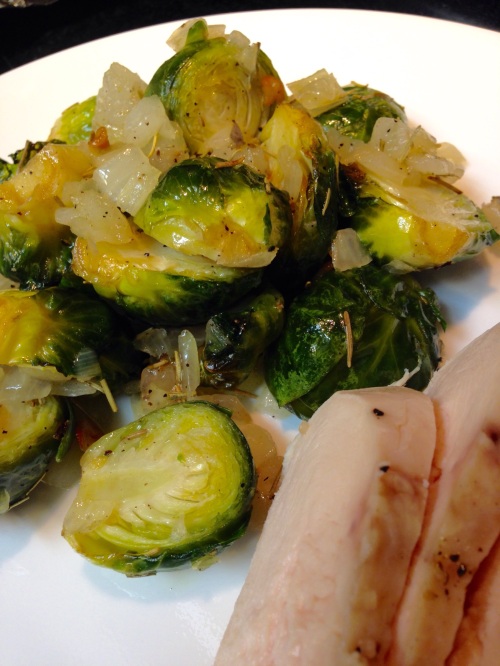
Final product without Parmesan sprinkles. That's sous vide chicken in the foreground.

Final product without Parmesan sprinkles. That’s sous vide chicken in the foreground, making this a complete meal for me.

At my request, my wife bought me a mess o’ Brussels sprouts, and I’ve been experimenting with recipes.

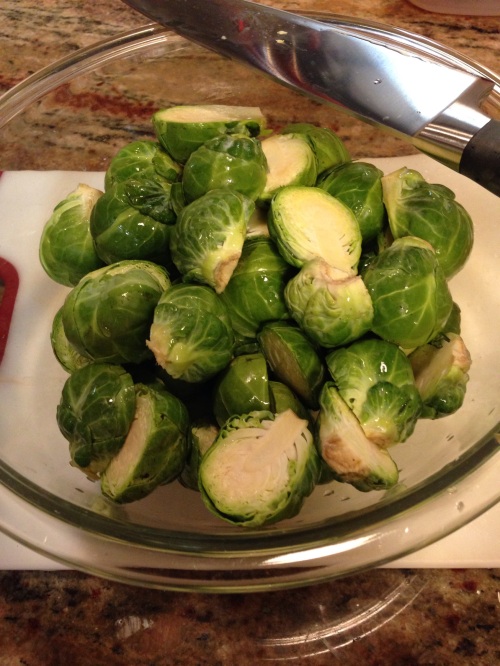
Sprouts sliced in half

Sprouts sliced in half

Ingredients this time are the sprouts, dried rosemary (i.e., not fresh although it grows where I live), salt, pepper, extra virgin olive oil, fresh garlic, and diced onion.

FYI, rosemary is used as an ornamental landscaping plant in southern Arizona.

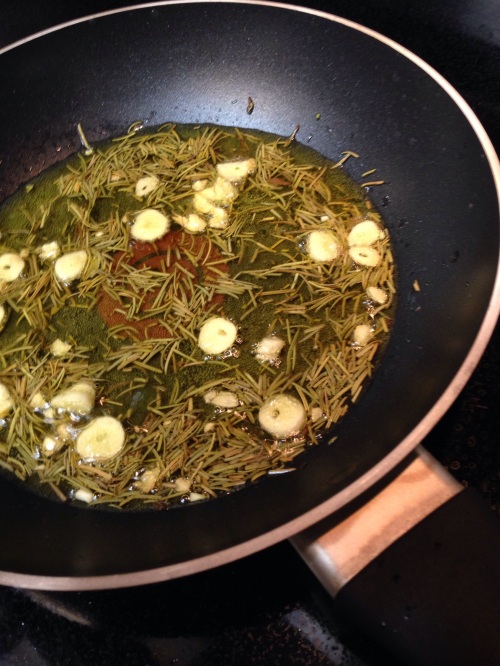
To promote release of flavor, I sautéed three garlic cloves and the rosemary in EVOO.

Releasing the flavors of garlic and rosemary over medium heat for perhaps 3 minutes

Releasing the flavors of garlic and rosemary over medium heat for perhaps 3 minutes

Then I sliced the sprouts in half along their long axis, to reduce cooking time. (Cut them so the leaves stay attached to the internal stalk.) You’d have to cut them in half before you eat ’em anyway.

I dumped all ingredients into a bowel and mixed thoroughly to ensure the sprouts were coated with oil.

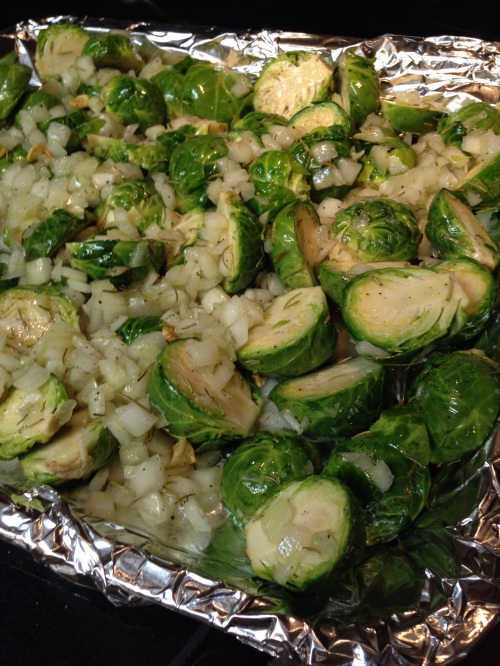
Ready for the oven

Ready for the oven. I used about 3/4 cup of diced onion.

Everything except the bowl was transferred to a cooking sheet covered with aluminum foil (easy clean-up!), which I then popped into an oven pre-heated to 425°F. I cooked for 25 minutes. At around the 10 and 17-minute marks, I pulled the concoction out of the oven and stirred/flipped the ingredients to promote even cooking and browning. Your cooking time will vary from 17 to 25 minutes depending on your preferences. If you want some browning of the sprouts, you likely need to cook longer than 17 minutes. Unless your oven runs hotter than mine.

This is my favorite roasted Brussels sprouts recipe thus far. For an extra flavor zing, sprinkle with some Parmesan cheese just before eating. In the future, I may  top the ingredients with some other type of cheese a minute before the cooking is completed. Bacon bits are another tasty option.

Steve Parker, M.D.

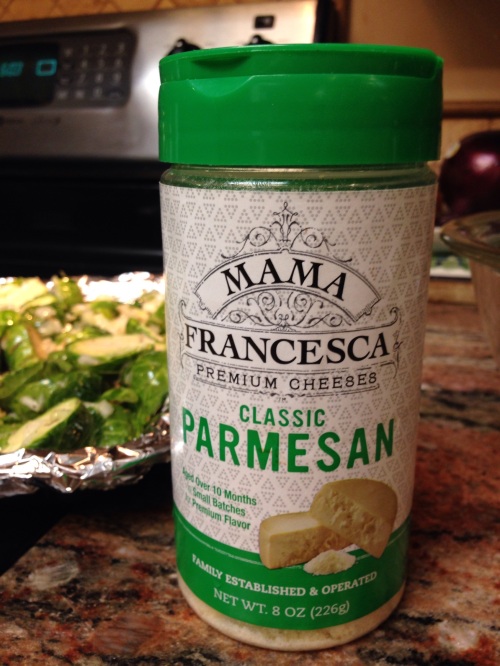
Not "real" Parmesan from Italy. For example, this one contains cellulose "to prevent caking."

Not “real” Parmesan from the Parma region of Italy. For example, this one contains cellulose “to prevent caking.”


Comments Off on Recipe: Rosemary Roasted Brussels Sprouts

Filed under Recipes

Very Low-Carb Diet Helps T1D Patients Achieve Glycemic Control 

Naturally Low-carb Caprese Salad

MedPage Today has a brief report that may interest you. A new study indicates that a very low-carb diet (VLCD) is beneficial to both adults and children with type 1 diabetes. No surprise to me, although I admit this was not an ideal study.

Among people with type 1 diabetes, following a very low-carbohydrate diet (VLCD) can aid in achieving glycemic control, researchers suggested.

Responses from an online survey of people with type 1 diabetes found that those who followed a VLCD reported very good glycemic control – a mean HbA1c of 5.67% ± 0.66%, according to the study by Belinda Lennerz, MD, PhD, of Boston Children’s Hospital, and colleagues. Overall, 97% of these participants achieved the recommended glycemic targets of the American Diabetes Association.

The average blood glucose levels among the subset of patients who reported these values were 104 ± 16 mg/dL, the researchers reported in Pediatrics.

Followers of this diet also noted very few adverse events, with only 2% of the total respondents reporting a diabetes-related hospitalization within the past year – 1% for ketoacidosis and 1% for hypoglycemia.

The survey included 316 responses from both adults with type 1 diabetes and the parents of children with type 1 diabetes. These individuals belonged to a Facebook group of people living with type 1 diabetes who adhere to a VLCD. While a VLCD is usually defined as ≤20 to 50 g per day of carbohydrates or ≤5% to 10% of daily caloric intake, the mean carbohydrate intake of these respondents was 36 ± 15 grams per day.

Source: Carb-Light Diet Helps T1D Patients Achieve Glycemic Control | Medpage Today

Click for the scientific citation.

More details from Maria Muccioli, Ph.D.

Comments Off on Very Low-Carb Diet Helps T1D Patients Achieve Glycemic Control 

Filed under ketogenic diet