Random Notes on Indian Cuisine

Chicken Kolhapur from Chennai Chettinaad Palace

From Madhur Jaffrey’s “An Invitation to Indian Cooking,” 1973 (43 years ago)

“Curry” is just a vague, inaccurate word which the world has picked up from the British, who, in turn, got it mistakenly from us.

“Us” being Indians.

If “curry” is an oversimplified name for an ancient cuisine, then “curry powder” attempts to oversimplify (and destroy) the cuisine itself.”

“Try to buy only whole spices and grind them yourself in small quantities.”

  • in coffee grinder
  • better flavor
  • whole spice that the grindings came from lasts longer
  • store in jar with tight lid away from light

“It is the preparation and combination of whole or freshly ground spices which makes Indian foods unique.”

Ghee: two types. See p. 9

Her recipes are adapted for American kitchens and stores. They focus on Delhi and adjacent sections of Uttar Pradesh.

Meat is usually goat. Fairly tough, so it is cooked slowly or tenderized.

80% of India is Hindu, who technically do not eat beef.

Cooking chicken? Usually remove skin first.

A tandoor is a clay oven with a live coal or wood fire.

Tandoori chicken is indeed popular in India.

“Indians never use olive oil,” but she does.

Fruits and veggies in India  (1973) were/are very seasonal. Not eaten out of season.

Coriander (Chinese parsley or cilantro) and green chilies are essential.

Many Indians don’t like or eat hot (spicy) foods.

Most Indians eat a lot of greens: spinach, mustard greens, fenugreek greens, white radish greens, gram (or chick pea) greens. Spinach is popular over all of India.

Potatoes are a staple in North India.

The average Indian (1973) eats 1/2 to 2/3 pound of rice/day [cooked weight, I guess]. Her recipes use Carolilna (a long-grain uncooked rice) or basmati. (I must re-read. Is Carolilna really Carolina?)

Dals = lentils or pulses = varieties of dried beans and peas.

  • daily in most Indian homes
  • always eaten with rice or bread

Various home-made pickles are popular. By no means only made with cucumbers. Even meat can be pickled.

Chutney p. 226-7.

Her childhood family had servants.

Indian breads are called roti.

  • chapati, paratha, porris, naan
  • naan is leavened
  • typically whole wheat flour
  • cooked on a cast iron griddle or clay oven (tandoor)

In India most meals end with fruit.


From “Beyond Curry Indian Cookbook” by Denise D’Silva Sankhé, 2016. Subtitle: A culinary journey through India.

She’s a columnist at Serious Eats (Beyond Curry).

Over 50 languages in India.

“Curry, to most Indians, is only one type of dish, a gravy or sauce-based one, which can have meat or vegetable in it. “In India, there is no one “curry powder.”

Again, many regional differences in flavors and foods.

Grind your own spices. Store them dark and dry, in steel or glass airtight, in fridge maybe.

A masala is just a blend of spices; quite variable.

Nutmeg is poisonous, but use it anyway.

Dal designates more than lentils. Dals  are a staple, served at least a few times/week. Dal-chawal is a simple dish of lentils and rice, and perhaps the most comforting of foods to Indians.

“Indian food is traditionally eaten  by hand.” The right hand. The left is unclean.

“Mise en place” p. 35.

Some religions forbid alliums (e.g., onions and garlic) and root veggies. Substitute asefetida for the alliums.

Desserts and sweet treat are common, especially in religious and other festivals and celebrations.

Shop for pantry essentials and spices at specialty stores: Indian, Asian, Middle Eastern.

Buy spice in small quantities. They don’t store well for long.

Green chilis (sic): lighter-colored, longer ones are less spicy. Shorter, dark green ones are very hot. Thai and serrano chiles (sic) are fine substitutes.

When her recipes call for onion, she means red onion (can substitute white ones).


Testimonials

Search DietDoctor and you will find. Also http://indialchf.com


From Today’s Dietitian magazine:

August 2014 Issue

Indian Cuisine — Foods That Hold a Special Place in Plant-Based Food Traditions
By Sharon Palmer, RDN
Today’s Dietitian
Vol. 16 No. 8 P. 17

[Ed.: copy/pasted with a few paragraphs deleted. Click the link above for some recipes.]

Gita Patel, MS, RDN, CDE, LD, CLT, author of Blending Science With Spices, explains that Indian culture leans toward vegetarianism due to Hinduism, which hosts a central theme of nonviolence, including animals. “A profound respect for all life is a common Hindu belief that supports vegetarian eating styles,” adds Vandana Sheth, RDN, CDE, a spokesperson for the Academy of Nutrition and Dietetics.

However, British colonial influences and Western food trends, such as the emergence of fast-food restaurants, have brought more animal foods into India, Patel says. “With the globalization of the world and technology, some of the urban lifestyle changes have significantly affected traditional food practices in India,” Sheth adds, listing as evidence the increasing number of fast-food restaurants and premade foods replacing traditional meals in India.

Traditional Eating Patterns
“A lot of people are drawn to Indian cuisine. People like the flavors, herbs, and spices,” Patel says, noting that home cooking is vastly different from what you’re likely to sample in an Indian restaurant.

“The traditional eating pattern is very balanced,” Patel says. She describes typical meals consisting of dal (a legume dish), rice, roti (bread), vegetable, salad, fruit, and a yogurt or buttermilk drink, which may vary slightly depending on the region.

Indeed, there’s scientific consensus that a disease-protective diet is based on a variety of whole plant foods, which sums up the traditional Indian eating pattern. “The traditional Indian vegetarian diet is one that’s rich in a wide variety of grains, beans, lentils, vegetables, fruits, nuts, seeds, spices, and herbs. Research has found that vegetarians have a lower risk of heart disease and some types of cancer,” Sheth says. The National Cancer Institute reports that cancer rates are lower in India than in Western countries, and that diet characteristics such as a high intake of fruits, vegetables, spices, and tea may be responsible for protecting Indians against certain forms of cancer.2

Key Components
While the specific dishes may vary according to different regions of India, the key ingredients basically are the same and include the following:

• Vegetables: “Vegetables are grown all over the country due to the climate,” Patel says, adding that many vegetables are unique to India, such as specific types of gourds, radishes, beans, and greens. However, other dishes are based on more familiar vegetables, such as beets, Brussels sprouts, cabbage, carrots, cauliflower, celery, cucumber, corn, eggplant, green beans, various greens, okra, onions, peas, peppers, potatoes, radishes, spinach, squash, and tomatoes. In addition, fermented foods such as pickled vegetables are a regular feature in Indian cuisine.

• Grains: Rice and wheat are staples in India and used in flatbreads (eg, dosa, roti, chapati), doughs (eg, samosa, kachori), and side dishes (rice) to accompany meals.

• Legumes: Indian cuisine relies on the regular and flavorful use of legumes, such as black-eyed peas, chickpeas, lentils, and beans. In addition to dal, many legumes are sprouted or used as flour in breads.

• Fruits: Apples, apricots, bananas, figs, grapes, guavas, lychees, loquats, mangoes, oranges, papayas, passion fruit, and sweet limes are common fruits in India.

• Dairy: From milk and buttermilk to yogurt and paneer (fresh cheese), dairy products are regular features of the Indian diet. Patel reports that most Indian households receive fresh milk, which is then used for beverages and cooking. Households make their own ghee (clarified butter) from the milk fat, and leftover milk is made into fresh yogurt every day.

• Vegetable oils: Most oils used in traditional cooking are unrefined vegetable oils, such as peanut or sesame. However, Patel reports an increase in the use of refined oils, such as soybean oil, in modern cooking.

• Herbs and spices: At the heart of Indian food is a long list of culinary herbs and spices that have been used for centuries, many of which are proven to have antioxidant, anti-inflammatory, antimicrobial, and anticancer effects. Indian spices include amchur (made from mangoes), aniseed, asafetida (a pungent, onionlike flavor), bay leaf, black pepper, cardamom, chilies, cinnamon, cloves, coconut, coriander, cumin, dill, fennel, fenugreek, garam masala (a spice blend), garlic, ginger, mango powder, mint, mustard, nutmeg, onion seeds, parsley, pomegranate seeds, poppy seeds, saffron, sesame seeds, tamarind, and turmeric.

— Sharon Palmer, RDN, is a contributing editor to Today’s Dietitian and the author of The Plant-Powered Diet and Plant-Powered for Life.


2 Comments

Filed under India

Modified Mediterranean Diet Fights Depression


Olive oil is a prominent source of fat in the Mediterranean diet

From Dr. Emily Deans at Psychology Today:

This year, finally, we have the SMILES trial, the very first dietary trial to look specifically at a dietary treatment in a depressed population in a mental health setting. Participants met criteria for depression and many were already being treated with standard therapy, meds, or both. The designers of this trial took the preponderance of observational and controlled data we already have for general and mental health and decided to train people using dietary advice, nutritional counseling, and motivational interviewing directed at eating a “modified Mediterranean diet” that combined the Australian Dietary Guidelines and the Dietary Guidelines for Adults in Greece. They recommended eating whole grains, vegetables, fruit, legumes, unsweetened dairy, raw nuts, fish, chicken, eggs, red meat (up to three servings per week), and olive oil. Everyone in the study met criteria for a depressive disorder.

The experimental arm of subjects were instructed to reduce the intake of sweets, refined cereals, fried food, fast food, processed meat, sugary drinks, and any alcohol beyond 1-2 glasses of wine with meals. There were seven hour long nutritional counseling sessions and a sample “food hamper” with some food and recipes. The control group had the same number of sessions in “social support,” which is a type of supportive therapy that is meant to mimic the time and interpersonal engagement of the experimental group without utilizing psychotherapeutic techniques.

*  *  *

Despite the small size, the results were still statistically significant and better than anticipated. The dietary group had bigger reductions in depression scores at the end of 12 weeks. Remission of depression symptoms occurred in 32.3 percent of the diet group as opposed to 8 percent of the control group.

Source: A Dietary Treatment for Depression | Psychology Today

The Mediterranean diet…Is there anything it can’t do?

Comments Off on Modified Mediterranean Diet Fights Depression

Filed under Health Benefits, Mediterranean Diet

Men, Do You Need Testosterone Supplementation?

Steve Parker MD, Advanced Mediterranean Diet, Ketogenic Mediterranean Diet

Testosterone is one reason men are better than women at push-ups

I’m running across more middle-aged and older men who are taking testosterone supplements. I don’t know if it’s a national trend or simply a Scottsdale, AZ, phenomenon.

The Endocrine Society in 2010 published guidelines regarding testosterone therapy for men who are androgen-deficient. Here are their recommendations on who should be tested for deficiency, and how:

1.1 Diagnosis and evaluation of patients with suspected androgen deficiency

“We recommend making a diagnosis of androgen deficiency only in men with consistent symptoms and signs and unequivocally low serum testosterone levels.

We suggest that clinicians measure serum testosterone level in patients with clinical manifestations shown in Table 1A. We suggest that clinicians also consider measuring serum testosterone level when patients report the less specific symptoms and signs listed in Table 1B.

TABLE 1.
Symptoms and signs suggestive of androgen deficiency in men

A. More specific symptoms and signs
Incomplete or delayed sexual development, eunuchoidism
Reduced sexual desire (libido) and activity
Decreased spontaneous erections
Breast discomfort, gynecomastia
Loss of body (axillary and pubic) hair, reduced shaving
Very small (especially < 5ml) or shrinking testes

Inability to father children, low or zero sperm count
Height loss, low trauma fracture, low bone mineral density
Hot flushes, sweats

B. Other less specific symptoms and signs
Decreased energy, motivation, initiative, and self-confidence
Feeling sad or blue, depressed mood, dysthymia
Poor concentration and memory
Sleep disturbance, increased sleepiness
Mild anemia (normochromic, normocytic, in the female range)
Reduced muscle bulk and strength
Increased body fat, body mass index
Diminished physical or work performance

We suggest the measurement of morning total testosterone level by a reliable assay as the initial diagnostic test.

We recommend confirmation of the diagnosis by repeating measurement of total testosterone.

We suggest measurement of free or bioavailable testosterone level, using an accurate and reliable assay, in some men in whom total testosterone concentrations are near the lower limit of the normal range and in whom alterations of SHBG are suspected.

We suggest that an evaluation of androgen deficiency should not be made during an acute or subacute illness.”

Harriet Hall thinks testosterone is being over-prescribed.

Comments Off on Men, Do You Need Testosterone Supplementation?

Filed under Uncategorized

Sacrilege: High Cholesterol Doesn’t Cause Heart Disease, Say Doctors

Plaque unrelated to cholesterol

From The Irish Times:

There is no evidence that high levels of total cholesterol or of “bad” cholesterol cause heart disease, according to a new paper by 17 international physicians based on a review of patient data of almost 1.3 million people.

The authors also say their review shows the use of statins – cholesterol lowering drugs – is “of doubtful benefit” when used as primary prevention of cardiovascular disease.

The authors include Galway-based Prof Sherif Sultan, professor of the International Society for Vascular Surgery; Scottish-based Dr Malcolm Kendrick, author of The Great Cholesterol Con; and Dr David M Diamond, a US-based neuroscientist and cardiovascular disease researcher.

Prof Sultan said millions of people all over the world, including many with no history of heart disease, are taking statins “despite unproven benefits and serious side effects”.

Source: ‘No evidence’ high cholesterol causes heart disease, say doctors

1 Comment

Filed under Heart Disease

Mark Rippetoe Insists Old Folks Need Strength Training

That's a dumbbell in her right hand. I work-out with those myself.

That’s a dumbbell in her right hand. I work-out with those myself.

I agree. Click the link below for details.

“Strength – as well as a tolerance for childish nonsense – is the thing we all lose as we age. Squatting down, standing back up, putting things overhead, pulling things up the driveway, loading the groceries, wrestling with the grandkids, teaching the dog who’s boss, mowing the yard, putting the broken lawnmower in the truck again: simple physical tasks we took for granted years ago are often problems for older, weaker people, as well as a source of potential injury that can be expensive and debilitating.

For most of us, this happens because of inactivity. If you do not use your muscles to produce enough force to convince them to maintain their ability to do so, it shouldn’t be surprising that they become less capable of doing it. And walking, running, riding a bicycle – physical activities whose performance is not limited by strength for even moderately active people – cannot increase or even maintain strength.”

Source: Strength Training for People My Age | Mark Rippetoe

Comments Off on Mark Rippetoe Insists Old Folks Need Strength Training

Filed under Exercise

Can I Do the Newcastle Diet On My Own?

Some of these are Newcastle-compliant

Probably. Also probably not a good idea to fly solo, without personal medical attention.

Here’s a link to details of the diet, which has reversed some cases of type 2 diabetes, prepared by Professor Roy Taylor. Overall, his advice looks pretty reasonable to me. However, with such severe calorie restriction (600-800 cals/day), I think a multivitamin supplement might be a good idea.

Note that Taylor says any reasonable diet that leads to loss of enough excess weight may be just as good as the Newcastle diet.

Steve Parker, M.D.

low-carb mediterranean diet

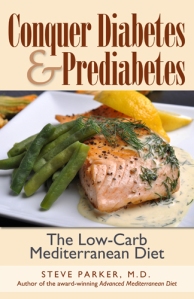
Front cover of book


1 Comment

Filed under Weight Loss

Are You About to Pull the Trigger on a Sous Vide Device? Watch Us Unbox Our New Anova Precision Cooker

My wife got interested in the sous vide cooking method in 2016. She gave her original Anova cooker away to someone and replaced it with another brand that broke and shocked her, literally. We just got our new Anova and made this unboxing video. (I’m told that unboxing videos are “a thing.”)

We’ve noticed in our corner of the universe that steaks are getting more expensive. Sous vide cooking allows us to use cheaper and tougher cuts of meat and it comes out very tender. The method often yields foods that are also more flavorful and juicier compared to other cooking styles.

Comments Off on Are You About to Pull the Trigger on a Sous Vide Device? Watch Us Unbox Our New Anova Precision Cooker

Filed under Uncategorized

15 Natural Ways to Treat High Blood Pressure

You may need to cut back on alcohol Photo copyright: Steve Parker MD

You may need to cut back on alcohol.

Drugs to control hypertension can save your life. I prescribe them all the time. However, there are also “natural” ways to control high blood pressure. Click the link at bottom for some of the better known methods from Kerri-Ann Jennings, RD. If you’re trying to avoid drugs, you’ll probably need a combination of tricks. And they don’t work for everybody.

Even if you’re already on drugs, you may be able to cut back or stop them if you adopt some of these tips.

From Jennings:

High blood pressure is a dangerous condition that can damage your heart. It affects one in three people in the US and 1 billion people worldwide.

If left uncontrolled, it raises your risk of heart disease and stroke.

But there’s good news. There are a number of things you can do to lower your blood pressure naturally, even without medication.Here are 15 natural ways to combat high blood pressure.

Source: 15 Natural Ways to Lower Your Blood Pressure

h/t Jan at The Low Carb Diabetic

Comments Off on 15 Natural Ways to Treat High Blood Pressure

Filed under Heart Disease

Ketogenic Diet Surging in Popularity

Low-Carb Mediterranean Diet, front cover

As of 0130 hrs August 2, these are the top five diet and/or weight-loss books at Amazon.com. (If you’re not in the U.S., your country may have its own separate URL.) In order of top sellers first:

  • The Complete Ketogenic Diet for Beginners (#5 on best-seller list)
  • Instant Loss Cookbook (#8)
  • The Ketogenic Diet (#40)
  • The Plant Paradoz Cookbook (#42)
  • The Easy 5-Ingredient Ketogenic Diet Cookbook (#50-something)

I was fully aware ketogenic diets are popular now, but I didn’t realize just how popular! Both of my books on this page feature a doctor-designed ketogenic diet based on the healthy traditional Mediterranean diet.

Sadly, none of my books are best-sellers. I may have to start begging for donations from my blog readers. Poor, poor, pitiful me.

Steve Parker, M.D.

8 Comments

Filed under ketogenic diet, Shameless Self-Promotion

From 2012: Largest Healthcare Fraud Settlement in History Involves Diabetes Drug Avandia

Your friendly neighborhood drug supplier

Your friendly neighborhood drug supplier

“Global health care giant GlaxoSmithKline LLC (GSK) agreed to plead guilty and to pay $3 billion to resolve its criminal and civil liability arising from the company’s unlawful promotion of certain prescription drugs, its failure to report certain safety data, and its civil liability for alleged false price reporting practices, the Justice Department announced today. The resolution is the largest health care fraud settlement in U.S. history and the largest payment ever by a drug company. GSK agreed to plead guilty to a three-count criminal information, including two counts of introducing misbranded drugs, Paxil and Wellbutrin, into interstate commerce and one count of failing to report safety data about the drug Avandia to the Food and Drug Administration (FDA). Under the terms of the plea agreement, GSK will pay a total of $1 billion, including a criminal fine of $956,814,400 and forfeiture in the amount of $43,185,600. The criminal plea agreement also includes certain non-monetary compliance commitments and certifications by GSK’s U.S. president and board of directors. GSK’s guilty plea and sentence is not final until accepted by the U.S. District Court. GSK will also pay $2 billion to resolve its civil liabilities with the federal government under the False Claims Act, as well as the states. The civil settlement resolves claims relating to Paxil, Wellbutrin and Avandia, as well as additional drugs, and also resolves pricing fraud allegations.”

Source: GlaxoSmithKline to Plead Guilty and Pay $3 Billion to Resolve Fraud Allegations and Failure to Report Safety Data | OPA | Department of Justice

Regarding Avandia:

“The United States alleges that, between 2001 and 2007, GSK failed to include certain safety data about Avandia, a diabetes drug, in reports to the FDA that are meant to allow the FDA to determine if a drug continues to be safe for its approved indications and to spot drug safety trends. The missing information included data regarding certain post-marketing studies, as well as data regarding two studies undertaken in response to European regulators’ concerns about the cardiovascular safety of Avandia. Since 2007, the FDA has added two black box warnings to the Avandia label to alert physicians about the potential increased risk of (1) congestive heart failure, and (2) myocardial infarction (heart attack). GSK has agreed to plead guilty to failing to report data to the FDA and has agreed to pay a criminal fine in the amount of $242,612,800 for its unlawful conduct concerning Avandia.”

And…

“In its civil settlement agreement, the United States alleges that GSK promoted Avandia to physicians and other health care providers with false and misleading representations about Avandia’s safety profile, causing false claims to be submitted to federal health care programs. Specifically, the United States alleges that GSK stated that Avandia had a positive cholesterol profile despite having no well-controlled studies to support that message. The United States also alleges that the company sponsored programs suggesting cardiovascular benefits from Avandia therapy despite warnings on the FDA-approved label regarding cardiovascular risks. GSK has agreed to pay $657 million relating to false claims arising from misrepresentations about Avandia. The federal share of this settlement is $508 million and the state share is $149 million.”

Does this help you understand why I favor diet modification over drug therapy for type 2 diabetes?

Steve Parker, M.D.

low-carb mediterranean diet

Front cover of book

2 Comments

Filed under Drugs for Diabetes