A Whole Grain Food Isn’t What You Think

Now THIS is whole grain

Do you know what a whole grain food is? I thought I did. I was wrong. Here’s the definition in a 2013 article in Scientific American:

The term “whole grain” might evoke an image of a whole, intact grain—that is, a fiber-rich coating of bran surrounding a starchy endosperm and a small reproductive kernel known as the germ. But in a definition created in 1999 by the American Association of Cereal Chemists (AACC) International, an organization of food industry professionals and scientists, and adopted by the U.S. Food and Drug Administration in 2006, “whole grain” refers to any mixture of bran, endosperm and germ in the proportions one would expect to see in an intact grain—yet the grains can be, and usually are, processed so that the three parts are separated and ground before being incorporated into foods. (Refined grains, on the other hand, are grains that have been stripped of their bran and germ.) For a food product to be considered whole grain, the FDA saysit must contain at least 51 percent of whole grains by weight. Compared with intact grains, though, processed whole grains often have lower fiber and nutrient levels.

Many of the scientific studies that support the healthfulness of whole grains, and there aren’t many, considered wheat germ and bran cereals as whole grain foods. But those are only parts of a whole grain. The studies that linked lower heart disease and type 2 diabetes with whole grain consumption were diets high in fiber or bran as a whole grain.

Read the whole article (it’s not long) to find out how modern processing of whole grains can reduce their healthfulness.

Food companies lump ground whole grains, partially processed grains and intact unprocessed grains together under the same broad category of “whole grains,” so it’s difficult for consumers to know which they’re getting.

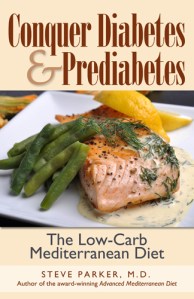
Click pic to buy book at Amazon.com in the U.S.

3 Comments

Filed under Grains

NASEM Concludes U.S. Dietary Guidelines Are Not Trustworthy

Back to the drawing board

NASEM is the National Academies of Sciences, Engineering, and Medicine. Dr. Andy Harris writes that:

The nation’s senior scientific body recently released a new report raising serious questions about the “scientific rigor” of the Dietary Guidelines for Americans. This report confirms what many in government have suspected for years and is the reason why Congress mandated this report in the first place: our nation’s top nutrition policy is not based on sound science.

Dr. Harris notes that since 1980, when the guidelines were first published, rates of obesity have doubled and diabetes has quadrupled.

Current recommendations to reduce saturated fat consumption and to eat health whole grains do not, after all, reduce rates of cardiovascular disease. That was my conclusion in 2009.

For a mere $68 US you can read the NASEM report yourself. Better yet, read Tom Naughton’s thoughts for free.

Steve Parker, M.D.

PS: The diets I’ve designed are contrary to U.S. Dietary Guidelines.

1 Comment

Filed under Overweight and Obesity

Mediterranean and Paleo Diets Linked to Longer Lifespan

The Journal of Nutrition in 2017 published a study that looked at baseline diet characteristics of over 21,000 folks, then over the next six years noted who died, and why. Guess how many died?

Here’s a clue. These U.S. study participants were at least 45 years old at the start of the study.

2,513 died. Seems high to me, so I bet the average age was close to 65.

Hank’s not worried about death

I can’t tell for sure from the report’s abstract, but it looks like the researchers were interested in the Mediterranean and “caveman” diets from the get-go. Study subjects who ate Paleo- or Mediterranean-style were significantly less likely to die over six years. They were less likely to die from any cause or from cancer or from cardiovascular disease.

Composition of the paleo diet is debatable (click for my 2012 definition).

Consider adopting some Mediterranean diet features, too.

Steve Parker, M.D.

Reference:

Paleolithic and Mediterranean Diet Pattern Scores Are Inversely Associated with All-Cause and Cause-Specific Mortality in Adults. First published February 8, 2017, doi: 10.3945/​jn.116.241919. Authors:

  1. Kristine A Whalen
  2. Suzanne Judd
  3. Marjorie L McCullough
  4. W Dana Flanders
  5. Terryl J Hartman
  6. Roberd M Bostick

Abstract

Background: Poor diet quality is associated with a higher risk of many chronic diseases that are among the leading causes of death in the United States. It has been hypothesized that evolutionary discordance may account for some of the higher incidence and mortality from these diseases.

Objective: We investigated associations of 2 diet pattern scores, the Paleolithic and the Mediterranean, with all-cause and cause-specific mortality in the REGARDS (REasons for Geographic and Racial Differences in Stroke) study, a longitudinal cohort of black and white men and women ≥45 y of age.

Methods: Participants completed questionnaires, including a Block food-frequency questionnaire (FFQ), at baseline and were contacted every 6 mo to determine their health status. Of the analytic cohort (n = 21,423), a total of 2513 participants died during a median follow-up of 6.25 y. We created diet scores from FFQ responses and assessed their associations with mortality using multivariable Cox proportional hazards regression models adjusting for major risk factors.

Results: For those in the highest relative to the lowest quintiles of the Paleolithic and Mediterranean diet scores, the multivariable adjusted HRs for all-cause mortality were, respectively, 0.77 (95% CI: 0.67, 0.89; P-trend < 0.01) and 0.63 (95% CI: 0.54, 0.73; P-trend < 0.01). The corresponding HRs for all-cancer mortality were 0.72 (95% CI: 0.55, 0.95; P-trend = 0.03) and 0.64 (95% CI: 0.48, 0.84; P-trend = 0.01), and for all-cardiovascular disease mortality they were 0.78 (95% CI: 0.61, 1.00; P-trend = 0.06) and HR: 0.68 (95% CI: 0.53, 0.88; P-trend = 0.01).

Conclusions: Findings from this biracial prospective study suggest that diets closer to Paleolithic or Mediterranean diet patterns may be inversely associated with all-cause and cause-specific mortality.

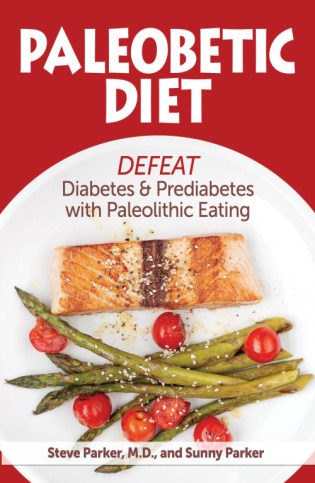
Click pic to order at Amazon


Click pic to order at Amazon

1 Comment

Filed under Longevity

Have You Heard of the Milk Diet?

hiking, Arizona, Steve Parker MD,

Tom’s Thumb trail in Scottsdale, AZ


I vaguely recall a milk diet to treat stomach ulcers in the mid-20th century. Tagamet changed that!

I’ve been reading scientific articles on low-energy liquid diets for weight loss and diabetes remission, and ran across a reference to a milk diet. I found impressive results in a 16-week study.

This was a small randomized trial that enrolled 45 very fat folks — BMI 41-47, average weight 122 kg (268 lb), mostly women — and assigned them to one of three diets:

  1. Control: conventional balanced diet of normal foods providing about 800 calories/day and at least 36 grams of protein.
  2. Milk: “variable combination of full cream or semi-skimmed milk and unsweetened yoghurt,” about 800 calories/day. BTW, a cup (240 ml) of whole milk has 150 calories.
  3. Milk Plus: same as the milk diet plus “unlimited amount of a single food selected by the patient on each day of the week. Of these seven extra foods, three were a fruit or vegetable, two were a high protein food, and two were a “favourite” food. The seven foods were repeated on the same day of successive weeks.” (If you understand this, you’re smarter than me, which wouldn’t be unusual.) Average calories were 1,350/day.

The researchers figured these adults were eating about 2,500 calories/day at baseline. Diabetics were excluded.

Results

The Milk group lost the most weight. Eleven of the 14 participants completed the 16-week study, with an average weight loss of 11.2 kg (24.6 lb). Constipation was the only “serious” side effect reported. The authors admitted that deficiencies in some vitamins and iron might be a problem, but cited a similar but longer trial (24 weeks) that found no such deficiencies.

Eleven of the 17 in the Milk Plus group persevered for the whole 16 weeks. Average weight loss was 8.2 kg (18 lb).

Nine of the 14 in the Control Group were able to put up with it for the duration. Average weight loss was only 2.6 kg (5.7 lb). I suspect they had a bit of a compliance problem. When you weigh 268 lb, a 5.7 lb loss isn’t much.

“Analysis of compliance (not reported) showed that it was similar for the two milk diets but much lower for the conventional diet.”

Comments

The researchers opine that…

  • “Patients are more likely to respond to a simple diet which they have not tried before than to advice on conventional diets.”
  • Probably the best strategy is to rotate diets,…[to prevent compliance from falling].”

I wonder how well the Milk diet would work for someone who weighs 205 lb (93 kg) and just wants to lose 25 lb (11.4 kg).

I wonder how important are the exact proportions of “full cream or semi-skimmed milk and unsweetened yoghurt.”

I wonder if the Milk diet has ever been tested in overweight people with diabetes. The carbohydrate in milk shouldn’t be a problem since overall calories are so low. A cup of milk has 12 grams of carbohydrate.

As with all diets, weight regain will be a problem after the 16 weeks.

I’m skeptical about the nutritional adequacy of the Milk diet.

The Milk diet might be a good temporary option for someone who wants to lose more excess weight but has hit a weight-loss plateau in their current regimen.

The simplicity of the milk diet is very appealing to me.

Steve Parker, M.D.

Reference: Summerbell, C.D., et al. Randomised controlled trial of novel, simple, and well supervised weight reducing diets in outpatients. British Medical Journal, 317: 1487-1489. November 28, 1998.

Low-Carb Mediterranean Diet, front cover


1 Comment

Filed under Weight Loss

Sofia Norton Debunks 21 Weight-Loss Myths

Click the link below for her article at Kiss My Keto. The preamble:

Before we dive into the weight loss myths, it’s important to state the truth about weight loss.It’s not as simple as eating healthy and following an exercise program.

Of course, those can make a big difference, however, it doesn’t work that way for everyone.

There are so many factors that come into play when it comes to weight loss. Some of those factors include genetics, endocrine disorders, medications, insomnia, and cultural reasons.

This is why women with the polycystic ovarian syndrome may find it harder to lose weight than those who don’t have it.

So the next time you come across a trending weight loss tip, pause for a moment, and research about it to see if it’s even true. Secondly, analyze your current situation to see if this particular weight loss strategy will work for you.

Source: 21 Popular Weight Loss Myths Debunked! – Kiss My Keto

1 Comment

Filed under Uncategorized

Can Diet Reduce Your Gingivitis and Periodontitis?

Yes...at least according to a tiny short-term study done in Germany. Only 10 experimental subjects.

Here’s their description of the food: “…low in carbohydrates, rich in Omega-3 fatty acids, and rich in vitamins C and D, antioxidants and fiber for four weeks.” How low in carbs? To a level “as far as possible to a level < 130 grams/day.” Click the link above for full diet details. It looks to me like a paleo diet.

Certified paleo-compliant, plus high omega-3 fatty acids and low-carb

The researchers note in the body of their report that they can’t tell for sure which components of the experimental diet were most helpful, but they suspect it’s 1) the carbohydrate restriction, 2) increased omega-3 fatty acids, and 3) reduced omega-6 consumption.

Those three factors are at play in the both the Paleobetic Diet and Low-Carb Mediterranean Diet.

Here’s the study’s abstract for you science nerds:

Background

The aim of this pilot study was to investigate the effects of four weeks of an oral health optimized diet on periodontal clinical parameters in a randomized controlled trial.

Methods

The experimental group (n = 10) had to change to a diet low in carbohydrates, rich in Omega-3 fatty acids, and rich in vitamins C and D, antioxidants and fiber for four weeks. Participants of the control group (n = 5) did not change their dietary behavior. Plaque index, gingival bleeding, probing depths, and bleeding upon probing were assessed by a dentist with a pressure-sensitive periodontal probe. Measurements were performed after one and two weeks without a dietary change (baseline), followed by a two week transitional period, and finally performed weekly for four weeks.

Results

Despite constant plaque values in both groups, all inflammatory parameters decreased in the experimental group to approximately half that of the baseline values (GI: 1.10 ± 0.51 to 0.54 ± 0.30; BOP: 53.57 to 24.17 %; PISA: 638 mm2 to 284 mm2). This reduction was significantly different compared to that of the control group.

Conclusion

A diet low in carbohydrates, rich in Omega-3 fatty acids, rich in vitamins C and D, and rich in fibers can significantly reduce gingival and periodontal inflammation.

Thanks to BioMed Central for making the entire report available for free.

Reference:

An oral health optimized diet can reduce gingival and periodontal inflammation in humans – a randomized controlled pilot study

  • J. P. WoelberEmail author,
  • K. Bremer,
  • K. Vach,
  • D. König,
  • E. Hellwig,
  • P. Ratka-Krüger,
  • A. Al-Ahmad and
  • C. Tennert
BMC Oral Health 2016, 17:28

https://doi.org/10.1186/s12903-016-0257-1

Published: 26 July 2016

2 Comments

Filed under Carbohydrate, Paleo diet

Short-Term Metabolic Effects of Low-Carb Versus High-Carb Diet In Type 1 Diabetes

Shrimp Salad

A scientific study published 2017 compared a high-carb (at least 250 grams/day) to low-carb diet (50 grams or less) in 10 patients with type 1 diabetics. The low-carb diet yielded more time in the normal blood sugar range, less hypoglycemia, and less variability of glucose levels.

I assume the low-carb diet required less insulin, but I don’t know since I haven’t seen the full article. Let me know if you can confirm.

In case you’re wondering, the Paleobetic diet provides about 60 grams of carb daily, and the Low-Carb Mediterranean Diet ranges from 20 t0 100 grams.

Here’s the abstract:

The aim of the present study was to assess the effects of a high carbohydrate diet (HCD) vs a low carbohydrate diet (LCD) on glycaemic variables and cardiovascular risk markers in patients with type 1 diabetes. Ten patients (4 women, insulin pump-treated, median ± standard deviation [s.d.] age 48 ± 10 years, glycated haemoglobin [HbA1c] 53 ± 6 mmol/mol [7.0% ± 0.6%]) followed an isocaloric HCD (≥250 g/d) for 1 week and an isocaloric LCD (≤50 g/d) for 1 week in random order. After each week, we downloaded pump and sensor data and collected fasting blood and urine samples. Diet adherence was high (225 ± 30 vs 47 ± 10 g carbohydrates/d; P < .0001). Mean sensor glucose levels were similar in the two diets (7.3 ± 1.1 vs 7.4 ± 0.6 mmol/L; P = .99). The LCD resulted in more time with glucose values in the range of 3.9 to 10.0 mmol/L (83% ± 9% vs 72% ± 11%; P = .02), less time with values ≤3.9 mmol/L (3.3% ± 2.8% vs 8.0% ± 6.3%; P = .03), and less glucose variability (s.d. 1.9 ± 0.4 vs 2.6 ± 0.4 mmol/L; P = .02) than the HCD. Cardiovascular markers were unaffected, while fasting glucagon, ketone and free fatty acid levels were higher at end of the LCD week than the HCD week. In conclusion, the LCD resulted in more time in euglycaemia, less time in hypoglycaemia and less glucose variability than the HCD, without altering mean glucose levels.

3 Comments

Filed under Carbohydrate, Paleo diet

Seniors, Preserve Your Muscle Mass as You Lose Weight

dementia, memory loss, Mediterranean diet, low-carb diet, glycemic index, dementia memory loss

“Honey, please come to the gym with me.”

We’ve known for a while that resistance training helps preserve muscle mass in younger folks during weight-loss programs. I’ve always figured the principle applied to older folks, too. Now we have proof. Average age of these study participants was 67.

From UPI.com:

Seniors who want to lose weight should hit the weight room while they cut calories, a new study suggests.

Older folks who performed resistance training while dieting were able to lose fat but still preserve most of their lean muscle mass, compared with those who walked for exercise, researchers report.

“The thought is if you lose too much lean mass, that this will exacerbate risk of disability in older adults,” said lead researcher Kristen Beavers, an assistant professor of health and exercise science at Wake Forest University in Winston-Salem, N.C. “Our findings show if your treatment goal is to maximize fat loss and minimize lean mass loss, then the resistance training is probably the way to go.”


2 Comments

Filed under Uncategorized

Should You Restrict Sodium Intake?

I’m still not convinced that severe sodium restriction is necessary or even possible for most people

U.S public health authorities recommend maximum daily sodium consumption of 2.3 grams a day, in order to prevent cardiovascular disease. But a 2018 multi-country study published in Lancet supports a much different and higher maximum sodium intake level:

Sodium intake was associated with cardiovascular disease and strokes only in communities where mean intake was greater than 5 g/day. A strategy of sodium reduction in these communities and countries but not in others might be appropriate.

The researchers also found, “All major cardiovascular outcomes decreased with increasing potassium intake in all countries.”

Click for a list of potassium-rich foods from a .gov website.

You’ll find several cold-water fatty fish there.

My Low-Carb Mediterranean Diet recommends the fish but you’ll find no sodium restriction advice.

Source: Urinary sodium excretion, blood pressure, cardiovascular disease, and mortality: a community-level prospective epidemiological cohort study – The Lancet

low-carb mediterranean diet

Front cover of book

1 Comment

Filed under Heart Disease, Stroke

What’s the Best Diet For Diabetes?

From a recent Diabetes Care journal article:

“The Consensus Report highlights the role of weight management, dietary patterns, and technology-enabled tools in diabetes prevention and management. There is a clear consensus on reducing intake of added sugars, sodium, and unhealthy fats, especially trans fat, in the diet, although the panel does not recommend a “one-size-fits-all” eating plan. Instead, multiple eating patterns including the Mediterrranean diet, DASH (Dietary Approaches to Stop Hypertension) diet, and vegetarian and low-carbohydrate diets can be used for weight and diabetes management. However, the quality and food sources of the macronutrients are among the most critical factors determining the efficacy and long-term outcomes of these diets.”

Source: Nutritional Strategies for Prevention and Management of Diabetes: Consensus and Uncertainties | Diabetes Care

2 Comments

Filed under Uncategorized