
Category Archives: Uncategorized

When Is the Hemoglobin A1c Test Misleading?

From 97 to 90 mg/dl

Not the only way to assess glucose control

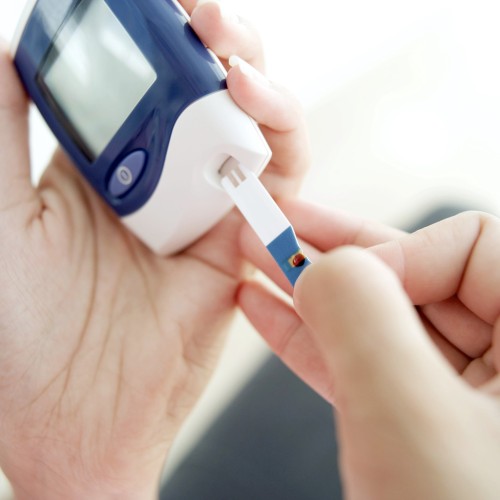
Can you believe I’ve had patients show me a week’s worth of home glucose tests showing great numbers, tell me they’ve been that good for the last three months, and then I find a sky high hemoglobin A1c test? How can that be? Sometimes the patient, usually a young one, is trying to pull the wool over my eyes. But there are other potential explanations.

Hemglobin A1c (or HgbA1c) is a standard measure of glucose control, or lack thereof, over the three months preceding the blood test.

It’s also used for diagnosis of diabetes and prediabetes. Levels between 5.7 and 6.4% suggest prediabetes. Levels of 6.5% of higher indicate diabetes.

Hemoglobin is the oxygen-carrying protein in red blood cells. HgbA1c tells us if many sugar molecules are stuck to the hemoglobin, a process called glycosylation. HgbA1c is sometimes referred to as glycated hemoglobin. About half of the HgbA1c value is determined by blood sugar levels in the month before the blood draw.

But the HgbA1c test isn’t always an accurate reflection of blood sugar levels.

Many factors unrelated to serum glucose (sugar) levels can alter the HgbA1c value. Here they are:

Pregnancy

Pregnant women tend to have lower than average HgbA1c.

Certain Types of Anemia

Iron-deficiency anemia may yield falsely low or high HgbA1c, depending on whether it’s being treated or not.

Acute bleeding and hemolytic anemia give falsely low HbA1c values.

The unifying feature here is that young red blood cells, called reticulocytes, take some time to get glycosylated.

Lack of a Spleen 

HgbA1c will be falsely high. Your spleen removes old red blood cells. Not having a spleen increases the life span of red blood cells, so they can accumulate more glucose molecules.

Various Hemoglobin Types or Congenital Abnormalities

Hemoglobin S and hemoglobin C may lead to deceptively low HgbA1c. Hemoglobin F tends to overestimate.

Blood Transfusions

Recent red blood cell transfusions will lower the HgbA1c if it was elevated to begin with, especially if lots of blood is transfused.

Renal Failure

It’s complicated; talk to your kidney specialist.

Chronic Disease

HgbA1c values can be unreliable in chronic alcoholism, chronic narcotic users, severely high triglyceride or bilirubin levels, kidney failure, vitamin and mineral deficiencies (particularly the vitamins and minerals needed to make red blood cells).

Race

Hispanics, Asians, and Blacks tend to have higher HgbA1c’s than Whites who have the same blood sugar levels. The difference is about 0.3% (absolute, not relative.

Wild Glycemic Excursions

What’s this? You might call it labile diabetes: dramatic swings between sugars too low and way too high. For example, this patient may have daily glucose swings between 40 and 210 mg/dl (2.2  and 11.7 mmol/l). His HgbA1c may turn out near normal or acceptable, but many experts worry that the wild oscillations may contribute to diabetic microvascular complications like eye and kidney disease.

Are There Alternatives to HgbA1c?

Yes. If you think the HgbA1c test is inaccurate, consider other tests such as continuous glucose monitoring, fructosamine, glycated albumin, 1,5-anhydroglucitol, and more frequent home glucose monitoring.

Steve Parker, M.D.

Reference: Bazerbachi, F., et al. Is hemoglobin A1c an accurate measure of glycemic control in all diabetic patients? Cleveland Clinic Journal of Medicine, vol. 81, #3, March 2014: 146-149


Comments Off on When Is the Hemoglobin A1c Test Misleading?

Filed under Uncategorized

Dr. Aseem Malhotra on Diet and Chronic Diseases

Yet another good post at DietDoctor:

“Only last week I saw a woman in her late sixties who was diagnosed with type 2 diabetes a quarter of a century ago. She had been on insulin injections for the past 17 years. But recently, after reading reports that type 2 diabetes is a condition of carbohydrate intolerance, she changed her diet. “What did you stop eating?” I asked her. “Bread, rice, and sugar,” she answered with a beaming grin. “But now I can enjoy eating cheese and butter again.” She no longer requires her 80 units of insulin.”

Source: Good Health Doesn’t Come Out of a Medicine Bottle – Diet Doctor

Comments Off on Dr. Aseem Malhotra on Diet and Chronic Diseases

Filed under Uncategorized

T2 Diabetic Flouts His Doctor’s Advice

Yes, this is another low-carb success story from DietDoctor:

“Mike was recently diagnosed with type 2 diabetes. He was put on drugs, including insulin, to control his blood sugars. This made him gain lots of weight and he developed all kinds of complications.

Mike decided his treatment was not working. He decided to quit eating carbs, and to quit his mealtime insulin. His doctor panicked and said “you can’t do that”. Mike did it anyway.

Here’s what happened.”

Source: “‘You Can’t Do That,’ He Said. I Did It Anyway” – Diet Doctor

Comments Off on T2 Diabetic Flouts His Doctor’s Advice

Filed under Uncategorized

Another T2 Diabetes Success Story at DietDoctor

“Bradley got type 2 diabetes in his forties, then he got fatty liver. Then the really bad thing happened.

He went to the diabetic clinic for help and was recommended a low-fat diet. Despite following it “to the letter”, he rapidly gained 15 pounds (7 kg) and needed to double his insulin doses, while feeling like he was starving! It obviously did not work.

Even though the clinic threatening to kick him out, he decided to do the opposite: a low-carb diet. A year later, everything has changed.”

Source: “As of Today I Take No Diabetic Medication at All” – Diet Doctor

Comments Off on Another T2 Diabetes Success Story at DietDoctor

Filed under Uncategorized

Physical Activity = Improved Blood Sugar

If you’ve let your exercise program slip, Kelley Pounds, RN, CDE, may motivate you to get back on the wagon. She writes:

“I often get folks asking me what they can do to lower their blood sugar when they are already very low in carbs. The first question I now ask is “what are you doing for exercise?” What I am finding is that most people are not exercising and have no desire to exercise. Believe me, I understand.”

“I’m going to admit, a couple months ago, I NEVER imagined exercise could be enjoyable. I pretty much hated it. And I had ALL the excuses, even valid ones, to NOT do it…I’m too tired, I don’t have time, I don’t like to exercise, I’m too weak, everything hurts, you name it, I had made every excuse for myself to avoid it.”

Source: Physical Activity = Improved Blood Sugar – Low Carb RN (CDE)

Comments Off on Physical Activity = Improved Blood Sugar

Filed under Exercise, Uncategorized

Another Low-Carb High-Fat Success Story In Type 1 Diabetes

From DietDoctor:

“Tyler was diagnosed with type 1 diabetes at age 19. During the next decade he gained a lot of weight following the official dietary guidelines, needed more and more medications, and got all kinds of health issues. Something felt wrong.

Recently someone recommended him to check out the Diet Doctor website, and he decided to try LCHF and intermittent fasting.”

RTWT. Source: “I Only Wish I Had Known What I Know Now 10 Years Ago” – Diet Doctor

Here’s another LCHF program:

LCHF Mediterranean diet

LCHF Mediterranean diet

Comments Off on Another Low-Carb High-Fat Success Story In Type 1 Diabetes

Filed under Uncategorized

Two sons REVERSED their father’s T2 diabetes by making him cut out pasta and bread 

DailyMail.com has the story.

BTW, you’ll read below about body weight expressed in “stones.” That’s a term used in the UK and Ireland. One stone equals 14 pounds or 6.35 kilograms.

Click the link below for more details. Here’s a snippet:

“The story of how Anthony and his younger brother Ian, 37, a documentary maker, intervened to bring their father back from the brink is told in a powerful new BBC film, called Fixing Dad.

The searingly honest documentary is a salutary tale for the 3.6 million people with Type 2 diabetes in the UK.

With his family’s help Geoff believes he has managed to ‘reverse’ the disease: he now weighs 13 stone and his blood sugar levels are so low he no longer needs diabetes medication.

His sons believe this may not have happened had they not stuck Geoff on an 800-calorie-a-day diet for eight weeks, an approach pioneered by Professor Roy Taylor of Newcastle University’s Diabetes Research Group.They also dramatically slashed his carbohydrate intake — by banning pasta and bread — after studies in the journals Nutrition & Metabolism and Diabetologia in 2008 and 2012 found this may be one of the best approaches to reset the release of insulin to safe levels again.”

Source: These sons REVERSED their fathers diabetes by making him cut out pasta and bread | Daily Mail Online

Steve Parker, M.D.

PS: Here’s more info on the Newcastle Diet.

5 Comments

Filed under Uncategorized

FDA Advisory Panel Recommends Continuous Glucose Monitors

Most users of these devices have type 1 diabetes, but I saw a type 2 recently who had one.

“An FDA advisory panel voted 8-2 that the benefits of using a continuous glucose monitoring (CGM) device as a replacement for fingerstick blood glucose testing for diabetic patients outweigh the risks.

They also voted 8-2 that there was a “reasonable assurance” that the expanded indication for the device — a fifth generation CGM from Dexcom currently approved for use as an adjunct to fingersticks — would be safe, and 9-1 that it would be effective. If approved, the broadened use would allow patients to make decisions about their care solely by checking the interstitial fluid glucose concentration values, something many patients reported already doing.”

Source: FDA Panel Says Yes to Expanded CGM Use | Medpage Today

Comments Off on FDA Advisory Panel Recommends Continuous Glucose Monitors

Filed under Uncategorized

Almost Two of Every Ten U.S. Teens Has Prediabetes

“Fewer than 1% of U.S. teens have diabetes, but nearly 18% have pre-diabetes, according to a new analysis of data from the National Health and Nutrition Examination Survey (NHANES).Researchers tested 2,606 adolescents, ages 12 to 19, for diabetes and found that the weighted prevalence was 0.8%, of which 28.5% of cases were undiagnosed, according to Andy Menke, PhD, of Social & Scientific Systems in Silver Spring, Md., and colleagues.”

Source: Pre-Diabetes Prevalent Among U.S. Teens | Medpage Today

Among U.S. adolescents with diabetes, 90% of it is type 1.

Prediabetes tends to progress into type 2 diabetes over time. We don’t know much about stopping that in adolescents. I bet these steps would help:

  1.  If you’re overweight or obese, lose excess fat weight. How much should you lose? Aim for at least 5% of body weight and see if that cures your prediabetes. For instance, if you weigh 200 lb (91 kg), lose 10 lb (4.5 kg).
  2. If you’re sedentary, start exercising regularly.
  3. Cut back on your consumption of sugar-sweetened beverages, other sugar sources, and other refined carbohydrates like wheat flour.

Steve Parker, M.D.

Comments Off on Almost Two of Every Ten U.S. Teens Has Prediabetes

Filed under Prediabetes, Uncategorized

Sitting Is the New Smoking: Too Much Is Bad for Your Heart

“How much sitting can a body take without hurting the heart? A meta-analysis of prospective cohort studies found a nonlinear association with cardiovascular disease (CVD), suggesting that 10 hours a day might be a critical threshold.”

Source: Long Periods of Sitting Take Toll on the Heart | Medpage Today

Comments Off on Sitting Is the New Smoking: Too Much Is Bad for Your Heart

Filed under Uncategorized