
Category Archives: Health Benefits

Low-Carb Research Update

“What about that recent study in American Journal of Clinical Nutrition…?”

As much as possible, I base my nutrition and medical recommendations on science-based research published in the medical literature.  Medical textbooks can be very helpful, but they aren’t as up-to-date as the medical journals.

In the early 2000s, a flurry of research reports demonstrated that very-low-carb eating (as in Dr. Atkins New Diet Revolution) was safe and effective for short-term weight management and control of diabetes.  I was still concerned back then about the long-term safety of the high fat content of Atkins.  But 80 hours of literature review in 2009 allowed me to embrace low-carbohydrate eating as a logical and viable option for many of my patients.  The evidence convinced me that the high fat content (saturated or otherwise) of many low-carb diets was little to worry about over the long run.

By the way, have you noticed some of the celebrities jumping on the low-carb weight-management bandwagon lately?  Sharon Osbourne, Drew Carey, and Alec Baldwin, to name a few.

My primary nutrition interests are low-carb eating, the Mediterranean diet, and the paleo diet.  I’m careful to stay up-to-date with the pertinent scientific research.  I’d like to share with you some of the pertinent research findings of the last few years.

Low-Carb Diets

  • Low-carb diets reduce weight, reduce blood pressure, lower triglyceride levels (a healthy move), and raise HDL cholesterol (another good trend).  These improvements should help reduce your risk of heart disease.  (In the journal Obesity Reviews, 2012.)
  • Dietary fat, including saturated fat, is not a cause of vascular disease such as heart attacks and atherosclerosis (hardening of the arteries).  (Multiple research reports.)
  • If you’re overweight and replace two sugary drinks a day with diet soda or water, you’ll lose about four pounds over the next six months.  (American Journal of Clinical Nutrition, 2012.)
  • United States residents obtain 40% of total calories from grains and added sugars.  Most developed countries are similar.  Dr. Stephan Guyenet notes that U.S. sugar consumption increased steadily “…from 6.3 pounds [2.9 kg] per person per year in 1822 to 107.7 pounds [50 kg] per person in 1999.  Wrap your brain around this: in 1822 we ate the amount of added sugar in one 12-ounce can of soda every five days, while today we eat that much sugar every seven hours.”
  • A very-low-carb diet improves the memory of those with age-related mild cognitive impairment. Mild cognitive impairment is a precursor to dementia.  (University of Cincinnati, 2012.)
  • High-carbohydrate and sugar-rich diets greatly raise the risk of mild cognitive impairment in the elderly. (Mayo Clinic study published in the Journal of Alzheimers’ Disease, 2012.)
  • Compared to obese low-fat dieters, low-carb dieters lose twice as much fat weight.  (University of Cincinnati, 2011.)
  • Diets low in sugar and refined starches are linked to lower risk of age-related macular degeneration in women.  Macular degeneration is a major cause of blindness.  (University of Wisconsin, 2011.)
  • A ketogenic (very-low-carb) Mediterranean diet cures metabolic syndrome (Journal of Medicinal Food, 2011.)
  • For type 2 diabetics, replacing a daily muffin (high-carb) with two ounces (60 g) of nuts (low-carb) improves blood sugar control and reduces LDL cholesterol (the “bad” cholesterol). (Diabetes Care, 2011.)
  • For those afflicted with fatty liver, a low-carb diet beats a low-fat diet for management. (American Journal of Clinical Nutrition, 2011.)
  • For weight loss, the American Diabetes Association has endorsed low-carb (under 130 g/day) and Mediterranean diets, for use up to two years. (Diabetes Care, 2011.)
  • High-carbohydrate eating doubles the risk of heart disease (coronary artery disease) in women.  (Archives of Internal Medicine, 2010.)
  • One criticism of low-carb diets is that they may be high in protein, which in turn may cause bone thinning (osteoporosis).  A 2010 study shows this is not a problem, at least in women.  Men were not studied.  (American Journal of Clinical Nutrition.)
  • High-carbohydrate eating increases the risk of developing type 2 diabetes (American Journal of Clinical Nutrition, 2010.)
  • Obesity in U.S. children tripled from 1980 to 2000, rising to 17% of all children.  A low-carb, high-protein diet is safe and effective for obese adolescents.  (American Journal of Clinical Nutrition, 2010.)

Mediterranean Diet

The traditional Mediterranean diet is well established as a healthy way of eating despite being relatively high in carbohydrate: 50 to 60% of total calories.  It’s known to prolong life span while reducing rates of heart disease, cancer, strokes, diabetes, and dementia.  The Mediterranean diet is rich in fresh fruits, vegetables, nuts and seeds, olive oil, whole grain bread, fish, and judicious amounts of wine, while incorporating relatively little meat.  It deserves your serious consideration.  I keep abreast of the latest scientific literature on this diet.

  • Olive oil is linked to longer life span and reduced heart disease.  (American Journal of Clinical Nutrition, 2012.)
  • Olive oil is associated with reduced stroke risk.  (Neurology, 2012).
  • The Mediterranean diet reduces risk of sudden cardiac death in women.  (Journal of the American Medical Association, 2011.)
  • The Mediterranean diet is linked to fewer strokes visible by MRI scanning.  (Annals of Neurology, 2011.)
  • It reduces the symptoms of asthma in children.  (Journal of the American Dietetic Association, 2011.)
  • Compared to low-fat eating, it reduces the incidence of type 2 diabetes by 50% in middle-aged and older folks.  (Diabetes Care, 2010.)
  •  A review of all available well-designed studies on the Mediterranean diet confirms that it reduces risk of death, decreases heart disease, and reduces rates of cancer, dementia, Parkinson’s disease, stroke, and mild cognitive impairment.  (American Journal of Clinical Nutrition, 2010.)
  • It reduces the risk of breast cancer.  (American Journal of Clinical Nutrition, 2010.)
  • The Mediterranean diet reduces Alzheimer’s disease.   (New York residents, Archives of Neurology, 2010).
  • It slows the rate of age-related mental decline.  (Chicago residents, American Journal of Clinical Nutrition, 2010.)
  • In patients already diagnosed with heart disease, the Mediterranean diet prevents future heart-related events and preserves heart function.  (American Journal of Clinical Nutrition, 2010.)

Clearly, low-carb and Mediterranean-style eating have much to recommend them.  Low-carb eating is particularly useful for weight loss and management, and control of diabetes, prediabetes, and metabolic syndrome.  Long-term health effects of low-carb eating are less well established.  That’s where the Mediterranean diet shines.  That’s why I ask many of my patients to combine both approaches: low-carb and Mediterranean.  Note that several components of the Mediterranean diet are inherently low-carb: olive oil, nuts and seeds, fish, some wines, and many fruits and vegetables.  These items easily fit into a low-carb lifestyle and may yield the long-term health benefits of the Mediterranean diet.  If you’re interested, I’ve posted on the Internet a Low-Carb Mediterranean Diet that will get you started.

Steve Parker, M.D.

Disclaimer:  All matters regarding your health require supervision by a personal physician or other appropriate health professional familiar with your current health status.  Always consult your personal physician before making any dietary or exercise changes.

7 Comments

Filed under Carbohydrate, Fat in Diet, Health Benefits, Heart Disease, ketogenic diet, Mediterranean Diet, nuts, olive oil, Stroke, Vegetables, Weight Loss

A Little Known Way to Reduce Your Stroke Risk Starting Today

Older adults with high olive oil consumption have a lower risk of stroke, according to French investigators.

Caprese salad: mozzarella cheese, basil, tomatoes, extra virgin olive oil

The Mediterranean diet, rich in olive oil, has long been linked to lower rates of stroke.  French researchers wondered if that might be related to higher olive oil consumption.  Triglyceride esters of oleic acid comprise the majority of olive oil, and oleic acid blood levels reflect olive oil consumption.

Have you heard of monounsaturated fatty acids?  Oleic acid is one.

Methodology

Over 7,000 older adults without history of stroke were surveyed with regards to olive oil consumption.  Oleic acid plasma levels were measured in over a thousand of the study participants.  Over the course of five years, 175 strokes occurred.

Compared with those who never used olive oil, those with the highest consumption had a 41% lower risk of stroke.  The researchers made adjustments for other dietary variables, age, physical activity, and body mass index.

In looking at the plasma oleic acid levels, those in the highest third of levels had 73% lower risk of stroke compared to those in the lowest third.

Comments

Results suggest that the olive oil in the Mediterranean diet  may help explain the diet’s protection against stroke.  The researchers didn’t suggest an amount of olive oil that would reduce stroke risk.  I suggest at least one or two tablespoons (15–30 ml) a day, on average.  Olive oil is a key component of the Low-Carb Mediterranean Diet and Advanced Mediterranean Diet.

Steve Parker, M.D.

Reference:  Samieri, C. et al.  Olive oil consumption, plasma oleic acid, and stroke incidence: the Three-City StudyNeurology, Published online before print June 15, 2011, doi: 10.1212/WNL.0b013e318220abeb

3 Comments

Filed under Health Benefits, Mediterranean Diet, Stroke

Right Diet Preserves Brain Function and Size

mp9004223691.jpg  Neurology last year reported that the proper diet seems to help prevent age-related brain shrinkage and cognitive decline.

From the press release:

People with diets high in several vitamins or in omega 3 fatty acids are less likely to have the brain shrinkage associated with Alzheimer’s disease than people whose diets are not high in those nutrients, according to a new study published in the December 28, 2011, online issue of Neurology, the medical journal of the American Academy of Neurology.

Those with diets high in omega 3 fatty acids and in vitamins C, D, E and the B vitamins also had higher scores on mental thinking tests than people with diets low in those nutrients. These omega 3 fatty acids and vitamin D are primarily found in fish. The B vitamins and antioxidants C and E are primarily found in fruits and vegetables.

So the dietary pattern linked to preservation of brain size and function in this study is: high omega-3 fatty acids and vitamins B, C, D, and E. I don’t know if study participants were getting these nutrients from supplements or from food or a combination. (I haven’t read the full article.)

Note that the time-honored Mediterranean diet is also associated with lower rates of dementia and slower rate of age-related mental decline.

I previously reported that a supplement cocktail of three B vitamins slowed the rate of brain shrinkage

Steve Parker, M.D.

Reference: Bowman, G.L., et al. Nutrient biomarker patterns, cognitive function, and MRI measures of brain aging. Neurology. doi: 10.1212/WNL.0b013e3182436598

h/t to Randall Parker at FuturePundit

3 Comments

Filed under Dementia, Health Benefits, Mediterranean Diet

Does Olive Oil Protect Against Stroke?

Older adults with high olive oil consumption have a lower risk of stroke, according to French investigators.

The Mediterranean diet, rich in olive oil, has long been linked to lower rates of stroke and other health benefits.  The French researchers wondered stroke prevention might be attibutable to higher olive oil consumption.  Triglyceride esters of oleic acid comprise the majority of olive oil, and oleic acid blood levels reflect olive oil consumption. 

Have you heard of monounsaturated fatty acids?  Oleic acid is one.

Methodology

Over 7,000 older adults without history of stroke were surveyed with regards to olive oil consumption.  Oleic acid plasma levels were measured in over a thousand of the study participants.  Over the course of five years, 175 strokes occurred.

Compared with those who never used olive oil, those with the highest consumption had a 41% lower risk of stroke.  The researchers made adjustments for other dietary variables, age, physical activity, and body mass index.

In looking at the plasma oleic acid levels, those in the highest third of levels had 73% lower risk of stroke compared to those in the lowest third.

Comments

Results suggest that the olive oil in the Mediterranean diet  may help explain the diet’s protection against stroke.  They also support my inclusion of olive oil in the Low-Carb Mediterranean Diet and Advanced Mediterranean Diet.

Steve Parker, M.D.

Reference:  Samieri, C. et al.  Olive oil consumption, plasma oleic acid, and stroke incidence: the Three-City StudyNeurology, Published online before print June 15, 2011, doi: 10.1212/WNL.0b013e318220abeb

3 Comments

Filed under Health Benefits, Mediterranean Diet, olive oil, Stroke

Mediterranean Diet Linked to Brain Preservation

 The Mediterranean diet slowed age-related mental decline in elderly Chicago residents, according to researchers at Rush University Medical Center.  The investigators noted that a Manhattan population following the Mediterranean diet also showed slower mental decline and lower rates of Alzheimers dementia.

Over 3,000 study participants (2,280 blacks, 1,510 whites) were studied for an average of eight years.  Food consumption was determined by questionnaires, and mental function was tested every three years.  Adherence to the Mediterranean diet was judged according to a Mediterranean diet score developed by Panagiotakis, et al.

The greater the adherence to the Greek-style Mediterranean diet, the lower the rate of mental decline over the course of the study.

Mental decline to some extent is a normal part of aging.  If we can avoid it or lessen it’s impact, why not?  A couple ways to do that are regular exercise and the Mediterranean diet.

Would a low-carb Mediterranean diet work just as well or better?  Nobody knows yet.

Steve Parker, M.D.

Reference:  Tangney, Christine, et al. Adherence to a Mediterranean-type dietary pattern and cognitive decline in a community population.  American Journal of Clinical Nutrition, 2010.  doi 10.3945/ajcn.110.007369


3 Comments

Filed under Health Benefits, Mediterranean Diet

Mediterranean Diet Linked to Less Sudden Cardiac Death in Women

"Trust me. You don't want sudden cardiac death until you're very old!"

A Mediterranean-style diet is one of four factors helping to greatly reduce the risk of sudden cardiac death in women, as reported by Reuters on June 5, 2011. The other factors reducing risk were maintainence of a healthy weight, regular exercise, and not smoking.

The study involved women only, so we don’t know if the research, reported in the Journal of the American Medical Association, applies to men.  I bet it does.

This study confirms many earlier ones linking the Mediterranean diet with longevity and reduced rates of heart disease.

Steve Parker, M.D.

Comments Off on Mediterranean Diet Linked to Less Sudden Cardiac Death in Women

Filed under coronary heart disease, Health Benefits, Mediterranean Diet

Mediterranean Diet for Diabetes

In 2009, Current Diabetes Reports published “The usefulness of a Mediterranean-based diet in individuals with type 2 diabetes,” by Catherine M. Champagne, Ph.D., R.D., L.D.N.  Unfortunately, the full article isn’t available to you at no cost.  But I read it.  Her article is a review of available scientific evidence related to the Mediterranean diet as applied to a diabetic population.  Here’s a quote:

This diet is a viable treatment option; advisors should stress not only adherence to a fairly traditional Mediterranean eating plan but also a lifestyle that includes sufficient physical activity.

I’ve been publishing my series on exercise here in dribs and drabs for the last several months.

Dr. Champagne was very favorably impressed with the DIRECT trial of Shai et al, which I covered extensively elsewhere.  DIRECT compared three diets over 24 months: Atkins, Mediterranean/calorie-restricted, and low-fat/calorie-restricted.  Mind you, it was a weight loss study, but a fair number of diabetics participated.  Mediterranean-style eating showed the most beneficial effects for diabetics. 

The author also mentions evidence that a modified Mediterranean diet may help counteract the build-up of fat in the liver, seen in up to 70% of type 2 diabetics.  I wrote recently about how a very-low-carb diet beat the low-fat diet so often recommended for this condition (hepatic steatosis or non-alcoholic fatty liver disease).

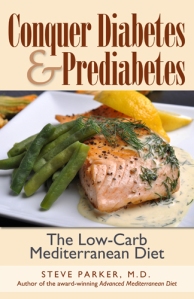
ResearchBlogging.orgIf you want full online access to Champagne’s 6-page article, you can purchase it for $34 (USD) at SpringerLink.  I cite many of the same scientific sources and provide a whole lot more in my 216-page Conquer Diabetes and Prediabetes: The Low-Carb Mediterranean Diet, at Amazon.com for $16.95 or $9.99 (the Kindle edition) or in multiple ebook formats from Smashwords.

Steve Parker, M.D.

Reference: Champagne, Catherine (2009). The usefulness of a Mediterranean-based diet in individuals with type 2 diabetes. Current Diabetes Reports DOI: 10.1007/s11892-009-0060-3

1 Comment

Filed under Health Benefits, Mediterranean Diet, Shameless Self-Promotion

Book Review: Zest For Life – The Mediterranean Anti-Cancer Diet

I recently read Zest For Life: The Mediterranean Anti-Cancer Diet, by Conner Middelmann-Whitney.  I give it five stars per Amazon.com’s rating system.

♦   ♦   ♦

The lifetime risk of developing invasive cancer in the U.S. is four in ten: a little higher for men, a little lower for women.  Those are scary odds.  Cancer is second only to heart disease as a cause of death in western societies.  The Mediterranean diet has a well established track record of protecting against cancers of the prostate, colon/rectum, uterus, and prostate.  Preliminary data suggest protection against melanoma and stomach cancer, too.  I’m not aware of any other way of eating that can make similar claims. 

So it makes great sense to spread the word on how to eat Mediterranean-style, to lower your risk of developing cancer.  Such is the goal of Ms. Conner Middelmann-Whitney.  The Mediterranean diet is mostly, although by no means excusively, plant-based.  It encourages consumption of natural, minimally processed, locally grown foods.  Generally, it’s rich in vegetables, fruits, legumes, oive oil, whole grains, red wine, and nuts.  It’s low to moderate in meat, chicken, fish, eggs, and dairy products (mostly cheese and yogurt).

Note that one of the four longevity hot spots featured in Dan Buettner’s Blue Zones was Mediterranean: Sardinia.  All four Blue Zones were characterized by plant-based diets of minimally processed, locally grown foods.  (I argue that Okinawa and the Nicoya Peninsula dwellers ate little meat simply due to economic factors.)

Proper diet won’t prevent all cancer, but perhaps 10-20% of common cancer cases, such as prostate, breast, colorectal, and uterine cancer.  A natural, nutrient-rich, mostly plant-based diet seems to bolster our defense against cancer.

Ms. Middelmann-Whitney is no wacko claiming you can cure your cancer with the right diet modifications.  She writes, “…I do not advocate food as a cancer treatment once the disease has declared itself….” 

She never brings it up herself, but I detect a streak of paleo diet advocacy in her.  Several of her references are from Loren Cordain, one of the gurus of the modern paleo diet movement.  She also mentions the ideas of Michael Pollan very favorably.

She’s not as high on whole grains as most of the other current nutrition writers.  She points out that, calorie for calorie, whole grains are not as nutrient-rich as vegetables and fruits.  Speaking of which, she notes that veggies generally have more nutrients than fruits.  Furthermore, she says, grain-based flours probably contribute to overweight and obesity.  She suggests that many people eat too many grains and would benefit by substituting more nutrient-rich foods, such as veggies and fruits.

Some interesting things I learned were 1) the 10 most dangerous foods to eat while driving, 2) the significance of organized religion in limiting meat consumption in some Mediterranean regions, 3) we probably eat too many omega-6 fatty acids, moving the omega-6/omega-3 ratio away from the ideal of 2:1 or 3:1, 4) one reason nitrites are added to processed meats is to create an pleasing red color (they impair bacterial growth, too), 5) fresh herbs are better added towards the end of cooking, whereas dried herbs can be added earlier, 6) 57% of calories in western societies are largely “empty calories:” refined sugar, flour, and industrially processed vegetable oils,  and 7) refined sugar consumption in the U.S. was 11 lb (5 kg) per person in the 1830s, rising to 155 lb (70 kg) by 2000.

Any problems with the book?  The font size is a bit small for me; if that worries you, get the Kindle edition and choose your size.  She mentions that omega-6 and omega-3 fatty acids as “essential” fats. I bet she meant to say that linolenic and linoleic fatty acids are essential (our bodies can’t make them); linolenic happens to be an omega-3, linoleic is an omega-6.  Reference #8 in chapter three is missing.  She states that red and processed meats cause cancer, or at least are strongly linked; in my view, the studies are inconclusive.  I’m not sure that cooking in or with polyunsaturated plant oils causes formation of free radicals that we need to worry about.

As would be expected, the author and I don’t see eye to eye on everything.  For example, she worries about bisphenol-A, pesticide residue, saturated fat, excessive red meat consumption, and strongly prefers pastured beef and free-range chickens and eggs.  I don’t worry.  She also subscribes to the “precautionary principle.”

The author shares over 150 recipes to get you started on your road to cancer prevention.  I easily found 15 I want to try.  She covers all the bases on shopping for food, cooking, outfitting a basic kitchen, dining out, shopping on a strict budget, etc.  Highly practical for beginning cooks.  Numerous scientific references are listed for you skeptics.

I recommend this book to all adults with normal carbohydrate metabolism, particularly for those with a strong family history of cancer.  But following the author’s recommendations would do more than lower your risk of cancer.  You’d likely have a longer lifespan, lose some excess fat weight,  and lower your risk of type 2 diabetes, dementia, heart disease, stroke, vision loss from macular degeneration, and obesity.  Particularly compared to the standard American diet. 

Steve Parker, M.D.

Disclosure: The author arranged a free copy of the book for me, otherwise I recieved nothing of value for writing this review.

3 Comments

Filed under Book Reviews, cancer, Health Benefits, Mediterranean Diet

Penelope Cruz Touts Mediterranean Diet

Penelope Cruz credits the Mediterranean diet with helping her keep her weight under control, according to “The Times of India.”

1 Comment

Filed under Health Benefits, Mediterranean Diet, Weight Loss

Heart Patients: Mediterranean Diet to the Rescue!

The Mediterranean diet preserves heart muscle performance and reduces future heart disease events, according to Greek researchers reporting in the American Journal of Clinical Nutrition, May 19, 2010.

Reuters and other news services have covered the story.

The Mediterranean diet is well-established as an eating pattern that reduces the risk of death or illness related to cardiovascular disease—mostly heart attacks and strokes. Most of the studies in support of the heart-healthy diet looked at development of disease in general populations. The study at hand examined whether the diet had any effect on patients with known heart disease, which has not been studied much.

How Was the Study Done?

The study population was 1,000 consecutive patients admitted with heart disease to a Greek hospital between 2006 and 2009. In this context, heart disease refers to a first or recurrent heart attack (70-80% of participants) or unstable angina pectoris. Acute heart attacks and unstable angina are “acute coronary syndromes.” Average age was 64. Sixty percent had a prior diagnosis of cardiovascular disease (coronary heart disease or stroke). Thirty percent had diabetes. At the time of hospitalization, half had diminished function of the main heart pumping chamber (the left ventricle), half had normal pump function. Men totalled 788; women 212.

On the third hospital day, participants were given a 75-item food frequency questionnaire asking about consumption over the prior year. If a potential enrollee died in the first two hospital days, he was not included in the study. A Mediterranean diet score was calculated to determine adherence to the Mediterranean diet. Mediterranean diet items were nonrefined cereals and products, fruits, nuts, vegetables, potatoes, dairy products, fish and seafood, poultry, red meats and meat products, olive oil, and alcohol.

Left ventricle function was determined by echocardiogram (ultrasound) at the time of study entry, at the time of hospital discharge, and three months after discharge. Systolic dysfunction was defined as an ejection fraction of under 40%. [Normal is 65%: when the left ventricle is full of blood, and then squeezes on that blood to pump it into the aorta, 65% of the blood squirts out.]

Participants were then divided into two groups: preserved (normal) systolic left ventricular function, or diminished left ventricular function.

They were followed over the next two years, with attention to cardiovascular disease events (not clearly defined in the article, but I assume including heart attacks, strokes, unstable angina, coronary revascularization, heart failure, arrhythmia, and death from heart disease or stroke.

Results

  • Four percent of participants died during the initial hospitalization.
  • At the three month follow-up visit, those with greater adherence to the Mediterranean diet (a high Mediterranean diet score) had higher left ventricular performance (P=0.02).
  • At the time of hospital admission, higher ejection fractions were associated with greater adherence to the Mediterranean diet (P<0.001).
  • Those who developed diminished left ventricular dysfunction had a lower Mediterranean diet score (P<0.001)
  • During the hospital stay, those in the highest third of Mediterranean diet score had lower in-hospital deaths (compared with the lower third scores) (P=0.009).
  • Among those who survived the initial hospitalization, there was no differences in fatal cardiovascular outcomes based on Mediterranean diet score.
  • Food-specific analysis tended to favor better cardiovascular health (at two-year follow-up) for those with higher “vegetable and salad” and nut consumption. No significant effect was found for other components of the Mediterranean diet score.
  • Of those in the highest third of Mediterranean adherence, 75% had avoided additional fatal and nonfatal cardiovasclar disease events as measured at two years. Of those in the lowest third of Mediterranean diet score, only 53% avoided additional cardiovascular disease events.

The Authors’ Conclusion

Greater adherence to the Mediterranean diet seems to preserve left ventricular systolic function and is associated with better long-term prognosis of patients who have had an acute coronary syndrome.

My Comments

I agree with the authors’ conclusion.

We’re assuming these patients didn’t change their way of eating after the initial hospitalization. We don’t know that. No information is given regarding dietary instruction of these patients while they were hospitalized. In the U.S., such instruction is usually given, and it varies quite a bit.

In this study, lower risk of cardiovascular death was linked to the Mediterranean diet only during the initial hospital stay. Most experts on the Mediterranean diet would have predicted lower cardiovascular death rates over the subsequent two years. Mysteriously, the authors don’t bother to discuss this finding.

For those who don’t enjoy red wine or other alcoholic beverages, this study suggests that the Mediterranean diet may be just as heart-healthy without alcohol. A 2009 study by Trichopoulou et al suggests otherwise.

Steve Parker, M.D.

Reference:  Chrysohoou, C., et al. The Mediterranean diet contributes to the preservation of left ventricular systolic function and to the long-term favorable prognosis of patients who have had an acute coronary event.  American Journal of Clinical Nutrition 2010.  DOI: 10.3945/ajcn.2009.28982

Comments Off on Heart Patients: Mediterranean Diet to the Rescue!

Filed under Alcohol, coronary heart disease, Health Benefits, Mediterranean Diet