Category Archives: Causes of Diabetes

The Heavier Identical Twin Is Twice as Likely to Develop Type 2 Diabetes

The study was done in Sweden and involved 4,000 identical twin pairs. The lighter of the twin pairs had average body mass index of 23.9; the heavier twins averaged 25.9. Note that 25.9 is barely into the overweight range.

Type 2 diabetes definitely tends to “run in families.” If you have a genetic predisposition to it, then get overweight or obese, your risk increases even more.

From the abstract:

“In [identical] twin pairs, higher BMI was not associated with an increased risk of MI or death but was associated with the onset of diabetes. These results may suggest that lifestyle interventions to reduce obesity are more effective in decreasing the risk of diabetes than the risk of cardiovascular disease or death.”

Source: Risks of Myocardial Infarction, Death, and Diabetes in Identical Twin Pairs With Different Body Mass Indexes | JAMA Internal Medicine | JAMA Network

PS: Study results may or may not apply to non-Swedes.

PPS: Calculate your body mass index.

Comments Off on The Heavier Identical Twin Is Twice as Likely to Develop Type 2 Diabetes

Filed under Causes of Diabetes

Night Shift Work Linked to Increased Type 2 Diabetes In Women

Shift work may kill you.

I’ve seen studies associating night shift work with T2 diabetes in Japanese men, higher breast cancer rates, more metabolic syndrome, and higher heart disease risk in men.

Now we have evidence for higher diabetes rates in women who do shift work”

“Our results suggest that an extended period of rotating night shift work is associated with a modestly increased risk of type 2 diabetes in women, which appears to be partly mediated through body weight. Proper screening and intervention strategies in rotating night shift workers are needed for prevention of diabetes.”

Source: PLOS Medicine: Rotating Night Shift Work and Risk of Type 2 Diabetes: Two Prospective Cohort Studies in Women

Action Plan: P.D. Mangan has some ideas.

Also, reduce your risk of cancer, heart disease, and diabetes with the Mediterranean diet.

2 Comments

Filed under Causes of Diabetes

Professor Tim Noakes Explains Why He Favors a Low-Carb Diet for Diabetes

Click the link below for details.

Overall, Prof. Noakes makes a lot of sense. I like the concept of diabetes as a disease of carbohydrate intolerance. He may not have everything right. For instance, experts debate whether insulin resistance is a cause or result of type 2 diabetes.

The professor writes:

“My interest in the dietary management of diabetes stems from watching my father’s rapid downward physical decent in the years after he was diagnosed with Type 2 diabetes mellitus (T2DM); the diagnosis of T2DM in myself; and my reading of the “alternative” literature which convinces me that T2DM does not have to be an inevitably progressive disease:My conclusion is that unlike my father, it is not my pre-ordained fate to die from the final common pathway in fatal T2DM – disseminated obstructive arterial disease. But to achieve that I will have to ignore what I was taught and which, in turn, I have conveyed to two generations of students:So to prevent the development of the disseminated obstructive arterial disease of T2DM, I will have to follow dietary practices that are the polar opposite of those my father was advised to adopt and which hastened his death; advice that I personally practised for 33 years and which ultimately caused me also to develop T2DM.”

Source: The Low Carb Diabetic: NOAKES: DOCTORS, DIETITIANS MAKE DIABETES A THREAT TO LIFE?

Comments Off on Professor Tim Noakes Explains Why He Favors a Low-Carb Diet for Diabetes

Filed under Causes of Diabetes

Is Diabetes Caused by Poor Regulation of Glucagon?

From Shutterstock.com

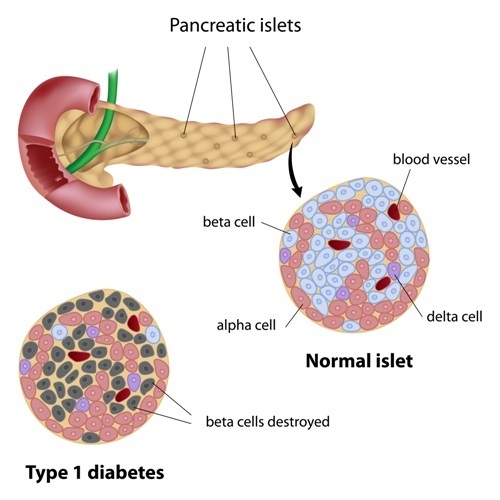
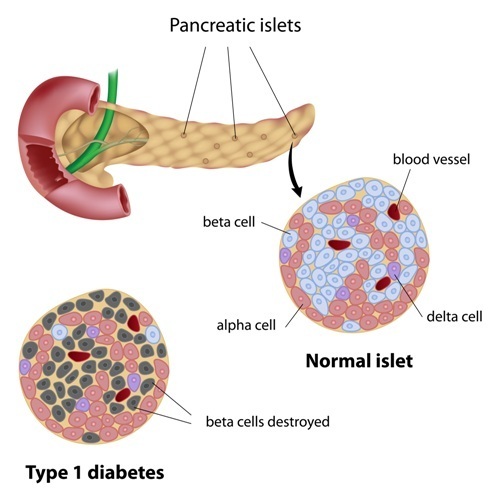
Glucagon is produced in the alpha cells and works to increase blood sugar levels. Insulin is from the beta cells.

Most folks assume that the hormone called insulin is at the heart of diabetes: either there’s not enough of it or it’s not working right.

But thats’s not the only possible mechanism for diabetes. I’ve written several times here about the glucagon-centric theory of diabetes, which is most closely associated with Roger Unger, M.D. If you’re interested in a scientific review article on glucagon and type 2 diabetes, here’s one:

Reference: Xiao C. Li and Jia L. Zhuo. Current Insights and New Perspectives on the Roles of Hyperglucagonemia in Non Insulin-dependent Type 2 DiabetesCurrent Hypertension Reports. Oct 2013; 15(5): 10.1007/s11906-013-0383-y.  doi: 10.1007/s11906-013-0383-y

Steve Parker, M.D.

low-carb mediterranean diet

Front cover of book

2 Comments

Filed under Causes of Diabetes

Do Artificial Sweeteners Cause Diabetes and Overweight?

Would aspartame or stevia be healthier than those sugar cubes?

Would aspartame or stevia be healthier than those sugar cubes?

We don’t know with certainty yet. But a recent study suggests that non-caloric artificial sweeteners do indeed cause overweight and type 2 diabetes in at least some folks. The study at hand is very small, so I wouldn’t bet the farm on it. I’m not even changing any of my recommendations at this point.

exercise for weight loss and management, dumbbells

Too many diet sodas?

The proposed mechanism for adverse metallic effects is that the sweeteners alter the mix of germs that live in our intestines. That alteration in turn causes  the overweight and obesity. See MedPageToday for the complicated details. The first part of the article is about mice; humans are at the end.

Some quotes:

“Our results from short- and long-term human non-caloric sweetener consumer cohorts suggest that human individuals feature a personalized response to non-caloric sweeteners, possibly stemming from differences in their microbiota composition and function,” the researchers wrote.

The researchers further suggested that these individualized nutritional responses may be driven by personalized functional differences in the micro biome [intestinal germs or bacteria].

***

Diabetes researcher Robert Rizza, MD, of the Mayo Clinic in Rochester, Minn., who was not involved with the research, called the findings “fascinating.”

He noted that earlier research suggests people who eat large amounts of artificial sweeteners have higher incidences of obesity and diabetes. The new research, he said, suggests there may be a causal link.

“This was a very thorough and carefully done study, and I think the message to people who use artificial sweeteners is they need to use them in moderation,” he said. “Drinking 17 diet sodas a day is probably a bad idea, but one or two may be OK.”

I won’t argue with that last sentence!

Finally, be aware the several clinical studies show no linkage between human consumption of non-caloric artificial sweeteners and overweight, obesity, and T2 diabetes.

Steve Parker, M.D.

2 Comments

Filed under Causes of Diabetes, Overweight and Obesity, Sugar Substitutes

Endocrine-Disrupting Chemicals May Cause T2 Diabetes and Obesity

See text for mention of pancreatic alpha and beta cells

See text for mention of pancreatic alpha and beta cells

A panel of university-based scientists convened by The Endocrine Society recently reviewed the available literature on health effects of endocrine-disrupting chemicals (aka EDCs). The executive summary is available free online. Some excerpts:

The full Scientific Statement represents a comprehensive review of the literature on seven topics for which there is strong mechanistic, experimental, animal, and epidemiological evidence for endocrine disruption, namely: obesity and diabetes, female reproduction, male reproduction, hormone-sensitive cancers in females, prostate cancer, thyroid, and neurodevelopment and neuroendocrine systems. EDCs such as bisphenol A, phthalates, pesticides, persistent organic pollutants such as polychlorinated biphenyls, polybrominated diethyl ethers, and dioxins were emphasized because these chemicals had the greatest depth and breadth of available information.

*  *  *

Both cellular and animal models demonstrate a role for EDCs in the etiology of obesity and T2D [type 2 diabetes]. For obesity, animal studies show that EDC-induced weight gain depends on the timing of exposure and the age of the animals. Exposures during the perinatal period [the weeks before and after birth] trigger obesity later in life. New results covering a whole range of EDC doses have underscored the importance of nonmonotonic dose-response relationships; some doses induced weight increase, whereas others did not. Furthermore, EDCs elicit obesity by acting directly on white adipose tissue, al- though brain, liver, and even the endocrine pancreas may be direct targets as well.

Regarding T2D, animal studies indicate that some EDCs directly target 􏰁beta and alpha cells in the pancreas, adipocytes, and liver cells and provoke insulin resistance together with hyperinsulinemia. These changes can also be associated with altered levels of adiponectin and leptin— often in the absence of weight gain. This diabetogenic action is also a risk factor for cardiovascular diseases, and hyperinsulinemia can drive diet-induced obesity. Epide- miological studies in humans also point to an association between EDC exposures and obesity and/or T2D; however, because many epidemiological studies are cross-sectional, with diet as an important confounding factor in humans, it is not yet possible to infer causality.

RTWT.

Bix at Fanatic Cook blog says foods of animal origin are the major source of harmful persistent organic pollutants, some of which act as ECDs.

Keep your eyes and ears open for new research reports on this critically important topic.

Steve Parker, M.D.

Comments Off on Endocrine-Disrupting Chemicals May Cause T2 Diabetes and Obesity

Filed under Causes of Diabetes, Overweight and Obesity

Do Antibiotics Cause Type 2 Diabetes?

Denmark researchers found an association between antibiotic usage and later development of type 2 diabetes. I don’t think they’ve released full details of their study yet. Just because there’s a linkage between antibiotics and type 2 diabetes doesn’t mean there is a direct causal relationship.

One possible way that antibiotics could cause diabetes, however, would be through alteration of gut germs (aka microbiome). An antibiotic may do a great job curing your urinary tract infection, while at the same time eliminating millions of certain gut bacteria and allowing other species to have a population explosion. One of the most fascinating fields of medicine now is trying to figure out if and how the billions of bacteria in our intestines might influence health and disease. F’rinstance, gut bacteria may influence whether we are fat or slim.

I bet if you graphed antibiotic use and incidence of type 2 diabetes over the last 50 years, they would trend together pretty well.

Steve Parker, M.D.

Comments Off on Do Antibiotics Cause Type 2 Diabetes?

Filed under Causes of Diabetes

Are Obesity and Type 2 Diabetes Caused By Pollution?

Salmon is one the the cold-water fatty fish loaded with omega-3 fatty acids

Salmon is one the the cold-water fatty fish loaded with healthful omega-3 fatty acids, but also persistent organic pollutants

It sounds like Jerome Ruzzin is convinced that’s the case. I put some thought into it last August and was skeptical—still am, but I’m keeping an open mind. Mr. Ruzzin has a review article published in 2012 at BMC Public Health (“Public health concern behind the exposure to persistent organic pollutants and the risk of metabolic diseases”). Here’s his summary:

The global prevalence of metabolic diseases like obesity and type 2 diabetes, and its colossal economic and social costs represent a major public health issue for our societies. There is now solid evidence demonstrating the contribution of POPs [persistent organic pollutants], at environmental levels, to metabolic disorders. Thus, human exposure to POPs might have, for decades, been sufficient and enough to participate to the epidemics of obesity and type 2 diabetes. Based on recent studies, the fundaments of current risk assessment of POPs, like “concept of additive effects” or “dioxins and dl-PCBs induced similar biological effects through AhR”, appear unlikely to predict the risk of metabolic diseases. Furthermore, POP regulation in food products should be harmonized and re-evaluated to better protect consumers. Neglecting the novel and emerging knowledge about the link between POPs and metabolic diseases will have significant health impacts for the general population and the next generations.

Read the whole enchilada.

The cold-water fatty fish I so often recommend to my patients could be hurting them. They are major reservoirs of food-based POPs.

Steve Parker, M.D.

Comments Off on Are Obesity and Type 2 Diabetes Caused By Pollution?

Filed under Causes of Diabetes, Overweight and Obesity

Major U.S. Diet Changes over the Last 100 Years

Medical student Kris Gunnars has an article at Business Insider, of all places, that shows graphically many of the major U.S. dietary changes of the last hundred years. In this case, transmogrification may be a better term than mere “changes.” Much of the Western world has evolved in similar fashion.

You need to read the article and ponder the graphs if you question why we have so much obesity, type 2 diabetes, heart disease, hypertension, and perhaps cancer. You’ll see dramatic increases in consumption of added sugars, industrial seed oils (esp. soybean), soda pop and fruit juice (added sugar!), total calories, and fast food. You’ll see how much we’ve increased dining away from home. Butter consumption is down drastically, but doesn’t seem to have done us much good, if any.

Sugar cane

Sugar cane


There’s fairly good evidence that coronary artery disease (CAD) the cause of most heart attacks) was very prominent between 1960 to 2000 or so, but it’s been tapering off in recent years and didn’t seem to be very common 100 years ago. Understand that you can have it for 20 years or more before you ever have symptoms (angina) or a heart attack from it. In fact, the disease probably starts in childhood. I’ve always wondered about the cause of the CAD prevalence trends, and wondered specifically how much of the long-term trend was related to trans-fat consumption. But I’ve never been able to find good data on trans-fat consumption. Kris came up with a chart of margarine consumption, which may be a good proxy for trans-fats. Another of his charts includes shortening, a rich source of trans-fats and probably also a good proxy. I remember growing up in the 1960s that we always had a 1/2 gallon tin can of Crisco hydrogenated fat in the cupboard. Shortening consumption increased dramatically from 1955 until dropping like a rock around 2000.

The timeline curves for trans-fat consumption (by proxy) and prevalence of coronary heart disease seem to match up fairly well, considering a 20 year lag. In the early 1990s, we started cutting back on trans-fats, and here we are now with lower mortality and morbidity from coronary artery disease. (CAD is very complex; lower rates of smoking surely explain some of the recent trend.)

Read the whole enchilada. Very impressive. Highly recommended.

Steve Parker, M.D.

1 Comment

Filed under Causes of Diabetes, coronary heart disease, Fat in Diet, Heart Disease

Is Excessive Fructose Consumption the Cause of Type 2 Diabetes?

Lumps of Diabetes

Cubes of Diabetes?

A Pharm.D (Dr of Pharmacology) and a pair of MD’s surveyed much of the available scientific literature—both animal and human studies—and concluded that fructose is a major culprit in the rise of type 2 diabetes and prediabetes. Fructose does its damage by increasing insulin resistance. ScienceDaily has the details.

Be aware that their conclusion is certainly not universally accepted. I just read “Pathogenesis of type 2 diabetes mellitus” at UpToDate.com and saw no mention of fructose. Under dietary factors, they mainly talked about obesity and how that increases insulin resistance, leading to elevated blood sugars, while the reverse happens with weight loss. I haven’t looked at all the research so I have no definite opinion yet on the fructose-diabetes theory; I’m skeptical.

Fructose is a type of simple sugar. Common dietary sources of fructose are fruits, table sugar (aka sucrose, a 50:50 combination of glucose and fructose molecules), and high-fructose corn syrup (which is usually 42 or 55% fructose).

Damaging effects, if any, of fructose in these fruits may be mitigated by the fiber

Damaging effects, if any, of fructose in these fruits may be mitigated by the fiber

A few quotes from ScienceDaily:

“At current levels, added-sugar consumption, and added-fructose consumption in particular, are fueling a worsening epidemic of type 2 diabetes,” said lead author James J. DiNicolantonio, PharmD, a cardiovascular research scientist at Saint Luke’s Mid America Heart Institute, Kansas City, MO. “Approximately 40% of U.S. adults already have some degree of insulin resistance with projections that nearly the same percentage will eventually develop frank diabetes.”

*   *   *

While fructose is found naturally in some whole foods like fruits and vegetables, consuming these foods poses no problem for human health. Indeed, consuming fruits and vegetables is likely protective against diabetes and broader cardiometabolic dysfunction, explained DiNicolantonio and colleagues. The authors propose that dietary guidelines should be modified to encourage individuals to replace processed foods, laden with added sugars and fructose, with whole foods like fruits and vegetables. “Most existing guidelines fall short of this mark at the potential cost of worsening rates of diabetes and related cardiovascular and other consequences,” they wrote.

If you’re eating a typical Western or American diet, you’ll reduce your fructose consumption by moving to the Mediterranean diet, the Advanced Mediterranean Diet, Low-Carb Mediterranean Diet, or the Paleobetic Diet.

RTWT.

Steve Parker, M.D.

5 Comments

Filed under Causes of Diabetes, Sugar