

Olive oil and vinegar
Olive oil figures prominently in my Ketogenic Mediterranean Diet and Low-Carb Mediterranean Diet.
-Steve
Olive oil and vinegar
Olive oil figures prominently in my Ketogenic Mediterranean Diet and Low-Carb Mediterranean Diet.
-Steve
Comments Off on Lower Risk of Death and Heart Disease With Olive Oil
Filed under Fat in Diet, Heart Disease, Longevity, olive oil

What’s it gonna be? You decide
These have worked for lots of my patients. Take what works for you and discard the rest.
Godspeed!
Filed under Weight Loss

“May I have your attention, please”
At 1PM PST (Pacific Standard Time) today I’ll be doing a talk on the Mediterranean diet as applied to diabetes at TuDiabetes.org. I plan on a 20 or 30-minute monologue then I’ll entertain questions from listeners. Please join us! Just go to the TuDiabetes home page and you’ll see how to tune in.
-Steve
Comments Off on Dr. Steve Parker at TuDiabetes for Live VideoChat Today
Filed under Shameless Self-Promotion

“I’m doing everything I’m supposed to. Or am I?”
It’s common on any weight-loss program to be cruising along losing weight as expected, then suddenly the weight loss stops although you’re still far from goal weight. This is the infamous and mysterious stall.
Once you know the reason for the stall the way to break it becomes obvious. The most common reasons are:
If you still can’t figure out what’s causing your stall, do a nutritional analysis of one weeks’ worth of eating, with a focus on daily digestible carb (net carbs) and calorie totals. You can do this analysis online at places like FitDay (http://fitday.com/) or Calorie Count (http://caloriecount.about.com/). Perhaps you’re eating many more calories than you thought. Or you may find you’ve been sabotaged by “carb creep”: excessive dietary carbs have insidiously invaded you. Even if you’re eating very-low-carb, it’s still possible to have excess body fat, even gain new fat, if you eat too many calories from protein and fat. It’s not easy, but it’s possible.
Filed under Weight Loss
Has anyone even bothered to ask why the tuna are eating mercury?
—Jim Gaffigan
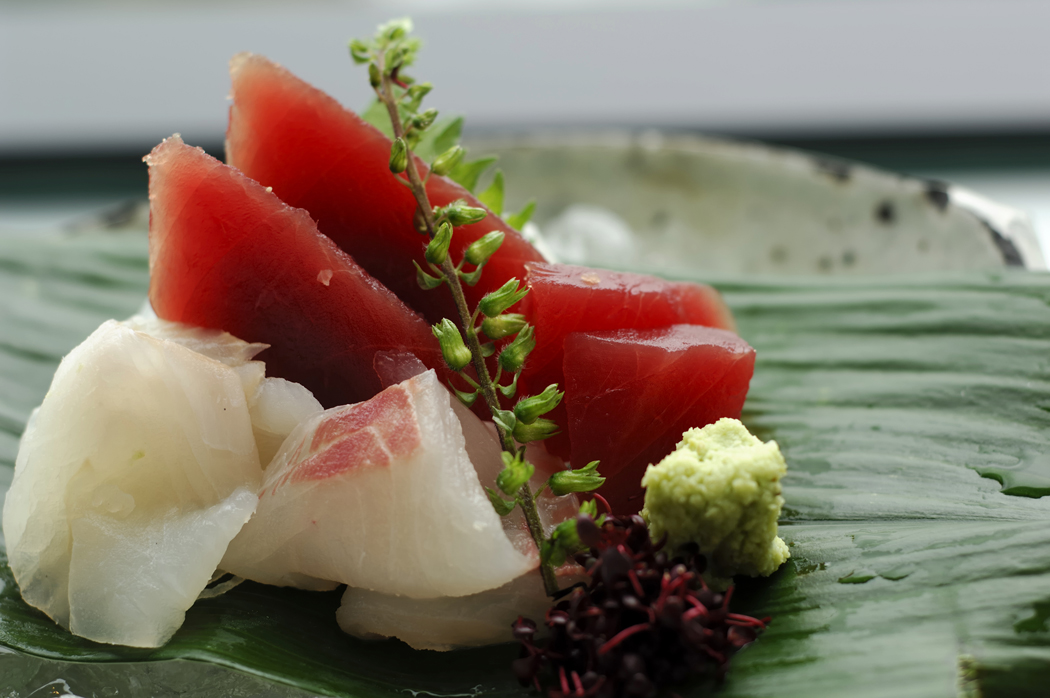
Filed under Quote of the Day
I heard about this book before it was available in the U.S. and I thought it had the potential to be huge here. So I read Six Weeks to OMG: Get Skinnier Than All Your Friends by Venice Fulton, published in 2012. Per Amazon.com’s rating system, I give it two stars (“I don’t like it”).
Judging from the wording and writing style, this book was written for not-too-bright girls and women from 12 to 22 years old. Others need not bother with it.

Will it work for weight loss? Yes, even without the author’s three cornerstone gimmicks: 1) Skip breakfast, but eat three meals daily, 2) Black coffee one or two cups every morning, and 3) Cold-water baths at 59 to 68°F for up to 15 minutes. There’s no good scientific data to support those prescriptions.
The diet will work because it restricts your consumption of items that make us fat: concentrated sugars and refined starches. It’s a low-carbohydrate diet—up to 60, 90, or 120 grams a day, depending on how fast you want to lose.
The diet consists mostly of high-protein animal-derived foods, low-carb vegetables, and up to three pieces of fruit daily. Do not exceed 40 grams of carbohydrate per meal, even less is better, the author says. Grains and dairy products aren’t mentioned much; it’s easy to blow your carb limit with them. High-carb vegetables are listed, so you can avoid them.
Mr. Fulton emphasizes some important, valid points. High protein consumption helps control appetite. Trans fats are bad. Eat cold-water fatty fish twice weekly. Eat off a small plate (maximum of 9-inch diameter). No snacking. He says good things about weight training, while failing to mention it’s more much important long-term maintenance than for active weight loss.
He says some things that are just plain wrong, such as 1) everyone can be skinny, 2) there are only eight essential amino acids, 3) exercise is fairly helpful with weight loss, and 4) weight training just once every 10 days is adequate.
I’ll confess I didn’t read every word of the book. The writing style is just too irritating unless you’re a not-too-bright 12 to 22-year-old. For instance, every page had at least four exclamation marks!
Here are some of the dumbed-down sentences that unintentionally made me laugh out loud:
If you want a low-carb weight loss diet, you’re better off with Protein Power, The New Atkins For a New You, or the Low-Carb Mediterranean Diet. A low-carb diet specifically for diabetics is my Conquer Diabetes and Prediabetes.
Filed under Book Reviews, Weight Loss
The powers not delegated to the United States by the Constitution, nor prohibited by it to the States, are reserved to the States respectively, or to the people.
— Tenth Amendment to the U.S. Constitution
Comments Off on Quote of the Day
Filed under Quote of the Day

“Ah hah! There it is, stuck in the ureter.”
MedPage Today in May, 2012, reported a substantial increase (70%) in the prevalence of kidney stones in the U.S. over the last two decades. Stone prevalence rose from 5.2% to 8.8% of the population. Prevalence was based on the periodic National Health and Nutrition Examination Survey, which asked participants, “Have you ever had kidney stones?”
Stone prevalence began rising even earlier. Again according to the third NHANES, prevalence increased from 3.8 percent in the period 1976 to 1980 to 5.2 percent in the years 1988 to 1994.
Older studies estimated that one in 10 men and one of every 20 women will have at least one painful stone by the age of 70.
What are kidney stones make of?
Three out of four patients with kidney stones form calcium stones, most of which are composed primarily of calcium oxalate or, less often, calcium phosphate. Pure uric acid stones are less than 10 percent of all stones.
Why the increased stone prevalence? Does diet count?
Unfortunately, the article doesn’t offer any speculation as to why kidney stones are more prevalent. Kidney stones have a genetic component, but our genes have changed very little over just two decades. I wonder if diet plays a role.
UpToDate.com reviewed diet as a risk factor for kidney stones. Some quotes:
There are several dietary factors that may play an important role in many patients: fluid, calcium, oxalate, potassium, sodium, animal protein, phytate, sucrose, fructose, and vitamin C intake. Lower intake of fluid, calcium, potassium, and phytate and higher intake of sodium, animal protein, sucrose, fructose, and vitamin C are associated with an increased risk for calcium stone formation. The type of beverage may also influence the risk. The effect of calcium intake is paradoxical, with a decreased risk with increased dietary calcium and an increased or no change in risk with calcium supplements.
The combination of dietary factors may also have a significant impact upon stone risk. As an example, the Dietary Approaches to Stop Hypertension (DASH) diet is high in fruits and vegetables, moderate in low-fat dairy products, and low in animal protein. Based upon an analysis of three large cohorts, adherence to a DASH-style diet lowered the risk for kidney stones among men, older women, younger women, high body mass index (BMI) individuals, and low BMI individuals. Thus, the DASH diet is a reasonable option in the attempt to reduce the risk of stone recurrence.
Higher sucrose [table sugar] intake is associated with an increased risk of stone formation in younger and older women.
Comments Off on Kidney Stones on the Rise
Filed under Uncategorized

You get it?
Registered Dietitian Franziska Spritzler recently reviewed the concept of low-carb ketogenic diets. She thinks they are a valid approach to certain clinical situations. Among dietitians, this puts her in a small but growing minority.
I hesitate to mention this, but I will anyway. Many, if not most, dietitians too easily just go along with the standard party line on low-carb eating: it’s rarely necessary and quite possibly unhealthy. Going along is much easier than doing independent literature review and analysis. I see the same mindset among physicians.
Franziska breaks the mold.
Filed under ketogenic diet
Type 1 diabetics diagnosed in childhood and born between 1965 and 1980 have an average life expectancy of 68.8 years. That compares to a lifespan average of 53.4 years for those born between 1950 and 1964. The figures are based on Pittsburgh, PA, residents and published in a recent issue of Diabetes.
Elizabeth Hughes, one of the very first users of insulin injections, lived to be 73. She started on insulin around 1922.
Average overall life expectancy in the U.S. is 78.2 years—roughly 76 for men and 81 for women.
Don’t be too discouraged if you have diabetes: you have roughly a 50:50 chance of beating the averages, and medical advances will continue to lengthen lifespan.
Filed under Diabetes Complications
Click the pic to purchase at Amazon.com. E-book versions also available at Smashwords.com.
 Bible Verse of the Day
 Diabetic Mediterranean Diet