Save Time by Microwaving Your Spaghetti Squash

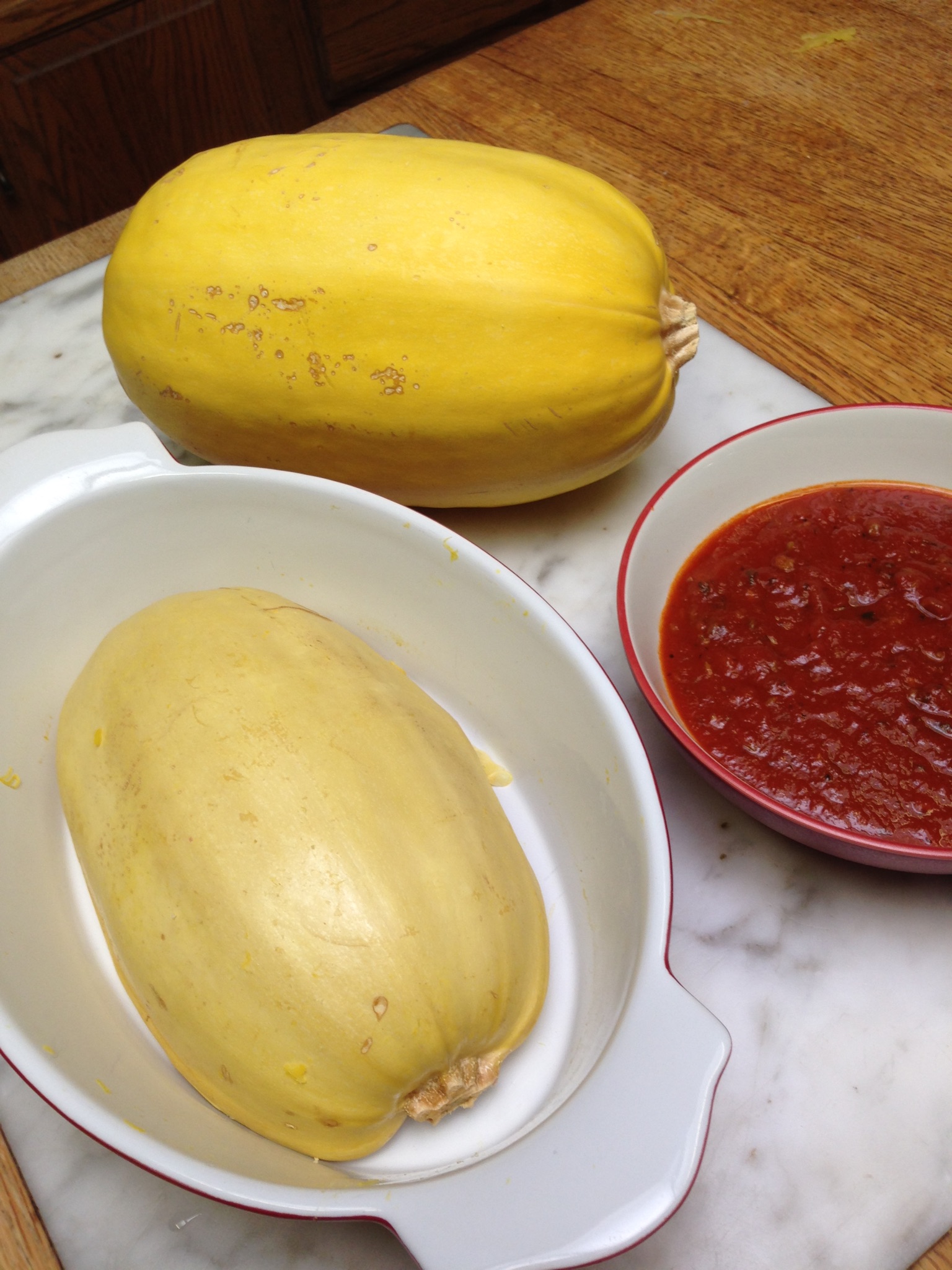
The pale yellow half-squash is cooked. The meaty red sauce is low-carb.

Both of these weighed about 4 pounds (1.8 kg). The pale yellow half-squash is cooked. The meaty red sauce is low-carb.

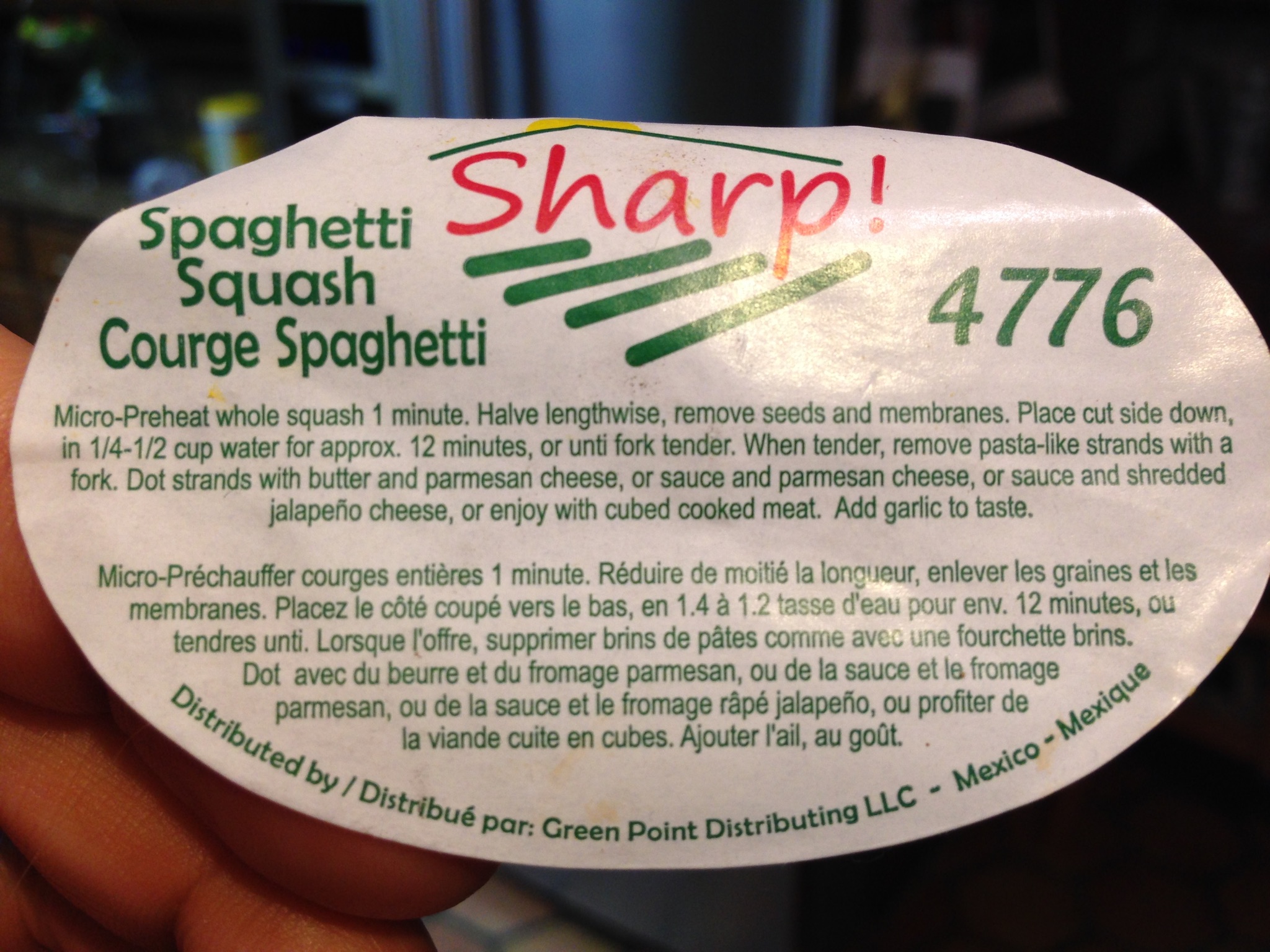
My wife found this new spaghetti squash cooking method—new to us at least—on a sticker attached to a squash. We tried it and the finished product is the same as if done in the traditional oven baking way. The whole process just takes 15 minutes. Here it is:

Hope you can read it

Hope you can read it

A different squash had a different stuck-on cooking method that involved both microwaving AND oven baking. Why make it so complicated?

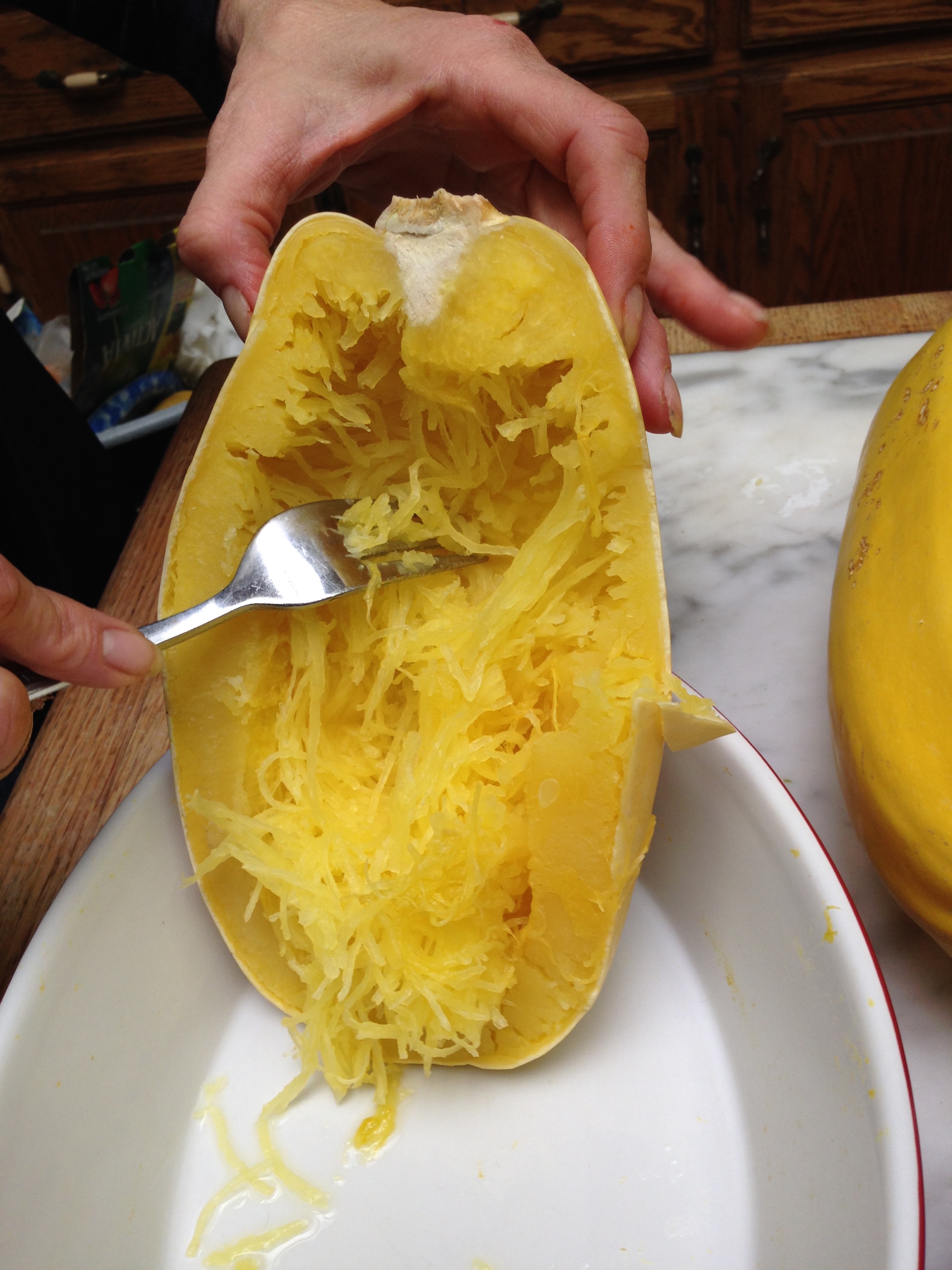
It takes no skill at all to make it look like spaghetti pasta

It takes no skill at all to make it look like spaghetti pasta


IMG_2208

In the northern hemisphere, the spaghetti squash season is autumn and winter. Purchasing in spring and summer may be iffy. We tried one out of season and it was inedible.

Spaghetti Squash Recipes

Low-Carb Spaghetti Sauce

photo-77

IMG_1437


1 Comment

Filed under Recipes

Don’t Settle for Store-Bought Salad Dressing; Try Home-Made AMD Vinaigrette

Salmon tends to dry out when baked; a vinaigrette marinade helps keep it moist

Salmon tends to dry out when baked; a vinaigrette marinade helps keep it moist

Classic vinaigrettes are very low in carbohydrate content. On the other hand, many commercial salad dressings are “enhanced” with added sugar, which you don’t need if you have diabetes.

Try AMD vinaigrette on salads, fresh vegetables, or as a marinade for chicken, fish, or beef. If using as a marinade, keep the entree/marinade combo in the refrigerator for 4–24 hours. Seasoned vinaigrettes taste even better if you let them sit for several hours after preparation.

I’ll warn you, this is pretty spicy. If you prefer less tang, either use less of the vinaigrette, or reduce these particular ingredients by half: lemon juice, salt, pepper, paprika, and mustard.

This recipe was in my first book, The Advanced Mediterranean Diet from 2007; hence, “AMD vinaigrette.” BTW, there’s a second edition of The Advanced Mediterranean Diet from 2012.

Ingredients:

2 garlic cloves (6 g), minced

juice from 1 lemon (40–50 ml)

2/3 cup (160 ml) extra virgin oil olive

4 tbsp (16 g or 60 ml) fresh parsley, finely chopped

1 tsp (5 ml) salt

1 tsp (5 ml) yellow mustard

1 tsp (5 ml) paprika

4 tbsp (60 ml) red wine or apple cider vinegar

Preparation:

In a bowl, combine all ingredients and whisk together. Alternatively, you can put all ingredients in a jar with a lid and shake vigorously—my preferred method. Let sit at room temperature for an hour, for flavors to meld. Then refrigerate. It should “keep” for at least 5 days in refrigerator. The olive oil will solidify, so take it out and set at room temperature for an hour before using. Shake before using.

Number of Servings: 6 servings of 2 tbsp (30 ml). (In Australia and NZ, you guys say “serves” instead of servings, right mate?)

Nutritional Analysis:

98 % fat

2 % carbohydrate

0 % protein

220 calories

1.4 g carbohydrate

0.3 g fiber

1 g digestible carbohydrate

400 mg sodium

41 mg potassium

(You may see a slightly different nutritional analysis—2 g of digestible carb versus 1 g here—at one of my other blogs. That’s the difference between Fitday.com (here) and NutritionData, and rounding.)

Steve Parker, M.D.

Comments Off on Don’t Settle for Store-Bought Salad Dressing; Try Home-Made AMD Vinaigrette

Filed under Recipes

Recipe: Spaghetti Squash Spaghetti


paleobetic diet, diabetic diet, low-carb diet, spaghetti squash, spaghetti

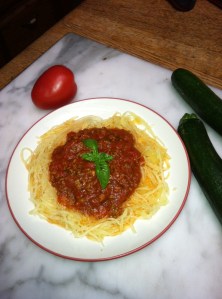
Meaty low-carb spaghetti sauce over spaghetti squash

Making a wholesale switch from the Standard American Diet or most diabetic diets to a very low-carbohydrate diet can be difficult for some under the best of circumstances. For those used to eating carb-heavy pasta, I thought it might be comforting to offer something similar to pasta but with a lower carb count. Hence, spaghetti pasta. The tomatoes in the sauce are an additional source of blood glucose-elevating carbohydrates. So I’ve tried to minimize them by creating a meat-heavy sauce. Nevertheless, a reasonable portion size—two cups 0f squash—tipped me over my usual “20 grams of carbohydrate per meal” limit. In contrast, a single cup of cooked spaghetti pasta by itself—no sauce—has 40 grams of digestible carbohydrate and 220 calories. Add some sauce and the combo could wreck your blood sugar control for a few hours. 


paleobetic diet, spaghetti, squash, low-carb diet, diabetic diet, paleo diet

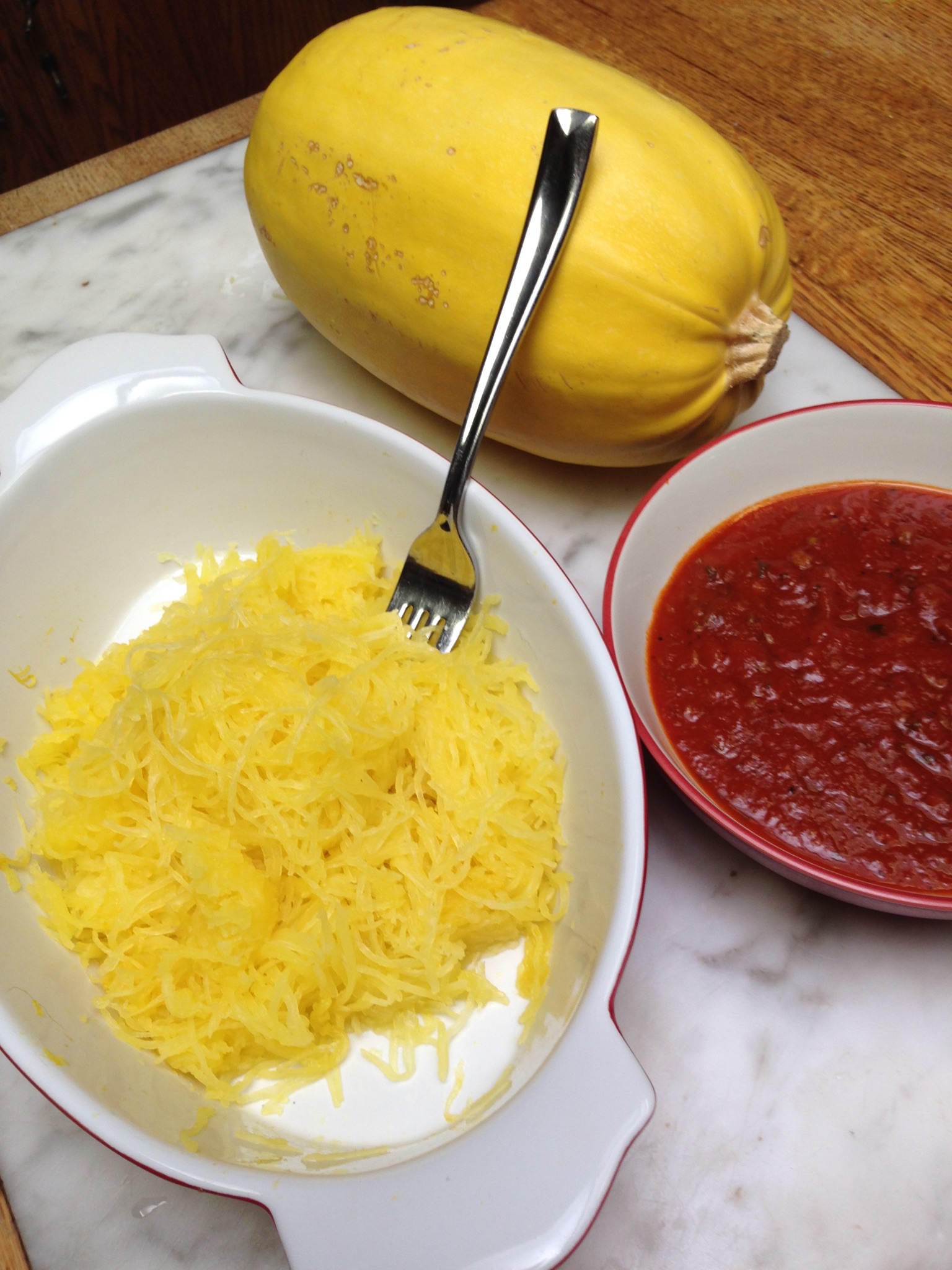
Cooked spaghetti squash partially teased apart with a fork

Ingredients:

3/4 cup (240 ml) low-carb spaghetti sauce

2 cups (480 ml) cooked spaghetti squash

Instructions:

Prepare the ingredients after clicking on links above. Assemble as in the photo. Enjoy.

Number of Servings: 1

Nutritional Analysis: 

52% fat

33% carbohydrate

15% protein

408 calories

36 g carbohydrate

7 g fiber

29 g digestible carbohydrate

1,398 mg sodium

1,201 mg potassium

Prominent features: Rich in B12, copper, iron, niacin, thiamin, B6

I think you’ll find the two cups of spaghetti squash filling and satisfying. If that’s not enough calories for you, munch on some leftover high-protein food such as chicken or steak.

3 Comments

Filed under Recipes

Breaking News! Obesity Can Cut Years Off Your Life

Are you tired of this stock photo yet?

Are you tired of this stock photo yet?

MedPageToday has the details. A quote:

In a computer modeling study, very obese men lost just over 8 years of life compared with normal-weight men, and very obese women lost as many as 6 years, Steven Grover, PhD, of McGill University, and colleagues reported online in the Lancet Diabetes and Endocrinology.

They also found that very obese men and women (defined as a body mass index [BMI] of 35 and higher) lost about 19 years of healthy life, defined as living free of chronic disease such as diabetes and cardiovascular disease.

Note that “very obese” in this context has a specific definition: body mass index 35 or higher. Calculate yours.

The number of life years lost to obesity and disease were highest for those who were very obese in young adulthood and presumably stayed obese for years. In other words, becoming very obese at age 60 is not as dangerous as at 25.

I first got interested in weight loss in the 1990s when I had an office-based primary care medical practice. It was obvious that many of the medical problems I was treating were related to years of obesity. Believe me, you’re much better off preventing those problems via diet and exercise.

Click for The Lancet study abstract.

Steve Parker, M.D.

Comments Off on Breaking News! Obesity Can Cut Years Off Your Life

Filed under Diabetes Complications, Heart Disease, Longevity, Overweight and Obesity

How to Make a Super Salad Into a Whole Meal

diabetic diet, Paleobetic diet, diabetes,

You won’t be able to eat this in one sitting if you’re small or sedentary

This huge salad is a full meal. It fills a 10-inch plate (25 cm). Since it contains five vegetables, you should feel virtuous eating it. But don’t use that health halo as an excuse for eating a carton of ice cream for dessert.

Ingredients:

8 oz (230 g) raw chicken breast tenderloin (it cooks down to 5 oz)

1/4 cup (60 ml) canned mandarin orange wedges (6-7 wedges) (if you can only find these packed in syrup or light syrup, add 3 g to the digestible carb count below)

1/4 tsp (1.2 ml) lemon pepper seasoning

4 oz (110 g) hearts of romaine lettuce

1 oz (30 g) baby spinach

2.5 oz (1/4 cucumber or 70 g) cucumber, peeled and sliced into discs

2 oz (60 g) California avocado, peeled and seeded, cut into wedges (1/2 of standard-sized avocado)

3 oz (85 g) fresh tomato (a typical roma or small tomato)

1 oz (30 g) walnuts

6 tbsp (90 ml) extra virgin olive oil

2 tbsp (30 ml) vinegar (we used balsamic)

1/4 tsp (1.2 ml) salt

1/4 tsp (1.2 ml) fresh ground black pepper

1/4 tsp (1.2 ml) crushed dried rosemary

diabetic diet, Paleobetic diet, low-carb, seasoning

Like Deborah on “Everybody Loves Raymond,” my wife often makes lemon chicken

Instructions:

First cook the chicken breast over medium heat in a skillet. If you think the meat will stick to the pan, add a smidgen (1/2 tsp or 2.5 ml) of olive oil to the pan. Don’t overcook or the meat will get tough. It’ll take five or 10 minutes.

While that’s cooking, prepare your vinaigrette. In a jar with a lid, place the olive oil, vinegar, salt, pepper, and rosemary, then shake vigorously for 20 seconds. Not 21 or you’ll ruin it. You’re done.

If you use a commercial vinaigrette instead, use one that has no more than 2 g of carbohydrate per 2 tbsp. You may have trouble finding that since so many of the commercial guys add sugar.

Place the lettuce and spinach on a plate then add the cucumber, avocado, tomato, cooked chicken, walnuts, and mandarin orange wedges on top. Drizzle two or three tbsp of the vinaigrette over it (nutritional analysis assumes three). Enjoy.

Servings: 1

(Actually, you’ll have enough vinaigrette left over for one or two more salads or vegetable servings. Save it in the refrigerator.)

Nutritional Analysis:

57 % fat

12 % carbohydrate

31 % protein

710 calories

25 g carbohydrate

10 g fiber

15 g digestible carb

990 mg sodium

1,570 mg potassium

Prominent features: Rich in protein, vitamin A, B6, C, copper, iron, manganese, magnesium, pantothenic acid, selenium, and phosphorus.

low-carb diet, diabetic diet, Paleobetic diet, balsamic vinaigrette,

I like this and use it. The lower left corner says “with EXTRA VIRGIN OLIVE OIL.” In order, the listed ingredients are water, balsamic vinegar, soybean oil and extra virgin olive oil, sugar….  2 tbsp has 3 grams of carb. Which oil would you guess predominates? BTW, balsamic has the most carbs of all the vinegars.

1 Comment

Filed under Recipes

Salads, Vinaigrettes, and Cruets

Our new cruet

Our new $8 cruet

If you’re trying to lose weight or keep from getting fat, salads are helpful. I recommend them in my Advanced Mediterranean Diet, Low-Carb Mediterranean Diet, Paleobetic Diet, and Ketogenic Mediterranean Diet.

My favorite salad dressings are vinaigrettes. They can be as simple as olive oil, vinegar, salt and pepper. The problem with most commercial vinaigrettes is the label says “_____ Vinaigrette with olive oil, “but the first listed ingredient is soybean oil (or some other industrial seed oil) and olive oil is somewhere down the line.

Get around that by making your own. Here’s a recipe and a salad to try it on. Also, if you’re watching your carb consumption, the commercial dressings  may sneak in more than you want. Again, avoid that by making your own.

Cruet label

Cruet label

You can make a vinaigrette in a jar with a lid. Add the ingredients then shake to create an emulsion. Or do it in a bowl with a whisk. My wife found us a cruet at the supermarket that I’m hoping will allow mixing, storing, and pouring all from the same attractive container. I’ll let you know if it doesn’t work out; I’m afraid it will leak when I shake it.

Steve Parker, M.D.

PS: It leaked. This device is for a liquid that you won’t be shaking.

Comments Off on Salads, Vinaigrettes, and Cruets

Filed under Recipes

New Podcast Episode Features Professional Low-Carb Diet Proponents

Jimmy Moore posted an interview with Dr. Troy Stapleton and Franziska Spritzler, R.D. They both advocate carbohydrate-restricted diets for management of blood sugars in diabetes. Dr. Stapleton, by the way, has type 1 diabetes; I’ve written about him before. Franziska is available for consultation either by phone, Skype, or in person.

Steve Parker, M.D.

1 Comment

Filed under Uncategorized

Is Any Non-Caloric Sweetener Really Natural?

Are noncaloric sweeteners any better than an teaspoon of sugar in your coffee? Is honey better?

Are noncaloric sweeteners any better than an teaspoon of sugar in your coffee? Is honey healthier since it’s “natural”?

Daniel Engber has an article at the online New York Times on the quest for natural no-calorie sweeteners. Some quotes:

As badly as stevia needs the soft-drink companies, the soft-drink companies may need stevia even more. While sweetened carbonated beverages still make up around one-fifth of all the liquids we consume, the volume sold has dropped, per capita, every year since 1998. We’re more afraid of sugar than we’ve ever been. What yesterday were seen as “empty calories” have today been designated “toxic.” Doctors warn that cans of soda put fat into your liver, weaken your response to insulin and increase your risk of heart disease and diabetes. The panic over sugar has grown so pervasive that other dietary boogeymen — salt and fat and gluten — seem like harmless flunkies in comparison. (In 2012, when the market-research firm Mintel asked consumers which ingredients or foods they were trying to avoid, sugar and added sugar topped the list, by a wide margin.)

***

Some consumers also wonder if the natural sweeteners aren’t simply different flavors of the products they’ve been trying to avoid. At the beginning of July, just as PepsiCo got approval for Reb-D and Coca-Cola said it would be working on Reb-X, a 58-year-old woman living in Hawaii filed suit against Big Stevia. In March she bought a box of Truvia at Walmart because she thought it was a natural product. Now she’s convinced it’s no such thing. Her complaint declared that “Reb-A is not the natural crude preparation of stevia,” and that its manufacture is not “similar to making tea,” as Cargill’s packaging suggests. Rather, it’s “a highly chemically processed and purified form of stevia-leaf extract.”

Hers was not the only attack on Cargill’s natural sweetener. In ongoing negotiations to settle a similar suit, Cargill has offered to remove the phrase “similar to making tea” from the packaging and/or add an asterisk to the product’s tagline, “Nature’s Calorie-Free Sweetener,” directing people to a website F.A.Q. That page would explain that Truvia contains very little stevia, by weight, and that its main ingredient — erythritol — comes from yeast that may be fed with genetically modified corn sugar. “As with almost all finished food products,” the F.A.Q. would say, “the journey from field to table involves some processing.”

***

But what’s “natural” mean anyway?

It’s a question that has bedeviled beverage-makers, too. In the fall of 2012, a German food company surveyed 4,000 people in eight European countries, to find out how they understood the “natural” claim. Almost three-quarters said they thought that natural products were more healthful and that they’d pay a premium to get them. More than half argued that natural products have a better taste. But the respondents weren’t sure what degree or form of processing would be enough to strip a product of its natural status. Some drew a line between sea salt (natural) and table salt (artificial). Others did the same for dried pasta and powdered milk, though both are made by dehydration.

 Read the whole enchilada.

Comments Off on Is Any Non-Caloric Sweetener Really Natural?

Filed under Sugar Substitutes

Are We Fat Because We’re Eating Away From Home More?

So easy to over-eat!

So easy to over-eat!

The U.S. trend of increasing overweight and obesity started about 1970. I wonder if eating away from home is related to the trend. I found a USDA report with pertinent data from 1977 to 1995. It also has interesting info on snacking and total calories consumed. Some quotes:

“We define home and away-from-home foods based on where the foods are obtained, not where they are eaten. Food at home consists of foods purchased at a retail store, such as a grocery store, a convenience store, or a supermarket. Food away from home consists of foods obtained at various places other than retail stores (mainly food-service establishments).”

***

“Over the past two decades, the number of meals consumed has remained fairly stable at 2.6 to 2.7 per day. However, snacking has increased, from less than once a day in 1987–88 to 1.6 times per day in 1995. The increased popularity in dining out is evident as the proportion of meals away from home increased from 16 percent in 1977–78 to 29 percent in 1995, and the proportion of snacks away from home rose from 17 percent in 1977–78 to 22 percent in 1995. Overall, eating occasions (meals and snacks) away from home increased by more than two-thirds over the past two decades, from 16 percent of all eating occasions in 1977–78 to 27 percent in 1995.”

***

“Average caloric intake declined from 1,876 calories per person per day in 1977–78 to 1,807 calories per person per day in 1987–88, then rose steadily to 2,043 calories per person per day in 1995.”

***

“These numbers suggest that, when eating out, people either eat more or eat higher-calorie foods or both.”

Parker here. I’m well aware that these data points don’t prove that increased eating-out, increased snacking,  and increased total calorie consumption have caused our overweight and obesity problem. But they sure make you wonder, don’t they? None of these factors was on a recent list of potential causes of obesity.

If accurate, the increased calories alone could be the cause. Fast-food and other restaurants do all they possibly can to satisfy your cravings and earn your repeat business.

If you struggle with overweight, why not cut down on snacking and eating meals away from home?

Steve Parker, M.D.

Bonus:

Here’s a pie chart I found with more current and detailed information from the U.S. government (h/t Yoni Freedhoff):

feb13_feature_guthrie_fig03

2 Comments

Filed under Overweight and Obesity

Spaghetti Squash Recipes

low-carb diet, spaghetti squash, paleobetic diet, diabetic diet

The yellow spaghetti squash is at the top. It’s related to pumpkins and zucchini.

Spaghetti squash is a classic low-carb vegetable. If you’ve never tried it, you should. As vegetables go, it’s one of the largest, heaviest, and most interesting to prepare. Easy, too. The spaghetti squash season is autumn and winter in the northern hemisphere. Purchasing in spring and summer may be iffy.

It’s hard to give up pasta. Many diabetics who don’t notice that their blood sugar levels spike too high when they eat pasta. What’s too high? In general, I’d say over 150 mg/dl (8.33 mmol/l) measured one hour after a meal, or over 130 mg/dl (7.22 mmol/l) two hours after the meal.

Other experts disagree and propose other numbers.

An alternative to spaghetti pasta that shouldn’t raise blood glucose levels as high is the aforementioned spaghetti squash. It’s all about the carbohydrates. A cup of cooked spaghetti squash has 10 g of carb; a cup of cooked spaghetti has 43 g. The fiber grams are about the same. Numbers are from FitDay.com.

In my part of the world, supermarket spaghetti squashes weigh between two and five pounds. We cooked a three-pounder (1.4 kg) that yielded five cups; a five-pounder (2.3 kg) gave us 12 cups. A serving size is one, maybe two cups. What you don’t eat immediately stays fresh in the refrigerator for at least several days. Re-heat by microwaving or stir-frying.

Like pasta and potatoes, the squash by itself is bland. It’s a great substrate for sauces or seasonings.

You can fit spaghetti squash into both the Ketogenic Mediterranean Diet and Low-Carb Mediterranean Diet.

low-carb diet, paleobetic diet, diabetic diet, spaghetti squash

Raw squash cut in half lengthwise

Here’s how we cook it at the Parker Compound. Preheat the oven to 375º F 0r 190º C. Very carefully slice the squash in half lengthwise. Spoon out and discard the guts (seeds and membranes like a pumpkin; it even smells like a pumpkin). Put the halves flat-side down in a pan, then add a half inch (1.3 cm) of water to the pan. Cover with foil and bake until the outer shell (rind) is fairly easily pierced with a paring knife. This will be about 45 minutes for a two-pound squash (0.9 kg); 90 minutes for a four-plus pounder (2.3+ kg). Then turn them over, re-cover with foil, and cook 15 minutes more, until very tender. Remove from the oven and allow them to cool for a few minutes. Then use a fork to pull the strands away from the rind.

Other cooks simplify the process and just place the squash halves flat-side down on a baking sheet and cook for 30-60 minutes. Some leave the seeds in while cooking and spoon them out just before the stranding step.

Now what?

You got options.

Our first experiment was with l0w-carb spaghetti sauce.

paleobetic diet, low-carb diet, diabetic diet, spaghetti squash

Low-carb spaghetti

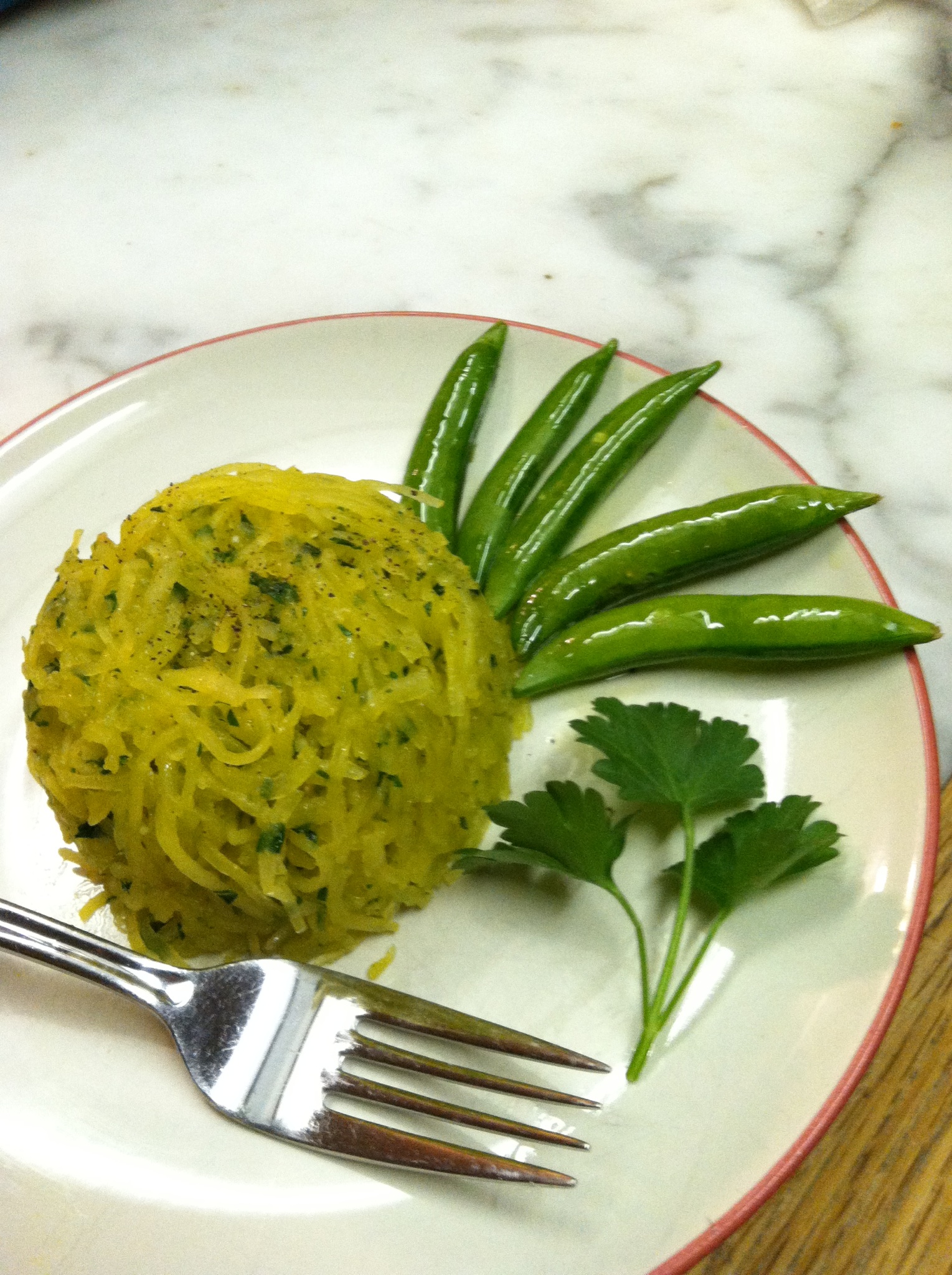
Next we took three cups squash (710 ml) and mixed in 2 tbsp (30 ml) extra virgin olive oil, 2.5 tbsp (37 ml) chopped parsley, 1/2 tsp (2.5 ml) minced fresh garlic, 1/2 tsp (2.5 ml) salt, and 1/8 tsp (0.6 ml) black pepper.

low-carb diet, diabetic diet, paleobetic diet

Seasoned with parsley, olive oil, garlic, salt, pepper

Finally, we took a cup (240 ml) of the squash and added minced celery (4 inches or 10 cm of stalk), 3 minced black olives, 5/8 oz (18 g) of minced sweet (bell) pepper, 1/2 clove of minced garlic, salt (a dash), and pepper to taste.

paleobetic diet, diabetic diet, low-carb diet, spaghetti squash

Seasoned with sweet peppers, black olives, garlic, celery, and salt

These last two options I consider side dishes. By the way, they taste good either cold or warm. They would go well with a number of entrees, such as steak or salmon.

I’ve read that this squash is good with pesto, or just with salt and butter.

Nutrition facts from FitDay.com:

One cup of cooked spaghetti squash has 75 calories (I’ve seen 42 elsewhere), 10 g of carbohydrate, 2 g of fiber, 8 g of digestible carb, 4 g of fat (predominantly MUFA), minimal protein, and a fair amount of vitamins A, niacin, B6, and C. Plus 8% of your RDA for manganese.

Steve Parker, M.D.


1 Comment

Filed under Recipes