Seafood Linked to Lower Alzheimer Dementia Risk in Those Genetically Predisposed

…according to an article at the Journal of the American Medical Association. The study involved Chicago-area residents who had provided information about their eating habits. After death, their brains were biopsied, looking for typical pathological findings of Alzheimers Disease.

fresh salmon and lobsters

Rich sources of omega-3 fatty acids include salmon, sardines, herring, trout, and mackerel

Participants who ate seafood at least once a week had fewer Alzheimers lesions in their brains, but only if they were carriers of a particular gene the predisposes to Alzheimers. The gene is called apolipoprotein E or APOE ε4.

You’ve heard that seafood may be contaminated with mercury, right? The seafood eaters in this study indeed had higher brain levels of mercury, but it didn’t cause any visible brain damage.

The Mediterranean diet, relatively rich in seafood, has long been linked to a lower risk of dementia.

A weakness of the study is that the researchers didn’t report results of clinical testing for dementia in these participants before they died. You can have microscopic evidence of Alzheimers disease on a biopsy, yet no clinically diagnosis of dementia.

Steve Parker, M.D.

Comments Off on Seafood Linked to Lower Alzheimer Dementia Risk in Those Genetically Predisposed

Filed under Dementia, Fish

Recipe: Roasted Radishes and Brussels Sprouts

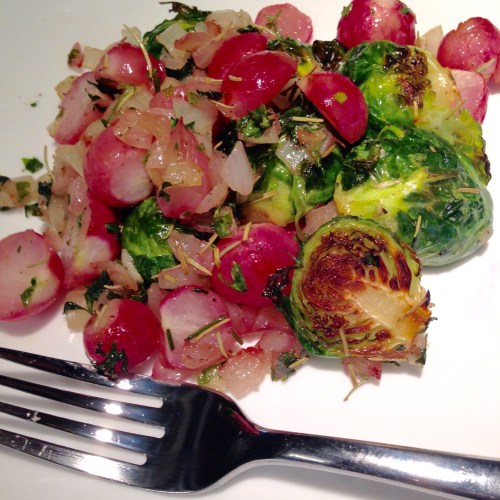
Roasted Radishes and Brussels Sprouts. Copyright Steve Parker MD

Roasted Radishes and Brussels Sprouts.
Copyright Steve Parker MD

A year ago I ran across online praise for roasted radishes. I’m not a big fan of radishes, perhaps because they weren’t part of Parker cuisine when I was growing up, but finally gave them a try.

Beautiful, huh?

Beautiful, huh?

This won’t be as detailed as most of my recipes because I need to get into the hospital soon.

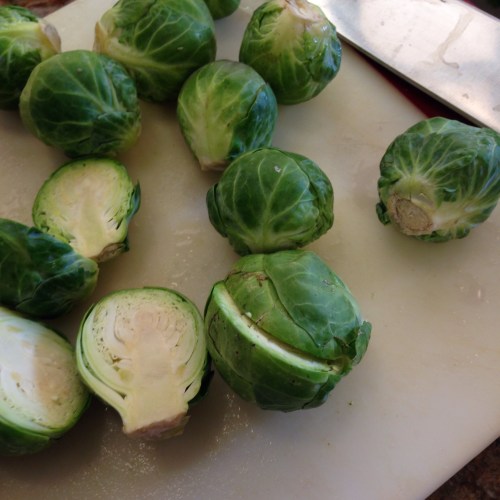
Raw Brussels Sprouts

Raw Brussels Sprouts

My basic ingredients were raw radishes and Brussels sprouts, diced onions, a bit of parsley (probably not needed), extra virgin olive oil, dried rosemary (i.e., not fresh), coarse salt, and pepper.

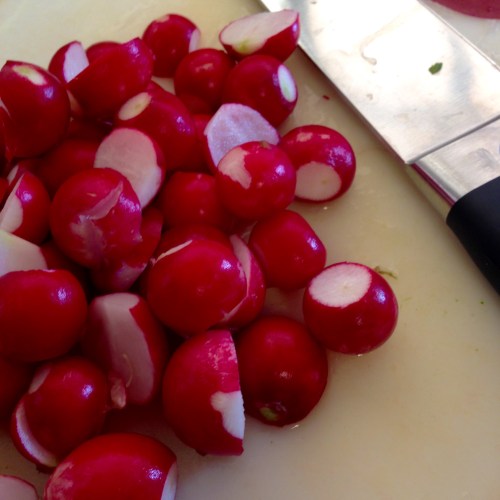
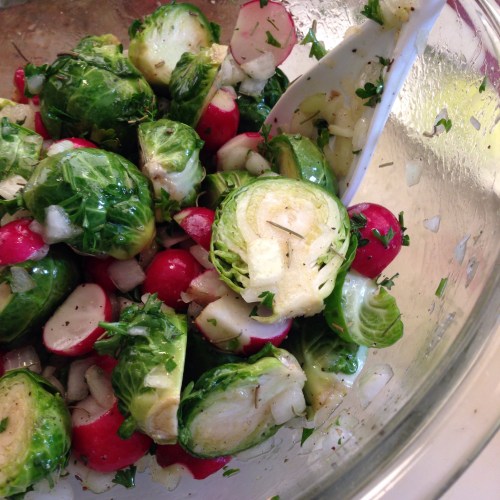
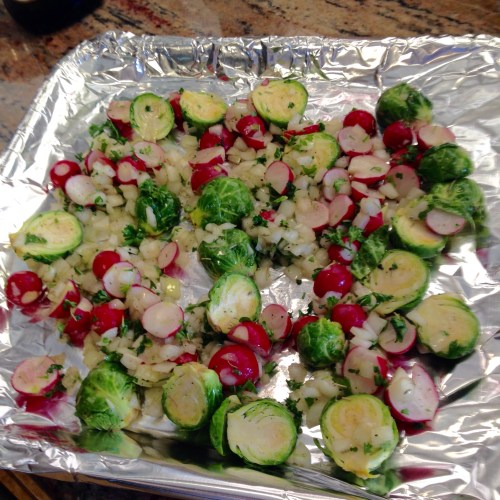
With the radishes, I cut off the little rootlet and green top, then cut them in half unless they were tiny radishes. Brussel sprouts take longer to cook, so I cut them in half, too. I put all the veggies  into a bowl, added just enough olive oil to coat them, sprinkled in some salt and pepper, then mixed with a spoon. Then I spread all that on a cooking sheet and popped it into an oven pre-heated to 425°F. (I covered my cooking sheet with aluminum foil to ease cleanup.)

All ingredients mixed in a bowl

All ingredients mixed in a bowl

I cooked in the oven for 17 minutes (15-20), using a turner to flip the veggies once or twice while cooking.

Ready for roasting

Ready for roasting

They were a little bland, so I topped off with Weber Roasted Garlic and Herb Seasoning. I enjoyed them and will do it again. Next time I may try coating with melted butter rather than olive oil. I felt very virtuous for eating my vegetables.

Steve Parker, M.D. 

PS: I ate half of this in one sitting. I refrigerated the rest and ate it about six hours later. It was much more flavorful. If you’re one of those people who never eats leftovers…

…reconsider.

4 Comments

Filed under Recipes

Another Theory to Explain the Obesity Epidemic

Dr. Michael Eades of Protein Power fame thinks he knows why we’ve gotten fat starting 35 years ago (at least in the U.S.):

Along with carbohydrates, vegetable oils have increased dramatically in the typical American diet. Over the same time period, we’ve all started eating away from home more and more, so that we’ve lost control of exactly what kinds of fats we’ve been eating.

Click the link for the details of his hypothesis, which involves the effects of various dietary fats and carbohydrates on intracellular energy metabolism and insulin resistance.

Steve Parker, M.D.

low-carb mediterranean diet

Front cover of book

Comments Off on Another Theory to Explain the Obesity Epidemic

Filed under Overweight and Obesity

I Lost My Virginity at an Indian Restaurant


Chennai Chettinaad Palace in Phoenix, Arizona

Chennai Chettinaad Palace in Phoenix, Arizona

Tonight I ate at my first Indian restaurant, Chennai Chettinaad Palace, at 2814 W. Bell Rd., Phoenix AZ 85053. This post isn’t a restaurant review, however. It’s a thumbnail sketch of my introduction to Indian food.

img_3828

We ended up here because it was recommended to my wife by an Indian gentleman she happened to sit next to on a plane trip. The restaurant has an extensive menu of what they say is authentic North Indian, South Indian & Gujarati food, both vegetarian and non-vegetarian.

We arrived at 6:40 PM and there were few patrons present. One hour later the place was full of apparent Indians.

Two of us started out with, and enjoyed, an appetizer called Gobi Manchurian.

Gobi Manchurian: spicy cauliflower pieces lightly battered and fried.

Gobi Manchurian: spicy cauliflower pieces lightly battered and fried. Yum!

It would have been too spicy for my third dining mate, who simply ate garlic naan (bread) and vegetarian fried rice. Both were delightful, although the rice was a tad oily. The rice dish easily serves four diners. The naan is addictive; split an order with your mate or you’ll eat too much.

Garlic Naan, a type of flat bread

Garlic Naan, a type of flat bread

Vegetarian Fried Rice with bits of cabbage, carrot, celery, and (?) cilantro.

Vegetarian Fried Rice with bits of cabbage, carrot, celery, green onion, and (?) cilantro.

My main entree was Chicken Kolhapuri. I was forewarned it would by spicy hot. I enjoyed it. My wife wouldn’t dare taste it. I’d get it again. I dipped my naan in the copious chicken sauce (a curry?).

Chicken Kolhapuri. Sauce includes ginger, garlic, sesame, and red chilly (sic) paste.

Chicken Kolhapuri. Sauce includes ginger, garlic, sesame, and red chilly (sic) paste.

Brian ordered Chicken Tikka Masala but didn’t like it. I don’t think it was bad; it just didn’t suit his taste, the way some folks don’t like asparagus.

Chicken Tikka Masala with a "traditional North Indian sauce" of roma tomatoes, fenugreek, and garam masala.

Chicken Tikka Masala with a “traditional North Indian sauce” of roma tomatoes, fenugreek, and garam masala.

We finished with an ice-cream style dish. If you want ice cream, stop at Baskin-Robbins on your way home.

Mango and Pistachio Kulfi

Mango and Pistachio Kulfi

Service was good. Our waitress was patient with us Indian food virgins. If you’re not familiar with Indian food, you won’t make sense of much of the menu. The restaurant was too cold for my wife, but fortunately she had brought a jacket. The bill for three of us was $63.42 (USD). We brought home two platefuls of leftovers.

I’ll visit again. I’m interested in vegetarian dishes, lamb, goat, and seafood. The secret to Indian food may be in the spices.

The rice, naan, and desert have too many carbohydrates for many diabetics. I’m sure there are low-carb alternatives, even if you have to make them yourself.

Steve Parker, M.D.

PS: The restaurant offered a 10% discount for customers paying with cash instead of credit. I always thought the credit card companies cut of credit card payments was only 3-4%.


5 Comments

Filed under India, Uncategorized

Do Insulin Levels Often Cause Hunger?

So easy to over-eat!

So easy to over-eat! Is it the insulin release?

No, insulin probably isn’t the cause of constant hunger, according to Dr. Stephan Guyenet. Dr. G gives 11 points of evidence in support of his conclusion. Read them for yourself. Here are a few:

  • multiple brain-based mechanisms (including non-insulin hormones and neurotransmitters) probably have more influence on hunger than do the pure effect of insulin
  • weight loss reduces insulin levels, yet it gets harder to lose excess weight the more you lose
  • at least one clinical study (in 1996) in young healthy people found that foods with higher insulin responses were linked to greater satiety, not greater hunger
  • billions of people around the world eat high-carb diets yet remain thin

An oft-cited explanation for the success of low-carbohydrate diets involves insulin, specifically the lower insulin levels and reduced insulin resistance seen in low-carb dieters. They often report less trouble with hunger than other dieters.

Here’s the theory. When we eat carbohydrates, the pancreas releases insulin into the bloodstream to keep blood sugar levels from rising too high as we digest the carbohydrates. Insulin drives the bloodstream sugar (glucose) into cells to be used as energy or stored as fat or glycogen. High doses of refined sugars and starches over-stimulate the production of insulin, so blood sugar falls too much, over-shootinging the mark, leading to hypoglycemia, an undeniably strong appetite stimulant. So you go back for more carbohydrate to relieve the hunger induced by low blood sugar. That leads to overeating and weight gain.

Read Dr. Guyenet’s post for reasons why he thinks this explanation of constant or recurring bothersome hunger is wrong or too simplistic. I tend to agree with him on this.

The insulin-hypoglycemia-hunger theory may indeed be at play in a few folks. Twenty ears ago, it was popular to call this “reactive hypoglycemia.” For unclear reasons, I don’t see it that often now. It was always hard to document that hypoglycemia unless it appeared on a glucose tolerance test.

Regardless of the underlying explanation, low-carb diets undoubtedly are very effective in many folks. That’s why I offer one as an option in my Advanced Mediterranean Diet. And low-carbing is what I always recommend to my patients with carbohydrate intolerance: diabetics and prediabetics.

Steve Parker, M.D.

front cover

front cover

Steve Parker MD, Advanced Mediterranean Diet

Two diet books in one

front cover

front cover

Comments Off on Do Insulin Levels Often Cause Hunger?

Filed under Overweight and Obesity

Stroke Drops to #5 Cause of Death in U.S.

For most of my medical career, stroke was the third leading cause of death in the U.S., behind heart disease and cancer. Just a few years ago, chronic lower respiratory tract disease surpassed stroke.

Stroke continues to fall in rank and fell recently to fifth place, overtaken by accidents (unintentional injuries).

Even non-fatal strokes can be devastating.

Reduce your risk of stroke by maintaining normal blood pressure, not smoking, exercise regularly, living at a healthy weight, limiting your alcohol consumption, don’t get diabetes, and limit your age to 55. It’s also important to seek medical attention if you have a TIA (transient ischemic attack).

I also think the Mediterranean diet helps.

Steve Parker, M.D.

low-carb mediterranean diet

Front cover of book

Comments Off on Stroke Drops to #5 Cause of Death in U.S.

Filed under Health Benefits, Mediterranean Diet, Stroke

Do Diet Beverages Inhibit Weight Loss?

Overweight and obese women who habitually drank diet beverages lost more weight if they substituted water for the diet beverage. Over the course of 24 weeks on a reduced calorie diet, the water drinkers lost an extra 1.2 kg (2.6 lb) compared to those who continued their diet beverage habit.

Furthermore, the researchers found that the water drinkers had healthier values on insulin levels, HOMA-IR (a measure of insulin resistance), and after-meal blood sugar levels.

It was a small study with only about 30 in each experimental group. Whether similar results would be seen in men is unknown to me.

In the past, I’ve advised dieters it’s OK to drink diet drinks in moderation while trying to weight. I may have to revise my recommendations. On the other hand, if diet drinks help keep you happy and on a successful weight-loss journey, they may be helpful. The diet beverage consumers still lost 7.6 kg (16.7 lb) compared with 8.8 kg (19.4 lb) in the abstainers. But diets don’t work, right?

Steve Parker, M.D.

PS: I haven’t read the full text of the article; just the abstract.

PPS: Steven Novella at Science-Based Medicine blog concludes that low energy sweeteners probably help with weight control.

Comments Off on Do Diet Beverages Inhibit Weight Loss?

Filed under Overweight and Obesity, Sugar Substitutes

QOTD: H.L. Mencken on the U.S. Presidency

As democracy is perfected, the office of president represents, more and more closely, the inner soul of the people. On some great and glorious day the plain folks of the land will reach their heart’s desire at last and the White House will be adorned by a downright moron.

–H. L. Mencken

Comments Off on QOTD: H.L. Mencken on the U.S. Presidency

Filed under Uncategorized

Adam Brown: Diabetes on a 65% Fat Diet

Adam Brown over at DiaTribe has been experimenting with diet to see effects on his blood sugar:

“Over the past 80 days, I’ve seen excellent results from eating higher fat (65% of my calories) and a bit lower carb (about 90 grams per day) than I have in the past. I’ve spent 76% of the past 11.5 weeks in the tight range of 70-140 mg/dl [3.9-7.8], with a low average (118 mg/dl) [6.6 mmol/l], low hypoglycemia, and low diabetes burden. Combined, these are the strongest numbers I’ve ever seen in myself over such a long time period. I’ve also lost 5 lbs [2.3 kg].”

Source: Adam’s Corner: Diabetes on a 65% Fat Diet, Chia for Breakfast, and Intermittent Fasting | diaTribe

Also see his comments on chia pudding and intermittent fasting.

3 Comments

Filed under Uncategorized

Have You Heard of Chutney?

I rarely hear about it or see in my social circles. I have a vague childhood recollection of an uncle introducing it to me. I’ve always liked the word.

“Chutney.”

Outback Steakhouse a couple decades ago sold pork steak with a side of orange chutney. Good combo.

From Diabetic Foodie:

“Are you familiar with chutney? Born in India, it’s basically fruit or vegetables + spices + vinegar + sweetness + heat (optional). You can make it as chunky or smooth as you like.

How to use chutney:

Use as a topping for turkey or pork. (Think Thanksgiving side dish.) Serve with curry dishes like Chickpea Curry with Sweet Potato. Mix into plain yogurt as a snack or dip. Combine with sweet potatoes or winter squash before roasting. Serve with sweet potato dishes such as Sweet Potato Hash or Baked Sweet Potato & Parsnip Latkes. Purée and use as a condiment for turkey, chicken, or veggie burgers. Purée and mix into meatloaf. Serve with cheese as a snack. Use as a topping for whole grain waffles or pancakes. Purée and use instead of ketchup.”

Source: Apple Chutney

PS: The waiter at Outback in Pensacola, FL, always asked how I wanted my pork cooked. As if someone would order it medium rare? Can you say trichinosis?

Comments Off on Have You Heard of Chutney?

Filed under Uncategorized