Takine BP Meds at Bedtime Prevents Cardiovascular Events

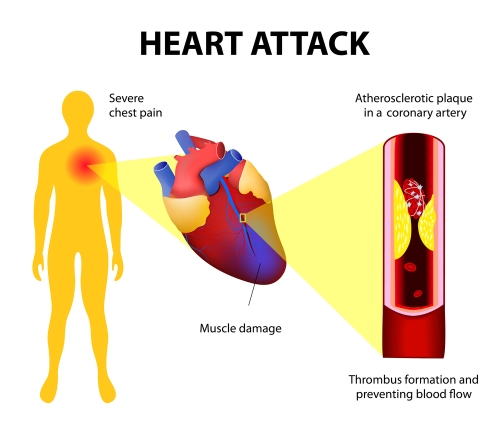
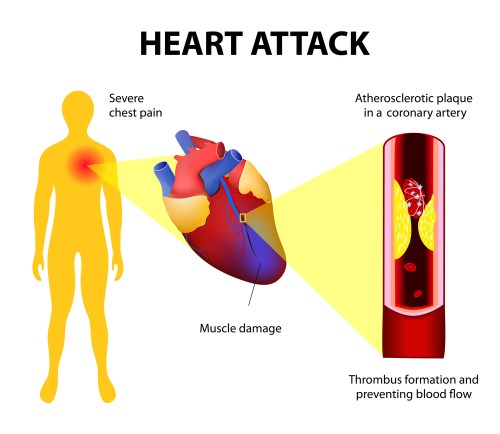
High blood pressure is linked to heart attacks

Very recently I have noticed hypertension patients taking their medications at bedtime. Now I know why.

From Medscape:

Taking antihypertensive medication at bedtime led to an almost halving of cardiovascular events in a new study.

The Hygia Chronotherapy Trial is the largest ever study to investigate the effect of the time of day when people take their antihypertensive medication on the risk of cardiovascular events.

The trial randomly assigned 19,084 patients to take their medication on waking or at bedtime and followed them for an average of 6 years.Results showed that patients who took their pills at bedtime had a 45% reduction in overall cardiovascular events. This included a 56% reduction in cardiovascular death, a 34% reduction in myocardial infarction (MI), a 40% reduction in coronary revascularization [bypass surgery and angioplasty/stenting], a 42% reduction in heart failure, and a 49% reduction in stroke, all of which were statistically significant.

***

“We showed that if blood pressure is elevated during sleep then patients have increased cardiovascular risk regardless of daytime pressure, and if blood pressure during sleep is normal then cardiovascular risk is low even if the [doctor’s] office pressure is elevated,” Hermida said.

***

Results showed that during the 6.3-year median patient follow-up, 1752 participants experienced the primary cardiovascular disease (CVD) outcome (a composite of CVD death, MI, coronary revascularization, heart failure, or stroke).

Drug classes at physicians’ disposal were ARBs (angiotensin receptor blockers), calcium channel blockers, ACE inhibitors, and diuretics. Preventative effects were most pronounced for ARBs and ACE inhibitors.

Don’t change your BP medication dosing until you check with your personal physician.

Source: Bedtime Dosing of Hypertension Meds Reduces CV Events

Did you know most heart attacks occur in the morning, and those tend to be the most serious?

Steve Parker, M.D.

PS: Exercise and loss of excess weight help control blood pressure and prevent cardiovascular disease. I can help you with those…

low-carb mediterranean diet

Click the pic to purchase at Amazon.com. E-book versions also available at Smashwords.com.


1 Comment

Filed under coronary heart disease, Heart Disease, Stroke

Science Skepticism


“You can’t tell whether I’m lying, delusional, ignorant, or simply incompetent. Sometimes even I don’t know!”

I ran across a 2016 article by Callie Joubert that summarizes skeptical ideas I’ve read about for years, but most people and physicians don’t know about. Bottom line: scientific research and medical studies aren’t nearly as reliable as you think.

Read the whole thing, but here are some excerpts:

We tend to think of science as a dispassionate (impartial, neutral) search for truth and certainty. But is it possible that we are facing a situation in which there is a massive production of wrong information or distortion of information? Is it possible that certain scientific disciplines are facing a crisis of credibility? Mounting evidence suggests this is indeed the case, which raises two questions: How serious is the problem? And what could explain this?

***

The title of an editorial in the prestigious medical journal The Lancet, dated April 6, 2002, asks the question, “Just How Tainted Has Medicine Become?”4 The article states, “Heavily, and damagingly so, is the answer.” Among other things, in 2001, researchers completed experiments with biotechnology products in which they had a direct financial interest and doctors did not tell their patients that others had died using these products when safer alternatives were available. In the same journal, dated April 11, 2015, Dr. Richard Horton stated the gravity of the problem as follows: “The case against science is straightforward: much of the scientific literature, perhaps half, may simply be untrue . . . science has taken a turn towards darkness.”

In 2004, under the heading of “Depressing Research,” the editor of The Lancet had this to say about antidepressants for children: “The story of research into selective serotonin reuptake inhibitor (SSRI) use in childhood depression is one of confusion, manipulation, and institutional failure. . . . In a global medical culture where evidence-based practice is seen as the gold standard for care, these failings [i.e., of the USA Food and Drug Administration to act on information provided to them about the harmful effects of these drugs on children] are a disaster.”6 After being editor of the New England Journal of Medicine for 20 years, Dr. Marcia Angell stated that “physicians can no longer rely on the medical literature for valid and reliable information.”7 She referred to a study of 74 clinical trials of antidepressants that indicates that 37 of 38 positive studies were published. In contrast, 33 of the 36 negative studies were either not published or published in a form that conveyed a positive outcome. She also mentions the fact that drug companies are financing “most clinical research on the prescription drugs, and there is mounting evidence that they often skew the research they sponsor to make their drugs look better and safer.”

In 2011, researchers at Bayer decided to test 67 recent drug discoveries on preclinical cancer biology research. In more than 75 percent of cases, the published data did not match their attempts to replicate them.8 In 2012, a study published in Nature announced that only 11 percent of the sampled preclinical cancer studies coming out of the academic pipeline were replicable.9

In the prestigious Science journal, in 2015, the Open Science Collaboration10 presented a study of 100 psychological research studies that 270 contributing authors tried to replicate. An astonishing 65 percent failed to show any statistical significance on replication, and many of the remainder showed greatly reduced effect sizes. In plain terms, evidence for original findings is weak.

***

A discovery in physics, the hardest of all hard sciences, is usually thought of as the most reliable in the world of science. However, two of the most vaunted physics results of the past few years—“cosmic inflation and gravitational waves at the BICEP2 experiment in Antarctica, and the supposed discovery of superluminal neutrinos at the Swiss-Italian border—have now been retracted, with far less fanfare than when they were first published.”

***

Parker here again….

The science skeptic best known to physicians is John P.A. Ioannidis:

Empirical evidence from diverse fields suggests that when efforts are made to repeat or reproduce published research, the repeatability and reproducibility is dismal.

Another quote form Ioannidis:

There is increasing concern that most current published research findings are false. The probability that a research claim is true may depend on study power and bias, the number of other studies on the same question, and, importantly, the ratio of true to no relationships among the relationships probed in each scientific field. In this framework, a research finding is less likely to be true when the studies conducted in a field are smaller; when effect sizes are smaller; when there is a greater number and lesser preselection of tested relationships; where there is greater flexibility in designs, definitions, outcomes, and analytical modes; when there is greater financial and other interest and prejudice; and when more teams are involved in a scientific field in chase of statistical significance. Simulations show that for most study designs and settings, it is more likely for a research claim to be false than true. Moreover, for many current scientific fields, claimed research findings may often be simply accurate measures of the prevailing bias.

Ioannidis again:

Most physicians and other healthcare professionals are unaware of the pervasiveness of poor quality clinical evidence that contributes considerably to overuse, underuse, avoidable adverse events, missed opportunities for right care and wasted healthcare resources. The Medical Misinformation Mess comprises four key problems. First, much published medical research is not reliable or is of uncertain reliability, offers no benefit to patients, or is not useful to decision makers. Second, most healthcare professionals are not aware of this problem. Third, they also lack the skills necessary to evaluate the reliability and usefulness of medical evidence. Finally, patients and families frequently lack relevant, accurate medical evidence and skilled guidance at the time of medical decision‐making.

If you like videos, here’s Ioannidis on YouTube.

Staying skeptical,

Steve Parker, M.D.

h/t Vox Day


1 Comment

Filed under Uncategorized

Do Certain Diabetes Drugs Protect the Heart and Kidneys?


Blood pressure control is also extremely important for protection of heart and kidneys

I’ve been reticent to tout the putative heart-protective effects of diabetes drugs in the classes called SGLT2 inhibitors and GLP-1 receptor agonists. Frankly, their supposed kidney-protective effects haven’t even been on my radar. My hesitation to report on these matters stems from:

Maybe if Big Pharma sent me a nice check….

The GLP-1 receptor agonists seem to have beneficial effects on both heart and kidney. With SGLT2 inhibitors, renal benefits may be more prominent than cardiac. Also note that any beneficial heart or renal effects may be attributable only to certain drug within the class, and not a class effect.

For what it’s worth, the American Diabetes Association recently hosted a conference on these issues. I assume the ADA endorses the report written by three experts, two of whom have received some sort of compensation from pharmaceutical companies. This doesn’t necessarily mean they are biased. Some excerpts:

Since patients with diabetes are at increased risk for CV [cardiovascular] and renal events, reducing the risk of these events is of primary interest to improve outcomes in the long-term. [Cardiovascular events usually refers to heart attacks, strokes, and death from those. Renal events would be high loss of protein through the kidneys, impaired kidney function or chronic kidney disease, or the need for dialysis.]

SGLT2 inhibitors and GLP-1 RAs have dramatically changed the treatment landscape of type 2 diabetes due to their established CV benefits, and the observed improvements in renal function seen with these classes of agents are currently undergoing intense investigation.

***

It is now apparent that both SGLT2 inhibitors and GLP-1 RAs show consistent reductions in major adverse cardiovascular events for patients with established cardiovascular (CV) disease, and both appear to have renal benefits as well.

***

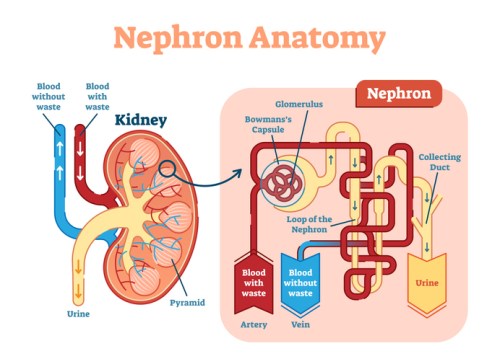
The nephron is the microscopic structural and functional unit of the kidney.

Renal effects of GLP-1 receptor agonists

These drugs may exert their beneficial actions on the kidneys through their effects on lowering blood glucose and blood pressure and by reducing the levels of insulin.

For GLP-1RAs, these [studies] include ELIXA with lixisenatide, LEADER with liraglutide, SUSTAIN-6 with semaglutide, EXCSEL with exenatide once-weekly, HARMONY with albiglutide, and REWIND with dulaglutide.

All these studies indicate that albuminuria [protein loss through urine] is reduced during treatment with GLP-1 RAs, and eGFR [estimated glomerular filtration rate, a measure of kidney function] appears to be stabilized.

These benefits are seen independently of HbA1c, weight, and blood pressure variations.

***

Heart attack is only one type of cardiovascular event

Cardiovascular effects of GLP-1 receptor agonists

Large CV outcomes trials with GLP-1 RAs have shown that these agents can reduce the risk of major adverse CV events, CV mortality, and all-cause mortality.

These CV benefits appear to be related to four distinct mechanisms:

    • Improve myocardial [heart muscle] performance in ischemic heart failure [caused by poor blood flow to heart]
    • Improve myocardial survival in ischemic heart disease
    • Ameliorate endothelial dysfunction [endothelium is the lining of arteries]
    • Decrease markers of CV risk.

***

Renal effects of SGLT2 inhibitors

  • However, many potential mechanisms have been linked to the renoprotective effects of SGLT2 inhibitors.
  • These include reduction of blood pressure, improved metabolic parameters, reduced volume overload, reduction in albuminuria, and glomerular pressure.
  • For the latter, SGLT2 inhibition appears to reduce hyperfiltration via a tubuloglomerular feedback mechanism.
  • Clinical data from CV outcomes trials have shown consistent variations in eGFR and reduction in death from renal causes with empagliflozin, canagliflozin, and dapagliflozin.
  • However, to gain more information about the renal effects of these agents, dedicated renal outcomes trials are needed to study reductions in albuminuria, changes in eGFR, number of patients reaching end-stage renal disease, need for dialysis, and deaths due to kidney failure.

***

Key Messages from the authors

Large CV outcomes trials have shown that both SGLT2 inhibitors and GLP-1 RAs are associated with significant reductions in CV events in patients with elevated CV risk.

From CV outcomes trials both classes of agents also appear to have renal benefits, although large dedicated studies are needed to establish the magnitude of this potential benefit

The mechanism of action at the basis of CV and renal benefits of SGLT2 inhibitors and GLP-1 RAs is complex, multifactorial, and still not completely understood.


I’m still skeptical but will keep an open mind.

Steve Parker, M.D.

PS: Bold emphasis above is mine.

low-carb mediterranean diet

Click the pic to purchase at Amazon.com. E-book versions also available at Smashwords.com.


3 Comments

Filed under coronary heart disease, Drugs for Diabetes, Heart Disease, kidney disease, Stroke

ADA Nutrition Conference in 2019: Low-Carb Eating on the Rise

Spaghetti squash with parsley, olive oil, snow peas, garlic, salt, pepper

I’m astounded by how many people with diabetes I meet who pretty much eat whatever they want. Others, when I ask if they’re on a particular diet, say, “I watch what I eat.” Which usually just means avoiding obvious sugar bombs.

The American Diabetes Association in 2019 hosted a conference on nutrition therapy for diabetes. I assume the ADA endorses the panel’s recommendations. The big news is continued movement toward carb-restricted eating. Some excerpts:

Today, there is strong evidence to support both the efficacy and cost-effectiveness of nutrition therapy as a key component of integrated management of individuals with diabetes. This is increasingly relevant as it is evident that “one-size-fits-all” eating plan is not suitable for prevention or management of diabetes, also considering diverse cultural backgrounds, personal preferences, comorbidities, and socioeconomic settings. The American Diabetes Association (ADA) is now emphasizing that medical nutrition therapy (MNT) is fundamental for optimal diabetes management, and the new report also includes information on prediabetes.

***

One of the key recommendations is to refer adults living with type 1 or type 2 diabetes to individualized, diabetes-focused MNT [medical nutrition therapy] at diagnosis and as needed throughout the life span, particularly during times of changing health status to achieve treatment goals.

           ***

The new consensus recommendations consider that a variety of eating patterns are acceptable for the management of diabetes.

In the absence of additional strong evidence on the comparative benefits of different eating patterns in specific individuals, healthcare providers should focus on the key factors that are common among the patterns, including emphasizing non-starchy vegetables, minimizing added sugars and refined grains, and preferring whole foods over highly processed foods.

Reducing overall carbohydrate intake for individuals with diabetes is associated with the most evidence for improving glycemia and may be applied in a variety of eating patterns.

For selected adults with type 2 diabetes who are not meeting glycemic targets or where reducing anti-glycemic medications is a priority, reducing overall carbohydrate intake with low or very low carbohydrate eating plans is also a viable approach.

***

Regarding weight loss in overweight or obese folks with diabetes or prediabetes:

…a low carbohydrate diet is now recognized as a safe, viable, and important option for patients with diabetes, and the other is that greater emphasis is now placed on weight loss in patients who are overweight/obese for the prevention of diabetes and its treatment.

Indeed, in type 2 diabetes, 5% weight loss is recommended to achieve clinical benefits, with a goal of 15%, when feasible and safe, in order to achieve optimal outcomes.

In prediabetes, the goal is 7–10% for preventing progression to type 2 diabetes.

“Metabolic surgery,” better known as bariatric surgery, and medication-assisted weight loss (aka weight-loss drugs) should be considered in some cases.

***

Best approach for optimizing blood sugars:

For macronutrients, the available evidence suggests that there is not an ideal percentage of calories from carbohydrate, protein, and fat for all people with or at risk for diabetes; therefore, macronutrient distribution should be based on individualized assessment of current eating patterns, preferences, and metabolic goals.

[Self-monitoring of carbohydrate consumption is important.]

People with diabetes and those at risk for diabetes are encouraged to consume at least the amount of dietary fiber recommended for the general population; increasing fiber intake, preferably through food (vegetables, pulses (beans, peas, and lentils), fruits, and whole intact grains) or through dietary supplement, may help in modestly lowering HbA1C.

***

What about sugar-sweetened beverages?

Firstly, sugar-sweetened beverages should be replaced with water as often as possible.

Secondly, if sugar substitutes are used to reduce overall calorie and carbohydrate intake, people should be counseled to avoid compensating with intake of additional calories from other food sources.

***

Is alcohol forbidden? No.

…educating people with diabetes about the signs, symptoms, and self-management of delayed hypoglycemia after drinking alcohol, especially when using insulin or insulin secretagogues, is recommended.

To reduce hypoglycemia risk, the importance of glucose monitoring after drinking alcohol beverages should be emphasized.

Steve Parker, M.D.

PS: I note that William Yancy, M.D., was on the expert panel.

PPS: Bold emphasis above is mine.

low-carb mediterranean diet

Click the pic to purchase at Amazon.com. E-book versions also available at Smashwords.com.

5 Comments

Filed under Uncategorized

70 Is the New 60 (in the U.S.)

…unless you’re an elderly African-American.

Old-school preparation for exercise; stretching actually doesn’t do any good for the average person

From Market Watch:

Better living conditions, easier work, and better health care are all helping shave years off our effective ages, researchers have said. The progress is steady and consistent, they have found. A typical American woman of 67 today is about as healthy as her mom was at age 60, and at 89 she’s likely to be as healthy as her mom was at 75, the report released this week said.

Health-wise, older people are 10 years younger than their grandparents. “A 70-year-old born in 1960 is predicted to be about as healthy as a 60-year-old born in 1910,” the authors wrote. The authors, Ana-Lucia Abeliansky, Devil Erel and Holger Strulik, economists and statisticians at the University of Goettingen in Germany, crunched medical data on thousands of Americans.

Furthermore:

From 1950 to 2000, average life expectancy has risen more in Western Europe than in the U.S. Europeans have gained 11.3 years, on average, compared with 8.6 years for Americans.

Source: Good news for older Americans: 70 is the new 60 (but not for everyone) – MarketWatch

Regular exercise is a reliable fountain of youth.

Steve Parker, M.D.

Click the pic to purchase at Amazon.com. E-book versions also available at Smashwords. com
1 Comment

Filed under Longevity

Does Diet Quality Affect Cardiovascular Disease Risk in Post-Menopausal Diabetic Women?

I’m increasingly skeptical of studies like this: observational, relatively low numbers of participants, and dubious premises. regarding premises, the article at hand mentions the American Diabetes Association diet. But there is no ADA diet. You won’t hurt my feelings if you jump straight to the “conclusions” section.

Abstract

Background

Dietary patterns are associated with cardiovascular disease (CVD) risk in the general population, but diet-CVD association in populations with diabetes mellitus is limited. Our objective was to examine the association between diet quality and CVD risk in a population with type 2 diabetes mellitus.

Methods and Results

We analyzed prospective data from 5809 women with prevalent type 2 diabetes mellitus at baseline from the Women’s Health Initiative. Diet quality was defined using alternate Mediterranean, Dietary Approach to Stop Hypertension, Paleolithic, and American Diabetes Association dietary pattern scores calculated from a validated food frequency questionnaire. Multivariable Cox’s proportional hazard regression was used to analyze the risk of incident CVD. During mean 12.4 years of follow-up, 1454 (25%) incident CVD cases were documented. Women with higher alternate Mediterranean, Dietary Approach to Stop Hypertension, and American Diabetes Association dietary pattern scores had a lower risk of CVD compared with women with lower scores (Q5 v Q1) (hazard ratio [HR]aMed 0.77, 95% CI 0.65-0.93; HRDASH 0.69, 95% CI 0.58-0.83; HRADA 0.71, 95% CI 0.59-0.86). No association was observed between the Paleolithic score and CVD risk.

Conclusions

Dietary patterns that emphasize higher intake of fruits, vegetables, whole grains, nuts/seeds, legumes, a high unsaturated:saturated fat ratio, and lower intake of red and processed meats, added sugars, and sodium are associated with lower CVD [cardiovascular disease] risk in postmenopausal women with type 2 diabetes mellitus.

Source: Diet Quality and Cardiovascular Disease Risk in Postmenopausal Women With Type 2 Diabetes Mellitus: The Women’s Health Initiative. – PubMed – NCBI

Steve Parker, M.D.

low-carb mediterranean diet

Click the pic to purchase at Amazon.com. E-book versions also available at Smashwords.com.

1 Comment

Filed under coronary heart disease, Heart Disease, Stroke

Are You Nuts?: Combine Mediterranean and Ketogenic Diets

The Jerusalem Post has an article comparing and combining the Mediterranean and ketogenic diets:

Why choose a favorite when you can have both? Instead of making the tough Keto vs Mediterranean diet decision, many people have instead decided to combine the most appealing parts of the two diets to create a new option called the Keto Mediterranean Diet (KMD). Macronutrients are divided as follows:

• 7-10% carbs

• 55-65% fat

• 22-30% protein

• 5-10% alcohol

What is The Keto Mediterranean Diet Food List?

• Fats – olive oil, coconut oil and avocados

• Proteins – fish, cheese, eggs and lean meats • Vegetables – non-starchy varieties

• Red wine – moderate amount

• No sugars, starches, grains allowed

Carbs are limited, the way they are with the Keto diet and red wine is allowed, like in the Mediterranean diet. For people who want keto results and still enjoy going out at night for a drink, this seems like a good compromise!

Keto Mediterranean Diet Pros and Cons

Pros:

• Benefits of the Keto diet while still enjoying a glass of red wine

• More flexibility in food choices

• Healthy option  for diabetes sufferers

• Lower risk of experiencing keto-flu symptomsCons:

• Constant checking to make sure you are still in ketosis

• No strong boundaries which could weaken the results you experience

Source: Has The Mediterranean Diet Gone Keto-Crazy? – Special Content – Jerusalem Post

Unfortunately, I see nothing in the article that you can use from a practical standpoint unless you’re a dietitian or nutrition nerd, like me.

Steve Parker, M.D.

Click the pic to purchase at Amazon.com. E-book versions also available at Smashwords. com
Click the pic to purchase at Amazon.com. E-book versions also available at Smashwords. com.

3 Comments

Filed under ketogenic diet

Dog Owners Have Lower Risk of Death From Stroke and Heart Attack

Young Hank

From UPI:

A pair of new reports found that dog owners have a lower risk of early death than people without canine companionship, particularly when it comes to dying from a heart attack or stroke.

Dog ownership decreases a person’s overall risk of premature death by 24 percent, according to researchers who conducted a review of the available medical evidence.

The benefit is most pronounced in people with existing heart problems. Dog owners had a 65 percent reduced risk of death following a heart attack and a 31 percent reduced risk of death from heart disease, the researchers said.

Source: Having a dog can lower risk of death from heart attack, stroke – UPI.com

Steve Parker, M.D.

PS. What else lowers your risk of premature death? The Mediterranean diet!

Click the pic to purchase at Amazon.com. E-book versions also available at Smashwords. com
1 Comment

Filed under Heart Disease, Longevity, Stroke

Are You Wiping Your Butt Wrong?

This is a topic I’d never run across online until recently. In the anal hygeine department, it looks like the Europeans and Japanese—with their bidets—are ahead of us in North America.

From Insider:

To keep your backside happy, Goldstein [a rectal surgeon] recommended using a patting motion rather than a wiping motion and being as gentle as possible. Ideally, he added, you should use a bidet to clean yourself and then pat the excess water dry with a bit of toilet paper if need be.

From MF (Mental Floss):

Asbury [a dermatologist] is an advocate of the standalone or add-on toilet accessory that squirts a spray of water between your cheeks to flush out residual fecal matter. While bidets are common in Europe and Japan, the West has been slower to adopt this superior method of post-poop clean-up; others might be wary of tapping into existing home plumbing to supply fresh water, even though DIY installation is quite easy. For those patients, Asbury has developed an alternative method.

TRY PAPER TOWELS AND WATER

“What I tell people to use is Viva, a really soft, thick paper towel made by Kleenex,” he says. “You get a squirt bottle and you leave it near the toilet and moisten the paper towel.” Regular toilet paper is usually too flimsy to stand up to a soaking, while normal paper towels are too harsh for rectal purposes. Viva is apparently just right. (And no, Asbury is not a brand ambassador, nor does Kleenex endorse this alternative use.)

This advice does come with a major caveat: Viva wipes are not flushable and might very well clog your pipes if you try to send them down the drain.

From Shape:

When it comes to wiping, less is more and not just because it keeps you from replacing the toilet paper roll every other day. “Overwiping can irritate the perianal skin and lead to small abrasions that trigger inflammation and itching,” Sheth [a gastroenterologist] says. One or two wipes are all it takes, he says. If you need to wipe more than that you may not have completely emptied your system or you could be constipated (in which case, up your fiber and water intake like you would to prevent hemorrhoids). If you still require more than a few wipes, consider switching to wet toilet paper or unscented baby wipes. “Moist wipes decrease the friction of wiping and cause less irritation,” Sheth says.

The first two links recommend against baby wipes.

From Sussex Surgery:

Many people cannot bear the thought of a dirty anus and they go to great lengths to keep their anus spotlessly clean using large amounts of toilet paper and vigorously washing the area, especially after defaecation.  Unfortunately this breaks down the fragile anal skin and then this usually effective barrier to bacteria lets in microbes to the surrounding tissues.  This is very irritating to local nerves and people then get in to a viscious cycle because they get itchy, feeling the need to clean the anus even more, which breaks down the anal skin barrier even further.  Therefore it is ironically and usually the cleanest people that end up in my specialist bowel surgery clinic rather than the dirtiest!

The first thing to do is to break the vicious cycle and I recommend that people tone down their anal cleaning routine.  Fingernails and abrasive materials such as rough toilet paper should be kept away from the anus.  Non-scented baby wipes or luxury toilet tissue are usually the kindest and most effective ways of wiping the bottom after opening the bowels.  Running water is the best way to wash the anal surfaces.

Often people think that they must keep on wiping their bottom with toilet paper until they do not see any more brown smears on the toilet paper but this can cause significant damage.  Instead people should stop wiping when the brown smears have lessened but before they rub their fragile anal skin raw.

From Atlas Obscura:

All of this provides a mixed view on the ideal material for wiping. Water is very good, because it’s gentle and won’t cause tears, but you want to stay away from residual moistness. Toilet paper isn’t bad, because it easily soaks up any moisture, but it also can be a little rough, which is bad. The ideal method would probably be a water bath followed by careful, gentle, and immediate drying, whether that’s with toilet paper or a jet of warm air.

For a history of anal hygeine and a tour of various cultures, visit Toilet Guru.

Steve Parker, M.D.

low-carb mediterranean diet

Click the pic to purchase at Amazon.com. E-book versions also available at Smashwords.com.

3 Comments

Filed under Uncategorized

Kevin Hall’s Tentative New Theory of Obesity

paleo diet, paleolithic diet, caveman diet

Not Kevin Hall, although I do have a female relative named Kevan

At Scientific American:

Nutrition researcher Kevin Hall strives to project a Zen-like state of equanimity. In his often contentious field, he says he is more bemused than frustrated by the tendency of other scientists to “cling to pet theories despite overwhelming evidence that they are mistaken.” Some of these experts, he tells me with a sly smile, “have a fascinating ability to rationalize away studies that don’t support their views.”

Among those views is the idea that particular nutrients such as fats, carbs or sugars are to blame for our alarming obesity pandemic. (Globally the prevalence of obesity nearly tripled between 1975 and 2016, according to the World Health Organization. The rise accompanies related health threats that include heart disease and diabetes.) But Hall, who works at the National Institute of Diabetes and Digestive and Kidney Diseases, where he runs the Integrative Physiology section, has run experiments that point fingers at a different culprit. His studies suggest that a dramatic shift in how we make the food we eat—pulling ingredients apart and then reconstituting them into things like frosted snack cakes and ready-to-eat meals from the supermarket freezer—bears the brunt of the blame. This “ultraprocessed” food, he and a growing number of other scientists think, disrupts gut-brain signals that normally tell us that we have had enough, and this failed signaling leads to overeating.

*  *  *

At the end of the 19th century, most Americans lived in rural areas, and nearly half made their living on farms, where fresh or only lightly processed food was the norm. Today most Americans live in cities and buy rather than grow their food, increasingly in ready-to-eat form. An estimated 58 percent of the calories we consume and nearly 90 percent of all added sugars come from industrial food formulations made up mostly or entirely of ingredients—whether nutrients, fiber or chemical additives—that are not found in a similar form and combination in nature. These are the ultraprocessed foods, and they range from junk food such as chips, sugary breakfast cereals, candy, soda and mass-manufactured pastries to what might seem like benign or even healthful products such as commercial breads, processed meats, flavored yogurts and energy bars.

Wasn’t David Kessler, M.D., saying the same things ten years ago?

Here’s another new theory from me: If you had to kill and butcher your own animals, you’d eat less meat.

Steve Parker, M.D.

Click the pic to purchase at Amazon.com. E-book versions also available at Smashwords. com

2 Comments

Filed under Overweight and Obesity