I’ve run across a number of people who slowly increased their alcohol consumption over months or years, not realizing it was causing or would cause problems for them. Alcohol is dangerous, lethal at times.
From a health standpoint, the generally accepted safe levels of consumption are:
no more than one standard drink per day for women
no more than two standard drinks per day for men
One drink is 5 ounces of wine, 12 ounces of beer, or 1.5 ounces of 80 proof distilled spirits (e.g., vodka, whiskey, gin).
Dry January was conceived in the UK in 2012 or 2014. The idea is simply to abstain from all alcohol for the month of January. The Alcohol Change UK website can help you git ‘er done. Many folks notice that they sleep better, have more energy, lose weight, and save money. There are other potential benefits.
If you think you may have an unhealthy relationship with alcohol, check your CAGE score. It’s quick and easy.
Alternatively, if you make a commitment to a Dry January but can’t do it, you may well have a problem.
Caprese salad: mozzarella cheese, tomatoes, basil, extra virgin olive oil
Folks with diabetes have higher-than-average risk of dying from cardiovascular disease, such as heart attacks and strokes. So it’s good to know about dietary habits that enhance longevity.
Examining a variety of diet quality methodologies will inform best practice use of diet quality indices for assessing all-cause and CVD [cardiovascular disease] mortality.
Objective
To examine the association between three diet quality indices (Australian Dietary Guideline Index, DGI; Dietary Inflammatory Index, DII; Mediterranean-DASH Intervention for Neurodegenerative Delay, MIND) and risk of all-cause mortality, CVD mortality and non-fatal CVD events up to 19 years later.Design
Data on 10,009 adults (51.8 years; 52% female) from the Australian Diabetes, Obesity and Lifestyle study were used. A food frequency questionnaire was used to calculate DGI, DII and MIND at baseline. Cox proportional hazard models were used to estimate hazard ratios (HR) and 95% CI of all-cause mortality, CVD mortality and non-fatal CVD events (stroke; myocardial infarction) according to 1 SD increase in diet quality, adjusted for age, sex, education, smoking, physical activity, energy intake, history of stroke or heart attack, and diabetes and hypertension status.Results
Deaths due to all-cause (n = 1,955) and CVD (n = 520), and non-fatal CVD events (n = 264) were identified during mean follow-ups of 17.7, 17.4 and 9.6 years, respectively. For all-cause mortality, HRs associated with higher DGI, DII and MIND were 0.94 (95% CI: 0.89, 0.99), 1.08 (95% CI: 1.02, 1.15) and 0.93 (95% CI: 0.89, 0.98), respectively. For CVD mortality, HRs associated with higher DGI, DII and MIND were 0.93 (95% CI: 0.85, 0.99), 1.10 (95% CI: 1.00, 1.24) and 0.90 (95% CI: 0.82, 0.98), respectively. There was limited evidence of associations between diet quality and non-fatal CVD events.Conclusions
Better quality diet predicted lower risk of all-cause and CVD mortality in Australian adults, while a more inflammatory diet predicted higher mortality risk. These findings highlight the applicability of following Australian dietary guidelines, a Mediterranean style diet and a low-inflammatory diet for the reduction of all-cause and CVD mortality risk.
“If you’re looking to improve your heart health, you may want to try eating a low-carb, high-fat Mediterranean diet. Why? Because a new study published in The American Journal of Clinical Nutrition found that eating a low-carb (no more than 20% of daily calories from carbs), the high fat-style Mediterranean diet may reduce the risk of cardiovascular disease (CVD).For the study, obese study participants reported both improved insulin resistance and cholesterol levels compared to those who ate a moderate carb (40%) or high carb (60%) diet over a five-month period.”
Carbohydrate restriction shows promise for diabetes, but concerns regarding high saturated fat content of low-carbohydrate diets limit widespread adoption.Objectives
This preplanned ancillary study aimed to determine how diets varying widely in carbohydrate and saturated fat affect cardiovascular disease (CVD) risk factors during weight-loss maintenance.
Methods
After 10–14% weight loss on a run-in diet, 164 participants (70% female; BMI = 32.4 ± 4.8 kg/m2) were randomly assigned to 3 weight-loss maintenance diets for 20 wk. The prepared diets contained 20% protein and differed 3-fold in carbohydrate (Carb) and saturated fat as a proportion of energy (Low-Carb: 20% carbohydrate, 21% saturated fat; Moderate-Carb: 40%, 14%; High-Carb: 60%, 7%). Fasting plasma samples were collected prerandomization and at 20 wk. Lipoprotein insulin resistance (LPIR) score was calculated from triglyceride-rich, high-density, and low-density lipoprotein particle (TRL-P, HDL-P, LDL-P) sizes and subfraction concentrations (large/very large TRL-P, large HDL-P, small LDL-P). Other outcomes included lipoprotein(a), triglycerides, HDL cholesterol, LDL cholesterol, adiponectin, and inflammatory markers. Repeated measures ANOVA was used for intention-to-treat analysis.
Results
Retention was 90%. Mean change in LPIR (scale 0–100) differed by diet in a dose-dependent fashion: Low-Carb (–5.3; 95% CI: –9.2, –1.5), Moderate-Carb (–0.02; 95% CI: –4.1, 4.1), High-Carb (3.6; 95% CI: –0.6, 7.7), P = 0.009. Low-Carb also favorably affected lipoprotein(a) [–14.7% (95% CI: –19.5, –9.5), –2.1 (95% CI: –8.2, 4.3), and 0.2 (95% CI: –6.0, 6.8), respectively; P = 0.0005], triglycerides, HDL cholesterol, large/very large TRL-P, large HDL-P, and adiponectin. LDL cholesterol, LDL-P, and inflammatory markers did not differ by diet.
Conclusions
A low-carbohydrate diet, high in saturated fat, improved insulin-resistant dyslipoproteinemia and lipoprotein(a), without adverse effect on LDL cholesterol. Carbohydrate restriction might lower CVD risk independently of body weight, a possibility that warrants study in major multicentered trials powered on hard outcomes.
Eliza Skoler addresses this issue in an interesting article at Diatribe:
Rice. Billions of people around the world eat it every single day, for multiple meals a day – and it’s a primary food for many populations, with research showing that it provides about 20% of the world’s calorie intake. From beans and rice to stir fry with rice, from sushi to risotto to sweet rice desserts, this simple ingredient is a staple across the globe and across cultures.
Unfortunately, rice presents a key challenge for people with diabetes: it’s a spiky carb. Spiky carbs are foods that cause glucose to quickly increase, and they can create unpredictable swings in glucose levels. If you or someone you know has diabetes, you may be wondering how to manage your glucose when faced with this dietary staple.
I say”them” because some government authorities around the world, e.g., Australia, will vaccinate against the wishes of parents. I worry that tyrants in California are about to do the same.
Healthy children have extremely low risk of death from COVID-19. Should we subject them to unknown risks of vaccines just to save elderly Boomer lives?
These are experimental vaccines without a long-term safety record. The short-term record in adults doesn’t look that great either.
Jonathan Howard at Science-Based Medicine figures that fewer than one in 100,000 healthy children who contract COVID-19 will die from it. Among the young decedents, at least three out of four have a predisposing condition such as obesity, asthma, a developmental disorder, a neurological condition, or cardiovascular disease. Additionally, Dr. Howard says three out of four deaths are in Hispanics, Blacks, or indigenous people (American Indian/Alaskan Native).
Dr. Howard admits that the risk of death from COVID-19 for children is very low. But since the risk is not zero, all children should be vaccinated.
Dr. Howard bases his recommendation for the Pfizer/BionNTech vaccine for children on very limited data. This is child abuse since we don’t have long-term vaccination safety data.
You know I’m not a pediatrician. I’m an internist and hospitalist. Dr. Howard is a neurologist and psychiatrist. There may be a legitimate role of COVID-19 vaccination for sickly children. But there’s no way in hell I’d vaccinate my healthy children without long-term safety data.
For a healthy child, the potential risks of COVID-19 vaccination outweigh the potential benefits.
Stages of liver damage. Healthy, fatty, liver fibrosis, and cirrhosis.
Experts are predicting an epidemic of NASH: non-alcoholic steatohepatitis. In other words, fat build-up in the liver with associated inflammation and scarring (fibrosis). Which is related to it’s precursor, NAFLD: non-alcoholic fatty liver disease. These are significant issues particularly for folks with type 2 diabetes. From Diabetes Care:
“The clinical burden of both NAFLD overall and NASH specifically has increased steadily since the 1980s. NAFLD currently affects 25% of the global population and >60% of patients with T2D. Studies evaluating the prevalence of NASH suggest that it may involve an estimated 1.5%–6.5% of the general population and as many as 37% of people with T2D. Prevalence of NASH is expected to increase by 63% between 2015 and 2030. Although these numbers seem substantially lower than those for NAFLD overall, they still translate to 4.9 million to 21 million Americans and more than 100 million individuals worldwide. Modeling data estimate that the number of patients with NASH-related advanced fibrosis will likely double by 2030, resulting in 800,000 liver-related deaths.
NASH is already the number 1 indication for liver transplantation in women, patients older than 54 years, and Medicare recipients. Beyond the significant impairment of quality of life experienced by individuals with NASH and advanced fibrosis, Younossi et al. estimated in 2017 that the overall lifetime direct costs of NASH in the United States would be $222.6 billion, and approximately $95.4 billion over the next 2 decades, suggesting a substantial economic burden.”
Loss of excess weight is one way to combat or avoid non-alcoholic fatty liver disease. Let me help.
Erectile dysfunction primarily occurs when small arteries lose the ability to dilate and allow proper blood flow. It is more common in men with hypertension or declining testosterone levels.
“In our study, consuming a Mediterranean diet was linked with better exercise capacity, healthier arteries, and blood flow, higher testosterone levels, and better erectile performance,” says Angelis.
“Daily consumption for nuts and seeds was associated with a lower prevalence of NAFLD in non-Mediterranean, US adults, although the benefits seem to be greater in females across all categories of nut and seed consumption groups compared with nonconsumers. Both males and females presented with lower prevalence of NAFLD with intakes of 15–30 g/d.”
Steve Parker, M.D.
PS: The Low-Carb Mediterranean Diet includes nuts and seeds.




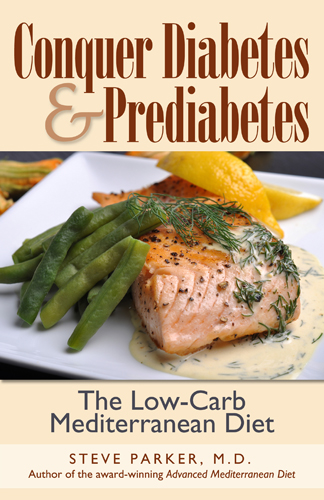









 Diabetic Mediterranean Diet