Category Archives: Stroke

Supplemental Omega-3 Fats’ Effect on Heart Disease, Stroke, Cancer, and Death: No Relationship In a General Population

Salmon is one the the cold-water fatty fish loaded with omega-3 fatty acids

Salmon is one the the cold-water fatty fish loaded with omega-3 fatty acids

I’ve been sitting on this research report a few years, waiting until I had time to dig into it. That time never came. The full report is free online (thanks, British Medical Journal!). I scanned the full paper to learn that nearly all the studies in this meta-analysis used fish oil supplements, not the cold-water fatty fish the I recommend my patients eat twice a week.

Here’s the abstract:

Objective: To review systematically the evidence for an effect of long chain and shorter chain omega 3 fatty acids on total mortality, cardiovascular events, and cancer.

Data sources: Electronic databases searched to February 2002; authors contacted and bibliographies of randomised controlled trials (RCTs) checked to locate studies.

Review methods Review of RCTs of omega 3 intake for 3 6 months in adults (with or without risk factors for cardiovascular disease) with data on a relevant outcome. Cohort studies that estimated omega 3 intake and related this to clinical outcome during at least 6 months were also included. Application of inclusion criteria, data extraction, and quality assessments were performed independently in duplicate.

Results: Of 15 159 titles and abstracts assessed, 48 RCTs (36 913 participants) and 41 cohort studies were analysed. The trial results were inconsistent. The pooled estimate showed no strong evidence of reduced risk of total mortality (relative risk 0.87, 95% confidence interval 0.73 to 1.03) or combined cardiovascular events (0.95, 0.82 to 1.12) in participants taking additional omega 3 fats. The few studies at low risk of bias were more consistent, but they showed no effect of omega 3 on total mortality (0.98, 0.70 to 1.36) or cardiovascular events (1.09, 0.87 to 1.37). When data from the subgroup of studies of long chain omega 3 fats were analysed separately, total mortality (0.86, 0.70 to 1.04; 138 events) and cardiovascular events (0.93, 0.79 to 1.11) were not clearly reduced. Neither RCTs nor cohort studies suggested increased risk of cancer with a higher intake of omega 3 (trials: 1.07, 0.88 to 1.30; cohort studies: 1.02, 0.87 to 1.19), but clinically important harm could not be excluded.

Conclusion: Long chain and shorter chain omega 3 fats do not have a clear effect on total mortality, combined cardiovascular events, or cancer.

Reference: Hooper, Lee et al. Risks and benefits of omega 3 fats for mortality, cardiovascular disease, and cancer: systematic review. BMJ  2006;332:752-760 (1 April), doi:10.1136/bmj.38755.366331.2F (published 24 March 2006).

3 Comments

Filed under coronary heart disease, Diabetes Complications, Fat in Diet, Fish, Heart Disease, Longevity, Stroke

Live Longer With The Mediterranean Diet Even If You Already Have Cardiovascular Disease

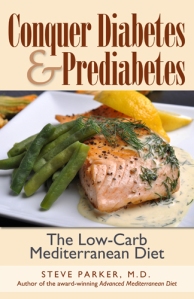
Conquer Diabetes and Prediabetes, Steve Parker MD

Olive oil and vinegar: prominent components of the Mediterranean diet

We’ve known for years that the Mediterranean diet helps prolong life and prevent cancer, heart attacks, type 2 diabetes, dementia, and strokes in folks who start out healthy.

What about patients with existing cardiovascular disease? I’m talking about history of heart attacks, strokes, angina, and coronary artery disease.

Yep. The Mediterranean diet helps them live longer, too.

Details of the study are at the American Journal of Clinical Nutrition. The research was done at Harvard.

Steve Parker, M.D.

2 Comments

Filed under coronary heart disease, Health Benefits, Heart Disease, Longevity, Mediterranean Diet, Stroke

Which Diseases Do Vegetables and Fruits Prevent?

Potential answers are in the American Journal of Clinical Nutrition (2012).  I quote:

For hypertension, coronary heart disease, and stroke, there is convincing evidence that increasing the consumption of vegetables and fruit reduces the risk of disease. There is probable evidence that the risk of cancer in general is inversely associated with the consumption of vegetables and fruit. In addition, there is possible evidence that an increased consumption of vegetables and fruit may prevent body weight gain. As overweight is the most important risk factor for type 2 diabetes mellitus, an increased consumption of vegetables and fruit therefore might indirectly reduces the incidence of type 2 diabetes mellitus. Independent of overweight, there is probable evidence that there is no influence of increased consumption on the risk of type 2 diabetes mellitus. There is possible evidence that increasing the consumption of vegetables and fruit lowers the risk of certain eye diseases, dementia and the risk of osteoporosis. Likewise, current data on asthma, chronic obstructive pulmonary disease, and rheumatoid arthritis indicate that an increase in vegetable and fruit consumption may contribute to the prevention of these diseases. For inflammatory bowel disease, glaucoma, and diabetic retinopathy, there was insufficient evidence regarding an association with the consumption of vegetables and fruit.

It bothers me that vegetables and fruits are lumped together: they’re not the same.

All of my diets—Advanced MediterraneanLow-Carb Mediterranean, and Ketogenic Mediterranean—provide plenty of fruits and vegetables.

4 Comments

Filed under cancer, Dementia, Fruits, Heart Disease, Stroke, Vegetables

Low-Carb Research Update

“What about that recent study in American Journal of Clinical Nutrition…?”

As much as possible, I base my nutrition and medical recommendations on science-based research published in the medical literature.  Medical textbooks can be very helpful, but they aren’t as up-to-date as the medical journals.

In the early 2000s, a flurry of research reports demonstrated that very-low-carb eating (as in Dr. Atkins New Diet Revolution) was safe and effective for short-term weight management and control of diabetes.  I was still concerned back then about the long-term safety of the high fat content of Atkins.  But 80 hours of literature review in 2009 allowed me to embrace low-carbohydrate eating as a logical and viable option for many of my patients.  The evidence convinced me that the high fat content (saturated or otherwise) of many low-carb diets was little to worry about over the long run.

By the way, have you noticed some of the celebrities jumping on the low-carb weight-management bandwagon lately?  Sharon Osbourne, Drew Carey, and Alec Baldwin, to name a few.

My primary nutrition interests are low-carb eating, the Mediterranean diet, and the paleo diet.  I’m careful to stay up-to-date with the pertinent scientific research.  I’d like to share with you some of the pertinent research findings of the last few years.

Low-Carb Diets

  • Low-carb diets reduce weight, reduce blood pressure, lower triglyceride levels (a healthy move), and raise HDL cholesterol (another good trend).  These improvements should help reduce your risk of heart disease.  (In the journal Obesity Reviews, 2012.)
  • Dietary fat, including saturated fat, is not a cause of vascular disease such as heart attacks and atherosclerosis (hardening of the arteries).  (Multiple research reports.)
  • If you’re overweight and replace two sugary drinks a day with diet soda or water, you’ll lose about four pounds over the next six months.  (American Journal of Clinical Nutrition, 2012.)
  • United States residents obtain 40% of total calories from grains and added sugars.  Most developed countries are similar.  Dr. Stephan Guyenet notes that U.S. sugar consumption increased steadily “…from 6.3 pounds [2.9 kg] per person per year in 1822 to 107.7 pounds [50 kg] per person in 1999.  Wrap your brain around this: in 1822 we ate the amount of added sugar in one 12-ounce can of soda every five days, while today we eat that much sugar every seven hours.”
  • A very-low-carb diet improves the memory of those with age-related mild cognitive impairment. Mild cognitive impairment is a precursor to dementia.  (University of Cincinnati, 2012.)
  • High-carbohydrate and sugar-rich diets greatly raise the risk of mild cognitive impairment in the elderly. (Mayo Clinic study published in the Journal of Alzheimers’ Disease, 2012.)
  • Compared to obese low-fat dieters, low-carb dieters lose twice as much fat weight.  (University of Cincinnati, 2011.)
  • Diets low in sugar and refined starches are linked to lower risk of age-related macular degeneration in women.  Macular degeneration is a major cause of blindness.  (University of Wisconsin, 2011.)
  • A ketogenic (very-low-carb) Mediterranean diet cures metabolic syndrome (Journal of Medicinal Food, 2011.)
  • For type 2 diabetics, replacing a daily muffin (high-carb) with two ounces (60 g) of nuts (low-carb) improves blood sugar control and reduces LDL cholesterol (the “bad” cholesterol). (Diabetes Care, 2011.)
  • For those afflicted with fatty liver, a low-carb diet beats a low-fat diet for management. (American Journal of Clinical Nutrition, 2011.)
  • For weight loss, the American Diabetes Association has endorsed low-carb (under 130 g/day) and Mediterranean diets, for use up to two years. (Diabetes Care, 2011.)
  • High-carbohydrate eating doubles the risk of heart disease (coronary artery disease) in women.  (Archives of Internal Medicine, 2010.)
  • One criticism of low-carb diets is that they may be high in protein, which in turn may cause bone thinning (osteoporosis).  A 2010 study shows this is not a problem, at least in women.  Men were not studied.  (American Journal of Clinical Nutrition.)
  • High-carbohydrate eating increases the risk of developing type 2 diabetes (American Journal of Clinical Nutrition, 2010.)
  • Obesity in U.S. children tripled from 1980 to 2000, rising to 17% of all children.  A low-carb, high-protein diet is safe and effective for obese adolescents.  (American Journal of Clinical Nutrition, 2010.)

Mediterranean Diet

The traditional Mediterranean diet is well established as a healthy way of eating despite being relatively high in carbohydrate: 50 to 60% of total calories.  It’s known to prolong life span while reducing rates of heart disease, cancer, strokes, diabetes, and dementia.  The Mediterranean diet is rich in fresh fruits, vegetables, nuts and seeds, olive oil, whole grain bread, fish, and judicious amounts of wine, while incorporating relatively little meat.  It deserves your serious consideration.  I keep abreast of the latest scientific literature on this diet.

  • Olive oil is linked to longer life span and reduced heart disease.  (American Journal of Clinical Nutrition, 2012.)
  • Olive oil is associated with reduced stroke risk.  (Neurology, 2012).
  • The Mediterranean diet reduces risk of sudden cardiac death in women.  (Journal of the American Medical Association, 2011.)
  • The Mediterranean diet is linked to fewer strokes visible by MRI scanning.  (Annals of Neurology, 2011.)
  • It reduces the symptoms of asthma in children.  (Journal of the American Dietetic Association, 2011.)
  • Compared to low-fat eating, it reduces the incidence of type 2 diabetes by 50% in middle-aged and older folks.  (Diabetes Care, 2010.)
  •  A review of all available well-designed studies on the Mediterranean diet confirms that it reduces risk of death, decreases heart disease, and reduces rates of cancer, dementia, Parkinson’s disease, stroke, and mild cognitive impairment.  (American Journal of Clinical Nutrition, 2010.)
  • It reduces the risk of breast cancer.  (American Journal of Clinical Nutrition, 2010.)
  • The Mediterranean diet reduces Alzheimer’s disease.   (New York residents, Archives of Neurology, 2010).
  • It slows the rate of age-related mental decline.  (Chicago residents, American Journal of Clinical Nutrition, 2010.)
  • In patients already diagnosed with heart disease, the Mediterranean diet prevents future heart-related events and preserves heart function.  (American Journal of Clinical Nutrition, 2010.)

Clearly, low-carb and Mediterranean-style eating have much to recommend them.  Low-carb eating is particularly useful for weight loss and management, and control of diabetes, prediabetes, and metabolic syndrome.  Long-term health effects of low-carb eating are less well established.  That’s where the Mediterranean diet shines.  That’s why I ask many of my patients to combine both approaches: low-carb and Mediterranean.  Note that several components of the Mediterranean diet are inherently low-carb: olive oil, nuts and seeds, fish, some wines, and many fruits and vegetables.  These items easily fit into a low-carb lifestyle and may yield the long-term health benefits of the Mediterranean diet.  If you’re interested, I’ve posted on the Internet a Low-Carb Mediterranean Diet that will get you started.

Steve Parker, M.D.

Disclaimer:  All matters regarding your health require supervision by a personal physician or other appropriate health professional familiar with your current health status.  Always consult your personal physician before making any dietary or exercise changes.

7 Comments

Filed under Carbohydrate, Fat in Diet, Health Benefits, Heart Disease, ketogenic diet, Mediterranean Diet, nuts, olive oil, Stroke, Vegetables, Weight Loss

Do You Really Need to Restrict Salt Consumption?

Unfairly demonized?

The American Council on  Science and Health has a brief review of the latest research on salt restriction, and it’s not supportive of population-wide sodium restriction.  On the other hand, salt-restriction proponents believe it would reduce strokes, heart attacks, heart failure, and premature death.  I’ve been a salt-restriction skeptic for a couple decades.

Remember, table salt molecules contain one sodium atom and one chloride atom.  Salt-restricted and low-sodium diets are usually designated by the amount of sodium, not salt.

That being said, I do believe some individuals have elevated blood pressure related to relatively high sodium intake.  This may apply to one of every five adults with high blood pressure.  To find out if you’re one of the five, you could go on a low-sodium diet—1.5 to 3 grams a day—for one or two months and see what it does to your blood pressure.  Get your personal physician’s blessing first.

Steve Parker, M.D.

4 Comments

Filed under Heart Disease, Longevity, Stroke

A Little Known Way to Reduce Your Stroke Risk Starting Today

Older adults with high olive oil consumption have a lower risk of stroke, according to French investigators.

Caprese salad: mozzarella cheese, basil, tomatoes, extra virgin olive oil

The Mediterranean diet, rich in olive oil, has long been linked to lower rates of stroke.  French researchers wondered if that might be related to higher olive oil consumption.  Triglyceride esters of oleic acid comprise the majority of olive oil, and oleic acid blood levels reflect olive oil consumption.

Have you heard of monounsaturated fatty acids?  Oleic acid is one.

Methodology

Over 7,000 older adults without history of stroke were surveyed with regards to olive oil consumption.  Oleic acid plasma levels were measured in over a thousand of the study participants.  Over the course of five years, 175 strokes occurred.

Compared with those who never used olive oil, those with the highest consumption had a 41% lower risk of stroke.  The researchers made adjustments for other dietary variables, age, physical activity, and body mass index.

In looking at the plasma oleic acid levels, those in the highest third of levels had 73% lower risk of stroke compared to those in the lowest third.

Comments

Results suggest that the olive oil in the Mediterranean diet  may help explain the diet’s protection against stroke.  The researchers didn’t suggest an amount of olive oil that would reduce stroke risk.  I suggest at least one or two tablespoons (15–30 ml) a day, on average.  Olive oil is a key component of the Low-Carb Mediterranean Diet and Advanced Mediterranean Diet.

Steve Parker, M.D.

Reference:  Samieri, C. et al.  Olive oil consumption, plasma oleic acid, and stroke incidence: the Three-City StudyNeurology, Published online before print June 15, 2011, doi: 10.1212/WNL.0b013e318220abeb

3 Comments

Filed under Health Benefits, Mediterranean Diet, Stroke

Heart Disease Death Rates For Diabetics Falling Fast

MedPage Today on May 22, 2012, reported a dramatic drop in cardiovascular death rates for folks with diabetes:

The death rate from cardiovascular disease in U.S. adults with diabetes fell 40% from 1997 to 2004, CDC and NIH researchers said.

And that’s not all:

Additionally, all-cause mortality in diabetic participants dropped by 23% (95% CI 10% to 35%), Gregg and colleagues reported, from 20.3 to 15.1 per 1,000 person-years after adjusting for age.

The researchers identified several factors that likely account for the improved life expectancy for diabetic Americans.

Among them was the “steady improvements in quality and organization of care, self-management behaviors, and medical treatments, including pharmacological treatment of hyperlipidemia and hypertension,” Gregg and colleagues suggested.

The MedPage Today article didn’t define cardiovascular disease.  It typically includes heart attacks, heart failure, strokes, aortic aneurysms, among a few others.

Hope that cheers you up!

Steve Parker, M.D. 

PS: Here’s the original research article in the current issue of Diabetes Care.

6 Comments

Filed under coronary heart disease, Diabetes Complications, Heart Disease, Stroke

Meat and Mortality

Red meat and processed meat consumption are associated with “modest” increases in overall mortality and deaths from cancer and cardiovascular disease, according to National Institutes of Health researchers.  This goes for both sexes.

Data are from the huge NIH-AARP Diet and Heart Study, a prospective cohort trial involving  over 550,000 U.S. men and women aged 50-71 at the time of enrollment.  Food consumption was determined by questionnaire.  Over the course of 10 years’ follow-up, over 65,000 people died.  Investigators looked to see if causes of death were related to meat consumption.

What do they mean by red meat, processed meat, and white meat?

Red meat:  all types of beef and pork (wasn’t there a U.S. ad campaign calling pork “the other white meat”?}

White meat:  chicken, turkey, fish

Processed meat:  bacon, red meat sausage, poultry sausage, luncheon meats (red and white), cold cuts (red and white), ham, regular hotdogs, low-fat poultry hotdogs, etc.

What did they find?

See the first paragraph above.

Studies like this typically look at the folks who ate the very most of a given type of food, those who ate the very least, then compare differences in deaths between the two groups.  That’s what they did here, too.  For instance, the people who ate the very most red meat ate 63 grams per 1000 caories of food daily.  Those who ate the least ate 10 grams per 1000 cal of food daily.  That’s about a six-fold difference.  Many folks eat 2000 calories a day.  The high red meat eaters on 2000 cals a day would eat 123 grams, or 4.4 ounces of red meat.  The low red meat eaters on 2000 cals/day ate 20 grams, or 0.7 ounces.

The heavy consumers of processed meats ate 23 grams per 1000 cal of food daily.  The lowest consumers ate 1.6 grams per 1000 cal.

Comparing these two quintiles of high and low consumption of red and processed meats, overall mortality was 31-36% higher for the heavy red meat eaters, and 16-25% higher for the heavy processed meat eaters.  (The higher numbers in the ranges are for women.)  Similar numbers were found when looking at cancer deaths and cardiovascular deaths (heart attacks, strokes, ruptured aneurysms, etc).

It’s not proof that heavy consumption of red and processed meats is detrimental to longevity, but it’s suggestive.  The “Discussion” section of the article reviews potential physiological mechanisms for premature death.

The researchers called these differences “modest.”  I guess they use “modest” since most people eat somewhere between these extreme quintiles.  The numbers incline me  to stay out of that “highest red and processed meat consumer” category, and lean more towards white meat and fish.

The study at hand is from 2009.  Another research report in Archives of Internal Medicine this month supported similar conclusions. (Click for Zoë Harcombe’s critique of the study.)

The traditional Mediterranean diet and Advanced Mediterranean Diet are naturally low in red and processed meats, but not designed specifically for folks with diabetes.

Steve Parker, M.D. 

Reference:  Sinha, Rashmi, et al.  Meat intake and mortality: a prospective study of over half a million peopleArchives of Internal Medicine, 169 (2009): 562-571.

4 Comments

Filed under cancer, coronary heart disease, Stroke

Does Olive Oil Protect Against Stroke?

Older adults with high olive oil consumption have a lower risk of stroke, according to French investigators.

The Mediterranean diet, rich in olive oil, has long been linked to lower rates of stroke and other health benefits.  The French researchers wondered stroke prevention might be attibutable to higher olive oil consumption.  Triglyceride esters of oleic acid comprise the majority of olive oil, and oleic acid blood levels reflect olive oil consumption. 

Have you heard of monounsaturated fatty acids?  Oleic acid is one.

Methodology

Over 7,000 older adults without history of stroke were surveyed with regards to olive oil consumption.  Oleic acid plasma levels were measured in over a thousand of the study participants.  Over the course of five years, 175 strokes occurred.

Compared with those who never used olive oil, those with the highest consumption had a 41% lower risk of stroke.  The researchers made adjustments for other dietary variables, age, physical activity, and body mass index.

In looking at the plasma oleic acid levels, those in the highest third of levels had 73% lower risk of stroke compared to those in the lowest third.

Comments

Results suggest that the olive oil in the Mediterranean diet  may help explain the diet’s protection against stroke.  They also support my inclusion of olive oil in the Low-Carb Mediterranean Diet and Advanced Mediterranean Diet.

Steve Parker, M.D.

Reference:  Samieri, C. et al.  Olive oil consumption, plasma oleic acid, and stroke incidence: the Three-City StudyNeurology, Published online before print June 15, 2011, doi: 10.1212/WNL.0b013e318220abeb

3 Comments

Filed under Health Benefits, Mediterranean Diet, olive oil, Stroke

Heart and Stroke Patients: Avoid Weight-Loss Drug Sibutramine (Meridia)

The weight-loss drug sibutramine (Meridia) should be withdrawn from the U.S. market, suggests an editorialist in the September 2, 2010, New England Journal of Medicine.  Based on a clinical study in the same issue, it’s more accurate to conclude that sibutramine shouldn’t be prescribed for people who aren’t supposed to be taking it in the first place.

Sibutramine is sold in the U.S. as Meridia and has been available since 1997.  Judging from the patients I run across, it’s not a very popular drug.  Why not?  It’s expensive and most people don’t lose much weight.

The recent multi-continent SCOUT trial enrolled 9,800 male and female study subjects at least 55 years old (average age 63) who had either:

  1. 1) History of cardiovascular disease (here defined as coronary artery disease, stroke, or peripheral artery disease)
  2. 2) Type 2 diabetes plus one or more of the following: high blood pressure, adverse cholesterol levels, current smoking, or diabetic kidney disease.
  3. Or both of the above (which ended up being 60% of the study population)`.

Here’s a problem from the get-go (“git-go” if you’re from southern U.S.).  For years, Meridia’s manufacturer and the U.S. Food and Drug Administration have told doctors they shouldn’t use the drug in patients with history of cardiovascular disease.  It’s not the scary “black box warning,” but it’s clearly in the package insert of full prescribing information.

Half the subjects were randomized to sibutramine 10 mg/day and the other half to placebo.  All were instructed in diet and exercise aiming for a 600 calorie per day energy deficit.  They should lose about a pound a week if they followed the program.  Average follow-up was 3.4 years.

What Did the Researchers Find?

Forty percent of both drug and placebo users dropped out of the study, a very high rate.

As measured at one year, the sibutramine-users averaged a weight loss of 9.5 pounds (4.3 kg), the majority of which was in the first 6 weeks.  After the first year, they tended to regain a little weight, but kept most of it off.

Death rates were the same for sibutramine and placebo.

Sibutramine users with a history of cardiovascular disease had a 16% increase in non-fatal heart attack and stroke compared to placebo.  To “cause” one heart attack or stroke in a person with known cardiovascular disease, you would have to treat 52 such patients.

Folks in the “diabetes plus risk factor(s)” group who took sibutramine had no increased risk of heart attack or stroke.

So What?

Average weight loss with sibutramine isn’t much.  Nothing new there.  [Your mileage may vary.]

People with cardiovascular disease shouldn’t take sibutramine.  Nothing new there either.

Steve Parker, M.D.

Reference:  James, W. Philip, et al.  Effect of sibutramine on cardiovascular outcomes in overweight and obese subjects.  New England Journal of Medicine, 363 (2010): 905-917.

Comments Off on Heart and Stroke Patients: Avoid Weight-Loss Drug Sibutramine (Meridia)

Filed under coronary heart disease, Drugs for Diabetes, Overweight and Obesity, Stroke, Weight Loss