Dr. Briffa on Low-Carb Diets For PWDs (People With Diabetes)

Diabetes UK is a prominent charity in Britain. It recommends that diabetics eat generous servings of carbohydrates: 5–14 daily servings of lower-glycemic-index items. Dr. Briffa strongly disagrees:

I can categorically state here that when individuals with diabetes cut back on carbohydrates, they almost always see significant improvement in their blood sugar control. They usually lose weight, and see improvements in markers of disease too. I’m most certainly not the only person to have noticed this. Just yesterday I met a most wonderful general practitioner who has come to the low-carb approach quite late in his career, but has used it to utterly transform the health of his patients. He showed me a variety of graphs from several patients pre- and post-adoption of a lower carbohydrate diet. He relayed a few stunning anecdotes too of people who believe eating a lower-carb diet has given them their health and their lives back.

***

I won’t mince my words and state here that I believe these recommendations are utterly mad. My experience tells me they will generally just entrench diabetics in their condition and the need for medical care. Compared to a lower-carbohydrate diet, the regime advocated by Diabetes UK stands to worsen blood sugar control and increase the need for medication and risk of complications. If Diabetes UK is serious about helping diabetics, I suggest it starts by ceasing to recommend a diet that, in my view, is utterly unsuitable for diabetics.


Comments Off on Dr. Briffa on Low-Carb Diets For PWDs (People With Diabetes)

Filed under Carbohydrate

Very Low-Carb Diet Beats ADA Diet in Type 2 Diabetes According to New Study

Compared to a mildly carbohydrate-restricted American Diabetes Association diet, a very-low-carbohydrate ketogenic diet was more effective at controlling type 2 diabetes and prediabetes, according to University of California San Francisco researchers.

Some non-starchy low-carb vegetables

Some non-starchy low-carb vegetables

Details, please!

Thirty-four overweight and obese type 2 diabetics (30) and pre diabetics (4) were randomly assigned to one of the two diets:

  1. MCCR: American Diabetes Association-compliant medium-carbohydrate, low-fat, calorie-resticted carb-counting diet. The goals were about 165 grams of net carbs daily, counting carbohydrates, an effort to lose weight by eating 500 calories/day less than needed for maintenance, and 45–50% of total calories from carbohydrate. Protein gram intake was to remain same as baseline. (Note that most Americans eat 250–300 grams of carb daily.)
  2. LCK: A very-low-carbohydrate, high-fat, non-calorie-restricted diet aiming for nutritional ketosis. It was Atkins-style, under 50 grams of net carbs daily (suggested range of 20–50 g). Carbs were mostly from non-starchy low-glycemic-index vegetables. Protein gram intake was to remain same as baseline.

Baseline participant characteristics:

  • average weight 100 kg (220 lb)
  • 25 of 34 were women
  • average age 60
  • none were on insulin; a quarter were on no diabetes drugs at all
  • most were obese and had high blood pressure
  • average hemoglobin A1c was about 6.8%
  • seven out of 10 were white

Participants followed their diets for three months and attended 13 two-hour weekly classes. Very few dropped out of the study.

Results

Average hemoglobin dropped 0.6% in the LCK group compared to no change in the MCCR cohort.

A hemoglobin A1c drop of 0.5% or greater is considered clinically significant. Nine in the LCK group achieved this, compared to four in the MCCR.

The LCK group lost an average of 5.5 kg (12 lb) compared to 2.6 kg (6 lb) in the MCCR. The difference was not statistically significant, but close (p = 0.09)

44% in the LCK group were able to stop one or more diabetes drugs, compared to only 11 % in the other group

31% in the LCK cohort were able to drop their sulfonylurea, compared to only 5% in the MCCR group.

By food recall surveys, both groups reported lower total daily caloric intake compared to baseline. The low-carbers ended up with 58% of total calories being from fat, a number achieved by reducing carbohydrates and total calories and keeping protein the same. They didn’t seem to increase their total fat gram intake;

The low-carbers apparently reduced daily carbs to an average of 58 grams (the goal was 20-50 grams).

There were no differences between both groups in terms of C-reactive protein (CRP), lipids, insulin levels, or insulin resistance (HOMA2-IR). Both groups reduced their CRP, a measure of inflammation.

LCK dieters apparently didn’t suffer at all from the “induction flu” seen with many ketogenic diets. They reported less heartburn, less aches and pains, but more constipation.

Hypoglycemia was not a problem.

If I recall correctly, the MCCR group’s baseline carb grams were around 225 g.

Bottom Line

Very-low-carb diets help control type 2 diabetes, help with weight loss, and reduce the need for diabetes drugs. An absolute drop of 0.6% in hemoglobin A1c doesn’t sound like much, translating to blood sugars lower by only 15–20 mg/dl (0.8–1 mmol/l). But remember the comparator diet in this study was already mildy to moderately carbohydrate-restricted. At least half of the type 2 diabetics I meet still tell my they don’t watch their carb intake, which usually means they’re eating around 250–300 grams a day. If they cut down to 58 grams, they most likely will see more than a 0.6% drop in hemoglobin A1c after switching to a very-low-carb diet.

This is a small study, so it may not be reproducible in larger clinical trials and other patient populations. Results are consistent with several other similar studies I’ve seen, however.

Steve Parker, M.D.

Reference: Saslow, Laura, et al (including Stephen Phinney). A Randomized Pilot Trial of a Moderate Carbohydrate Diet Compared to a Very Low Carbohydrate Diet in Overweight or Obese Individuals with Type 2 Diabetes Mellitus or PrediabetesPLoS One. 2014; 9(4): e91027. Published online Apr 9, 2014. doi: 10.1371/journal.pone.0091027     PMCID: PMC3981696

PS: When I use “average” above, “mean” is often a more accurate word, but I don’t want to have to explain the differences at this time.

PPS: Carbsane Evelyn analyzed this study in greater detail that I did and came to different conclusions. Worth a read if you have an extra 15 minutes.


3 Comments

Filed under Carbohydrate, Glycemic Index and Load, ketogenic diet, Prediabetes

Can You Help a Doc Out?


"I may not make wine with all of my grapes, but when I do, it's red wine."

“I may not make wine with all of my grapes, but when I do, it’s red wine.”

A major U.S. women’s magazine is considering doing an article on my Low-Carb Mediterranean Diet. The writer would like to be able to interview folks (by phone) who have done the diet and had success with it. The article is about weight  loss, however, not control of diabetes. Before and after pics would be icing on the cake but are not necessary.

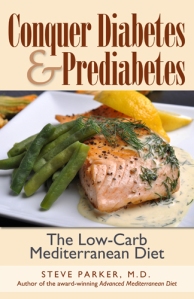
If you’ve read Control Diabetes and Prediabetes: The Low-Carb Mediterrean Diet, or The Advanced Mediterranean Diet (2nd edition), or KMD: Ketogenic Mediterranean Diet, then you’ve seen the Low-Carb Mediterranean Diet. Advanced Mediterranean Diet also has a traditional portion/calorie-controlled diet. Control Diabetes and KMD both start with the ketogenic Mediterranean diet (30 carb grams/day) and than add more carbohydrates as tolerated by the individual, resulting in the Low-Carb Mediterranean Diet. Most folks following the Low-Carb Mediterranean Diet will max out carb consumption at 80-100 grams a day.

I’m terrible at marketing myself and my ideas, so I’ve not kept track of individual success stories from the past.

If you’d be willing to share your success story, please email me with a few of the details at steveparkermd AT gmail.com and I will keep your name on file in case the magazine decides to run with the article. I’ll not divulge your information to anyone else. If you share with me, I’ll assume I have your permission to send your story and e-mail address to the writer.

Thanks for your consideration.

Steve Parker, M.D.

Comments Off on Can You Help a Doc Out?

Filed under Shameless Self-Promotion

Chromium No Help With Elevated Blood Sugar

ScienceDaily has the details.

Of course, if you’re taking a doctor-recommended chromium supplement for a true deficiency, don’t stop. In three decades of practicing medicine, I’ve never seen a case of chromium deficiency. Granted, I rarely look for it. 

h/t Diane Fennell

Comments Off on Chromium No Help With Elevated Blood Sugar

Filed under Uncategorized

Live Longer With The Mediterranean Diet Even If You Already Have Cardiovascular Disease

Conquer Diabetes and Prediabetes, Steve Parker MD

Olive oil and vinegar: prominent components of the Mediterranean diet

We’ve known for years that the Mediterranean diet helps prolong life and prevent cancer, heart attacks, type 2 diabetes, dementia, and strokes in folks who start out healthy.

What about patients with existing cardiovascular disease? I’m talking about history of heart attacks, strokes, angina, and coronary artery disease.

Yep. The Mediterranean diet helps them live longer, too.

Details of the study are at the American Journal of Clinical Nutrition. The research was done at Harvard.

Steve Parker, M.D.

2 Comments

Filed under coronary heart disease, Health Benefits, Heart Disease, Longevity, Mediterranean Diet, Stroke

Do Low-Carb Diets Help Overweight Kids?

DietDoctor Andreas Eenfeldt has located three studies that answer in the affirmative. Click through to his blog.

Steve Parker, M.D.

Comments Off on Do Low-Carb Diets Help Overweight Kids?

Filed under Overweight and Obesity

Heart Attack and Amputation Rates Much Improved in Diabetics

MedPageToday has the details. This jibes with my experience over the last 30 years. A quote:

An analysis of national data found that rates of myocardial infarction (MI) in diabetic patients dropped about 68%, and amputation rates were halved between 1990 and 2010, Edward Gregg, PhD, of the CDC in Atlanta, and colleagues reported in the April 17 issue of the New England Journal of Medicine.

Strokes and deaths from hyperglycemic crisis also fell dramatically.

The number of adults reporting a diagnosis of diabetes more than tripled during the study period.

Steve Parker, M.D.

2 Comments

Filed under coronary heart disease, Diabetes Complications

One More Drug for Type 2 Diabetes: Albiglutide

The U.S. Food and Drug Administration approved albiglutide for treatment of adult type 2 diabetes in mid-April, 2014. It will be sold in the U.S. as Tanzeum. It’s a once-a-week subcutaneous injection.

Albiglutide is a GLP-1 receptor agonist, joining exenatide and liraglutide in that class.

It’s not a first-line drug for diabetes. In clinical studies, it’s been used alone and with metformin, glimiperide (a sulfonylurea), pioglitazone, and insulin.

The most frequent side effects have been upper respiratory infections, diarrhea, nausea, and injection site reactions.

Steve Parker, M.D.

Comments Off on One More Drug for Type 2 Diabetes: Albiglutide

Filed under Drugs for Diabetes

Olympian Teeth Suffering From High Carb Consumption

 BBC has the story:

The beaming smiles of gold-medal winners Usain Bolt, Jessica Ennis-Hill and Mo Farah are some of the defining memories of London 2012.

But a team at University College London says many competitors had dental problems.

“Our data and other studies suggest that, for a similar age profile, the oral health of athletes is poor. It’s quite striking,” said lead researcher Prof Ian Needleman.

He said eating large amounts of carbohydrates regularly, including sugary energy drinks, was damaging teeth.

Impaired immune system function associated with hard training may also play a role.

Many, if not most, high-level athletes think high carbohydrate consumption is necessary for optimal performance. They should know better than I. For their sake, I hope meticulous oral care—brushing, flossing, professional cleaning—helps preserve dental health.

Super athletes may not be as healthy as you think. They push their bodies so hard that they move beyond health into injury and chronic inflammation.

Steve Parker, M.D.

tooth structure, paleo diet, caries, enamel

Cross-section of a tooth

Comments Off on Olympian Teeth Suffering From High Carb Consumption

Filed under Uncategorized

Book Review: Zest For Life

A few years ago I read and reviewed Zest For Life: The Mediterranean Anti-Cancer Diet, by Conner Middelmann-Whitney, published in 2011. Per Amazon.com’s rating system, I give it five stars (I love it).

♦   ♦   ♦

The lifetime risk of developing invasive cancer in the U.S. is four in ten: a little higher for men, a little lower for women.  Those are scary odds.  Cancer is second only to heart disease as a cause of death in western societies.  The Mediterranean diet has a well established track record of protecting against cancers of the prostate, colon/rectum, uterus, and breast.  Preliminary data suggest protection against melanoma and stomach cancer, too.  I’m not aware of any other way of eating that can make similar claims.

So it makes great sense to spread the word on how to eat Mediterranean-style, to lower your risk of developing cancer.  Such is the goal of Zest For Life’s author.  The Mediterranean diet is mostly, although by no means exclusively, plant-based.  It encourages consumption of natural, minimally processed, locally grown foods.  Generally, it’s rich in vegetables, fruits, legumes, olive oil, whole grains, red wine, and nuts. It’s low to moderate in meat, chicken, fish, eggs, and dairy products (mostly cheese and yogurt).

Note that one of the four longevity hot spots featured in Dan Buettner’s Blue Zones was Mediterranean: Sardinia.  All four Blue Zones were characterized by plant-based diets of minimally processed, locally grown foods. (I argue that Okinawa and the Nicoya Peninsula dwellers ate little meat simply due to economic factors.)

Proper diet won’t prevent all cancer, but perhaps 10-20% of common cancer cases, such as prostate, breast, colorectal, and uterine cancer.  A natural, nutrient-rich, mostly plant-based diet seems to bolster our defenses against cancer.

Ms. Middelmann-Whitney is no wacko claiming you can cure your cancer with the right diet modifications.  She writes, “…I do not advocate food as a cancer treatment once the disease has declared itself….”

She never brings it up herself, but I detect a streak of paleo diet advocacy in her.  Several of her references are from Loren Cordain, one of the gurus of the modern paleo diet movement.

She also mentions the ideas of Michael Pollan very favorably.

She’s not as high on whole grains as most of the other current nutrition writers.  She points out that, calorie for calorie, whole grains are not as nutrient-rich as vegetables and fruits.  Speaking of which, she notes that veggies generally have more nutrients than fruits. Furthermore, she says, grain-based flours probably contribute to overweight and obesity. She suggests that many people eat too many grains and would benefit by substituting more nutrient-rich foods, such as veggies and fruits.

Some interesting things I learned were 1) the 10 most dangerous foods to eat while driving, 2) the significance of organized religion in limiting meat consumption in some Mediterranean regions, 3) we probably eat too many omega-6 fatty acids, moving the omega-6/omega-3 ratio away from the ideal of 2:1 or 3:1 (another paleo diet principle), 4) one reason nitrites are added to processed meats is to create a pleasing red color (they impair bacterial growth, too), 5) fresh herbs are better added towards the end of cooking, whereas dried herbs can be added earlier, 6) 57% of calories in western societies are largely “empty calories:” refined sugar, flour, and industrially processed vegetable oils, and 7) refined sugar consumption in the U.S. was 11 lb (5 kg) in the 1830s, rising to 155 lb (70 kg) by 2000.

Any problems with the book?  The font size is a bit small for me; if that worries you, get the Kindle edition and choose your size.  She mentions that omega-6 and omega-3 fatty acids are “essential” fats. I bet she meant to say specifically that linolenic and linoleic fatty acids are essential (our bodies can’t make them); linolenic happens to be an omega-3, linoleic is an omega-6.  Reference #8 in chapter three is missing.  She states that red and processed meats cause cancer (the studies are inconclusive).  I’m not sure that cooking in or with polyunsaturated plant oils causes formation of free radicals that we need to worry about.

As would be expected, the author and I don’t see eye to eye on everything.  For example, she worries about bisphenol-A, pesticide residue, saturated fat, excessive red meat consumption, and strongly prefers pastured beef and free-range chickens and eggs.  I don’t worry much.  She also subscribes to the popular “precautionary principle.”

The author shares over 150 recipes to get you started on your road to cancer prevention.  I easily found 15 I want to try.  She covers all the bases on shopping for food, cooking, outfitting a basic kitchen, dining out, shopping on a strict budget, etc.  Highly practical for beginning cooks.  Numerous scientific references are listed for you skeptics.

I recommend this book to all adults, particularly for those with a strong family history of cancer.  But following the author’s recommendations would do more than lower your risk of cancer.  You’d likely have a longer lifespan, lose some excess fat weight,  and lower your risk of type 2 diabetes, dementia, heart disease, stroke, and vision loss from macular degeneration.  Particularly compared to the standard American diet.

Steve Parker, M.D.

Disclosure: The author arranged a free copy of the book for me, otherwise I recieved nothing of value for writing this review.


Comments Off on Book Review: Zest For Life

Filed under Book Reviews