JACC has the details. Sitagliptin is a DPP-4 inhibitor used to treat type 2 diabetes. It’s sold in the U.S. as Januvia. Note that the alleged higher risk of heart failure is in patients who had a history of prior heart failure. Research findings like this are not always dependable or reproducible. It bears watching, especially if you’re a heart patient.
Sitagliptin May Increase Risk of Heart Failure
Comments Off on Sitagliptin May Increase Risk of Heart Failure
Filed under Drugs for Diabetes
Multinational Study Suggests Insulin Pump Better Than Multiple Daily Injections for Inadequatedly-Controlled Type 2 Diabetes
Lancet has the details. I’ve only read the abstract, so don’t know much about the actual research. Study subjects were sub-optimally controlled (HgbA1c of 8-12%) on multiple daily injections; that’s why they were considered for pump therapy. They were randomized to pump or continued multiple daily injections. What I can’t tell – and it matters – is whether the multiple injection group underwent changes in their management or whether they were told to “just keep doing what your were doing” (which wasn’t working well).
Comments Off on Multinational Study Suggests Insulin Pump Better Than Multiple Daily Injections for Inadequatedly-Controlled Type 2 Diabetes
Filed under Drugs for Diabetes
Metformin Works Twice as Well in Blacks as Whites
Diabetes Self-Management has some of the details.
The implication is that the genetically determined physiology of black diabetics is different from whites. There could be other explanations, admittedly.
Here’s why I bring this to your attention. You don’t see me review many scientific articles involving mice, rats, pigs, or rabbits. I take care of human patients. I suspect there are too many genetic differences between us and them that clinically pertinent studies are rare. If you read my blogs carefully, you’ll also note I often hesitate to generalize clinical study results from one ethnic group to others. The different black/white responses to metformin validates my approach.
Type 2 diabetes in whites and blacks may not be the same disease, and it could be different in Asians, Australian aborigines, and North American Native Americans.
You may also be starting to understand why there’s so much confusion about which diabetic drugs are the best. We have 12 different classes of drugs now; what’s best for me may not be best for you.
Steve Parker, M.D.
Comments Off on Metformin Works Twice as Well in Blacks as Whites
Filed under Uncategorized
QOTD: Cicero on Food, Drink and the Mind
“ We cannot employ the mind to advantage when we are filled with excessive food and drink. ”
— Cicero
Comments Off on QOTD: Cicero on Food, Drink and the Mind
Filed under Quote of the Day
A New Drug for Diabetes: Afrezza
Well, it’s not really new. It’s our old friend insulin, soon to be available via inhalation with the brand name Afrezza. The U.S. Food and Drug Administration approved it in July, 2014. Click for the package insert.
Who Can Use It?
Adults with either type 1 or 2 diabetes.
Who Should Avoid It Or Not Use It?
- those with chronic lung disease such as asthma or chronic obstructive lung disease (COPD)
- smokers
- pregnant or lactating women
- those in diabetic ketoacidosis (DKA)
- users who see a significant deterioration in lung function over time
Common Side Effects:
Hypoglycemia, cough, throat pain.
What’s the Dose?
It comes in 4 and 8 unit cartridges. See the package insert for dosing details. Afrezza is a rapid-acting insulin taken at the start of meals, so you’re looking at two or three doses a day. Type 1 diabetics still need to take a basal (long-acting) insulin once or twice daily. As far as I can tell, the type 2 diabetics in the pre-approval clinical studies were all taking one or more oral diabetic drugs in addition to the Afrezza; the inhaled insulin was an add-on drug. The average time to maximum effect of the drug is 50 minutes with the 8 unit dose; blood levels of insulin are back to baseline after three hours.
Anything Else Interesting About It?
The manufacturer recommends a test of lung function before starting the drug, to identify folks with lung disease who shouldn’t inhale insulin. The test is called spirometry or FEV-1 (forced expiratory volume in 1 second). Moreover, spirometry should be repeated six months after start of the drug, then yearly thereafter.
Another form of inhaled insulin—Exubera—was on the U.S. market in 2006 and discontinued by the manufacturer the next year. The problem may have been poor sales or a concern about lung cancer.
You can’t get it at your pharmacy yet. Maybe later this year or the next.
Comments Off on A New Drug for Diabetes: Afrezza
Filed under Drugs for Diabetes
Recipe: Chicken Fafita Wraps
My earliest recollection of fajitas is from Austin, Texas, in 1981. I had just moved there from Oklahoma City to start my internship and residency in Internal Medicine. Back then fajitas were made with skirt steak, the diaphragm of a cow or steer. It was considered a cheap low-quality cut of meat. It’s not so cheap these days. You can also make fajitas with chicken. The contents of a traditional fajita are wrapped in a tortilla usually made with flour. To avoid blood sugar toxic blood sugar spikes, we’ll skip the tortilla. Use lettuce as a wrapper if you wish.
I wonder if the El Azteca Restaurant in Austin is still in business. Best Mexican food I ever had. I think it was on 6th Street or so, about 3/4 mile east of I-35. Good times.
By the way, the j in fajita is pronounced “h.” Accent on second syllable. “Fuh-HEET-uh.”
Today we’re using chicken and making four servings
Ingredients:
1 lb (454 kg) chicken breast, raw, boneless and skinless, cut in strips about 1/4-inch wide (you can often buy it this way)
7 oz onion, raw, cut in long crescent shapes about a 1/4-inch wide (0.6 cm)
6 oz (170 g) bell pepper, raw, cut in long strips roughly a 1/4-inch wide (these are also called sweet peppers; a combination of the red and green ones is eye-pleasing)
2 tbsp (30 ml) olive oil
5 or 6 oz (155 g) tomato, raw, cut in long strips
1 tsp (5 ml) salt
1/2 tsp (2.5 ml) pepper
1/2 tsp (2.5 ml) chili powder
1 tsp (5 ml) parsley flakes
1/2 tsp (2.5 ml) oregano leaves
1 pinch of cumin
1/2 tsp (2.5 ml) paprika
(Optional: You could replace all these spices with a 1-oz (28 g) pack of Lawry’s Chicken Fajitas Spices & Seasoning. The sodium and potassium values below would be different.)
1/3 cup (80 ml) water
16 oz (454 g) lettuce (e.g., iceberg, romaine, or bibb)
4 oz (113 g) walnuts
4 pears, small (about 1/3 lb or 150 g each))
Instructions:
Add the onions, peppers, and 1 tbsp (15 ml) olive oil to a 12-inch (30 cm) skillet and cook at medium-high heat until tender, stirring occasionally. This’ll take about 10 minutes. Set the skillet contents aside.
In the same pan, add 1 tbsp (15 ml) olive oil and the chicken and cook at medium to medium-high heat, stirring frequently, until chicken is thoroughly cooked. For me, this cooked quicker than the vegetables. But don’t overcook or the chicken will get tough. Then add the water and all the spices. Bring to a boil while stirring occasionally, then simmer on low heat a few minutes. This is your fajita filling.
My original plan was to make “fajita wraps,” wrapping the cooked fajitas into a large leaf of iceberg lettuce. This was pretty messy, especially since I love the sauce in the bottom of the pan. I tried two leafs as a base: still messy. Finally I just made a bed of lettuce (4 oz) and loaded the fajita concoction right on top. Mess gone. Try a different lettuce? Skip the lettuce entirely and you can reduce digestible carb count in each serving by 2 grams.
Enjoy the walnuts and pear with your meal.
Leftovers taste just as good as fresh-cooked, perhaps even better.
I have another fajita recipe using skirt steak marinated in commercial Zesty Italian Dressing in the refrigerator overnight or for at least four hours. Grill it over coals outside. Yum! I don’t recall whether I added lemon juice to the marinade or squirted it on the meat just before serving. You would just cook the onions and peppers on a pan on the stove as above, with salt and pepper to taste. Garnish with a margarita and I’ll make you an honorary Texan.
Number of servings: 4
Serving size: A cup (240 ml) of the fajita mixture, 4 oz (113 g) lettuce, 1 oz (28 g) walnuts, 1 small pear. One cup makes two lettuce wraps.
Nutritional Analysis Per Serving:
48% fat
26% carbohydrate
26% protein
Calories: 514
37 g carbohydrate
10 g fiber grams
27 g digestible carbohydrate (25 g if you skip the lettuce)
928 mg sodium
904 mg potassium
Prominent features: Rich in protein, vitamin B6, vitamin B12, vitamin C,copper, iron, manganese, niacin, phosphorus, and selenium.
Filed under Recipes, Uncategorized
T1 and T2 Diabetes Are Both Rising in U.S. Youth
Between 2001 and 2009, the prevalence of type 1 diabetes and type 2 diabetes increased by 21% and 31%, respectively.
Reference: F. Bruder Stapleton, MD Reviewing Dabelea D et al., Journal of the American Medical Association 2014 May 7; 311:1778
Comments Off on T1 and T2 Diabetes Are Both Rising in U.S. Youth
June 18, 2014 · 11:26 AMDo Pesticides Cause Type 1 Diabetes?
Maybe, according to a study done in Egypt.
“From the present findings, there is an observed strong association between
some types of pesticides (malathion, lindane, p.p.DDE, o.p.DDD, endrin and
p.p.DDA) and the risk of occurrence of childhood diabetes in relation to
the control non-diabetic group. To the best of our knowledge, this the
first study investigating the association between type 1 diabetes in
children and exposure to pesticides.”Reference: El-Morsi DA, Rahman RHA, Abou-Arab AAK. Pesticides Residues in Egyptian
Diabetic Children: A Preliminary Study. J Clinic Toxicol. 2012;2:138.Free full text: http://omicsonline.org/pesticides-residues-in-egyptian-diabetic-children-a-preliminary-study-2161-0495.1000138.pdf
Comments Off on Do Pesticides Cause Type 1 Diabetes?
Filed under Uncategorized
Why Do I Recommend Nuts to All My Patients?

Nuts with the lowest omega-6/omega-3 fatty acid ratios may be the healthiest. In other words, increase your omega-3s and decrease omega-6s.
Conner Middelmann-Whitney explains in her recent post at Psychology Today. In a nutshell, they are linked to longer life and better health. For example:
In the largest study of its kind, Harvard scientists found that people who ate a handful of nuts every day were 20% less likely to die from any cause over a 30-year period than those who didn’t consume nuts. The study also found that regular nut-eaters were leaner than those who didn’t eat nuts, a finding that should calm any fears that eating nuts will make you gain weight.
The report also looked at the protective effect on specific causes of death. “The most obvious benefit was a reduction of 29% in deaths from heart disease—the major killer of people in America,” according to Charles S. Fuchs, director of the Gastrointestinal Cancer Treatment Center at Dana-Farber, the senior author of the report and a professor of medicine at Harvard Medical School. “But we also saw a significant reduction—11% —in the risk of dying from cancer,” added Fuchs.
Nuts are integral to my Advanced Mediterranean Diet, Low-Carb Mediterranean Diet, Paleobetic Diet, and Ketogenic Mediterranean Diet.
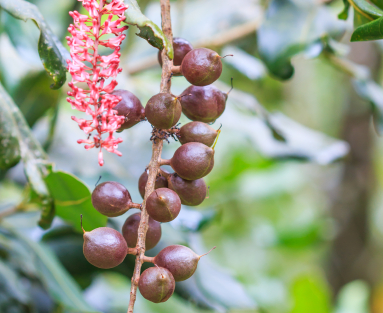
Walnuts seem to have the lowest omega-6/omega-3 fatty acid ratio of all the common nuts. That may make them the healthiest nut. The jury is still out. Macadamia nuts also have a good ratio. Paleo dieters focus on cutting out omega-6s and increasing omega-3s. Julianne Taylor has a great post on how to do that with a variety of foods, not just nuts.
Filed under cancer, coronary heart disease, Heart Disease, Longevity, nuts