Not As Bad As Cancer, But Diabetes Is Still Outrageously Expensive

Kelley at her Below Seven blog writes about the sad state of the U.S healthcare “system,”  mostly about how insanely expensive it is for those of us not in a socialized program like Medicare or Medicaid. If your tempted to put the blame only on doctors, hospitals, and Big Pharma, know that insurance companies and politicians are also at fault. Politicians alone could solve the cost problem.

If you want to learn how to negotiate lower healthcare prices, check out this post at ZeroHedge. You could save thousands of dollars.

If you have 15 minutes to spare, read Karl Denninger’s article on comprehensive healthcare reform.

From Kelley:

This year, I have a deductible of $6,500, which means that I have to pay 100% of expenses until I reach that deductible.  I’m not sure if “healthy” people realize how much money a person with a chronic disease spends on healthcare each year, but $6,500 isn’t chump change.  That’s a whole lot of money!

Since my husband and I have our own company, we go through peaks and valleys when it comes to income.  Sometimes, it’s just not feasible to spend $3,000 in one month for diabetes supplies, which is when I’m thankful I was able to stock up so I can make it another month.

I’m not trying to write a woe is me post, but because I have to pay so much out of pocket, I am frustrated at how the health care system works.  You never get an exact price of how much something is going to cost before it goes through insurance.   But because of my insurance plan, I am on the hook for 100% of whatever they decide the cost is.

Source: Unknown Costs with Healthcare – Below Seven

Physicians are not immune to this malarky either. Health insurance for my family-of-four is about $12,000/year, with individual deductibles of $1000/year, family deductible of $3000/year, and family out-of-pocket maximum of $9000/year. And of course if I want to keep my out-of-pocket expenses at a mininum, I have to use the healthcare providers the insurer picks for me.

Kinda make you wanna do everything possible to stay healthy and out of the medical-industrial complex, doesn’t it?

Steve Parker, M.D.

3 Comments

Filed under healthcare reform

Over Three Years, Gastric Bypass Beats Intensive Medical Therapy in Obese Type 2 Diabetes

…in terms of weight loss, lowering of HgbA1c, and weight-related quality of life. The specific gastric bypass surgery used in the study is the Roux-en-Y version.

bariatric surgery, Steve Parker MD

Band Gastric Bypass Surgery (not the only type of gastric bypass): very successful at “curing” T2 diabetes if you survive the operation

Average initial weight of participants was 104 kg (229 lb). Bypass patients dropped their weight by 25 kg (55 lb)and HgbA1c decreased by 1.8% (absolute decrease), compared to intensive medical management participants who lost 10.3 kg (32 lb) and dropped HgbA1c only by 0.4%.

I doubt that intensive medical therapy included a low-carb Mediterranean or paleo diet.

Source: Clinical and Patient-Centered Outcomes in Obese Patients With Type 2 Diabetes 3 Years After Randomization to Roux-en-Y Gastric Bypass Surgery Versus Intensive Lifestyle Management: The SLIMM-T2D Study | Diabetes Care


3 Comments

Filed under Weight Loss

David Spero on Diabetes In the Workplace

Diabetes Self-Management has  good article to consider if you’re still in the workforce. To whet your appetite:

“Diabetes influences what jobs are best to work. Here are some things to think about:

• Regular schedules are best. Dr. Alan Glaseroff, a physician with Type 1 diabetes, says “Try to avoid shift rotation. It throws off your insulin, food, and exercise schedule.”

• Stressful jobs aren’t good, as stress raises blood sugar levels. In addition to emotional stress, stress can include physical hardship such as working in extreme cold or extreme heat.

• It’s important to be aware what kind of health insurance, if any, a job provides.• It is also important to know if breaks are allowed. Managing diabetes requires occasional breaks for checking blood sugar, eating, or take medication. A warehouse worker told me, “At my job, you get one paid break in nine hours. Most people skip the unpaid break and just keep working. My diabetes has been out of control since I started.”

• Larger companies might be better, because they are covered by worker-protection laws. The Americans with Disabilities Act (ADA) requires employers with over 15 workers to provide “reasonable accommodation” for disabilities, including diabetes.The Family Medical Leave Act (FMLA) assures that workers get unpaid time off for health needs such as doctor appointments and self-management training, but it only applies to companies with 50 or more employees within 70 miles of your place of work. According to San Francisco–based employee rights attorney Alan Adelman, jobs with union membership may provide an extra layer of protection.

Under the ADA, no employer of any size is allowed to discriminate against you, though small ones are not required to accommodate special needs.”

Source: Diabetes In the Workplace – Diabetes Self-Management

Comments Off on David Spero on Diabetes In the Workplace

Filed under Uncategorized

Book Review: “Fit With Diabetes”

Front cover

Ginger Vieira introduced me recently to Christel Oerum via email. I was pleased to hear about Christel’s brand new e-book, “Fit With Diabetes.”

*  *  *

Physical fitness is a major determinant of longevity. It’s truly our only fountain of youth, and it’s available to most everybody. The only way to get and stay physically fit is through regular exercise. Some studies document shorter life spans for PWDs (persons with diabetes). So it’s particularly important for them to maintain a good level of fitness.

I like this e-book and highly recommend it to adults taking insulin for diabetes who need a great physical activity program but don’t know how to go about it. Use of insulin, whether in type 1 or 2 diabetes, significantly complicates exercise due to sometimes mysterious effects on blood sugar. Christel de-mystifies the issue in a clear and science-based manner.

The most dangerous interaction between insulin and exercise is hypoglycemia, although the opposite can be a problem, too. Much of the book is about avoiding dramatic swings in blood sugar, particularly hypoglycemia. Christel teaches the reader how to balance insulin, food, and exercise to keep sugars on an even keel. Aerobic exercise tends to cause hypoglycemia, whereas anaerobic exercise tends to cause high sugar spikes. But your own reaction may be a little different, if not a lot. As you might imagine, monitoring and record-keeping are critical, and Christel shares her own downloadable log.

Trust me, most primary care physicians and many endocrinologists are not going to be much help in the exercise advice department. I only remember one thing my first-ever accountant told me 30 years ago: “No one cares about your money as much as you do.” Likewise, no one cares about your health as much as you do. You’ll have to become your own expert.

The author is like a trusted old friend who’s “been there, done that,” and is sharing freely with you.

Christel has had type 1 diabetes for 21 years and is a diabetes coach. She’s been an avid exerciser since 2010. At that time there were very few resources that addressed vigorous exercise in the setting of T1 diabetes. Learn from her clients’ experience and her own N=1 experimentation so you don’t have to make the same trial-and-error mistakes.

The author works out five days a week. That doesn’t mean you have to. I suspect you can achieve 80–90% of the maximal longevity and other health benefits with just three days a week, maybe two. (Note: I am contradicting several authoritative medical panels!) If you’re sedentary now, two or three days a week should definitely improve your fitness. But you have to exercise right.

Early on, the author talks about how to get motivated for exercise. I like her SMART goal setting-checklist: Goals must be Specific, Measurable, Achievable, Relevant, and Time-bound.

She recommends a combination of aerobic exercise (“cardio”) and weight training. (I wouldn’t be surprised if we find out one day that the right weight-training program alone is good enough.) Christel tells exactly how to get started and maintain both types of exercise. She outlines both home-based and gym-based training programs.

Dietary calories for adults in the U.S. come 16% from protein, 48% from carbohydrates, and 34% from fats. Alternatively, the author recommends dietary calories come 40% from protein, 30% from carbohydrates, and 30% from fats. So 150 carb grams/day if eating 2000 calories, limiting meal carbs to 30 grams. I wonder if most folks will end up closer to 30% protein and 40% fat, especially for those not doing as much exercise as Christel. (Protein is important for muscle building and maintenance.) Many of my patients do well with additional carbohydrate restriction, but most don’t exercise as much as Christel despite my encouragement.

You can easily track your macronutrients and calories at MyFitnessPal.com.

The author shares some recipes and tells you how to get started on the all-important meal-planning and coming up with your own recipes. There’s even a helpful and realistic chapter on loss of excess weight.

As a reviewer, I always feel like I have to pick a few nits, so here it is. Christel says cardio exercise is great for losing weight. That probably true if you’re competing for $250,000 on TV’s Biggest Loser show. But usually exercise contributes at most 10% to a successful weight-loss program. Diet’s is critical. Exercise does help with prevention of weight regain and has many other benefits.

Again, I like this e-book and highly recommend it to adults taking insulin for diabetes who need a great physical activity program but don’t know how to go about it. Get the e-book here.

Of course, get the blessings of your personal healthcare provider before making any changes to your diet, exercise program, or medications.

Steve Parker, M.D.

PS: Disclosure: Christel kindly gave me a copy of the e-book. Otherwise there was not, and will not be, any remuneration for this review.


4 Comments

Filed under Book Reviews, Exercise

Traditional Dietitian Warns About Ketogenic Diets

She forgot to mention that ketogenic diets might cause bad breath, otherwise all the usual shibboleths are here. She implied that the diet could kill you.

One of her biggest gripes is that rapid weight regain is a problem after you go off the diet. But that’s a problem with all diets.

If you keep eating like most Americans, you’ll be fat like most Americans.

Clearly, I disagree with much of what the dietitian writes. Under “Categories” on the left side of this page, click “ketogenic diet” for details.

Here’s a taste:

“Limited food choices are not the only unglamorous part of the diet. In order to detect if your body is in ketosis, you must pee on a stick that will detect ketones in your urine. You will also experience some intense side effects. The combination of cramps, constipation, irritation, brain fog, insomnia, and more that are common during the start of the diet are labeled the “keto flu.” Symptoms seems to last anywhere from a week to a month until your body becomes accustomed to ketosis.”

Source: A dietitian weighs in on the Ketogenic diet for weight loss – Philly

2 Comments

Filed under ketogenic diet

Ketogenic Diets Coming Back In Style

https://platform.twitter.com/widgets.js

Click the top link above for a five-year Google trend on “ketogenic diet.” WordPress.com doesn’t allow me to embed the graph and I’m not smart enough to use WordPress.org.

A snippet from a recent NBCNews article:

“A main benefit of the diet, and why many of its followers praise the eating plan, is weight loss. Multiple studies show promising results: In a study in The American Journal of Clinical Nutrition, obese men dropped about 14 pounds after following the diet for a month. And in a longer-term study published in Clinical Cardiology, obese adults adhering to a ketogenic diet for about six months noticed significant weight loss — on average, 32 pounds — as well as reductions in total cholesterol and increases in beneficial HDL cholesterol. A review study in the European Journal of Clinical Nutrition also found that the weight loss seen within the first three to six months of following the keto diet was greater than the loss from following a regular balanced eating style.”

Source: Happier, Healthier, Smarter, BETTER: Life tips | NBC News

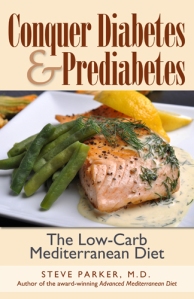
So I expect to sell more copies of my KMD: Ketogenic Mediterranean Diet book. Someone’s keto Mediterranean diet is even mentioned in the NBC News article. If you have my Conquer Diabetes and Prediabetes book, then you already have the KMD.

Steve Parker, M.D.

Front cover

1 Comment

Filed under ketogenic diet, Shameless Self-Promotion

Women With Type 2 Diabetes and Obesity-Related Cancer Risk

In general, women are a bit less likely to get cancer than men. But having type 2 diabetes and obesity negates that advantage.

“If you’re a woman with type 2 diabetes, you may be interested in a recent study done regarding obesitiy-related cancer risk. The CDC says that 40 percent of cancers in the U.S. are associated with being overweight or obese. These include cancers of the breast, gallbladder, liver, thyroid, kidneys, uterus, pancreas, upper stomach, colon and rectum, ovaries, multiple myelomas, adenocarcinoma of the esophagus, and meningiomas.

When it comes to diabetes and obesity, the duo “seem to be partly overlapping risk factors for the development of obesity-related cancer”. This especially includes breast, prostate, and colorectal cancer in those with type 2 diabetes, according to study authors.”

Source: Study Looks at Women With Type 2 Diabetes and Obesity-Related Cancer Risk

Regarding prostate cancer, I’ve seen one study that concluded diabetics are less likely to get prostate cancer.


Comments Off on Women With Type 2 Diabetes and Obesity-Related Cancer Risk

Filed under cancer

At Healthline: Are There Really Five Subgroups of Diabetes?

Ginger Vieira has a short and sweet article at Healthline on the new proposed diabetes classification system you may have heard about. I’ll be surprised if the proposal gains any traction. If it does lead to helpful clinical management changes, we won’t see them for at least 5–10 years. A snippet:

Today there are four common types of diabetes: type 1 and type 2, latent autoimmune diabetes in adults (LADA), and gestational. And these classifications are plagued by an enormous amount of confusion, misconceptions, and even misdiagnosis between the types.

To complicate things further, a new study published in The Lancet Diabetes & Endocrinology is suggesting people with type 2 diabetes should be categorized into an additional four subgroups.

“This is the first step towards personalized treatment of diabetes,” said Leif Groop, a doctor and professor in the diabetes and endocrinology department at Lund University of Sweden.

Source: Are There Really Five Subgroups of Diabetes?

1 Comment

Filed under Uncategorized

Physicians Disagree On How Aggressively Diabetes Should Be Treated

If you’re a patient, you probably don’t like to hear this. You like to think that doctors have looked carefully at the appropriate scientific studies, understand  the underlying pathophysiology in detail, then reach a consensus on treatment. Sorry, but not in the case of diabetes. NPR has the story. For example:

A major medical association today suggested that doctors who treat people with Type 2 diabetes can set less aggressive blood sugar targets. But medical groups that specialize in diabetes sharply disagree.

Half a dozen medical groups have looked carefully at the best treatment guidelines for the 29 million Americans who have Type 2 diabetes and have come up with somewhat differing guidelines.

The American College of Physicians has reviewed those guidelines to provide its own recommendations, published in the Annals of Internal Medicine. It has decided that less stringent goals are appropriate for the key blood sugar test, called the A1C.

“There are harms associated with overzealous treatment or inappropriate treatment focused on A1C targets,” says Dr. Jack Ende, president of the ACP. “And for that reason, this is not the kind of situation where the college could just sit back and ignore things.”

The ACP, which represents internists, recommends that doctors aim for an A1C in the range of 7 to 8 percent, not the lower levels that other groups recommend.

Source: The American College of Physicians Recommends A1C Levels Between 7 And 8 Percent : Shots – Health News : NPR

I come down in favor of the lower HgbA1c values.

Comments Off on Physicians Disagree On How Aggressively Diabetes Should Be Treated

Filed under Uncategorized

Tina Speaks From the Heart: A friend’s heart attack, a documentary film, and a celebrity death 

“On Saturday evening, I watched the movie WIDOWMAKER and went to bed with a heavy heart thinking of the high incidence of heart attacks among young men in the age group 38 – 50 in my social circle in the past couple of years.  6 of them had heart attacks, 2 survived. (One of them a friend. It was only after the friend got a heart attack that I started observing the trend.) The remaining 4 left behind young widows, little children and old, distraught parents.After some time, I stopped counting. This is the first generation in the history of mankind to lose their adult children not to war, wild animals or plagues, but to chronic diseases. Quite heartbreaking to see parents bury their young children in the prime of their life.I was grateful that my spouse and I started LCHF 4 years ago. He has lost 30 kgs and has some more to lose.

I realise that had we not started and continued to follow LCHF, I would have already become a widow or would become one in the next 10 years. Or I would have probably left him a widower.”

Source: A friend’s heart attack, a documentary film and a celebrity death – Indian LCHF

2 Comments

Filed under coronary heart disease, Heart Disease