Therapeutic exercise helps a little. But don’t expect a dramatic improvement, according to this 2023 study published at The Lancet Rheumatology. The benefits tend to accrue to patients who are in most pain and most physically impaired at baseline.
If you’re carrying a lot of excess weight, it only stands to reason that weight loss would take some stress off those worn-out joints. Let me help you.
Many physicians and dietitians have been hesitant to suggest ketogenic diets due to 1) possible increased risk of cardiovascular disease, and 2) unknown effects on overall mortality.
In the video below, JP implies that it is. He’s technically correct in that it is banned in some European countries according to a January 2024 article at HealthNews. Ozempic and Wegovy are brand names for the same drug: semaglutide, a GLP-1 receptor agonist. Wegovy is FDA-approved for treatment of particular folks with obesity whereas Ozempic is FDA-approved for treatment of type 2 diabetes.
I understand the superficial appeal of drug-induced weight management: no need to fool with exercise and dietary restriction.
…a higher intake of ultra-processed foods was associated with slightly higher all cause mortality, driven by causes other than cancer and cardiovascular diseases. The associations varied across subgroups of ultra-processed foods, with meat/poultry/seafood based ready-to-eat products showing particularly strong associations with mortality.
You can read the study for yourself free online. Did Big Food (e.g., Archer Daniels Midland, Con-Agra, Monsanto) exert any pressure on the researchers. I dunno.
From the Intro:
Ultra-processed foods are ready-to-eat/heat industrial formulations made mostly or entirely from substances derived from foods, including flavors, colors, texturizers, and other additives, with little if any intact whole food.1Ultra-processed foods, which are typically of low nutritional quality and high energy density, have been dominating the food supply of high income countries, and their consumption is markedly increasing in middle income countries.2 Ultra-processed food consumption accounts for 57% of daily energy intake among adults and 67% among youths in the US according to the National Health and Nutrition Examination Survey (NHANES).34
Ultra-processed foods usually disproportionately contribute added sugars, sodium, saturated fats and trans fats, and refined carbohydrates to the diet together with low fiber.56 As well as having low nutritional quality, ultra-processed foods may contain harmful substances, such as additives and contaminants formed during the processing.
Neurologist Steven Novella wrote a brief post about this study over at Science-Based Medicine. You may also find the comment section there enlightening.
If memory serves, when I started my medical career in 1981 we only had three classes of drugs for treating diabetes: insulin, sulfonylureas, and metformin. We have so many options now, that I have lost track. From Everyday Health earlier this year:
Metformin, a decades-old generic drug for type 2 diabetes, may also help treat COVID-19, a new study suggests.
Scientists at the University of Minnesota randomly assigned more than 1,300 adults with COVID-19 to take metformin or a placebo pill. All of the participants took nasal swab tests for viral levels after 1, 5, and 10 days.
Lab tests showed that metformin significantly reduced the amount of COVID-19 virus circulating in the body and also decreased the odds that virus levels would rebound after an initial reduction during treatment, according to study results published in Clinical Infectious Diseases.
Among the key research results:
On average, metformin reduced the amount of virus in the body almost 4 times more than the placebo pill.
People taking metformin were 28 percent more likely to have undetectable levels of the virus in their body at either day 5 or day 10 of the study.
Participants on metformin were 32 percent less likely to experience what’s known as rebound — when levels of the virus initially decrease but then become higher again.
Fruits and veggies are good for us, right. We should eat more more of them, right?
UK’s Daily Mail published a worrisome article about pesticide residues (PFAS) on many fruits and veggies: strawberries, grapes, cherries, spinach, tomatoes, peaches/nectarines, etc. The tested foods were from UK supermarkets but I bet the numbers are just as bad or worse in the U.S. PFAS stands for per- and polyfluoroalkyl substances. These man-made and long-lasting chemicals are implicated in causation of cancer, immunity impairment, infertility, impaired kidney function, thyroid disease, and low birth weight.
Thrice in the last six months I’ve heard that compared to the European Union, U.S. regulators allow many more chemical contaminants in food. That sounds like a deep and circuitous rabbit hole that I’m not ready to explore. Please mention in the comments an authoritative book or website on the subject.
I’ve been trying to grow food here in the Sonoran Desert for the last three years. I’m about ready to give up. My primary pests have been mealy bugs, caterpillars, mice, pack rats, and squirrels.
I learned a new word today: deprescription. It apparently refers to the act of stopping a prescribed drug.
There’s a class of type 2 diabetes drugs called GLP-1 receptor agonists. Popular examples are Ozempic and Trulicity. They help users to lose excess weight. But there’s concern about long-term drug side effects regain of lost weight when the drug is stopped. So do successful users need to take the drug lifelong?
A study published earlier this year in Diabetes Therapysuggests that successful users of GLP-1 receptor agonists can stop the drug without weight regain and without loss of diabetes control if they also adhere to a very carbohydrate restricted diet. How much carb restriction? Under 30 grams/day, at least at first. That’s going to be ketogenic in most folks. Although I don’t recall seeing “ketogenic” in the study at hand.
…..South Koreans, specifically. Korea has one of the lowest overweight/obesity rates among OECD countries: 33.7%. Life expectancy at birth is 83.4 years, compared to 80.9 in the U.S., 82.2 in UK, 82 in Ireland, and 72.3 in Russia. Anna Lee in the video below postulates why the Korean numbers look so good. She makes a lot of sense.
I’m increasingly distrustful of the mainstream (aka legacy) media. Ownership of it is in the hands of surprisingly few people. This makes reported news susceptible to manipulation by folks that have an agenda that may be at odds with your desire for “just the facts.”
In 1976, when the U.S had only three or four national over-the-air TV stations and no Internet, 72% of Americans trusted mass media. A Gallup poll found that in 2023, only 32% of Americans had a “great deal” or a “fair amount” of trust in the mass media. A larger percentage—39%—had “none at all.” In view of AI or CGI-generated imaging, it’s getting hard to believe anything you don’t see with your own eyes.
Most of the mainstream media (aka legacy media) consumed in the U.S. originates from a handful of companies. From a 2021 essay by Helen Johnson:
In 1983 there were 50 dominant media corporations. Today there are five. These five conglomerates own about 90 percent of the media in the United States, including newspapers, magazines, book publishers, motion picture studios and radio and television stations. As of 2020, the five media giants are AT&T (Time Warner, CNN, HBO), Comcast (NBC Universal, Telemundo, Universal Pictures), Disney (ABC, ESPN, Pixar, Marvel Studios), News Corp (Fox News, Wall Street Journal, New York Post) and ViacomCBS (CBS, Paramount Pictures).
Alternative Media for Your Consideration (not for local news, sports, weather)
By no means do I endorse or agree with everything you see or hear at these sites.
Tucker Carlson on X (news, opinion, politics, interviews)
RamzPaul on Rumble (news, cultural commentary, nationalism)
The Dan Bongino Show on Rumble (politics, news, opinion)
Michael Farris’ podcast “Coffee and a Mike” (interviews)
“Redacted” with Natali and Clayton Morris on Rumble (news, cultural commentary)
Jeffrey Prather’s “The Prather Point” on Rumble (preparedness, Deep State exposure, communitarianism)
The Epoch Times (U.S. and international news, lifestyle, health, Falun Gong)
The Unz Review (cultural commentary, economics, literature, politics, conspiracy)
Catherine Austin Fitts at Solari.com (for personal finance and investing, banking, government)
RT at RT.com (news and commentary from a Russian viewpoint)
O’Keefe Media Group (citizen journalism, expose wrongdoing)
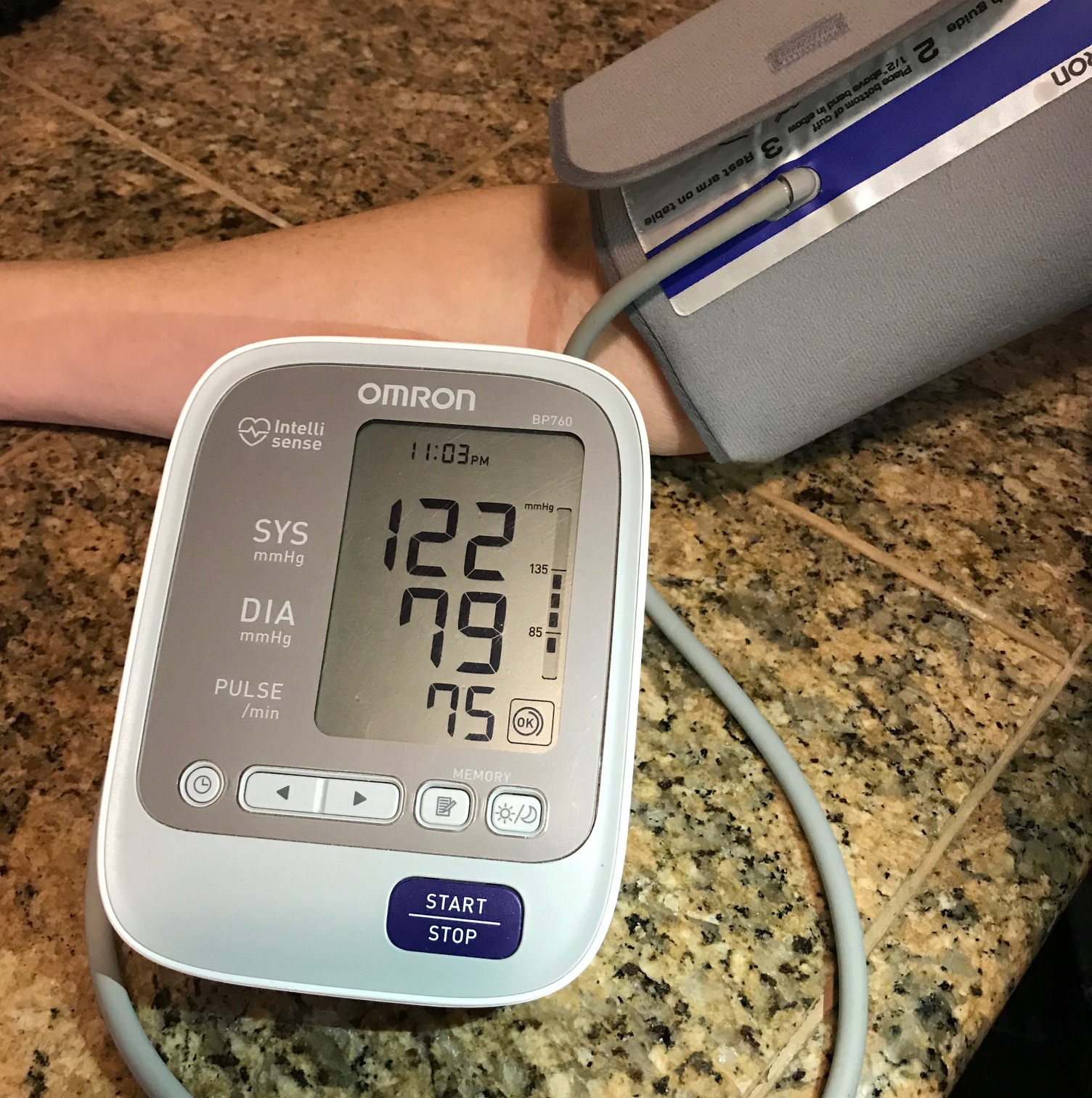
Cardiovascular diseases (CVDs) are major causes of mortality around the world. High blood pressure (BP) or hypertension is one of the most significant predisposing factors to CVDs. Ketogenic diets (KDs) have been the center of attention for their possible health benefits. The aim of this analysis is to study the impact of KDs on BP through the existing literature.
Data synthesis
We investigated the impact of KDs on systolic and diastolic blood pressures (SBP and DBP) conducted in the format of randomized controlled trials (RCTs). Four online databases (PubMed/Medline, SCOPUS, Cochrane Library, and Google Scholar) were searched from inception up to November 2022. Subgroup analyses were carried out to find the sources of heterogeneities.
Twenty-three RCTs with 1664 participants were identified. KDs did not exert any significant impacts on SBP (WMD: −0.87 mmHg, 95% CI: −2.05, 0.31) nor DBP (WMD: −0.11 mmHg, 95% CI -1.14, 0.93). Subgroup analyses did not reveal any further information. Also, non-linear dose-response analysis could not detect any associations between the percentage of calorie intake from fat in the KD format and BP levels.
Conclusion
KDs do not seem to be effective in improving BP. Nonetheless, further investigations are recommended to examine the proportion of fat intake needed to induce favorable clinical impacts.







 Diabetic Mediterranean Diet