I’ve run across a number of people who slowly increased their alcohol consumption over months or years, not realizing it was causing or would cause problems for them. Alcohol is dangerous, lethal at times.
From a health standpoint, the generally accepted safe levels of consumption are:
no more than one standard drink per day for women
no more than two standard drinks per day for men
One drink is 5 ounces of wine, 12 ounces of beer, or 1.5 ounces of 80 proof distilled spirits (e.g., vodka, whiskey, gin).
Dry January was conceived in the UK in 2012 or 2014. (A related concept is Sober October.) The idea is simply to abstain from all alcohol for the month of January. The Alcohol Change UK website can help you git ‘er done. Many folks notice that they sleep better, have more energy, lose weight, and save money. There are other potential benefits.
If you think you may have an unhealthy relationship with alcohol, check your CAGE score. It’s quick and easy.
Alternatively, if you make a commitment to a Dry January but can’t do it, you may well have a problem.
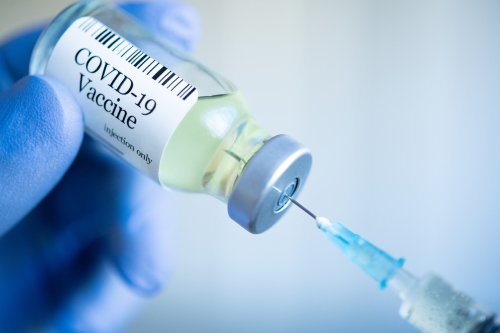
Former federal MP [Member of Parliament?] Dr Kerryn Phelps has revealed she and her wife both suffered serious and ongoing injures from Covid vaccines, while suggesting the true rate of adverse events is far higher than acknowledged due to underreporting and “threats” from medical regulators.
In an explosive submission to Parliament’s Long Covid inquiry, the former Australian Medical Association (AMA) president has broken her silence about the “devastating” experience — emerging as the most prominent public health figure in the country to speak up about the taboo subject.
“This is an issue that I have witnessed first-hand with my wife who suffered a severe neurological reaction to her first Pfizer vaccine within minutes, including burning face and gums, paraesethesiae, and numb hands and feet, while under observation by myself, another doctor and a registered nurse at the time of immunisation,” the 65-year-old said.
More recently, Paul looked into hiccup cures because his father had an intractable case. What finally worked for dad? Breathing into a plastic bag.
Boosting blood CO2 (hypercapnia) by breathing in a PLASTIC bag. This one is quite plausible and is easy and safe to try. Hypercapnia definitely affects some kinds of hiccups. The story (from a smart source, a good “friend of PainSci”): “There’s an even easier way out of hiccups — at zero cost. Learned it from my uncle, who studied medicine in Brazil in the 50s. Anesthetized patients with hiccups were a pain, so they needed to get rid of it ASAP. Method: breathing in a PLASTIC bag, small enough for you to get to hypercapnia (get higher blood levels of CO2). You have to hold the bag REALLY tight around nose and mouth to prevent air from escaping, and if you have troubles with dizziness, it’s advisable to sit down for it. As soon as it gets uncomfortable, mostly after 4-6 breaths, you can stop, the hiccup will be gone. I don’t know what this does to the phrenic nerve, but it works 100%.”
Safety Note: Obviously there could be some danger with this method. If he’d had low O2 or was struggling for breath, we likely wouldn’t have dared. (On the other hand, if he’d been in that state, he would’ve been at the hospital.) But he was supervised, with no possibility of getting stuck, and a matter of only just a few breaths. Perhaps there was still some risk… but I think not treating those hiccups was also a risk.
I’ve never tried that method for my hiccups. My personal favorite home remedy is “drinking from the far side of the glass.” AKA, drinking water upside down. Watch this video of a good ol’ boy demonstrating the technique although I would aim for drinking at least 6-8 fl oz of water before quitting. Don’t ask me how it works; it may have something to do with the soft palate or diaphragm.
Alcohol is a two-edged sword. On the one hand it makes life fun and turns strangers into intimate friends in the course of an evening; on the other, it makes a person dysfunctional. Very dysfunctional. Productive time is lost, relationships are damaged, and health is harmed.
I cannot say that I’ve “struggled” with alcohol in the truest sense. I’ve never been arrested for drunk driving, and I’ve had no serious relationship trouble from drinking. All of my drinking has been in an appropriate time and place — but one drink inevitably would lead to another. I’d wind up accidently drunk when I really wanted a light buzz. I also found that when the time came up when I’d be free to drink, I looked a bit too much forward to it.
If you’re a tippler, this is the time of year to consider a “Dry January.” You may learn something about yourself. Be kind to your liver — you only have one.
Steve Parker, M.D.
PS: It’s also time to decide on your weight loss program for the new year.
…according to an article at Annals of Internal Medicine. The study was done in a U.K. population over decade of observation. The 10% or greater reduction in all-cause mortality was seen at a habitual consumption level of two or more cups of black tea daily. Most prior similar studies I’ve seen focus on green tea.
Myopia, aka nearsightedness, is extremely common and can start in childhood or young adults. Over time it can lead to early-onset cataract, retinal detachment, and glaucoma. MedPageToday has an eye-opening article on treatments that can prevent myopia progression and complications. For example:
Common evidence-based treatments that offer both statistically significant and clinically meaningful efficacies include daytime multifocal soft contact lenses (MFSCL), overnight orthokeratology (ortho-k), and topical low dose atropine (LDA). Novel spectacle lenses also showed a promising myopia-inhibiting effect, albeit with limited availability in U.S. at the current moment. On average, these options slow myopia progression by 30-70% compared to conventional single vision glasses or contacts. With properly selected early interventions, not only the development of myopia stabilizes at younger ages, the endpoint of the progression is also much lower, resulting in significantly lower risk of complications. Furthermore, with lower level of myopia at stabilization, many myopic patients could be good candidates for refractive surgery with given corneal thickness.
I get the impression from the article than treatments need to be started in childhood.
There is a common belief that “good” posture is important to protect the spine from damage, as well as prevent and treat back pain. Good posture is commonly defined as sitting “upright”, standing “tall and aligned”, and lifting with a squat technique and “straight back”.
Conversely, “slump” sitting, “slouch” standing and lifting with a “round back” or stooped posture are frequently warned against. This view is widely held by people with and without back pain, as well as clinicians in both occupational health and primary care settings
Surprisingly, there is a lack of evidence for a strong relationship between “good” posture and back pain. Perceptions of “good” posture originate from a combination of social desirability and unfounded presumptions.
Starting twice daily flushing of the mucus-lined nasal cavity with a mild saline solution soon after testing positive for COVID-19 can significantly reduce hospitalization and death, investigators report.
They say the technique that can be used at home by mixing a half teaspoon each of salt and baking soda in a cup of boiled or distilled water then putting it into a sinus rinse bottle is a safe, effective and inexpensive way to reduce the risk of severe illness and death from coronavirus infection that could have a vital public health impact.
The irrigation, aka lavage, was not done by simply filling a spray bottle with the saline solution and squirting it up your nose. Participants used one of two high pressure devices: NAVAGE or Neilmed Sinus Rinse. The manufacturer’s of those devices provided at least partial funding for the study.