Category Archives: Uncategorized

Which Diet Improves Insulin Resistance Better: Alternate-Day Fasting or Daily Calorie Restriction?

Horses, like Java, also get Metabolic Syndrome but it’s not quite the same as in humans. Java had to lose weight and change his diet.

Body tissue resistance to the effect of insulin is considered harmful by many experts. For instance, it may contribute to obesity, high blood pressure, type 2 diabetes, and cancer. BTW, if you have Metabolic Syndrome, you probably have insulin resistance. Regular exercise and loss of excess body fat are two ways  to reduce insulin resistance. Fasting also has an effect, but is it better than daily calorie restriction?

From a small study in the journal Obesity:

ABSTRACT

Objective

This study compared the effects of alternate‐day fasting (ADF) with those of daily calorie restriction (CR) on body weight and glucoregulatory factors in adults with overweight or obesity and insulin resistance.

Methods

This secondary analysis examined the data of insulin‐resistant individuals (n = 43) who participated in a 12‐month study that compared ADF (25% energy needs on “fast days”; 125% energy needs on alternating “feast days”) with CR (75% energy needs every day) and a control group regimen.

Results

In insulin‐resistant participants, weight loss was not different between ADF (−8% ± 2%) and CR (−6% ± 1%) by month 12, relative to controls (P < 0.0001). Fat mass and BMI decreased (P < 0.05) similarly from ADF and CR. ADF produced greater decreases (P < 0.05) in fasting insulin (−52% ± 9%) and insulin resistance (−53% ± 9%) compared with CR (−14% ± 9%; −17% ± 11%) and the control regimen by month 12. Lean mass, visceral fat mass, low‐density lipoprotein cholesterol, high‐density lipoprotein cholesterol, triglycerides, blood pressure, C‐reactive protein, tumor necrosis factor α, and interleukin 6 values remained unchanged.

Conclusions

These findings suggest that Alternate-Day Fasting may produce greater reductions in fasting insulin and insulin resistance compared with Calorie Restriction in insulin‐resistant participants despite similar decreases in body weight.

Source: Differential Effects of Alternate‐Day Fasting Versus Daily Calorie Restriction on Insulin Resistance – Gabel – – Obesity – Wiley Online Library

It would be interesting to compare the compliance and drop-out rates between the two groups studied. Is a daily 25% calorie deficit easier to stomach than a 75% reduction every other day?

Click for info on Equine Metabolic Syndrome.

Caution: Folks with diabetes who take drug that can cause hypoglycemia may well suffer actual severe hypoglycemia if they reduce their usual daily calories by 75%, or even 25%.

Steve Parker, M.D.
low-carb mediterranean diet

Click the pic to purchase at Amazon.com. E-book versions also available at Smashwords.com.

 

1 Comment

Filed under Uncategorized

Mediterranean Diet May Prevent Gestational Diabetes

You can’t tell if she has gestational diabetes just by looking

From Newsweek:

Eating a Mediterranean diet while pregnant could prevent women at risk of gestational diabetes from developing the condition, a study has found.The women who took part in the study followed a Mediterranean-style diet, by eating more nuts, extra virgin olive oil, fish, white meat and pulses; while cutting their levels of red meat, butter, margarine, and cream. Researchers also asked the women to avoid sugary drinks, fast food, and those high in animal fats.

Source: Eating Mediterranean Diet During Pregnancy Could Cut Gestational Diabetes Risk: Study

Steve Parker, M.D.

low-carb mediterranean diet

Click the pic to purchase at Amazon.com. E-book versions also available at Smashwords.com.

1 Comment

Filed under Uncategorized

Ascension Shared Confidential Healthcare Info on Millions with Google

…according to Daily Mail:

Lawyers, medical professionals and tech experts have reacted with a mixture of horror and fury after it emerged that Google has been secretly acquiring sensitive medical data on millions of people without their knowledge or consent.

Questions were immediately raised around the ethics of the data-gathering operation – code-named Project Nightingale – as well as the security of patient data after the program was first reported on Monday.

Others called for an immediate change to privacy laws after Google and Ascension, the healthcare organization it has partnered with, boasted that the scheme is completely legal.

Dr. Robert Epstein, an author, medical researcher and former editor-in-chief at Psychology Today, summed up the mood when he tweeted: ‘You can’t make this s*** up. #BeAfraid.’

Source: Furious backlash after it emerges Google has secretly amassed healthcare data on millions of people | Daily Mail Online

The “confidential” date reportedly included names, dates of birth, lab results, diagnoses, and hospitalization records.

Thanks, Ascension. How much did you make off the deal?

I’ve increasingly noticed that I have to depend on Daily Mail or other non-U.S. sources for news that “the powers that be” apparently don’t want me to hear about.

Steve Parker, M.D.

PS: Keep your sensitive healthcare data out of Google’s and Ascension’s clutches by getting healthier.

PPS: I wonder if Google will censor this post by keeping it out of search results. Nah, my readership isn’t big enough. It would naturally show up on page 46 of results, and nobody goes that far down.

low-carb mediterranean diet

Click the pic to purchase at Amazon.com. E-book versions also available at Smashwords.com.

1 Comment

Filed under Uncategorized

LCHF Diet Improves Metabolic Syndrome Even Without Weight Loss

Use the search box to find the recipe for this LCHF avocado chicken soup

“Metabolic syndrome” may be a new term for you. It’s a collection of clinical features that are associated with increased future risk of type 2 diabetes and atherosclerotic complications such as heart attack and stroke. One in six Americans has metabolic syndrome. Diagnosis requires at least three of the following five conditions:

  • high blood pressure (130/85 or higher, or using a high blood pressure medication)
  • low HDL cholesterol:  under 40 mg/dl (1.03 mmol/l) in a man, under 50 mg/dl (1.28 mmol/l) in a women (or either sex taking a cholesterol-lowering drug)
  • triglycerides over 150 mg/dl (1.70 mmol/l) (or taking a cholesterol-lowering drug)
  • abdominal fat:  waist circumference 40 inches (102 cm) or greater in a man, 35 inches (89 cm) or greater in a woman
  • fasting blood glucose over 100 mg/dl (5.55 mmol/l)

One approach to improving the numbers is a low-carb, high-fat (LCHF) diet. Here’s a journal article abstract from JCI Insight:

BACKGROUND. Metabolic syndrome (MetS) is highly correlated with obesity and cardiovascular risk, but the importance of dietary carbohydrate independent of weight loss in MetS treatment remains controversial. Here, we test the theory that dietary carbohydrate intolerance (i.e., the inability to process carbohydrate in a healthy manner) rather than obesity per se is a fundamental feature of MetS.

METHODS. Individuals who were obese with a diagnosis of MetS were fed three 4-week weight-maintenance diets that were low, moderate, and high in carbohydrate. Protein was constant and fat was exchanged isocalorically for carbohydrate across all diets.

RESULTS. Despite maintaining body mass, low-carbohydrate (LC) intake enhanced fat oxidation and was more effective in reversing MetS, especially high triglycerides, low HDL-C, and the small LDL subclass phenotype. Carbohydrate restriction also improved abnormal fatty acid composition, an emerging MetS feature. Despite containing 2.5 times more saturated fat than the high-carbohydrate diet, an LC diet decreased plasma total saturated fat and palmitoleate and increased arachidonate.

CONCLUSION. Consistent with the perspective that MetS is a pathologic state that manifests as dietary carbohydrate intolerance, these results show that compared with eucaloric high-carbohydrate intake, LC/high-fat diets benefit MetS independent of whole-body or fat mass.

TRIAL REGISTRATION. ClinicalTrials.gov Identifier: NCT02918422.

FUNDING. Dairy Management Inc. and the Dutch Dairy Association.

Source: JCI Insight – Dietary carbohydrate restriction improves metabolic syndrome independent of weight loss

Steve Parker, M.D.

Click the pic to purchase at Amazon.com. E-book versions also available at Smashwords. com

1 Comment

Filed under Causes of Diabetes, coronary heart disease, Fat in Diet, Stroke, Uncategorized

Cross the Border for Affordable Insulin

Great article by Robin Cressman. Read the whole thing.

“Just a week before the trip [to Tijuana, Mexico], I was down to my very last vial of Humalog. It was June and I was close, but still so far, from hitting my $5,000 deductible for the year, which meant I was still paying full price out of pocket for all of my medical costs until I hit that figure. I had started the year low on supplies (a rookie mistake that I now know to avoid) and had been juggling bills from Dexcom, my doctor’s office, and my pump supplier for months, trying to only use our health savings account but often having to pull out credit cards to cover the costs. I called my pharmacy and asked to fill a single vial of Humalog, and the cost was $248.13. I hung up the phone. Instead I went to Walmart and for the first time bought vials of Novolin NPH and Regular for $24.99 each. It was those vials that were serving as my backup insulin a week later when I found myself in that pharmacy in Tijuana.”

Source: Crossing Borders to Afford Insulin – T1International

Whether it’s legal or not, I don’t know.

Steve Parker, M.D.

low-carb mediterranean diet

Click the pic to purchase at Amazon.com in the U.S. E-book versions also available at Smashwords.com.

 

1 Comment

Filed under Drugs for Diabetes, Uncategorized

Dietary Strategies for Management of Diabetic Gastroparesis

bariatric surgery, Steve Parker MD

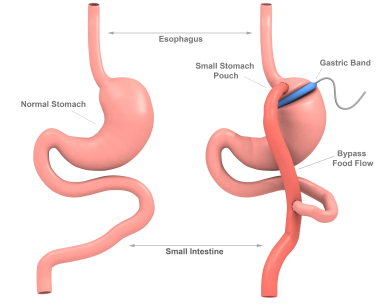
The only picture of stomach I have

When you eat a meal, your stomach holds it there for a while then gradually releases contents into the duodenum, the first part of the small intestine. The stomach makes those releases by contraction of muscles in the wall of the stomach. Those muscles are under control of the autonomic nervous system. In some folks with diabetes, the nerves controlling the stomach muscles don’t work very well, so stomach contractions are weak. Food just sits in the stomach for too long, delaying digestion and absorption of nutrients. One result is unpredictable blood sugar levels after meals, no matter how carefully you count carb grams. The medical term for these weak stomach contractions is gastroparesis.

From Diabetes Care:

“How is diabetic gastroparesis best managed?

Consultation by an RDN [registered dietitian, I reckon] knowledgeable in the management of gastroparesis is helpful in setting and maintaining treatment goals. Treatment goals include managing and reducing symptoms; correcting fluid, electrolyte, and nutritional deficiencies and glycemic imbalances; and addressing the precipitating cause(s) with appropriate drug therapy. Correcting hyperglycemia is one strategy for the management of gastroparesis, as acute hyperglycemia delays gastric emptying. Modification of food and beverage intake is the primary management strategy, especially among individuals with mild symptoms.

People with gastroparesis may find it helpful to eat small, frequent meals. Replacing solid food with a greater proportion of liquid calories to meet individualized nutrition requirements may be helpful because consuming solid food in large volumes is associated with longer gastric emptying times. Large meals can also decrease the lower esophageal sphincter pressure, which may cause gastric reflux [heartburn], providing further aggravation.

Results from a randomized controlled trial demonstrated eating plans that emphasize small-particle-size (<2 mm) foods may reduce severity of gastrointestinal symptoms. Small-particle-size food is defined as “food easy to mash with a fork into small particle size.” High-fiber foods, such as whole intact grains and foods with seeds, husks, stringy fibers, and membranes, should be excluded from the eating plan. Many of the foods typically recommended for people with diabetes, such as leafy green salads, raw vegetables, beans, and fresh fruits, and other food like fatty or tough meat, can be some of the most difficult foods for the gastroparetic stomach to grind and empty. Notably, the majority of nutrition therapy interventions for gastroparesis are based on the knowledge of the pathophysiology and clinical judgment rather than empirical research.”

Source: Nutrition Therapy for Adults With Diabetes or Prediabetes: A Consensus Report | Diabetes Care

Steve Parker, M.D.

Click the pic to purchase at Amazon.com

1 Comment

Filed under Diabetes Complications, Uncategorized

I Just Learned About Chaffles…

…at Diabetes Daily. I assume the word rhymes with waffles. From DD:

If you haven’t heard of the term “chaffle” yet, are you really living? The latest craze has taken the diabetes online community (DOC) by storm. One moment I was inquiring about what exactly a chaffle was, and the next, I found myself a golden ticket to an underground world with over 100,000 keto-crazed chaffle fanatics! What is a chaffle you ask? A chaffle is basically a cheese and egg alternative to bread, cooked in a mini (or regular, just adjust recipes accordingly) waffle maker that can be used for anything from breakfast foods straight through your after-dinner treat. It basically acts as a base to any creative concoction you can conjure up. Why are people with diabetes so excited about chaffles? Well for one, those of us who love to experiment with new low-carb options now have this new blank canvas to create from. But more importantly, this latest invention can also help keep your blood sugars in check straight from morning till night!

Click the link for recipes.

Source: 5 Chaffle Ideas to Get You from Breakfast to Dessert – Diabetes Daily

Steve Parker, M.D.

low-carb mediterranean diet

Click the pic to purchase at Amazon.com


4 Comments

Filed under Uncategorized

Sofia Norton Debunks 21 Weight-Loss Myths

Click the link below for her article at Kiss My Keto. The preamble:

Before we dive into the weight loss myths, it’s important to state the truth about weight loss.It’s not as simple as eating healthy and following an exercise program.

Of course, those can make a big difference, however, it doesn’t work that way for everyone.

There are so many factors that come into play when it comes to weight loss. Some of those factors include genetics, endocrine disorders, medications, insomnia, and cultural reasons.

This is why women with the polycystic ovarian syndrome may find it harder to lose weight than those who don’t have it.

So the next time you come across a trending weight loss tip, pause for a moment, and research about it to see if it’s even true. Secondly, analyze your current situation to see if this particular weight loss strategy will work for you.

Source: 21 Popular Weight Loss Myths Debunked! – Kiss My Keto

1 Comment

Filed under Uncategorized

Seniors, Preserve Your Muscle Mass as You Lose Weight

dementia, memory loss, Mediterranean diet, low-carb diet, glycemic index, dementia memory loss

“Honey, please come to the gym with me.”

We’ve known for a while that resistance training helps preserve muscle mass in younger folks during weight-loss programs. I’ve always figured the principle applied to older folks, too. Now we have proof. Average age of these study participants was 67.

From UPI.com:

Seniors who want to lose weight should hit the weight room while they cut calories, a new study suggests.

Older folks who performed resistance training while dieting were able to lose fat but still preserve most of their lean muscle mass, compared with those who walked for exercise, researchers report.

“The thought is if you lose too much lean mass, that this will exacerbate risk of disability in older adults,” said lead researcher Kristen Beavers, an assistant professor of health and exercise science at Wake Forest University in Winston-Salem, N.C. “Our findings show if your treatment goal is to maximize fat loss and minimize lean mass loss, then the resistance training is probably the way to go.”


2 Comments

Filed under Uncategorized

What’s the Best Diet For Diabetes?

From a recent Diabetes Care journal article:

“The Consensus Report highlights the role of weight management, dietary patterns, and technology-enabled tools in diabetes prevention and management. There is a clear consensus on reducing intake of added sugars, sodium, and unhealthy fats, especially trans fat, in the diet, although the panel does not recommend a “one-size-fits-all” eating plan. Instead, multiple eating patterns including the Mediterrranean diet, DASH (Dietary Approaches to Stop Hypertension) diet, and vegetarian and low-carbohydrate diets can be used for weight and diabetes management. However, the quality and food sources of the macronutrients are among the most critical factors determining the efficacy and long-term outcomes of these diets.”

Source: Nutritional Strategies for Prevention and Management of Diabetes: Consensus and Uncertainties | Diabetes Care

2 Comments

Filed under Uncategorized