Category Archives: Uncategorized

How to Eat Low-Carb at Fast-Food Joints

Laura Dolson tells you how over at About.com. For example:

Occasionally, you’ll see salads with other protein, but chicken is the mainstay of fast-food meal salads. Tips: 1. Skip the croutons, tortilla strips, and similar additions. 2. Be very careful about sugars in the dressing. 3) For best nutrition, look for salads with a mixture of greens, and a variety of vegetables. 4) Make sure the chicken is grilled, not “crispy fried”, or other chicken with breading.

On the Advanced Mediterranean Diet for non-diabetics, you have the option of:

  1. Traditional portion- and calorie-controlled eating, or
  2. Low-carb eating with the worlds’ first Low-Carb Mediterranean Diet

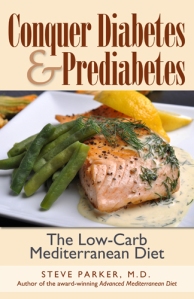
If you’ve read Conquer Diabetes and Prediabetes, you’re already familiar with #2.

Steve Parker, M.D.

Comments Off on How to Eat Low-Carb at Fast-Food Joints

Filed under Shameless Self-Promotion, Uncategorized

Chromium No Help With Elevated Blood Sugar

ScienceDaily has the details.

Of course, if you’re taking a doctor-recommended chromium supplement for a true deficiency, don’t stop. In three decades of practicing medicine, I’ve never seen a case of chromium deficiency. Granted, I rarely look for it. 

h/t Diane Fennell

Comments Off on Chromium No Help With Elevated Blood Sugar

Filed under Uncategorized

Olympian Teeth Suffering From High Carb Consumption

 BBC has the story:

The beaming smiles of gold-medal winners Usain Bolt, Jessica Ennis-Hill and Mo Farah are some of the defining memories of London 2012.

But a team at University College London says many competitors had dental problems.

“Our data and other studies suggest that, for a similar age profile, the oral health of athletes is poor. It’s quite striking,” said lead researcher Prof Ian Needleman.

He said eating large amounts of carbohydrates regularly, including sugary energy drinks, was damaging teeth.

Impaired immune system function associated with hard training may also play a role.

Many, if not most, high-level athletes think high carbohydrate consumption is necessary for optimal performance. They should know better than I. For their sake, I hope meticulous oral care—brushing, flossing, professional cleaning—helps preserve dental health.

Super athletes may not be as healthy as you think. They push their bodies so hard that they move beyond health into injury and chronic inflammation.

Steve Parker, M.D.

tooth structure, paleo diet, caries, enamel

Cross-section of a tooth

Comments Off on Olympian Teeth Suffering From High Carb Consumption

Filed under Uncategorized

Does Coffee Prevent Type 2 Diabetes?

Fanatic Cook Bix details the surprising answer: Yes.

“Still, study after study, it’s an association that won’t go away … coffee consumption lowers the risk for diabetes. And the more you drink, the lower your diabetes risk. It doesn’t matter whether the coffee is regular or decaf, but regular does consistently show a slight edge over decaf.”

Comments Off on Does Coffee Prevent Type 2 Diabetes?

Filed under Uncategorized

No Benefit to Intensive Type 2 Diabetes Treatment in Mild Disease Without Symptoms

That’s the take-away from an article at MedPageToday. I haven’t had time to dissect the original report yet.

Comments Off on No Benefit to Intensive Type 2 Diabetes Treatment in Mild Disease Without Symptoms

Filed under Uncategorized

Consider Carbohydrate Restriction for Your GERD

Dr. Michael Eades has a post on gastroesophageal reflux disease (GERD) and it’s treatment with carbohydrate-restricted eating versus drugs. GERD is relatively severe and/or frequent heartburn caused by stomach acid backing up in to the esophagus. The lining of your stomach is designed to be resistant to a high-acid environment; your esophagus not so much. A quote from Dr. Eades:

Most people who have GERD, have it for the long term. It’s not something that comes and goes. So these folks go on GERD therapy for the long term, and the most prescribed medications for long-term GERD treatment are PPIs [proton pump inhibitors], which, you now know, keep stomach acid neutralized for the long term, and, as you might imagine, creates a host of problems.

The scientific literature has shown long-term PPI therapy to be related to the following conditions:

  • Anemia
  • Pneumonia
  • Vitamin B12 deficiency
  • Impaired calcium absorption
  • Impaired magnesium absorption
  • Increased rate fractures, especially hip, wrist and spine
  • Osteopenia [thin brittle bones]
  • Rebound effect of extra-heavy gastric acid secretion
  • Heart attacks

Read the rest if you or someone you love has GERD.

Here’s a scientific report supporting Dr. Eades’ clinical experience. Carbs were reduced to 20 grams a day.

Steve Parker, M.D.

PS: Some studies find no association between PPI use and pneumonia. It makes sense that we have stomach acid for good reasons, and that suppressing it may well have adverse effects.

2 Comments

Filed under Uncategorized

Should You Try the Low FODMAPs Diet for Your IBS or GERD?

You won’t know until you try it, suggests dietitian Melanie Thomassian. These are some of the diagnoses that may respond positively: irritable bowel syndrome (IBS), Crohns disease, and gastroesophageal reflux disease (GERD).

Very low-carb diets also help GERD.

I’ve written before about the low FODMAPs diet and irritable bowel syndrome. The low FODMAPs diet essentially involves limiting the delivery of particular carbohydrates to your intestinal bacteria.

Steve Parker, M.D.

Comments Off on Should You Try the Low FODMAPs Diet for Your IBS or GERD?

Filed under Uncategorized

Dr. Andreas Eenfeldt Posted Another Testimonial From a T2 Diabetic With a Dramatic Response to Low-Carb Eating

Click for details.

Comments Off on Dr. Andreas Eenfeldt Posted Another Testimonial From a T2 Diabetic With a Dramatic Response to Low-Carb Eating

Filed under Uncategorized

FDA Looking At Home Glucose Meter Accuracy

The Joslin Diabetes Blog has some details. For example:

Current standards for blood glucose meters were established by the FDA in 2003 in conjunction with the International Organization for Standardization (ISO). Today’s requirements state that a blood glucose system (meter and strips) must meet an accuracy standard of being within 20 percent of reference values (laboratory) for numbers at or above 75mg/dl and within 15mg/dl below 75 mg/dl.

The FDA has been working on revising the current requirements since 2010 and the ISO has already come out with new standards. Whether the FDA will accept the ISO’s recommendations or adopt a different set of standards only time will tell.

The article also mentions various factors that may affect accuracy, including temperature extremes, humidity, and altitude. The user manual that comes with the device should explain these.


Comments Off on FDA Looking At Home Glucose Meter Accuracy

Filed under Uncategorized

Spend Time Outdoors (In Childhood) to Prevent Nearsightedness?

Steve Parker MD, paleobetic diet,

Should have spent more time outdoors

I bet that nearsightedness (myopia) is a relatively modern phenomenon. If you don’t see well, you’re more likely to get bitten by a poisonous snake or overcome by a predator that you should have seen coming. Or you simply trip and fall over obstacles, incurring cuts or fractures. In prehistoric times, these circumstances would lessen your chances of passing your genes on to the next generation. In other words, there was strong selection pressure in favor of good vision.

(For now, I’ll ignore the possibility that poor vision may have beneficial aspects. “Parker, you don’t see good. Stay here with the women while we chase down that ibex.”)

Steve Parker MD, eye chart, eye exam

My eyes are this bad

I’ve worn glasses since the 3rd grade and I’ve never been happy about it. OK…. worse things can happen!

According to an article at PopSci, I may have avoided myopia by spending more time outside when I was a youngster:

A team of Australian researchers recently reviewed major studies since 1993 of kids, myopia and time spent outdoors. They found more than a dozen studies, examining more than 16,000 school-age kids in total, that found children were more likely to be nearsighted or to develop nearsightedness if they spent less time outdoors. A few of the later studies also found that being outdoors protected even those kids who did a lot of near work or had myopic parents. The studies included kids living in Europe, the U.S., Asia, the Middle East and Australia.

Read the rest.

Steve Parker MD, paleo diet, paleobetic

Nubian ibex in Israel

So get your kids outside. They may even benefit just from the sunshine.

And for my fellow myopics out there, note that your risk of a retinal detachment is higher than average. By the time that usually happens, our children are already grown, so there’s little or no selection pressure against it.

Steve Parker, M.D.

Comments Off on Spend Time Outdoors (In Childhood) to Prevent Nearsightedness?

Filed under Uncategorized