Category Archives: Health Benefits

Mediterranean Diet Associated with 41% Risk Reduction for Age-Related Macular Degeneration, a Common Cause of Blindness

Photo of the retina at the back of the eyeball, where macular degeneration occurs

Not news to me…

“Protecting a patient’s eyes may be more heavily influenced by diet than previously thought. A new study, which analyzed data from a pair of previous study populations, found that people aged 55 and over who maintained a Mediterranean-style diet reduced their risk of developing late-stage age-related macular degeneration (AMD) by 41%.”

Source: Mediterranean Diet Associated with 41% Risk Reduction for AMD | MD Magazine

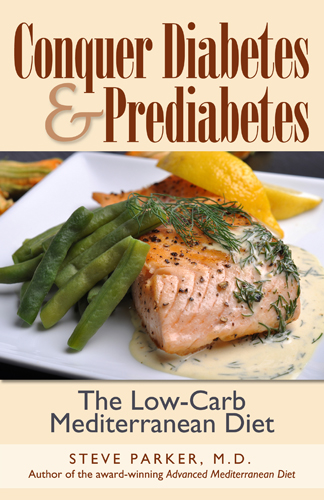
low-carb mediterranean diet

Click the pic to purchase at Amazon.com

1 Comment

Filed under Health Benefits, Mediterranean Diet

Have I Been Wrong About the Mediterranean Diet for the Last 12 years?

Bastian is also skeptical about the health benefits of judicious alcohol consumption. Fair enough.

Hilda Bastian at PLOS Blogs wrote about the recent retraction of a PREDIMED sub-study published in the New England Journal of Medicine in 2013. The suspect conclusion of that study was: “Among persons at high cardiovascular risk, a Mediterranean diet supplemented with extra-virgin olive oil or nuts reduced the incidence of major cardiovascular events.”

From Ms Bastian:

A very influential nutrition trial just tanked. It was retracted from the New England Journal of Medicine (NEJM) on 13 June, and re-published with new analyses and toned-down conclusions. Both Gina Kolata, writing in the New York Times, and Alison McCook, writing at NPR, imply, at least to some extent, that it might make no difference to the evidence. But I disagree.

Here’s what’s happened to the trial, and where I think it leaves the overall evidence. Called PREDIMED, it was a multi-center trial from Spain, with the NEJM final report published in 2013. Altogether, 7,447 people at risk of cardiovascular disease (CVD) – heart attack and stroke – were reported as randomized to one of 3 groups:

  • Mediterranean diet with free olive oil provided, along with individual and group training sessions at the start, and then quarterly;
  • Mediterranean diet with free nuts provided, along with individual and group training sessions at the start, and then quarterly;
  • Advice to reduce fat intake, with a leaflet – but after the first 3 years, people in this control group were also offered individual and group training sessions.

The primary endpoint for the trial was a composite one of major cardiovascular events: myocardial infarction, stroke, or CVD-related death. And the trial was stopped early. More people dropped out of the control group than the Mediterranean diet groups.There are several alarm bells here already, and we’ll come back to those.

Source: What Does the PREDIMED Trial Retraction & Reboot Mean for the Mediterranean Diet? | Absolutely Maybe

I encourage you to read Ms Bastian’s article if you enjoy such debates. I consider the 2013 PREDIMED sub-study to be one of numerous pieces of the nutritional puzzle.

I published the 2nd edition of my Advanced Mediterranean Diet in 2012, so the 2013 PREDIMED sub-study was not available to me. At the end of my book you’ll find not one, but 43 scientific references supporting the healthfulness of the Mediterranean diet.

Steve Parker MD, Advanced Mediterranean Diet

Click pic to purchase at Amazon.com

My Conquer Diabetes and Prediabetes book was also based predominantly on those 43 studies.

low-carb mediterranean diet

Click pic to purchase at Amazon.com


Steve Parker, M.D.

1 Comment

Filed under Health Benefits, Heart Disease, Longevity, Mediterranean Diet

Healthful Mediterranean Diet Still Standing After All These Years

Dead whole fish aren’t very appealing to many folks

From Paul Greenberg’s opinion piece in the New York Times (July 19, 2018):

In 1953, not long before President Dwight Eisenhower suffered a heart attack in office, the social scientist Leland Allbaugh published “Crete: A Case Study of an Underdeveloped Area.” The landmark analysis of the eating patterns of an isolated Greek population strongly suggested that a calorie-limited diet high in fresh fruits and vegetables, whole grains, and olive oil and low in animal protein, particularly red meat, could lower the risk of heart attacks and strokes, decrease chronic disease and extend life.

Medical research over the last half-century has largely borne out this initial finding. Weight-loss fads and eating trends come and go, but the so-called Mediterranean diet has stood fast. “Among all diets,” Dr. Walter Willett of Harvard’s T.H. Chan School of Public Health concluded in an email, “the traditional Mediterranean diet is most strongly supported for delivering long term health and wellbeing.”

Click for a more complete definition of the traditional Mediterranean Diet, which includes alcohol. More from Greenberg:

***

As the clinician Artemis Simopoulos pointed out to me, two meatless days a week are the norm in Greek Orthodox communities. This religious provision encouraged traditional communities to eat fish not only on Fridays but on Wednesdays as well. Recent epidemiological evidence links two portions of seafood a week with lower blood pressure, lower LDL cholesterol and lower triglycerides. In spite of this, American seafood consumption has stayed consistently low compared with other developed countries.

***

And for decades now, even Greeks have been abandoning their traditional foods and eating much more than they previously did. “In my view, the reason the diet worked to prevent heart disease on Crete was because they weren’t overeating,” said Marion Nestle, a professor of nutrition, food studies and public health at New York University. “By the time I got to Crete in the early 1990s, they were, and the hospitals were full of heart attacks and people with type 2 diabetes.”

***

Today, 65 years after Allbaugh returned from Crete, with modern America plagued by one of the highest obesity rates in the world and failing to meet life expectancy averages of almost every other developed nation, it’s worth circling back to the eating patterns of the ancients. For if the United States were to put itself on a Mediterranean diet, we would likely see huge improvements not only in human and environmental health, but also in rural economic stability.

RTWT for Greenberg’s roadmap to an American Mediterranean diet.

Steve Parker, M.D.

low-carb mediterranean diet

Click the pic to purchase at Amazon.com

1 Comment

Filed under Health Benefits, Longevity, Mediterranean Diet

Prevent Macular Degeneration With Mediterranean Diet

Photo of the retina at the back of the eyeball

I thought we knew this already. Yet another reason to love the Mediterranean diet. Macular degeneration is a leading cause of blindness in the developed world. Prevention is much better than treatment.

High adherence to a Mediterranean diet and regular physical activity seem to be protective factors for AMD in a Portuguese population. The effect of the diet is likely driven by the increased consumption of vegetables, fruits, and nuts.

Source: Adherence to a Mediterranean diet and its association with age-related macular degeneration. The Coimbra Eye Study–Report 4 – Nutrition

Hmmm…No mention of heart-healthy whole grains.

Steve Parker, M.D.

low-carb mediterranean diet

Click the pic to purchase at Amazon.com

3 Comments

Filed under Health Benefits, Mediterranean Diet

Modified Mediterranean Diet Fights Depression


Olive oil is a prominent source of fat in the Mediterranean diet

From Dr. Emily Deans at Psychology Today:

This year, finally, we have the SMILES trial, the very first dietary trial to look specifically at a dietary treatment in a depressed population in a mental health setting. Participants met criteria for depression and many were already being treated with standard therapy, meds, or both. The designers of this trial took the preponderance of observational and controlled data we already have for general and mental health and decided to train people using dietary advice, nutritional counseling, and motivational interviewing directed at eating a “modified Mediterranean diet” that combined the Australian Dietary Guidelines and the Dietary Guidelines for Adults in Greece. They recommended eating whole grains, vegetables, fruit, legumes, unsweetened dairy, raw nuts, fish, chicken, eggs, red meat (up to three servings per week), and olive oil. Everyone in the study met criteria for a depressive disorder.

The experimental arm of subjects were instructed to reduce the intake of sweets, refined cereals, fried food, fast food, processed meat, sugary drinks, and any alcohol beyond 1-2 glasses of wine with meals. There were seven hour long nutritional counseling sessions and a sample “food hamper” with some food and recipes. The control group had the same number of sessions in “social support,” which is a type of supportive therapy that is meant to mimic the time and interpersonal engagement of the experimental group without utilizing psychotherapeutic techniques.

*  *  *

Despite the small size, the results were still statistically significant and better than anticipated. The dietary group had bigger reductions in depression scores at the end of 12 weeks. Remission of depression symptoms occurred in 32.3 percent of the diet group as opposed to 8 percent of the control group.

Source: A Dietary Treatment for Depression | Psychology Today

The Mediterranean diet…Is there anything it can’t do?

Comments Off on Modified Mediterranean Diet Fights Depression

Filed under Health Benefits, Mediterranean Diet

Mediterranean Diet Could Prevent 20,000 Deaths Per Year in Britain


Italian seaside tangentially related to this post

Italian seaside tangentially related to this post

The Telegraph has the details:

“Some 20,000 lives could be saved each year if Britons switched to a Mediterranean diet, according to a new study.

The Medical Research Council (MRC) and Cambridge University followed nearly 24,000 people in the UK for up to 17 years to see how their diet affected the health of their heart.

They discovered that people who followed a diet high in fruits, vegetables, whole grains, nuts, fish and olive oil lowered their risk of cardiovascular disease by up to 16 per cent. The researchers estimate that 12.5 per cent of cardiovascular deaths, such as heart attacks and strokes,  could be prevented if everyone switched to the Mediterranean diet. There are around 160,000 heart deaths each year so 20,000 deaths could be avoided just by eating more healthy foods.”

Source: Mediterranean diet could prevent 20,000 deaths in Britain each year 

I’ve been a proponent of the Mediterranean diet for over a decade. I’m not alone.

Steve Parker, M.D.

3 Comments

Filed under Health Benefits, Heart Disease, Longevity, Mediterranean Diet, Stroke, Uncategorized

Improve Your Quality of Life With the Mediterranean Diet

Not only overall quality of life, but reduced pain, disability, and depression symptoms.

Action Plan: Move your current way of eating more towards Mediterranean.

Source: Adherence to the Mediterranean diet is associated with better quality of life: data from the Osteoarthritis Initiative

Improve your quality of life and lose excess weight with with the Advanced Mediterranean Diet.

Santorini, Greek seaside

Santorini, Greek seaside

3 Comments

Filed under Health Benefits, Mediterranean Diet

Mediterranean Diet With Extra Olive Oil May Prevent Breast Cancer

From my pantry...

From my larder…

A Mediterranean-style diet with supplemental extra-virgin olive oil seemed to reduce the incidence of breast cancer in a Spanish population. This is consistent with prior observational studies that link the Mediterranean diet with lower rates of breast and other cancers (colon, prostate, uterus, and melanoma).

The study population involved 4,000 women who were followed for five years. Thirty-five new cases of breast cancer occurred in this PREDIMED study sub-analysis.

The comparison diets were a reduced-fat diet and Mediterranean diet supplemented with mixed nuts.

This is a relatively small study, so results may not be entirely reliable.

Action Plan

If you’re a woman hoping to avoid breast cancer, consider the Mediterranean diet and be sure to eat plenty of extra-virgin olive oil. A good way to do this is to use home-made vinaigrettes.

Steve Parker, M.D.

PS: Even if you think Spaniards are jovial, you won’t find any in my books.

Reference: Mediterranean diet and invasive breast cancer risk among women at high cardiovascular risk in the PREDIMED trial. JAMA Internal Medicine, 2015. doi: 10.1001/jamainternmed.2015.4838

1 Comment

Filed under cancer, Health Benefits, Mediterranean Diet

Mediterranean Diet Fights Inflammation In Type 2 Diabetes


Santorini, Greek seaside

Santorini, Greek seaside

Blood markers of inflammation in our bodies are linked to higher rates of type 2 diabetes. One such marker is C-reactive protein: the higher the CRP, the greater the risk of T2 diabetes. Another inflammatory marker is adiponectin, a protein secreted by fat cells. Adiponectin levels are inversely related to ongoing inflammation: higher levels of adiponectin indicate lower levels of inflammation. Folks with higher adiponectin levels are at lower risk of type 2 diabetes.

Italian researchers affiliated with the MEDITA clinical trial took 215 men and women with newly diagnosed type 2 diabetes and randomized them to eat either a Mediterranean diet or a low-fat diet. Hemoglobin A1c and inflammatory markers were followed for up to eight years. (I’m not sure, but I think these were relatively mild diabetics from the get-go, probably with HgbA1c under 7%.)

At the end of year one, CRP dropped by 37% and adiponectin rose by 43% in the Mediterranean diet group. In other words, inflammatory markers moved in a healthful direction.

Levels in the low-fat group were unchanged.

For individual Mediterranean dieters who were deemed diet failures (HgbA1c over 7%) at one year, CRP levels were higher and adiponectin levels were lower than their counterparts without diet failure.

Values were also measured two and four years after baseline, but results are not easy to summarize, and I don’t give too much credence to a diet modification purported to last that long. After six to 12 months of a new diet, most folks drift back to their usual way of eating.

Grapes are a time-honored component of the Mediterranean diet

Grapes are a time-honored component of the Mediterranean diet

Action Plan

If you have type 2 diabetes or want to avoid it, consider a Mediterranean-style diet.

Steve Parker, M.D.

PS: Even if you think inflammation is important, you’ll find no shortage of chapters in my books.

Reference: Anti-inflammatory effect of Mediterranean diet in type 2 diabetes is durable: 8-year follow-up of a controlled trial. Diabetes Care, 2016. doi: 10.2337/dc15-2356

low-carb mediterranean diet

Front cover of book

1 Comment

Filed under Health Benefits, Mediterranean Diet

Stroke Drops to #5 Cause of Death in U.S.

For most of my medical career, stroke was the third leading cause of death in the U.S., behind heart disease and cancer. Just a few years ago, chronic lower respiratory tract disease surpassed stroke.

Stroke continues to fall in rank and fell recently to fifth place, overtaken by accidents (unintentional injuries).

Even non-fatal strokes can be devastating.

Reduce your risk of stroke by maintaining normal blood pressure, not smoking, exercise regularly, living at a healthy weight, limiting your alcohol consumption, don’t get diabetes, and limit your age to 55. It’s also important to seek medical attention if you have a TIA (transient ischemic attack).

I also think the Mediterranean diet helps.

Steve Parker, M.D.

low-carb mediterranean diet

Front cover of book

Comments Off on Stroke Drops to #5 Cause of Death in U.S.

Filed under Health Benefits, Mediterranean Diet, Stroke