

Arizona Governor Ducey, stop your unconstitutional business closures and let my gym re-open! Now. You’re doing more harm than good.
Steve Parker, M.D.
Click the pic to purchase at Amazon.com. E-book versions also available at Smashwords. com
Arizona Governor Ducey, stop your unconstitutional business closures and let my gym re-open! Now. You’re doing more harm than good.
Steve Parker, M.D.
Click the pic to purchase at Amazon.com. E-book versions also available at Smashwords. com
Comments Off on Don’t Be “That Guy”: Re-Rack Your Weights…
Filed under Exercise

MRI of brain
From Stony Brook University News:
A diet low in carbohydrates could stave off, or even reverse, the effects of aging on the brain, Stony Brook-led research finds.
A study using neuroimaging led by Stony Brook University professor and lead author Lilianne R. Mujica-Parodi, PhD, and published in PNAS, reveals that neurobiological changes associated with aging can be seen at a much younger age than would be expected, in the late 40s. But the study also suggests that this process may be prevented or reversed based on dietary changes that involve minimizing the consumption of simple carbohydrates.
Even in younger adults, under age 50, dietary ketosis (whether achieved after one week of dietary change or 30 minutes after drinking ketones) increased overall brain activity and stabilized functional networks.
Source: Low-Carb Diet Could Boost Brain Health, Study Finds | | SBU News
Steve Parker, M.D.
PS: You know what else helps preserve brain health? The Mediterranean diet.
Click the pic to purchase at Amazon.com. E-book versions also available at Smashwords.com.
Comments Off on Low-Carb Diet Could Improve Brain Health
Filed under Dementia
The headline says it all. Read below if you want details. What stands out to me is that they started these guinea pigs on a diet of under 500 calories/day for four weeks. I bet their drop-out rate was high because that’s not many calories. I wouldn’t ask you to go that low. But it probably helped these overweight/obese folks lose an average of 23 pounds in 10 weeks.
My book gives you a ketogenic diet without calorie restriction, followed by a Mediterranean diet. I don’t guarantee it’ll improve your psoriasis. But it might!
Objectives
Very low-calorie ketogenic diet (VLCKD) has been associated with a significant reduction in visceral adipose tissue and ketone bodies likely possessing anti-inflammatory properties. We evaluated the efficacy of an aggressive WL [weight loss?] program with a ketogenic induction phase as first-line treatment for chronic plaque psoriasis.
Research methods & procedures
Adult overweight/obese drug-naïve (never treated excluding use of topical emollients) patients (N=37; 30% males; age, 43.1±13.8 years) with stable chronic plaque psoriasis underwent a 10-week two-phase WL program consisting in a 4-week protein-sparing, VLCKD (<500 kcal/day; 1.2 grams of protein/kg of ideal body weight/day) and a 6-week balanced, hypocaloric (25-30 kcal/kg of ideal body weight/day), Mediterranean-like diet. The primary endpoint was the reduction in the Psoriasis Area and Severity Index (PASI) at week 10. Major secondary endpoints included: PASI50 and PASI75 response, reduction in body surface area (BSA) involved, improvement in itch severity (visual-analogue scale) and Dermatology Life Quality Index (DLQI) at week 10.
Results
With a mean body weight reduction of 12.0% (-10.6 kg), dietary intervention resulted in a significant reduction in PASI (baseline score, 13.8±6.9 [range, 7-32]): mean change, -10.6 [95%CI, -12.8 to -8.4] (P<0.001). A PASI50 and PASI75 response was recorded in 36 (97.3%) and 24 (64.9%) patients, respectively. Treatment resulted also in a significant reduction (P<0.001) in BSA involved (-17.4%) and an improvement in itch severity (-33.2 points) and DLQI (-13.4 points).
Conclusions
In drug-naïve adult overweight [what about obese?] patients with stable chronic plaque psoriasis an aggressive dietary WL program consisting in a very low-calorie ketogenic regimen followed by a balanced, hypocaloric Mediterranean-like diet appeared to be an efficacious first-line strategy for improving disease severity.
Steve Parker, M.D.
Click the pic to purchase at Amazon.com. E-book versions also available at Smashwords.com.
Filed under ketogenic diet

Big Pharma has been doing OK, at least until COVID-19 shut down 20% of the economy
From an article published March 5, 2020, at The Hill:
March 2020 marks the 10th anniversary of the passage of the Affordable Care Act, also known as ObamaCare. In its first decade, ObamaCare has failed to solve many of the health care problems it was supposed to address. Even worse, it has compounded many of the issues it was meant to fix — the law of unintended consequences in action.
First, then-candidate Barack Obama said his namesake act would “cut the cost of a typical family’s premiums by up to $2,500 a year.”
In reality, the opposite has occurred. According to the Department of Health and Human Services (HHS), “premiums have doubled for individual health insurance plans since 2013, the year before many of Obamacare’s regulations and mandates took effect.”
***
Third, President Obama repeatedly assured voters, “If you like your health care plan, you’ll be able to keep your health care plan, period.” After ObamaCare was enacted, millions of Americans were unable to keep their pre-ObamaCare health insurance plan.
Individual market premiums were $2789/year in 2013, compared to $5712/year in 2017.
Obamacare proponents promised that the plan would drastically reduce the number of uninsured folks. Wasn’t it 30 million uninsured? But there are still 28 million uninsured. And it’s probably going to get worse since citizens are no longer forced to buy something they don’t want or can’t afford.
The author of the article is affiliated with The Heartland Institute.
Source: ObamaCare: 10 years of distress and disappointment | TheHill
Steve Parker, M.D.
PS: Avoid the medical-industrial complex by getting and staying as healthy as possible. Let me help.

Click the pic to purchase at Amazon.com. E-book versions also available at Smashwords. com
Comments Off on Obamacare 10 Years Later: Disappointing
Filed under healthcare reform

Cardiovascular and renal systems simplified in one pic
The cited article below is by Milton Packer, who may have conflicts of interest since he has done work on behalf of drug companies. His article is a review of existing published literature showing beneficial effects of SGLT2 inhibitors on congestive heart failure, cardiovascular death, and kidney disease.
There is compelling evidence that sodium–glucose cotransporter 2 (SGLT2) inhibitors exert cardioprotective and renoprotective effects that are far greater than expected based on their effects on glycemia or glycosuria. In large-scale randomized controlled trials, SGLT2 inhibitors reduce the risk of hospitalizations for heart failure by ∼30% and often decrease the risk of cardiovascular death. This benefit is particularly striking in patients who have the most marked impairment of systolic function prior to treatment. In parallel, SGLT2 inhibitors also reduce the risk of end-stage renal events, including the occurrence of renal death and the need for dialysis or renal transplantation by ∼30%. This benefit is seen even when glomerular filtration rates are sufficiently low to abolish the glycosuric effect of these drugs.
Steve Parker, M.D.

Click the pic to purchase at Amazon.com. E-book versions also available at Smashwords. com
Comments Off on SGLT2 Inhibitors Yield Cardiac and Kidney Benefits
Filed under Uncategorized

Artist’s rendition of coronavirus
Recall that the coronavirus itself uses the ACE2 protein as an entry point into cells. One worry has been that the use of antihypertensive drugs [specifically angiotensin converting enzyme inhibitors or angiotensin receptor blockers] might well cause ACE2 expression to increase, which seems as if it could be a bad idea, providing more targets for the virus to latch on to. But this survey of the literature found little evidence that these expression changes even happen. The animal data that show these effects, they report, tend to be via acute injury models or doses that are much higher than human patients encounter, and there seems to be no good evidence that it happens in humans. So that’s one thing to think about: a big part of the worry about antihypertension drugs may not be even be founded on a real problem.
We also have some clinical data: this preprint from a multicenter team in Wuhan retrospectively evaluates 43 patients with hypertension who were taking drugs in these two classes versus 83 hypertension patients who were not taking ACE inhibitors or ARBs, versus. 125 age- and gender-matched controls without hypertension at all. They also compared hospital admission statistics in general to patients’ medical histories. They first confirmed what others have found, that hypertension itself is a risk factor: the patients admitted for treatment had higher levels of hypertension than the general population, and once admitted those patients had higher death rates and longer hospital stays. But when they looked at the hypertension patients who were taking either ACE inhibitors or ARBs, their numbers were better. They had comparable blood pressure numbers to those taking other drugs, but they were a lower percent of critical patients (9.3% versus 22.9%, near miss on statistical significance) and had a lower death rate (4.7% versus 13.3%). The ACE/ARB cohort also had lower inflammation markers (c-reactive protein and calcitonin). So while the data are noisy, there may be a trend towards protection in those taking angiotensin-targeting drugs. All the more reason to heed the advice not to change therapies for people with hypertension.
Source: Angiotensin and Coronavirus Infection: The Latest as of April 7 | In the Pipeline
Comments Off on Derek Lowe on ACEI and ARB Hypertension Drugs and #COVID19 #Coronavirus
Filed under Coronavirus

Eating this reduces risk of type 2 diabetes?
This is a real head-scratcher for me, just based on the abstract. I can’t explain or write-off the researchers findings at this point. I hope they administered the food frequency questionnaire more than once. If not, I can’t take this seriously.
Highlights
•Of 9689 middle-aged Australian women, 10% developed type 2 diabetes over 15 years.
•Carbohydrate restriction was associated with a 27% higher risk of type 2 diabetes.
•This association was attenuated after adjustment for BMI.
•The association was comparable for women with and without prior gestational diabetes.
•Women should be advised to avoid carbohydrate restricted diets low in fruit and grains.
Abstract
Background and aims
Low-carbohydrate diets (LCDs) are increasingly popular but may be nutritionally inadequate. We aimed to examine if carbohydrate restriction in midlife is associated with risk of developing type 2 diabetes (T2DM), and if this association differs by previous gestational diabetes (GDM) diagnosis.
Methods and results
Dietary intake was assessed for 9689 women from the Australian Longitudinal Study on Women’s Health in 2001 (aged 50–55) and 2013 (aged 62–67) via validated food frequency questionnaires. Average long-term carbohydrate restriction was assessed using a low-carbohydrate diet score (highest quartile (Q4) indicating lowest proportion of energy from carbohydrates). Incidence of T2DM between 2001 and 2016 was self-reported at 3-yearly surveys. Log-binomial regression was used to estimate relative risks (RR) and 95% CIs. During 15 years of follow-up, 959 women (9.9%) developed T2DM. Carbohydrate restriction was associated with T2DM after adjustment for sociodemographic factors, history of GDM diagnosis and physical activity (Q4 vs Q1: RR 1.27 [95% CI 1.10, 1.48]), and this was attenuated when additionally adjusted for BMI (1.10 [0.95, 1.27]). Carbohydrate restriction was associated with lower consumption of fruit, cereals and high-fibre bread, and lower intakes of these food groups were associated with higher T2DM risk. Associations did not differ by history of GDM (P for interaction >0.15).
Conclusion
Carbohydrate restriction was associated with higher T2DM incidence in middle-aged women, regardless of GDM history. Health professionals should advise women to avoid LCDs that are low in fruit and grains, and to consume a diet in line with current dietary recommendations.
Steve Parker, M.D.
Click the pic to purchase at Amazon.com. E-book versions also available at Smashwords. com
Filed under Carbohydrate, Causes of Diabetes

Caprese salad: mozzarella cheese, tomatoes, basil, extra virgin olive oil
Healthline has an article by Christina Crowder Anderson, a certified diabetes educator and pediatric registered dietitian nutritionist. It’s worth your time. A snippet:
While I was in my dietetic internship at Duke University, I met a person with diabetes who had morbid obesity and who had participated in Dr. Eric Westman’s “low carb clinic.” They did well on that regimen until they ended up gaining back all the weight plus some, along with a resurgence in their type 2 diabetes.
At that moment, my iron-clad nutrition paradigm started to shift, as the sadness and shame from “diet failure” was palpable. Most individuals would say they “didn’t try hard enough.” But when you meet an actual person and hear their story, you’ll learn there are many factors that play into their success with a specific dietary approach.
Even though I was moved by this experience, my practice philosophies still didn’t change in terms of my recommended dietary approach for type 1 or type 2 diabetes — low carbohydrate. Over the next few years as I worked in a pediatric and adult endocrinology clinic, I steered most patients toward the more severe end of the “low carbohydrate spectrum” and was enthralled by the ability of the low carb approach to produce a flat line continuous glucose monitor (CGM) tracing.
That was, until I worked with 10 young adults in a clinical trial (for my graduate thesis), who chose to participate for a total of 8 months: 3 months on the low carbohydrate diet (60 to 80g day), 2 months of a “washout” period back on their own preferred diet, and another 3 months on the “standard diabetes diet” of >150 g carbs per day.
Source: When Low Carb Eating Backfires for Diabetes
Steve Parker, M.D.

Click the pic to purchase at Amazon.com. E-book versions also available at Smashwords.com.
Filed under Carbohydrate

Will we allow coronavirus to destroy the fabric of American life?
I propose a four-point plan to prevent a prolonged economic recession or depression in the U.S. caused by unjustified fear and panic about coronavirus:
My presuppositions:
The problem with state-mandated or encouraged social distancing is that it’s strangling our economy.
Physicians, virologists, and epidemiologists who are advising our politicians are typically focused on medical aspects of the coronavirus epidemic. Economics is on the back burner, naturally, since that’s not their area of expertise. But the economy matters!

Post-viral apocalypse? Raccoon City?
In the U.S. in February 2020, 165 million people were in the labor force. For the week ended March 21, 2020, the U.S. set a record for unemployment benefits applications: 3.3 million. The very next week, a new record was set: 6.6 million. Economists are predicting a drop in 2nd quarter Gross Domestic Product of at least 20%.
In good times, most folk don’t apprehend the web of connections among various parts of the economy. They will soon find out.
Unemployment has been linked with a number of psychological disorders, particularly anxiety, depression, and substance abuse; dangerous behaviors including suicide and violence toward family members or others also correlate with unemployment. These associations hold true not only in surveys of those already unemployed but also in studies that follow one or several individuals with no psychological difficulties into a period of unemployment. Such findings have been reported from many industrialized nations and, with some minor variations, apply to workers of both sexes and all ages.
Research regarding the consequences of unemployment may be confounded by a commensurate loss of income in subjects being studied. However, some studies try to account for this phenomenon of drop in socioeconomic status. Although an alert health care system may provide some needed assistance, resolution of the problem lies outside the field of medicine.
For example regarding suicide, among the unemployed aged 26 to 64 suicide was two-and-a-half times more likely than those who had jobs. Worldwide, one in five suicides is linked to unemployment. In 2017, suicide was the 10th leading cause of death in the U.S., with over 47,000 victims. At the time of this posting, the U.S. has reported 5,137 deaths from COVID-19.
Bankruptcies and unemployment will lead to an epidemic of despair.

“Honey, we’ll be able to see the grandkids in few months. It’s just too dangerous right now.”
Additionally, the stock markets in the U.S—S&P 500 and Dow Jones Industrial Average—are already down by 20–30%, depending on the day you check. I wouldn’t be surprised if it drops another 20% or more from here. Imagine how that affects folks approaching retirement, or in it already, who are depending on their 401k’s to live.
Laid-off workers without a paycheck can’t pay their mortgages or car payments or other loans. In most jurisdictions, unemployment benefits are woefully inadequate: in Arizona it’s $240/week. This is a set-up for massive loan defaults. One silver lining: If you have cash, it may soon be buyer’s market for homes and new or used cars.
Panicking is rarely good. Let’s stop.
Expect more from me on Extreme Social Distancing in a future post.
Steve Parker, M.D.
PS: A few other sources that question the mainstream media’s and government narratives…
PPS: The history of the Coronavirus Pandemic will be written in the the next few years. I have no doubt it will look different than what we’re seeing now.

Click the pic to purchase at Amazon.com. E-book versions also available at Smashwords.com.
Filed under Coronavirus

Where does bile come from? The liver.
I found this study a while back. TL;DR: Physical activity, the Mediterranean diet, and legume consumption are linked to lower incidence of liver fat. At least in a Spanish population with metabolic syndrome.
Abstract
Objective
Non-alcoholic fatty liver disease (NAFLD) is the most common cause of chronic liver morbidity. This condition often is accompanied by obesity, diabetes, and metabolic syndrome (MetS). The aim of this study was to evaluate the connection between lifestyle factors and NAFLD in individuals with MetS.
Methods
A cross-sectional study with 328 participants (55–75 y of age) diagnosed with MetS participating in the PREDIMED-Plus trial was conducted. NAFLD status was evaluated using the non-invasive hepatic steatosis index (HSI). Sociodemographic, clinical, and dietary data were collected. Adherence to the Mediterranean diet (mainly assessed by the consumption of olive oil, nuts, legumes, whole grain foods, fish, vegetables, fruits, and red wine) and physical activity were assessed using validated questionnaires.
Results
Linear regression analyses revealed that HSI values tended to be lower with increasing physical activity tertiles (T2, β = –1.47; 95% confidence interval [CI], –2.73 to –0.20; T3, β = –1.93; 95% CI, –3.22 to –0.65 versus T1, Ptrend = 0.001) and adherence to the Mediterranean diet was inversely associated with HSI values: (moderate adherence β = –0.70; 95% CI, –1.92 to 0.53; high adherence β = –1.57; 95% CI, –3.01 to –0.13 versus lower, Ptrend = 0.041). Higher tertiles of legume consumption were inversely associated with the highest tertile of HSI (T2, relative risk ratio [RRR], 0.45; 95% CI, 0.22–0.92; P = 0.028; T3, RRR, 0.48; 95% CI, 0.24–0.97; P = 0.041 versus T1).
Conclusion
Physical activity, adherence to the Mediterranean diet, and consumption of legumes were inversely associated with a non-invasive marker of NAFLD in individuals with MetS. This data can be useful in implementing precision strategies aimed at the prevention, monitoring, and management of NAFLD.
Steve Parker, M.D.

Click the pic to purchase at Amazon.com. E-book versions also available at Smashwords.com.
Filed under liver disease
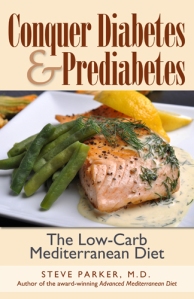
Click the pic to purchase at Amazon.com. E-book versions also available at Smashwords.com.
 Bible Verse of the Day
 Diabetic Mediterranean Diet